


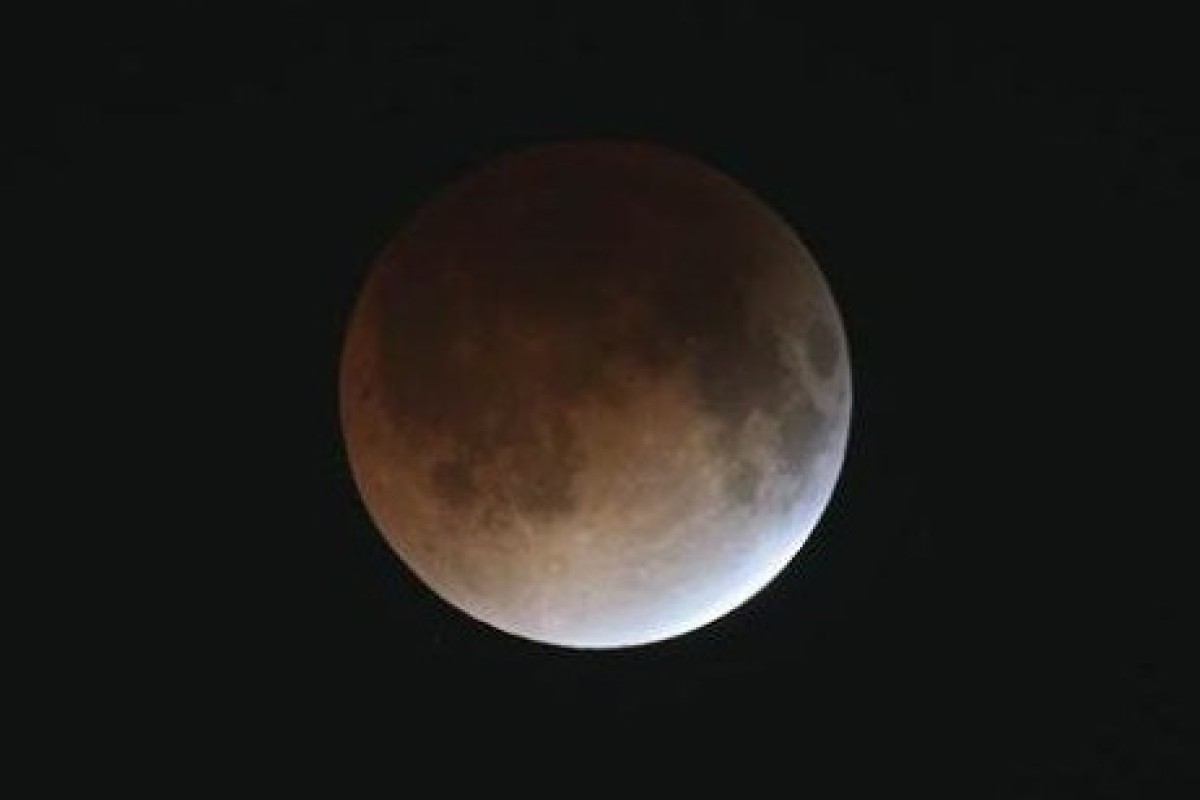


The first lunar eclipse of 2026 has begun, the Shamakhy Astrophysical Observatory named after Nasreddin Tusi told APA.
It was reported that the lunar eclipse started at 12:44 and will end at 18:23: “The maximum of the eclipse will occur at 11:33. This eclipse is a total lunar eclipse and will be observed in Asia, Australia, North and South America, the Arctic, the Antarctic, as well as over the Pacific, Atlantic and Indian Oceans. In Azerbaijan, however, it will not be possible to observe the eclipse, as the Moon will be below the horizon and the event will occur during daylight hours.”
It was noted that the phenomenon known as the “Blood Moon” occurs precisely during a total lunar eclipse, when the Moon takes on a reddish hue: “This is because, during the eclipse, only the long-wavelength portion of sunlight passing through the Earth’s atmosphere can reach the surface of the Moon, causing it to appear red. During a lunar eclipse, the Earth moves between the Sun and the Moon, limiting direct sunlight from reaching the Moon’s surface. At this time, the Earth’s shadow falls on the Moon, resulting in a lunar eclipse. Lunar eclipses usually last longer than solar eclipses because the Earth’s shadow is larger than the Moon’s shadow. A lunar eclipse occurs only during the full Moon phase. A total lunar eclipse can last up to approximately 105 minutes. Unlike a solar eclipse, a lunar eclipse can be observed from anywhere the Moon is above the horizon.”


 Follow us on Telegram
 t.me/apanewsaz
 Follow us on Instagram
 Follow us on TikTok
 Follow us on Facebook
 Follow us on X