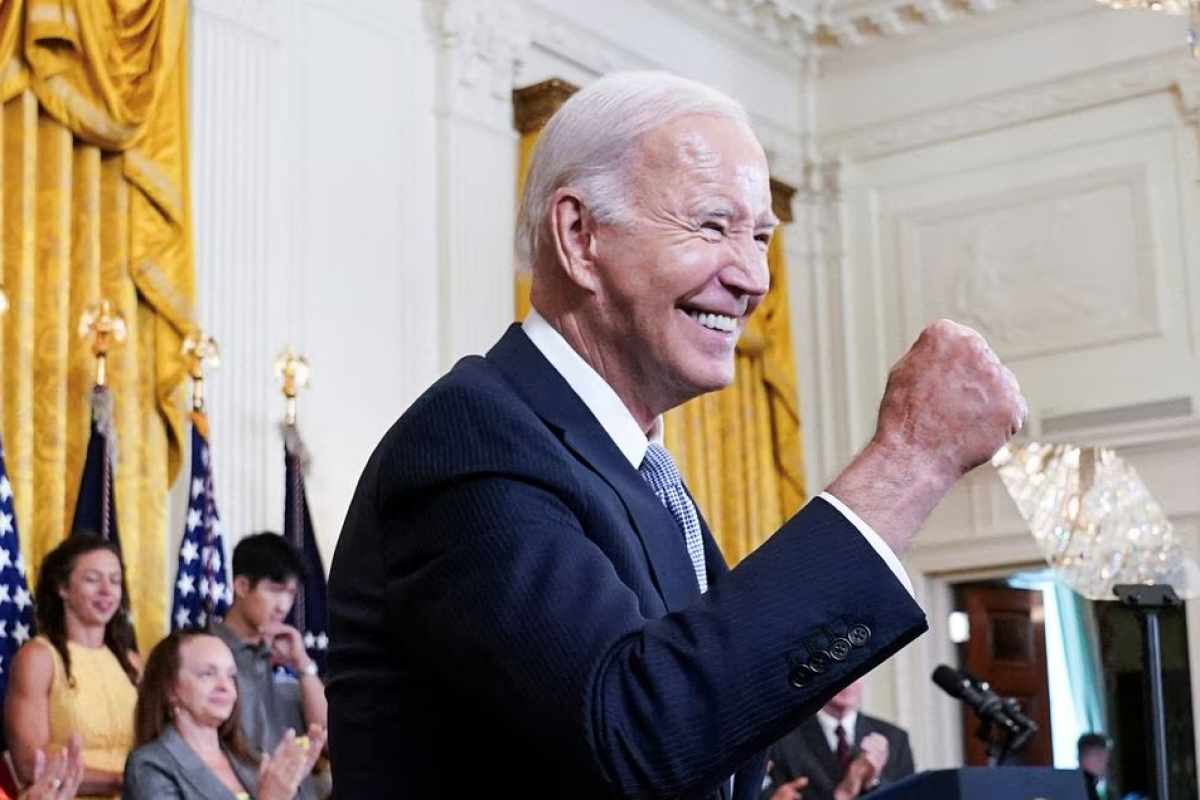

The Biden administration believes that a seismic but fragile realignment is underway in East Asia: a deeper relationship between two close U.S. allies with a long history of mutual acrimony and distrust, APA reports citing Reuters.
The change would accelerate Washington's effort to counter China's influence in the region and help it defend Taiwan.
U.S. President Joe Biden hopes to cement those ties with a summit at Camp David, the storied presidential retreat in Maryland's Catoctin Mountains, this Friday.
While the summit is unlikely to produce a formal security arrangement that commits the nations to each others' defense, they will agree to a mutual understanding about regional responsibilities.
"I find the meeting at Camp David mind blowing," Dennis Wilder, a professor at Georgetown University who once managed the Japan and South Korea relationship under former President George W. Bush, wrote on the social media platform X. "We could barely get South Korean and Japanese leaders to meet with us in the same room."
Behind the easing tensions, say diplomats from the three countries, is a shared concern about an increasingly aggressive China and an erratic North Korea.
But they credit, in particular, the initiative of Yoon and Kishida personally in seeking better ties.
Yoon's push to break the stalemate has provided "important momentum" for greater cooperation, South Korean deputy national security advisor Kim Tae-hyo told reporters, adding that the three leaders would spend the "longest time together ever" at Camp David.
When Yoon Suk Yeol this week commemorated his country's 1945 independence from Japan, the South Korean president didn't dwell on the brutal 35-year occupation his people endured under their neighbor.
Instead, the 62-year-old leader, too young to remember the humiliations of Japanese rule, celebrated the country as a "partner" that now shares the same values and interests. Facing nuclear threats from North Korea - a constant worry for both Seoul and Tokyo - Yoon reserved his condemnation for "Communist aggression."
To be sure, previous efforts to build closer ties between South Korea and Japan have stumbled. In 2019, a dispute over Japan's wartime treatment of Koreans led the Seoul to cancel a military intelligence-sharing agreement. Later that year, Japan placed restrictions on exports needed by Korean chips manufacturers.


 Follow us on Telegram
 t.me/apanewsaz
 Follow us on Instagram
 Follow us on TikTok
 Follow us on Facebook
 Follow us on X