










Baku – APA. Pentagon spokesman Geoff Morrell said, “This is a new authority that was requested by General Petraeus and approved by Secretary Gates but we don’t anticipate it becoming our new standard operating procedure, APA reports quoting CNN.
"Most combatants we pick up on the battlefield will still be turned over to Afghan authorities within 96 hours; however, there may be some who require more time in our custody (up to 2 weeks) in order to determine precisely who they are, what they’re up to and how much of a danger they pose.â€
A controversial policy that gives U.S. forces in Afghanistan four days to question detainees is being changed to give soldiers more time to interrogate the captives, Gen. David Petraeus said Tuesday.
Petraeus told the Senate Armed Services Committee that American troops will now be able to hold detainees for up to 14 days before either releasing them or turning them over to the Afghan government. In some cases, longer detention will be an option, he said.
Currently, U.S. troops have 96 hours to question people picked up in the field before they must either release them or hand them over to Afghan authorities. The rule is designed to give the Afghan government control over detainees and avoid abuses.
A CNN investigation in February found that one out of every four detainees has been released since NATO began keeping statistics, and soldiers complained the policy could put them in danger.
Petraeus said in January the 96-hour rule was a "big concern." He said the change has been approved by Defense Secretary Robert Gates.
Sen. Lindsey Graham, a critic of the policy, said he believes troops in the field "will appreciate that."
"I’m glad you’ve been given some relief, because the old rule just didn’t make a lot of sense," said Graham, R-South Carolina. "And I think the new way forward does make sense."
The 96-hour policy has been in effect since December 2005. NATO does not track what happens to the detainees once they are let go.
Nearly half of all U.S. troops in Afghanistan operate under NATO rules and fight as the International Security Assistance Force. CNN confirmed Tuesday that the remainder are also being put under NATO, meaning the new 14-day policy will apply to everyone.
The decision to place the troops under NATO, which is led by an American supreme commander, "is for the purpose of unity of effort," NATO spokesman James Appathurai said. "That decision has been taken in principle, but the mechanics of it need to be worked out."
Asked about the United States changing the 96-hour rule, Appathurai said, "We don’t have concerns about it. We understand the operational imperative behind it, but of course, it’s also true we have to invest more as a group of nations in ensuring the Afghans handle detainees in an appropriate way."
U.S. Lt. Col. Todd Breasseale, an International Security Assistance Force spokesman, confirmed about 30,000 troops are being transitioned to the assistance force and all will operate under the new rule.
Petraeus said in January that particularly when it comes to high-value targets, "96 hours is not enough if you are going to ensure that they stay behind bars."
"There has to be a process by which the individuals that need to be detained are detained, or that if they’re handed off to Afghan officials, that there’s confidence in the system working," he said.
Graham, an Air Force reserve colonel who visited Afghanistan last year, said in December the rule puts soldiers in danger.
"The one story I hear told over and over and over again, ’Sen. Graham, this policy makes no sense. It is putting our folks at risk for no higher purpose. It needs to change,’" Graham said. "So the level of frustration is now turning to anger, and quite frankly, here’s what’s going to start happening - we’re going to take less prisoners. They’re going to start shooting these folks."
CNN began examining the 96-hour rule with the case of Roger Hill, a former Army captain, who received a general discharge for his role in the questioning of 12 detainees. Those men, including one who was his trusted interpreter, had worked on his base in Afghanistan.
Hill was the U.S. commander in Wardak Province, in eastern Afghanistan, for much of 2008, and said he feared the enemy was tracking his every move. He suspected an inside threat.
"Out of a 90-man company, we had 30 wounded, to include two killed in action," he said. He said his headquarters sent a team to the base to detect possible spies. The team screened cell phone activity to find out which Afghan civilians working on the base were really working for the Taliban - and his interpreter was one of them.
Angry and frustrated that the interpreter might be the one sabotaging missions, Hill detained all 12 men in a small building on the base. That’s when the 96-hour rule went into effect.
Hill said the rule does not work, and many times dangerous suspects are released because there’s not enough time to gather evidence. As the clock ticked toward the 96-hour NATO deadline, Hill made a decision that would cost him his military career.
"I decided that I needed to break protocol and interrogate them myself," he said. "I took three gentlemen outside, sat them down, walked away, and fired my weapon into the ground three times, hoping that the men inside, left to their own imagination, would think that they really needed to talk."
Hill walked back inside. "And sure enough, some of the detainees started to talk," he said.
What the detainees told him was enough to persuade the Afghans to take all 12 men into custody, including Hill’s interpreter. Hill said he felt he had made the correct decision to protect his soldiers, but the Army charged him with detainee abuse, leading to his discharge from the military.
The 12 men were released, despite the confession, according to Army investigators. No one knows where they are now and what’s they’re doing.


 Follow us on Telegram
 t.me/apanewsaz
 Follow us on Instagram
 Follow us on TikTok
 Follow us on Facebook
 Follow us on X
Americas
CENTCOM airstrike in Syria kills senior ISIS leader
 18:00
18:00
 24 June 2026
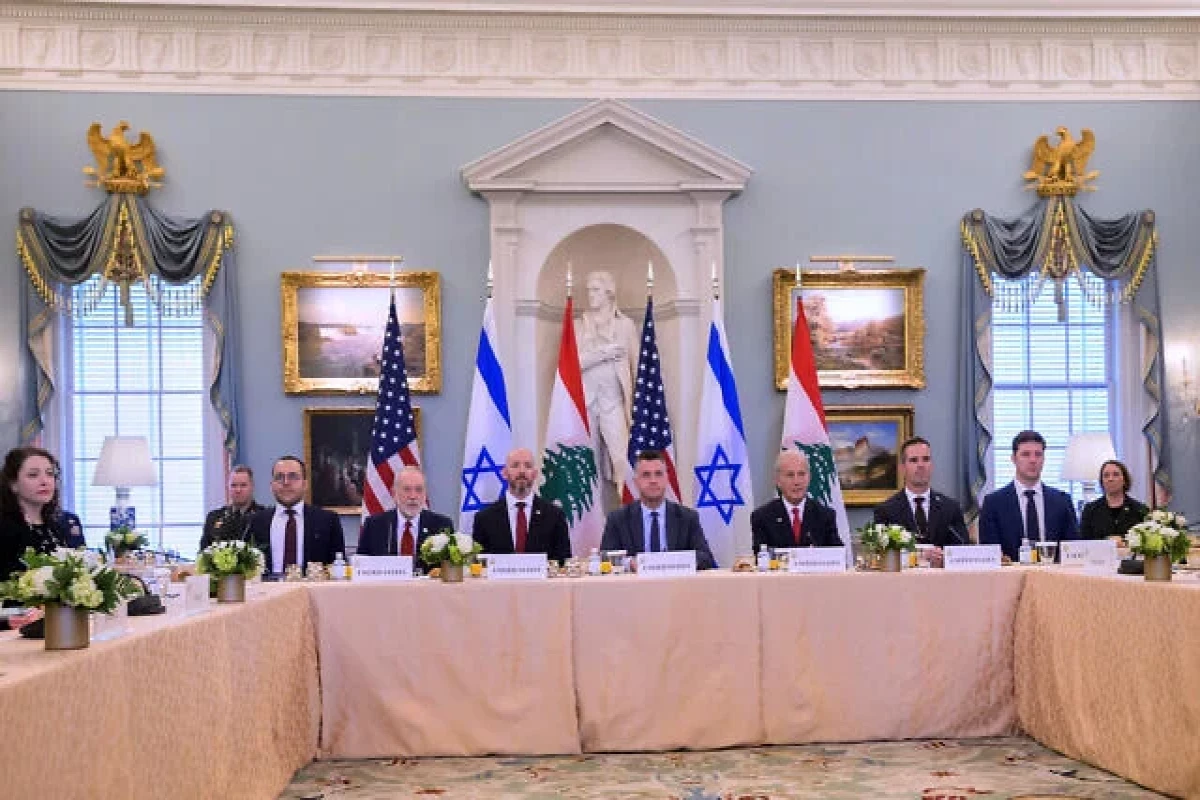
Israel, Lebanon discussing pilot scheme for handover of territory
16:37
24 June 2026
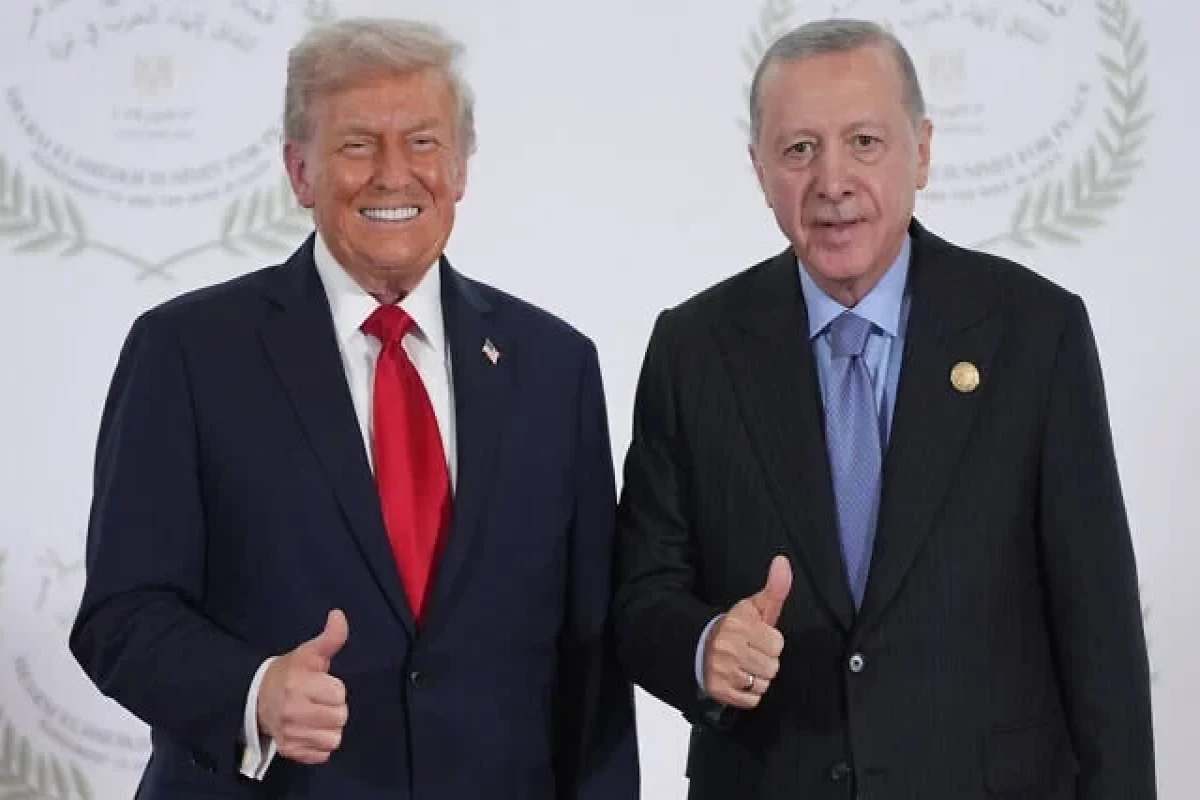
Erdoğan says one-on-one meeting with Trump likely at NATO Summit
16:23
24 June 2026

Trump: Negotiations will end immediately if Iran charges ships passing through the Strait of Hormuz
15:54
24 June 2026

NEWS FEED
Araghchi discusses US talks with Saudi foreign minister
19:50
24 June 2026
Ghalibaf: Azerbaijan-Iran relations have seen greater development over the past year
19:37
24 June 2026
Sahiba Gafarova meets Speaker of Iran's Parliament
19:34
24 June 2026
Meeting held with delegation from Pakistan National Defense University
19:10
24 June 2026
Ships start sailing through Hormuz under UN evacuation scheme, agency says
18:41
24 June 2026
Iraqi President congratulates Azerbaijani leader on Independence Day
18:37
24 June 2026
Speakers of Azerbaijani and Turkish parliaments meet, stress importance of Azerbaijan-Türkiye strategic alliance - UPDATED
18:22
24 June 2026
Ebola outbreak is still outpacing response, WHO's Tedros says
18:20
24 June 2026
Helicopter crashes in Russia's Krasnodar region
18:18
24 June 2026
Exchange of accusations erupts between Iranian and Yemeni representatives
18:13
24 June 2026
Azerbaijan’s Prime Minister meets with Speaker of Türkiye’s Grand National Assembly
18:06
24 June 2026
Azerbaijani MFA: France continues to pursue outdated and one-sided political approaches
18:05
24 June 2026
Ghalibaf: Iran learned who its friends and enemies were during the war, Azerbaijan stood by Iran
18:04
24 June 2026
CENTCOM airstrike in Syria kills senior ISIS leader
18:00
24 June 2026
Azerbaijan Railways showcases Azerbaijan’s transit and logistics potential at Transport Logistic China 2026
17:55
24 June 2026
President Ilham Aliyev received delegation led by Speaker of Iran’s Islamic Consultative Assembly
17:50
24 June 2026
Drone attempting to violate Azerbaijan’s border neutralized - PHOTO
17:27
24 June 2026
Azerbaijan extradites internationally wanted individual to Kyrgyzstan
17:11
24 June 2026
Iran-Gulf reconciliation talks expected to be held in Saudi Arabia, diplomat says
16:59
24 June 2026
Jeyhun Bayramov travels to Poland to attend Ukraine Recovery Conference
16:41
24 June 2026
Israel, Lebanon discussing pilot scheme for handover of territory
16:37
24 June 2026
Ukraine returns sailors from ship detained by Iranian security forces
16:29
24 June 2026
Erdoğan says one-on-one meeting with Trump likely at NATO Summit
16:23
24 June 2026
Trump: Negotiations will end immediately if Iran charges ships passing through the Strait of Hormuz
15:54
24 June 2026
Azerbaijan assumes chairmanship of the Parliamentary Union of OIC member states - UPDATED
15:24
24 June 2026
AZAL’s first Airbus A321neo delivered in Hamburg - PHOTO
15:23
24 June 2026
AZAL: New Airbus A321neo can be safely operated on any route - VIDEO
15:20
24 June 2026
Iran says access to attacked nuclear sites depends on final US deal
15:14
24 June 2026
Katz vows IDF won’t withdraw from south Lebanon ‘even if there’s an American demand’
15:02
24 June 2026
Media representatives visit Airbus production facility in Hamburg - PHOTO
14:50
24 June 2026
President Ilham Aliyev received delegation led by Speaker of Grand National Assembly of Türkiye
14:49
24 June 2026
Azerbaijan's insurance market grows by nearly 2% this year
14:39
24 June 2026
Erdoğan: Israel has been doing everything it can for 10 days to undermine a US-Iran agreement
14:39
24 June 2026
Lavrov: Diplomatic solution to Ukraine crisis remains possible
14:37
24 June 2026
France confirms first Ebola case in doctor returning from DR Congo mission
14:04
24 June 2026
Tehran's Mehrabad Airport to close due to Ali Khamenei's funeral ceremonies
13:52
24 June 2026
Ukraine hits two airfields and air defence systems in Crimea, including Pantsir-S1 units
13:51
24 June 2026
Drones strike major Russian gas processing plant 1,500 km from Ukraine
13:40
24 June 2026
Azercell and Samsung launch a new campaign
13:29
24 June 2026
Presidential aide: Main goal in cotton farming by 2030 is to increase average yield to 50 centners per hectare
13:27
24 June 2026
Peskov: Armenia is currently choosing its path of development
13:20
24 June 2026
AZAL: Today's Baku-Nakhchivan-Baku flights cancelled
13:09
24 June 2026
Central Bank of Azerbaijan preparing amendments to compulsory insurance regulations
13:02
24 June 2026
Azerbaijan extends special quarantine regime until October 1, 2026
12:57
24 June 2026
Sabirabad executive authority head: State Program will strengthen food security and non-oil sector growth
12:53
24 June 2026
Conference dedicated to Azerbaijan's position as a middle power held - PHOTO
12:45
24 June 2026
Azerbaijan's social reform achievements presented at UN Forum
12:43
24 June 2026
Numan Kurtulmuş: PUIC chairmanship passing to Azerbaijan is extremely important for us
12:43
24 June 2026
Azerbaijani President: We have always felt the consistent support of the OIC
12:20
24 June 2026
President Ilham Aliyev addressed participants of 20th Session of OIC Parliamentary Union Conference - UPDATED
12:15
24 June 2026


