










Baku – APA. With the apparent failure of Obama’s initiative to open negotiations, the administration turns toward support of the opposition and a focus on sanctions targeting the powerful Revolutionary Guard, APA reports quoting “Los Angeles Times†newspaper.
Reporting from Washington - After keeping a careful distance for the last year, the Obama administration has concluded that the Iranian opposition movement has staying power and has embraced it as a central element in the U.S.-led campaign to pressure the country’s clerical government.
Administration officials and some allied governments believe that a combination of domestic unrest and international sanctions targeting Iran’s Revolutionary Guard offers the best hope for forcing Tehran to yield on its nuclear program, and could even lead to a change in the government.
The administration has made the shift at a time when it is facing sharp domestic criticism over President Obama’s failed initiative to launch negotiations with Iran and its perceived unwillingness to strongly back the opposition movement. Meanwhile, the protests sparked by June’s disputed presidential election in Iran grew despite a tough crackdown.
This new approach is not a sure thing: It is far from clear that squeezing the Revolutionary Guard, a sprawling military organization that has vast business interests and is close to President Mahmoud Ahmadinejad, would seriously damage it or strengthen the opposition, as the administration hopes. And despite high-profile encouragement by Secretary of State Hillary Rodham Clinton and other U.S. officials, many opposition activists fear that Washington’s embrace will bring more harm than good.
"Just leave us alone, please," one activist in Tehran pleaded.
Still, U.S. officials and some European allies believe that there is less downside to openly supporting the opposition now because Iran has grown more politically polarized and the opposition is under direct assault.
Clinton, visiting the Persian Gulf region last month, warned repeatedly that Iran was becoming a "military dictatorship" and tried to draw a distinction between the power structure and the protest movement, which she said cared more about the lives of average Iranians.
"They don’t want to see sanctions," she said of the Iranian opposition. "They don’t want to see the end to their democracy. They don’t want to see the rise of an unelected body or a non-clerical body, namely the Revolutionary Guard, assuming all of this power."
The administration’s support for the opposition has been an issue since the June 12 presidential election. The perception of widespread electoral fraud sparked huge demonstrations against Ahmadinejad that have continued sporadically despite a violent crackdown and the imprisonment of protesters.
But the relatively poor turnout at protests on the Feb. 11 anniversary of the Islamic Revolution has raised questions about the movement’s momentum.
Whereas Clinton previously talked about "crippling" sanctions aimed broadly at the Iranian public, the administration is now pressing the U.N. Security Council for international sanctions targeting the Revolutionary Guard. The administration and its European allies appear to be gaining Russian support, but serious questions remain about China.
Separately, the Treasury Department in February slapped U.S. sanctions on some organizations and individuals tied to the Revolutionary Guard.
"Sanctions are increasingly being looked at by the administration in the context of how these measures could be potentially helpful to the cause of political reform in Iran," said Karim Sadjadpour, an Iran specialist at the Carnegie Endowment for International Peace. "Depriving the Revolutionary Guard of the ability to sign billion-dollar contracts and turning them into an international pariah would be welcomed by many democratic activists in Iran."
Though U.S. officials have emphasized that they are not trying to overthrow the Iranian government, Vice President Joe Biden and national security advisor James L. Jones have cheered those pressing for a tougher approach by speaking publicly about the prospects for political change.
The new approach does not include formal ties to Iranian dissidents; however, there have been intermittent contacts with some Iranians connected to the opposition.
Administration officials have urged private telecommunications firms to do what they can to enable opposition access to the Internet and other forms of communication.
Late last year, the administration spurred a change in U.S. sanctions to improve Iranians’ access to software needed for certain communication processes.
"We’re focusing now on how pressures from the outside, combined with pressure from the inside, could turn this around," said a U.S. official who is regularly briefed on the administration’s approach.
Some reformers in Iran are fearful that the U.S. approach will bring problems.
"It puts reformist and civic activists in danger," said Yousef Mollai, a professor of law at Tehran University and a reformist. "The Islamic Republic is waiting for any document showing covert or overt help of the U.S. to the Iranian opposition to claim, ’Hey, look, the reformists are the paid lackeys of the U.S. administration.’ And then there will be more pretexts for arrests."
Morad Saghafi, a social scientist and magazine editor who supports opposition leader Mehdi Karroubi, said there are "no common values shared between the Iranian opposition and the U.S. administration. Their foreign policy in the U.S. is prioritized according to their own set of values, which are not shared here."
A European official acknowledged that the strategy may be dangerous because of risks to the opposition. The official, who declined to be identified because of the sensitivity of the issue, said that it might take years for the opposition effort to yield results, while international concerns about the Iranian nuclear program are immediate.
U.S. officials and their allies believe that Iran is trying to develop expertise to build nuclear weapons, an allegation Tehran denies. A U.N. report last month said its nuclear investigators had found indications of "past or current undisclosed activities" aimed at building weapons.
As Iran has continued its enrichment efforts, there have been increased calls in Washington, including from some congressional Democrats, for the administration to step up support for political change in Iran.
Richard Haass, the president of the Council on Foreign Relations think tank, recently wrote that he no longer supported efforts to engage Iran in talks and wanted Western governments to focus on nonviolent means of promoting political change in Iran.
"The nuclear talks are going nowhere," he wrote in Newsweek. "Instead we should be focusing on another fact: Iran may be closer to profound political change than at any time since the revolution that ousted the shah 30 years ago."


 Follow us on Telegram
 t.me/apanewsaz
 Follow us on Instagram
 Follow us on TikTok
 Follow us on Facebook
 Follow us on X
Americas
CENTCOM airstrike in Syria kills senior ISIS leader
 18:00
18:00
 24 June 2026
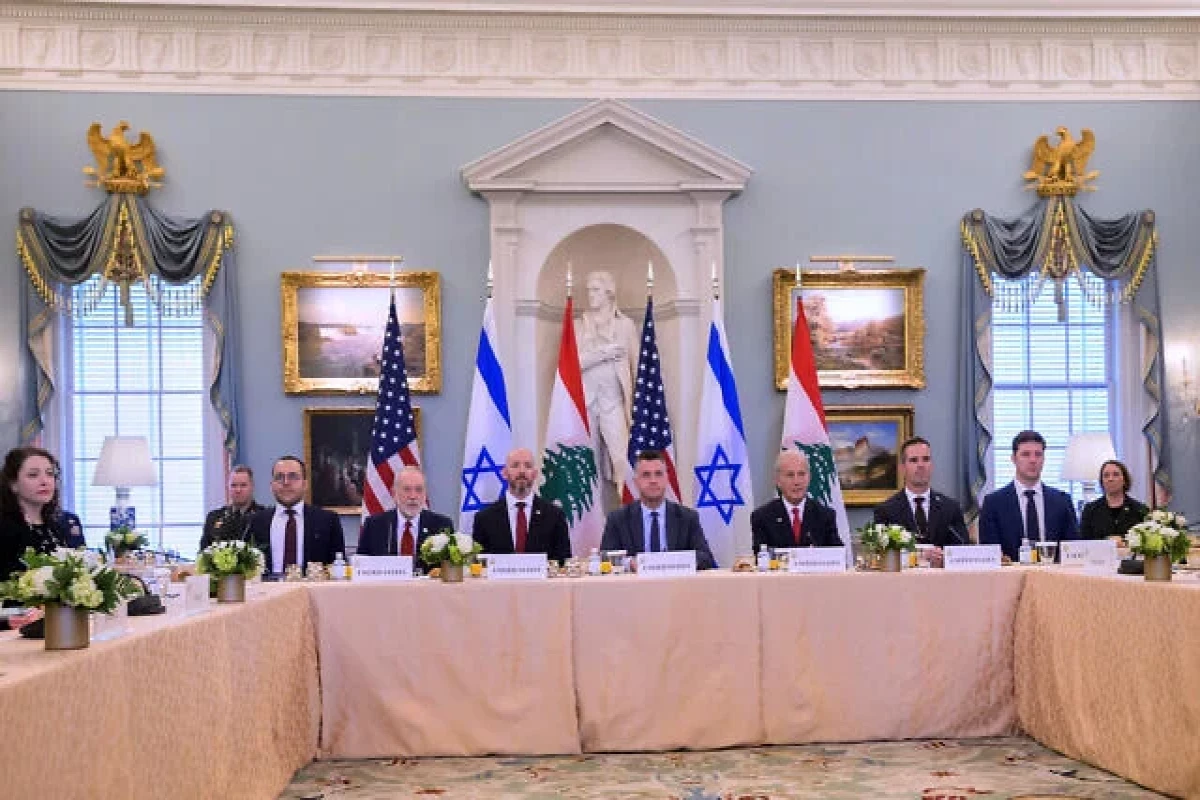
Israel, Lebanon discussing pilot scheme for handover of territory
16:37
24 June 2026
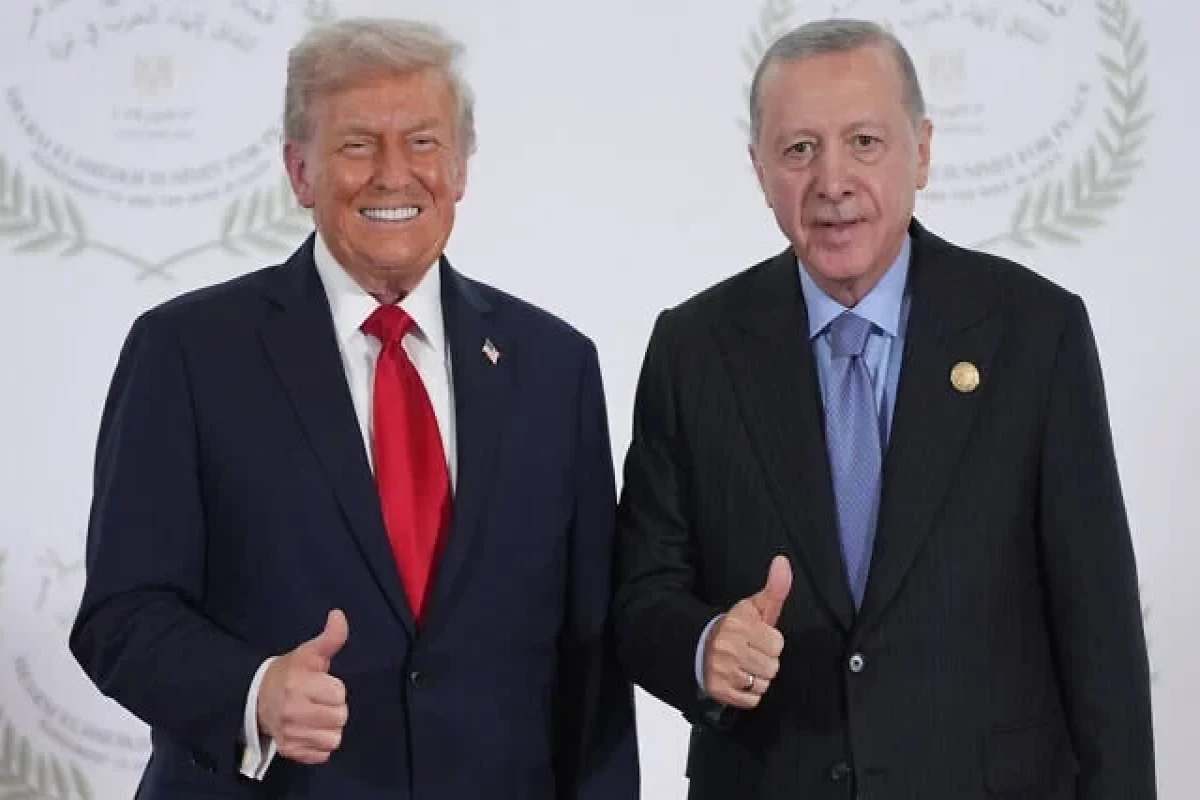
Erdoğan says one-on-one meeting with Trump likely at NATO Summit
16:23
24 June 2026
Trump: Negotiations will end immediately if Iran charges ships passing through the Strait of Hormuz
15:54
24 June 2026

NEWS FEED
Araghchi discusses US talks with Saudi foreign minister
19:50
24 June 2026
Ghalibaf: Azerbaijan-Iran relations have seen greater development over the past year
19:37
24 June 2026
Sahiba Gafarova meets Speaker of Iran's Parliament
19:34
24 June 2026
Meeting held with delegation from Pakistan National Defense University
19:10
24 June 2026
Ships start sailing through Hormuz under UN evacuation scheme, agency says
18:41
24 June 2026
Iraqi President congratulates Azerbaijani leader on Independence Day
18:37
24 June 2026
Speakers of Azerbaijani and Turkish parliaments meet, stress importance of Azerbaijan-Türkiye strategic alliance - UPDATED
18:22
24 June 2026
Ebola outbreak is still outpacing response, WHO's Tedros says
18:20
24 June 2026
Helicopter crashes in Russia's Krasnodar region
18:18
24 June 2026
Exchange of accusations erupts between Iranian and Yemeni representatives
18:13
24 June 2026
Azerbaijan’s Prime Minister meets with Speaker of Türkiye’s Grand National Assembly
18:06
24 June 2026
Azerbaijani MFA: France continues to pursue outdated and one-sided political approaches
18:05
24 June 2026
Ghalibaf: Iran learned who its friends and enemies were during the war, Azerbaijan stood by Iran
18:04
24 June 2026
CENTCOM airstrike in Syria kills senior ISIS leader
18:00
24 June 2026
Azerbaijan Railways showcases Azerbaijan’s transit and logistics potential at Transport Logistic China 2026
17:55
24 June 2026
President Ilham Aliyev received delegation led by Speaker of Iran’s Islamic Consultative Assembly
17:50
24 June 2026
Drone attempting to violate Azerbaijan’s border neutralized - PHOTO
17:27
24 June 2026
Azerbaijan extradites internationally wanted individual to Kyrgyzstan
17:11
24 June 2026
Iran-Gulf reconciliation talks expected to be held in Saudi Arabia, diplomat says
16:59
24 June 2026
Jeyhun Bayramov travels to Poland to attend Ukraine Recovery Conference
16:41
24 June 2026
Israel, Lebanon discussing pilot scheme for handover of territory
16:37
24 June 2026
Ukraine returns sailors from ship detained by Iranian security forces
16:29
24 June 2026
Erdoğan says one-on-one meeting with Trump likely at NATO Summit
16:23
24 June 2026
Trump: Negotiations will end immediately if Iran charges ships passing through the Strait of Hormuz
15:54
24 June 2026
Azerbaijan assumes chairmanship of the Parliamentary Union of OIC member states - UPDATED
15:24
24 June 2026
AZAL’s first Airbus A321neo delivered in Hamburg - PHOTO
15:23
24 June 2026
AZAL: New Airbus A321neo can be safely operated on any route - VIDEO
15:20
24 June 2026
Iran says access to attacked nuclear sites depends on final US deal
15:14
24 June 2026
Katz vows IDF won’t withdraw from south Lebanon ‘even if there’s an American demand’
15:02
24 June 2026
Media representatives visit Airbus production facility in Hamburg - PHOTO
14:50
24 June 2026
President Ilham Aliyev received delegation led by Speaker of Grand National Assembly of Türkiye
14:49
24 June 2026
Azerbaijan's insurance market grows by nearly 2% this year
14:39
24 June 2026
Erdoğan: Israel has been doing everything it can for 10 days to undermine a US-Iran agreement
14:39
24 June 2026
Lavrov: Diplomatic solution to Ukraine crisis remains possible
14:37
24 June 2026
France confirms first Ebola case in doctor returning from DR Congo mission
14:04
24 June 2026
Tehran's Mehrabad Airport to close due to Ali Khamenei's funeral ceremonies
13:52
24 June 2026
Ukraine hits two airfields and air defence systems in Crimea, including Pantsir-S1 units
13:51
24 June 2026
Drones strike major Russian gas processing plant 1,500 km from Ukraine
13:40
24 June 2026
Azercell and Samsung launch a new campaign
13:29
24 June 2026
Presidential aide: Main goal in cotton farming by 2030 is to increase average yield to 50 centners per hectare
13:27
24 June 2026
Peskov: Armenia is currently choosing its path of development
13:20
24 June 2026
AZAL: Today's Baku-Nakhchivan-Baku flights cancelled
13:09
24 June 2026
Central Bank of Azerbaijan preparing amendments to compulsory insurance regulations
13:02
24 June 2026
Azerbaijan extends special quarantine regime until October 1, 2026
12:57
24 June 2026
Sabirabad executive authority head: State Program will strengthen food security and non-oil sector growth
12:53
24 June 2026
Conference dedicated to Azerbaijan's position as a middle power held - PHOTO
12:45
24 June 2026
Azerbaijan's social reform achievements presented at UN Forum
12:43
24 June 2026
Numan Kurtulmuş: PUIC chairmanship passing to Azerbaijan is extremely important for us
12:43
24 June 2026
Azerbaijani President: We have always felt the consistent support of the OIC
12:20
24 June 2026
President Ilham Aliyev addressed participants of 20th Session of OIC Parliamentary Union Conference - UPDATED
12:15
24 June 2026


