












Baku-APA. With millions being affected by the ongoing famine and instability in Somalia, the Dadaab refugee camps in Kenya are seen by many desperate Somalis as a safe haven. But for some, the journey to Dadaab has only brought more hardship, APA.reports quoting voanews.com website
An estimated 1,300 Somalis are crossing into Kenya every single day in search of salvation from the ongoing suffering at home in Somalia. Word of sanctuary at Dadaab has spread across much of the country, prompting many to risk the long journey - often on foot - in hopes of a better life.
Many do not survive the journey, which can take more than a month. But those who do survive often find respite in the form of plentiful food, water and shelter provided by the humanitarian agencies operating in the camps.
For some, however, salvation is not so quick in coming. The massive influx of refugees over recent months has inundated the camps, straining the resources of those agencies trying to help. When refugees first arrive in Dadaab, they are provided with an initial food ration meant to last until they are officially registered and receive ration cards.
But with so many refugees arriving every day, registration can take too long, leaving people to fend for themselves while awaiting the precious designation of registered refugee.
Nurta Heirat left Baidoa with her two children in June to escape the oppression of the Islamist insurgent group al-Shabab. The family walked for 20 days to reach Dadaab, where they received their initial rations. But now, after more than two weeks in the camps, their food has run out.
Nurta returns to the UNHCR registration center in the Dagahaley camp each day in the hope of receiving her ration card but has so far had no luck.
Heirat and her children do not yet have a tent to sleep in. It was only through chance that she found her cousin Abdirashid Hajj at the camp, who has provided them with some support during the past week.
Nurta’s story is unfortunately common. The massive human pressure created by the recent Somali exodus has distribution systems at a breaking point, something humanitarian organizations are trying to address.
Rose Ogola, a spokesperson for the World Food Program at Dadaab, says "Initially when we started giving food here at the reception centers, we started by giving a 15-day ration in the hope that these people - within those 15 days - will have been registered and we can put them in the general manifest. However, because of the large influx, we realized this was not working. So since the 15th of July we changed that strategy and instead of a 15-day ration we are now giving a 21-day ration."
With refugees continuing to stream into Dadaab, it is likely the 21 days will not be enough. Some arrivals have reported waiting for up to 40 days for ration cards, leaving them helpless in the interim.
And challenges also exist once refugees are settled within the camps. Yusuf Ali and Fatumah Muhamud came from Somalia in 2008 to escape the fighting in their area. They were initially settled in the Dagahaley camp and had little problem until their 15-year-old daughter was raped. The parents reported the crime to UNHCR, who promptly arrested and jailed the man responsible.
But relatives of the attacker began to cause problems for Ali and Muhamud, demanding that they leave Dagahaley, and even attempting to kidnap their daughter. Recently, Ali and Muhamud moved their family out of Dagahaley for fear of continued reprisals from the family of the attacker. They have since been sleeping near the Dagahaley registration center in the hope of being moved to another camp or another area of Kenya.
Though refugees throughout the camps in Dadaab do find refuge from the numerous problems of Somalia, for many the hardships of the journey and the challenge of rebuilding their lives prove too costly.
Janet Ndoti-Ndila, who works for Care International as the lead psychological counselor in Dagahaley, says some of those she speaks with actually regret their decision to leave.
"Especially on the way sometimes they lose property. So that is one of the things that will make them say, ’I should not have come," she said. "We’ve lost property, I’ve lost my cattle, I’ve lost my gold. I have nothing.’"
Aid groups including Care, the World Food Program and the United Nations refugee agency, UNHCR, are scrambling to meet the needs of Dadaab’s mushrooming population, but the resources available are simply not enough. Around one half of the estimated $2 billion needed to address the east African crisis has been delivered thus far.
Shortages of critical items such as tents mean refugees receive only plastic sheets for constructing shelter on the outskirts of the camps. With humanitarian resources strained to the limit, many refugees will simply have to wait for the reprieve they have traveled hundreds of miles to find.
After Long Trek, Somali Refugees Face More Hardship in Camps

 27 July 2011 00:11 (UTC +04:00)



 İDMAN XƏBƏR
 Follow us on Telegram
 t.me/apanewsaz
 Follow us on Instagram
 Follow us on TikTok
 Follow us on Facebook
 Follow us on X
Africa
Two killed, five injured in shooting in S. Africa
16:09
 14 October 2026
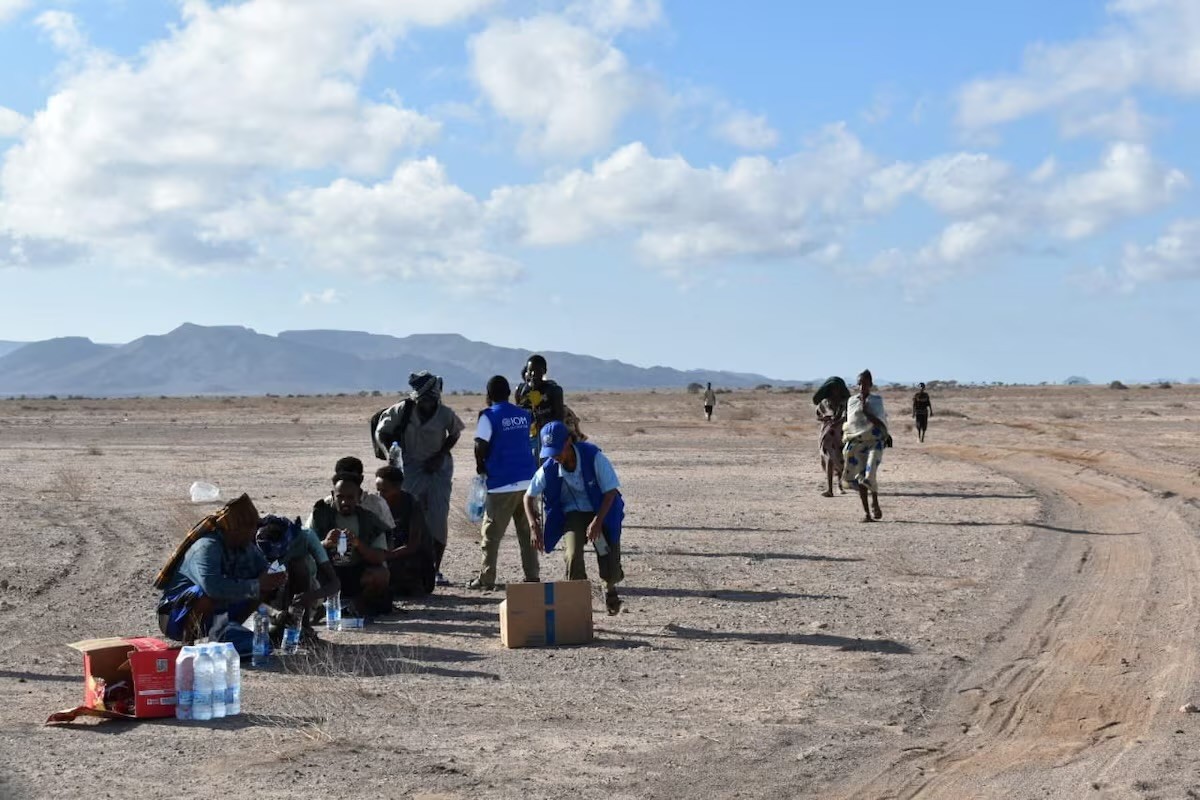
At least 139 migrants dead, including some children, after boat from Djibouti to Yemen capsizes, UN agency says
21:17
11 October 2026

Central African Republic foils planned large-scale militant attack
07:04
11 October 2026

Rebel attack kills 11 civilians in DR Congo
05:16
11 October 2026

NEWS FEED
Major indices rise across global stock markets
08:42
16 October 2026
Bitcoin price approaches $82,000
08:35
16 October 2026
Four killed, including three children, in US elementary school shooting
08:18
16 October 2026
US-Mexico trade talks stall over tariff reductions — WSJ
07:20
16 October 2026
Trump says US will not use nuclear weapons against Iran
06:46
16 October 2026
Trump claims Zelensky does not want to end war, calls for elections in Ukraine
05:43
16 October 2026
Trump calls Ukrainian strikes on Russian oil refineries a disgrace
04:33
16 October 2026
Conference League: Trabzonspor win as Ajax suffer defeat
03:14
16 October 2026
Europa League Matchday 2 round-up
01:05
16 October 2026
Train, bus collide in Channel Tunnel, injure 19
00:53
16 October 2026
China has not provided any military support to Iran since the beginning of the US operation
00:38
16 October 2026
Azerbaijani, Turkish FMs discuss relations between the two countries
00:10
16 October 2026
Azerbaijan's chairmanship of CICA extended until 2028
23:50
15 October 2026
Trump accused a Senate candidate of having ties to Muslim Brotherhood
23:27
15 October 2026
US: IRGC projectile hit civilian ship
22:50
15 October 2026
Putin: Ukrainian Armed Forces are again attempting to strike Russian oil refineries
22:23
15 October 2026
Ukraine not to be able to protect its infrastructure without PURL program — The Economist
22:10
15 October 2026
US has expanded sanctions against Iran
21:50
15 October 2026
UK provides Ukraine with additional long-range Storm Shadow missiles
21:20
15 October 2026
Video shared on President Ilham Aliyev’s social media accounts on his meeting with Amir of the State of Qatar Sheikh Tamim bin Hamad Al Thani
21:00
15 October 2026
President Ilham Aliyev’s social media accounts shared video on inauguration of Trans-Caspian Fiber-Optic Cable Line
20:55
15 October 2026
Baku hosted 7th CICA Summit, President Ilham Aliyev addressed the event - UPDATED-5
20:40
15 October 2026
Ukrainian President discusses air defense with NATO Secretary General
20:31
15 October 2026
Ukraine runs out of Patriot interceptor missiles as Zelenskyy and Trump clash over war
19:52
15 October 2026
Iran's navy says "violating" oil tanker caught fire east of Hormuz Strait
19:43
15 October 2026
White House official: Trump considering all options to keep Iran from nuclear weapon
19:37
15 October 2026
Houthis fire missiles at presidential palace in Yemen's Aden, officials say
19:00
15 October 2026
President Ilham Aliyev’s social media accounts shared video on 7th CICA Summit
18:28
15 October 2026
President Ilham Aliyev met with Amir of Qatar - UPDATED
18:12
15 October 2026
Armenian and Turkish businesspeople discuss joint cooperation
17:56
15 October 2026
Journalist Alexander Nevzorov added to Russia’s list of terrorists and extremists
17:53
15 October 2026
New head of Republic of Dagestan elected
17:46
15 October 2026
Kobakhidze visits Armenia
17:17
15 October 2026
Georgian opposition announces protest rallies
17:05
15 October 2026
Pashinyan establishes working group to resolve railway issues with Russia
17:02
15 October 2026
Pope Leo recovering as planned after lung cancer surgery, doctors say
16:58
15 October 2026
Papuashvili: EU takes disruptive stance in relations with Georgia
16:40
15 October 2026
Azerbaijan to chair CICA in 2026–2028
16:27
15 October 2026
UN considers CICA's role more important now than ever
16:26
15 October 2026
Meeting held with delegation of international and foreign national Paralympic committees
16:23
15 October 2026
President Ilham Aliyev received Türkiye’s Minister of Foreign Affairs
16:16
15 October 2026
7th CICA Summit concludes
16:12
15 October 2026
CICA Secretary General replaced
16:11
15 October 2026
Lavrov considers it appropriate to hold next "3+3" meeting in Azerbaijan
16:08
15 October 2026
Baku Declaration adopted following 7th CICA Summit
16:05
15 October 2026
Large amount of drugs prevented from being smuggled from Iran into Azerbaijan - PHOTO
16:02
15 October 2026
Signed documents exchanged between Azerbaijan and Kazakhstan
16:00
15 October 2026
Lavrov: Russia ready to participate in TRIPP, but has not yet received invitation
15:50
15 October 2026
Lavrov: Zelenskyy is challenging Trump, not interested in elections
15:47
15 October 2026
Presidents of Azerbaijan and Kazakhstan met in Baku and inaugurated Trans-Caspian Fiber-Optic Cable Line
15:44
15 October 2026


