












Baku. Rashad Suleymanov – APA. The European Parliament hosts the seminar for journalists on “The Situation of the News Media in Russia and the Eastern Partnerhsip Countries†co-organized by the European Parliament and the European Commission. From Azerbaijan, Director General of APA Group Vusala Mahirgizi, Editor-in-Chief of Ayna-Zerkalo newspaper Elchin Shikhli, Professor of Baku State University Gulu Maharramli, Director of Multimedia Information Systems Technologies Center Osman Gündüz, Vice Chairman of the Yeni Nesil Journalists Union Naila Aliyeva and reporter of the Radio Liberty Ulker Akifgizi joined the seminar, APA reports.
Today, a module “Media freedom in the Eastern Partnership countries and Russia†was held within the framework of the seminar.
Media freedom was in the focus of attention during the Euronest PA’s last session in Baku, the participants noted.
Most of the speakers called the situation in Belarus, which is the partner country, tense and also voiced ideas about the situation of freedom of speech in Azerbaijan, Armenia, Moldova and Ukraine.
Substitute Member of EP Committee on Foreign Affairs Helmut Scholz said it would be correct to express opinion about the situation in the European Union before focusing attention on the EP countries. He emphasized the situation of media in Italy and Hungary. “Indeed nowhere journalists can enjoy a freedom. European institutions want to see the Eastern Partnership countries among their partners and therefore they give much attention to media freedom and development of civil societies in those countriesâ€.
Head of Europe and Central Asia Desk, Reporters without Borders Johann Bihr focused attention on media freedom of Azerbaijan, Armenia and Georgia. He also criticized the situation in Moldova, Ukraine and Belarus. He said that pro-opposition internet resources in Azerbaijan were frequently destroyed and it could be considered as a limitation of internet freedom.
Member of EP Delegation to the EU-Russia Parliamentary Cooperation Committee Marek Henryk Migalski focused attention on the situation of freedom of speech and problems of journalists in Russia. He said the situation was worse in Moldova and Ukraine and critical in Belarus. Touching upon the situation in the Caucasus region, Migalski said the situation of media in Georgia was better than Azerbaijan and Armenia. However one of the members of Georgian delegation opposed his opinion. He said Georgia was using different methods to prevent media: they don’t give information, despite “transparent organizations†were established for obtaining government news by the public community, they don’t give information. The journalists are not killed and pressurized, but they are marginalized, they can’t get the facts in Georgia. According to the Georgian journalist, this year two photographers were convicted of spying for Russia. Parliamentary elections are coming on in Georgia and cameras are not allowed to some events. The journalist said that Migalski’s opinion about Georgia didn’t reflect truth. There were problems with opposition’s TV campaign. The situation is under the control of the government.
Migalski told the Georgian journalist that it might be an opinion of the pro-opposition journalist, but he wouldn’t change his opinion.
Ukrainian journalists said that there were forces alternative to real opposition and alternative opposition are not allowed to use TV air. Only constructive opposition can use this opportunity.
Chairman of the Azerbaijan Journalists Union Elchin Shikhli pointed out that the development of media in post-soviet countries is same. Speaking about the economic situation in Azerbaijani media, Shikhli said that advertising market is in low level in the country, which worsens the situation of print media and therefore media organizations are searching for ways out. “There can not be a political independence without the economic oneâ€.
There is no obstacle to internet in the country, Shikhli said. He criticized the amendments in the law on obtaining information saying that it could terminate obtaining information.
Osman Gündüz said that there were technical and professional problems with information security in Azerbaijan.
Commissioner responsible for Enlargement and European Neighborhood Policy Štefan Füle joining the discussions focused his attention on the issue of Belarus and Moldova. He noted that ensuring media freedom in the Eastern Partnership countries is the principle of EU and EP. They are working for integration of these values into the Eastern Partnership countries and offering their assistance.
Füle said IT license legalization in Moldova caused serious concern and Moldovan government has been elaborating the draft law on IT license and internet. He noted that Georgia also elaborates a new law on media. Füle called Russia as a dangerous country for the journalists and said journalists of Ukraine also faced serious problems.
Füle also spoke about Azerbaijan touching upon blackmailing the journalist and expressing concerns over non-existence of defamation law.
In her speech, Director General of APA Vusala Mahirgizi touched on the licensing of internet in Moldova. She said that this issue was serious and noted that the European Parliament and the European Commission had to work on preventing this problem: “There were negotiations on this issue in Azerbaijan and they are finished. The government announced its support to the free internet. But the licensing of internet in one county can stimulate the same process in others. That’s why the issue must be seriously kept in attentionâ€.
Mahirgizi spoke about the amendments made to the law on “Obtaining information†and noted that these amendments were adopted after long discussions: “This law was adopted after the Venice Commission’s recommendations and serious debates held with the participation of the OSCE. The law is enough democratic and effectiveâ€.
Mahirgizi noted the ongoing discussions in the civil society and media due to the amendments. She noted that the parliamentarians substantiate these with the similar laws in the European countries.
She spoke about the internet security and commented on the opinion of Reporters Without Borders representative. She noted that the internet was rapidly developing in Azerbaijan and there was a large advertisement flow to internet media. But there are problems on information, especially the safety of the internet resources: “I don’t think that these problems are related to the political position of the internet resources. The internet resources of several state organizations were hacked within several hours several months ago. Anyway, it is impossible to think that this fact was related to the government. The issue is related to the application of new IT. Representatives of the European Commission have stated that the grants will be allocated for developing online-media in the Eastern Partnership countries. In my opinion, it would be a good support to allocate grants for strengthening of technical supply in these countries in the future.
Füle rejoined the discussions and said that the Eastern Partnership project will defend the human rights, freedom of speech and press in the participating countries: “Sometimes I hear the talks that why the European Union is satisfied only with the statements and doesn’t demonstrate the firm position? But this partnership is mutual. That’s why it is possible to give recommendations in this sphere by observing the basic principles of the Eastern Partnership. We believe that these countries will fulfill their commitments while joining the Eastern Partnership. The governments of these countries understand that fulfillment of these commitments, establishment of civil societies and ensuring freedom of media move these countries to the EU step-by-step. We support the reforms implemented in every participating country.
Füle said that sometimes the problem of media freedom is related to the professional problems of the journalists. There are several issues in what the journalists show themselves as nonprofessionals: “All issues must be researched. It is unacceptable to assess any small incident as an issue against the freedom of speechâ€.
Füle also spoke about Azerbaijan: “After decision to hold the Eurovision in Baku, we told the Azerbaijani government that the country would be in the focus of attention. Azerbaijan had a chance in that period to show that it is open and democratic country. I have read several political writings and talked with the journalists. There are certain problems in the country. But the European Parliament works on continuing the debates with Azerbaijanâ€.
Füle noted his visit to Moldova’s capital Chisinau yesterday and said that he met and hold discussions with the representatives of the Eastern Partnership participating states: “I needed to hold such discussion after the European Parliament’s last resolution. We invited the representatives of the partner countries. Azerbaijan was represented by its ambassador to Moldovaâ€.
Füle underlined that the Council of Europe and the European Parliament would hold discussions with Azerbaijan in Strasbourg next week. He said that these negotiations would focus on effectiveness of cooperation with the European institutes for Azerbaijanâ€.
Füle added that the European Commission prepared a program on prevention of limitation of internet access. This program will support the development of social networks and new media.
Media Freedom in the Eastern Partnership countries and Russia discussed in European Parliament - PHOTO

 07 June 2012 14:12 (UTC +04:00)



 İDMAN XƏBƏR
 Follow us on Telegram
 t.me/apanewsaz
 Follow us on Instagram
 Follow us on TikTok
 Follow us on Facebook
 Follow us on X
Media
Azerbaijani journalists’ congress postponed by one day
12:59
 7 October 2026
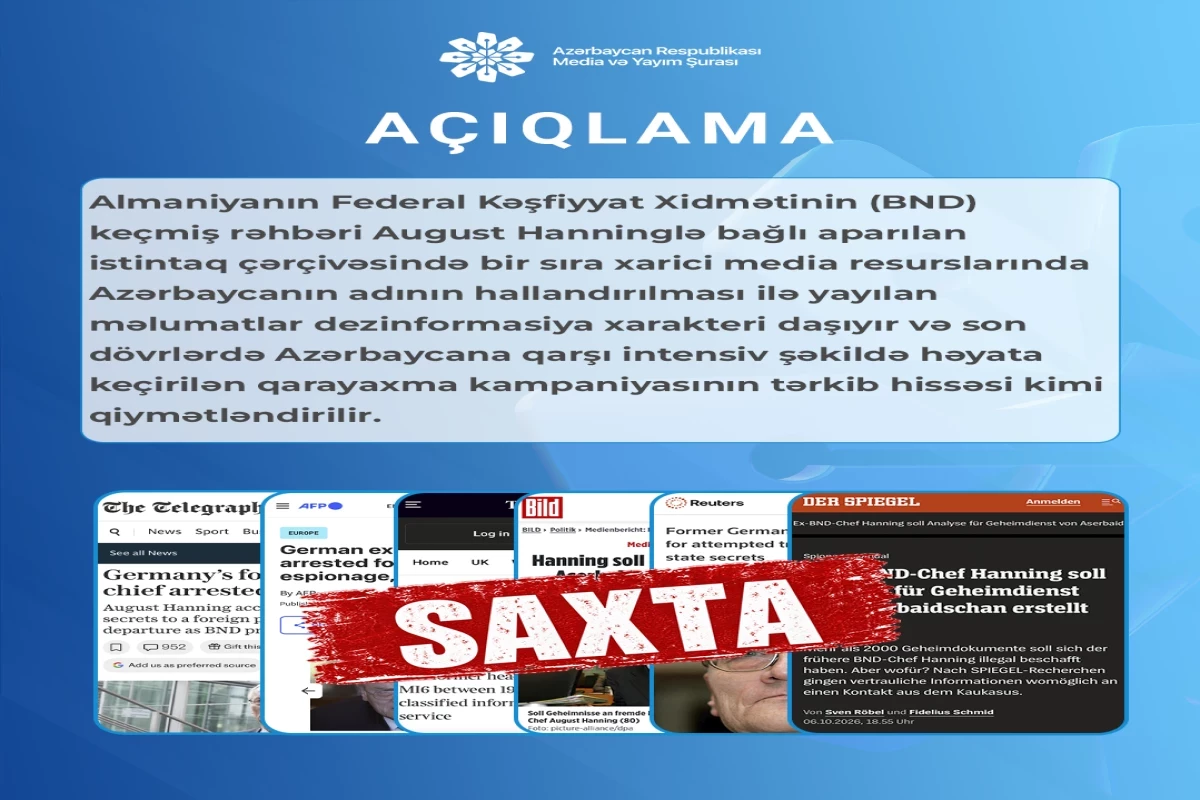
Media and Broadcasting Council: Linking Azerbaijan to former German intelligence chief is disinformation
10:25
7 October 2026
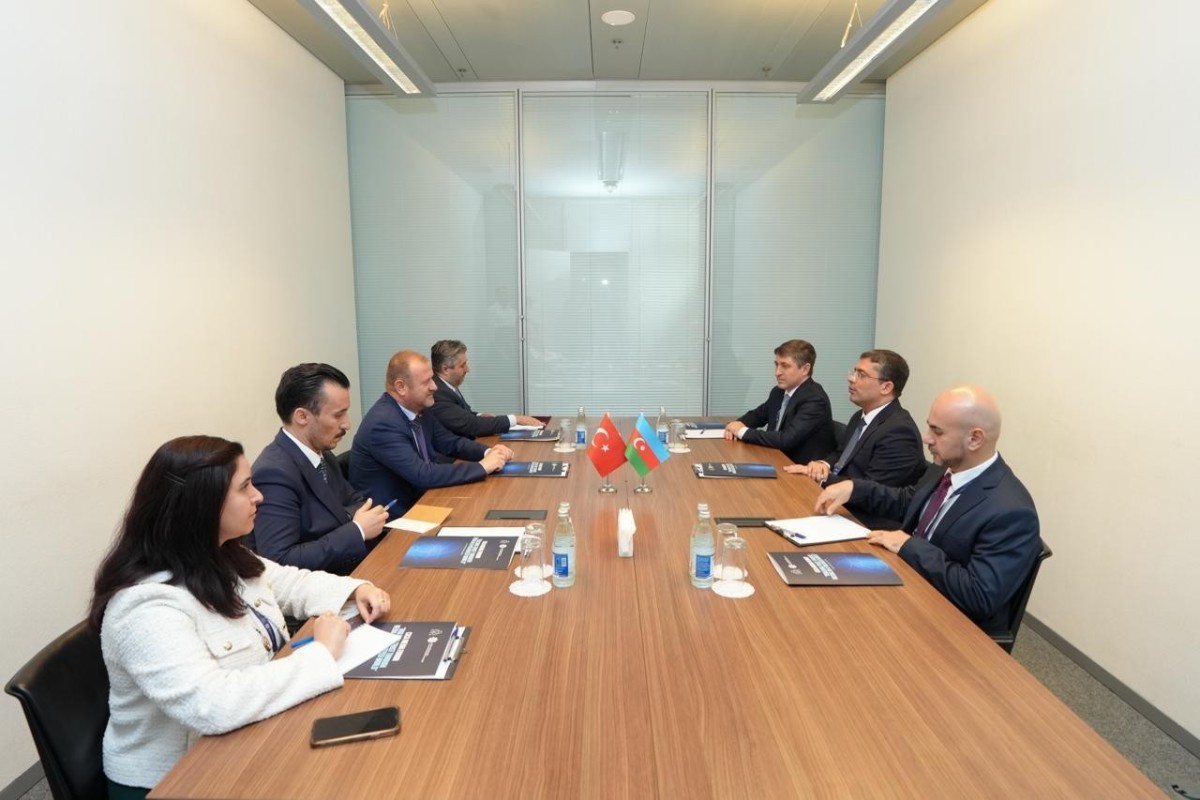
Ahmad Ismayilov meets RTÜK chairman
16:40
1 October 2026
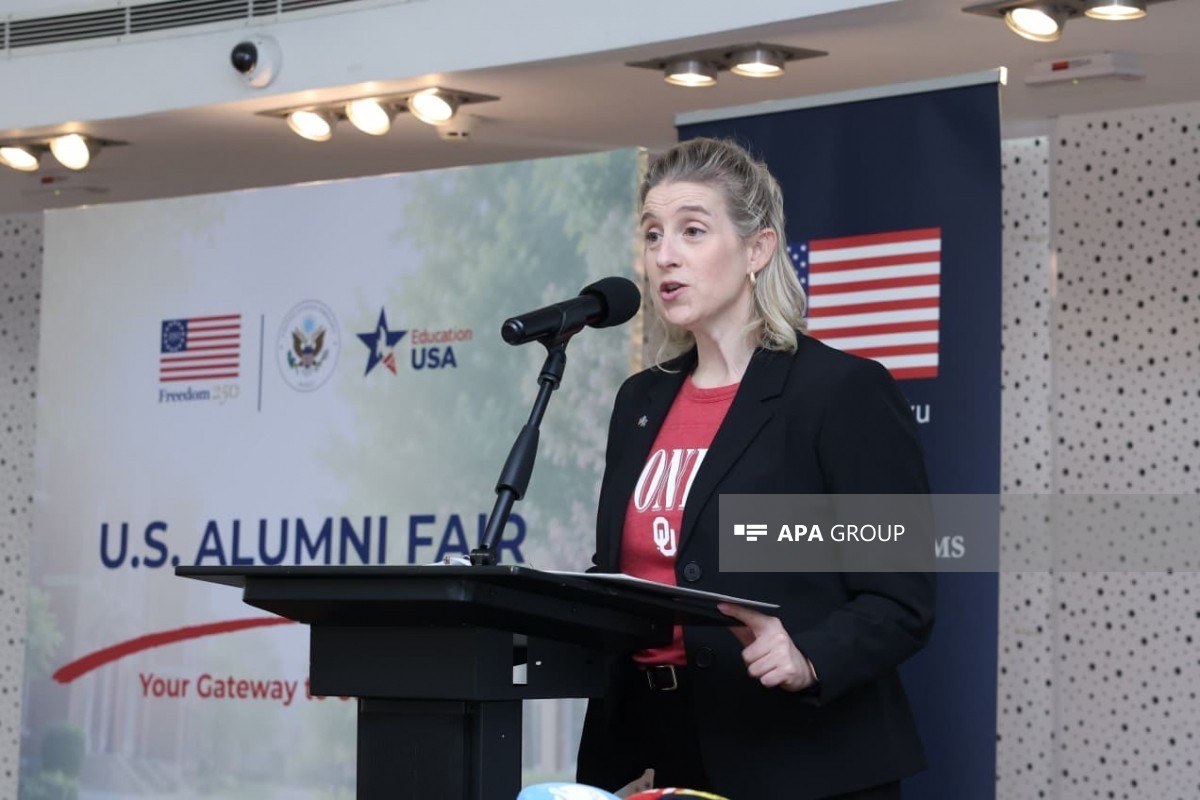
US Embassy Chargé d’Affaires meets with representatives of leading media outlets in Baku
16:27
28 September 2026

NEWS FEED
Azerbaijani judoka Ushangi Kokauri wins silver at World Judo Championships in Baku
19:22
10 October 2026
Airport in the capital of Saudi Arabia has been attacked again, officials say
18:44
10 October 2026
Isaias brings flood, tornado threats across US Southeast after Florida landfall
18:13
10 October 2026
Former Moldovan Prime Minister: Armenia should share information on missing persons
17:28
10 October 2026
Iranian army maintains over 50 units on border, identifies possible enemy entry points
17:08
10 October 2026
President Ilham Aliyev and Head of Chechen Republic of Russia have lunch together
16:34
10 October 2026
President Ilham Aliyev and Head of Chechen Republic of Russia visited Baku White City
16:06
10 October 2026
Ramzan Kadyrov once again offers condolences over Baku-Grozny plane crash
15:53
10 October 2026
President Ilham Aliyev received Head of Chechen Republic of Russia
15:47
10 October 2026
Participants of IV International Conference on Missing Persons Complete Visit to Karabakh
15:17
10 October 2026
Russian glide bomb attack on Zaporizhzhia kills at least 15 people - PHOTO
15:08
10 October 2026
Moldovan Ambassador: It is encouraging to see life being revived in Khojaly
15:06
10 October 2026
International travelers conclude visit to Karabakh and Eastern Zangezur - PHOTO
15:04
10 October 2026
Serviceman dies from gunshot wound in Armenia
14:08
10 October 2026
Russia Suspends Imports of Georgian Wine, Mineral Water and Other Products
14:01
10 October 2026
PM Shehbaz Sharif calls President Ilham Aliyev
13:58
10 October 2026
Kremlin says Putin relayed Iran's position on resolving conflict to Trump
13:30
10 October 2026
Azerbaijan’s revenue from cotton exports rises by more than 23%
13:00
10 October 2026
Pezeshkian: Regional diplomacy must become a tool to prevent expansion of conflict
12:59
10 October 2026
Five shot dead at residence in Georgia's Douglas, police says
12:48
10 October 2026
Russia made no concessions on Ukraine in exchange for diesel deal
12:35
10 October 2026
Ukraine strikes oil terminal, railway bridge and two vessels in Rostov region
12:34
10 October 2026
International travelers familiarize themselves with work carried out on Horadiz-Aghband highway - PHOTO - UPDATED
12:32
10 October 2026
Ambassador: No force can harm Azerbaijan-Türkiye brotherly relations, ties will further develop
12:15
10 October 2026
Kürşad Zorlu: No provocation aimed at undermining Türkiye-Azerbaijan relations will succeed
11:59
10 October 2026
Participants of international conference on missing persons visit Lachin - PHOTO
11:35
10 October 2026
Death toll from Russian strike on Zaporizhzhia rises to 8 - UPDATED
11:33
10 October 2026
Investment in fixed capital in Azerbaijan rises by nearly 11%
11:26
10 October 2026
American traveler: Restoration work in Karabakh is amazing
11:15
10 October 2026
Milli Majlis MPs appeal to US senators and members of House of Representatives
11:06
10 October 2026
Composition of State Commission on delimitation and demarcation of Azerbaijan-Georgia border amended
10:58
10 October 2026
Judges appointed to several courts of first instance
10:57
10 October 2026
Talks between Ukraine, Europe and the United States in Miami ended early
10:48
10 October 2026
JetSMART flight JA850 declares emergency and turns back toward Santiago
10:46
10 October 2026
Azerbaijani oil sells for $130.81
10:44
10 October 2026
American traveler: Large-scale construction underway toward Zangezur corridor
10:30
10 October 2026
United States threatened to leave Ukraine without intelligence over strikes on Russian oil refineries
10:11
10 October 2026
Latest on crypto market: Bitcoin rises
09:58
10 October 2026
Health Ministry: Average life expectancy in Azerbaijan exceeds 77 years
09:37
10 October 2026
Global stock market indices
09:35
10 October 2026
Oil prices rise on global markets
09:15
10 October 2026
Trump threatens Iran with destruction unless it accepts US terms
08:47
10 October 2026
Trump says he discussed resolution of Armenia-Azerbaijan conflict with Putin
07:48
10 October 2026
Ushakov: Timing of next Putin-Trump meeting has not been discussed
07:22
10 October 2026
Witkoff: Ukraine’s energy security and post-war recovery discussed in Miami
05:25
10 October 2026
Zelensky criticizes Trump over diesel deal with Putin amid Ukraine-US talks
03:19
10 October 2026
US talks on Ukraine address European security architecture — media
02:51
10 October 2026
Ushakov: Putin, Trump did not discuss new meeting
02:39
10 October 2026
Zelenskyy: Ukrainian negotiating team used as “smokescreen” amid US-Russia diesel deal
01:58
10 October 2026
Ukrainian President: Letting Russia sell fuel means investing in its war
01:46
10 October 2026


