





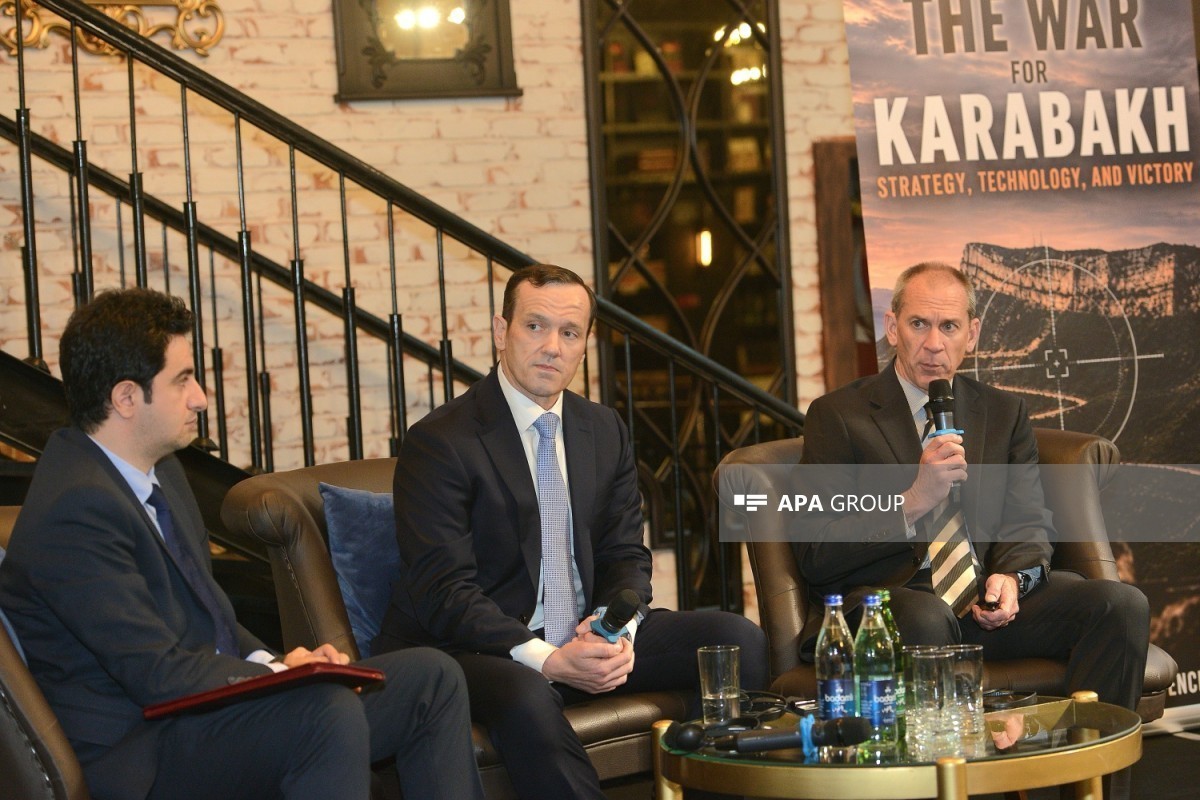


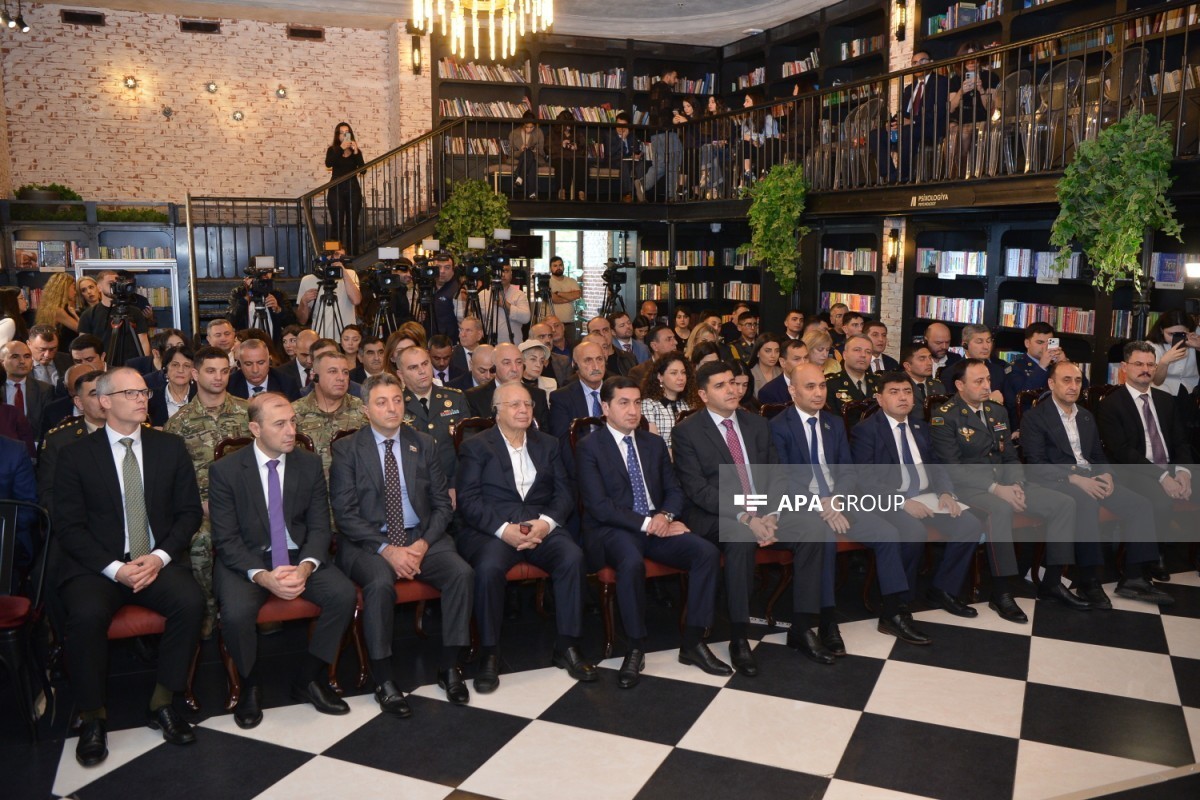
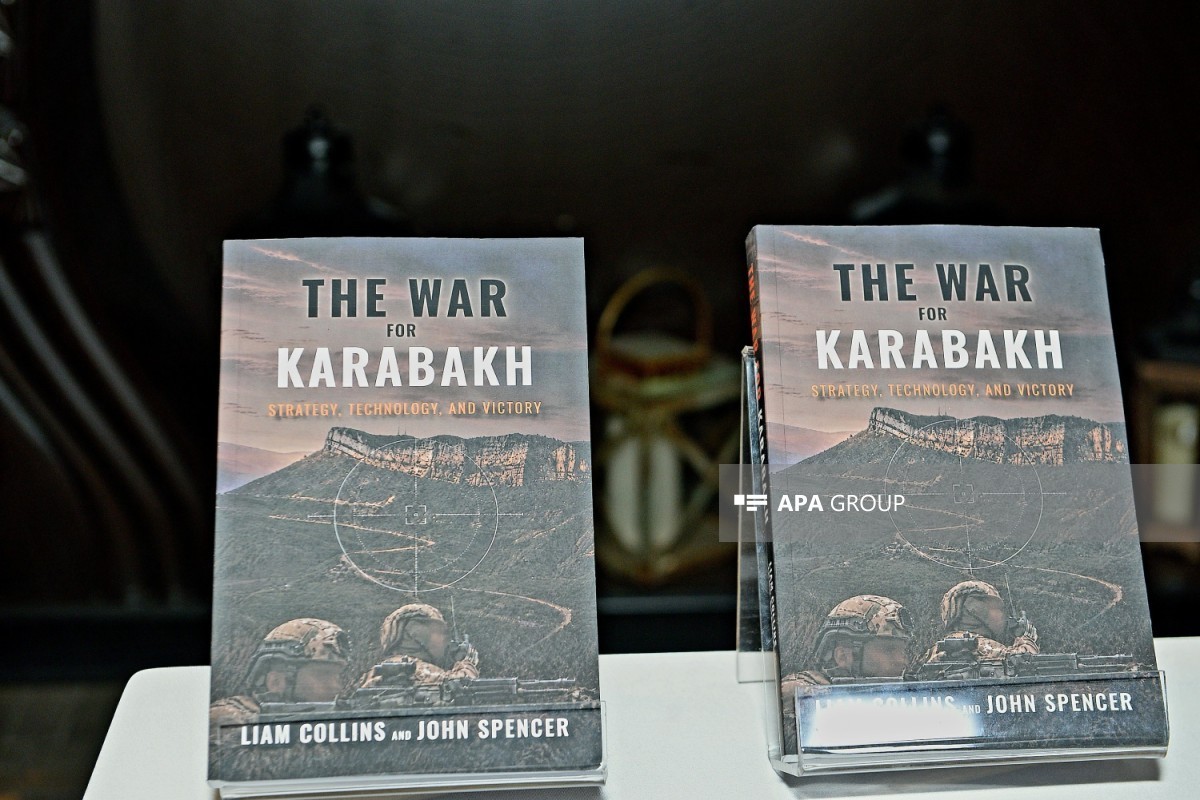
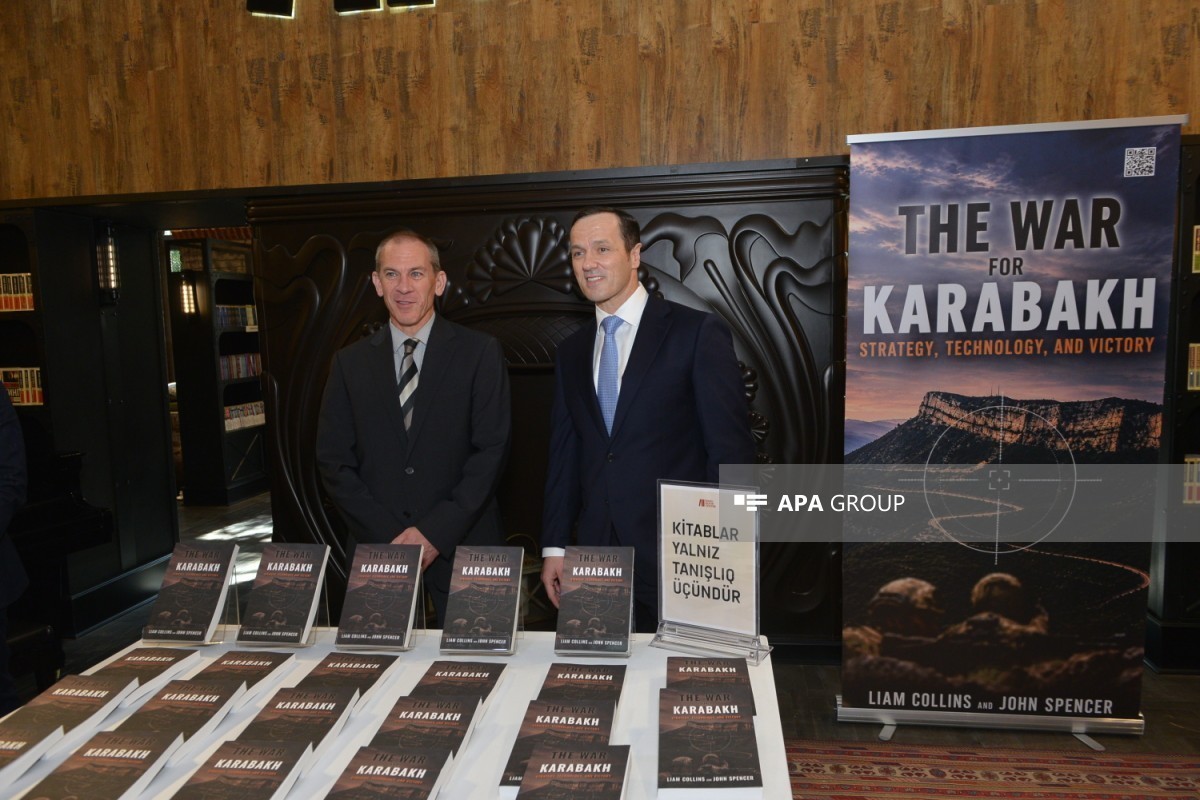
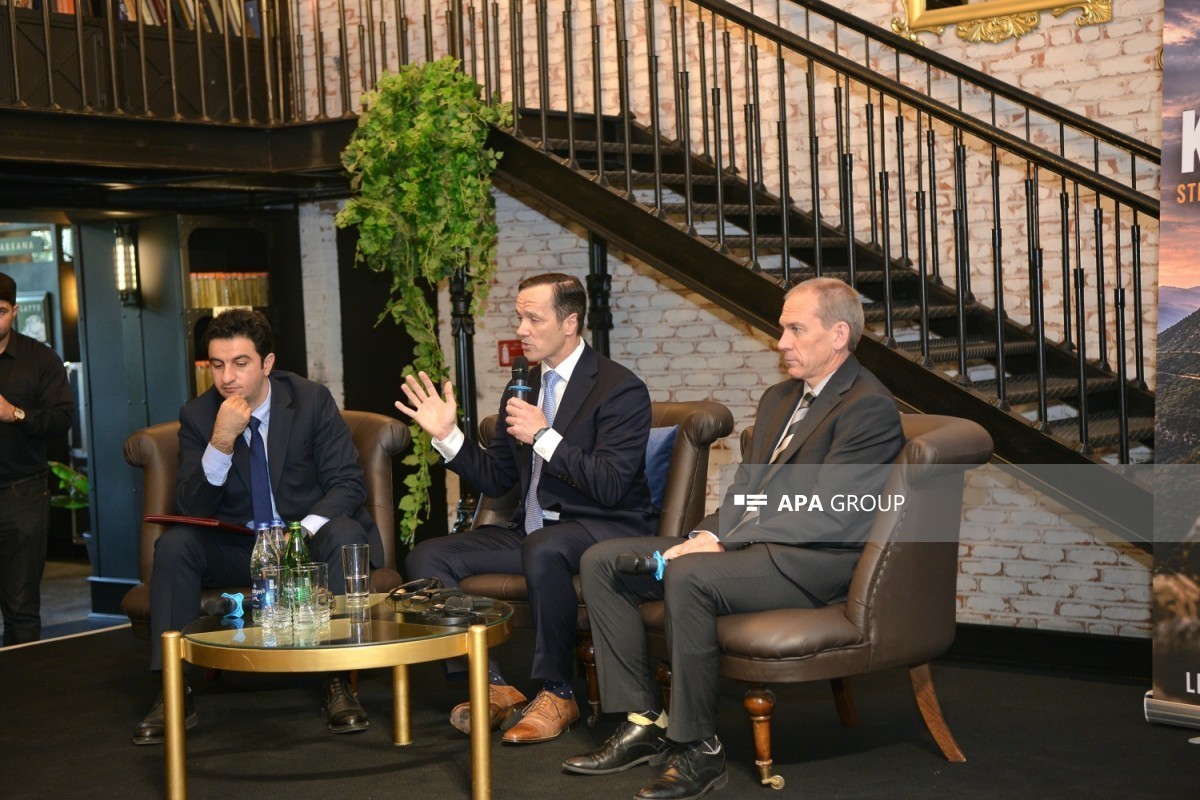
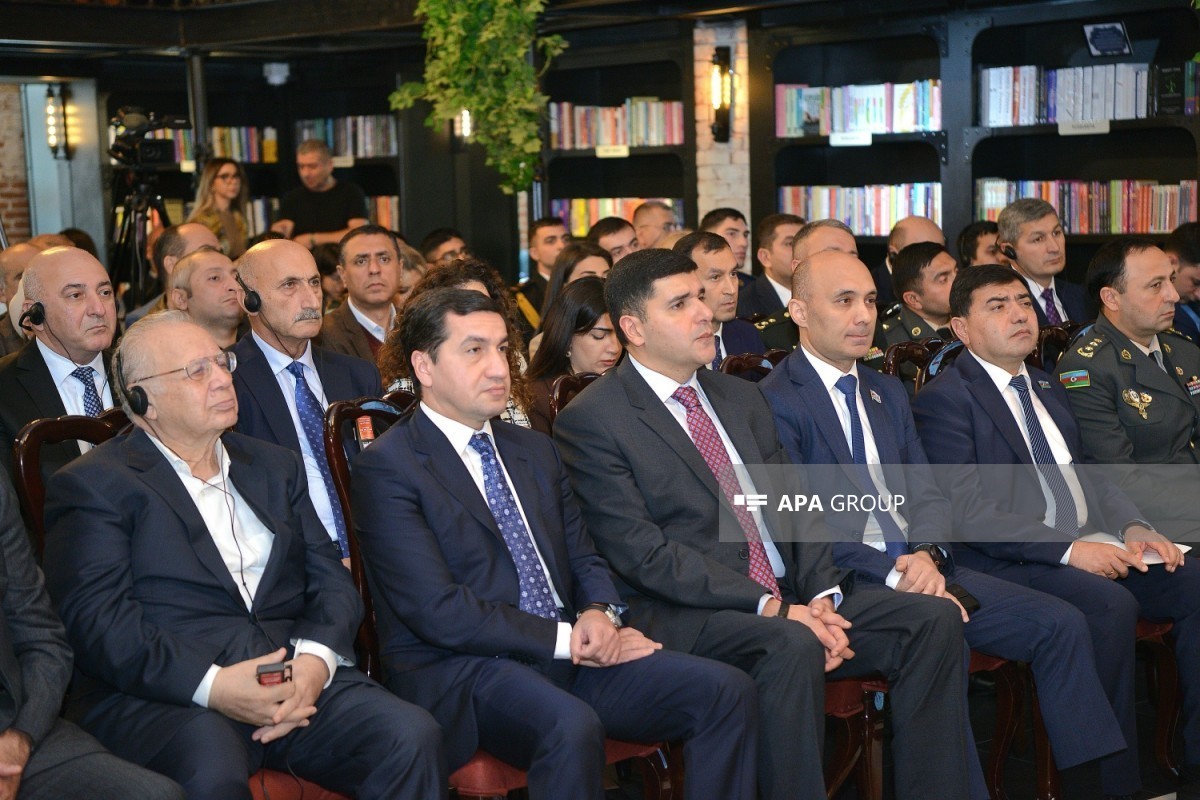
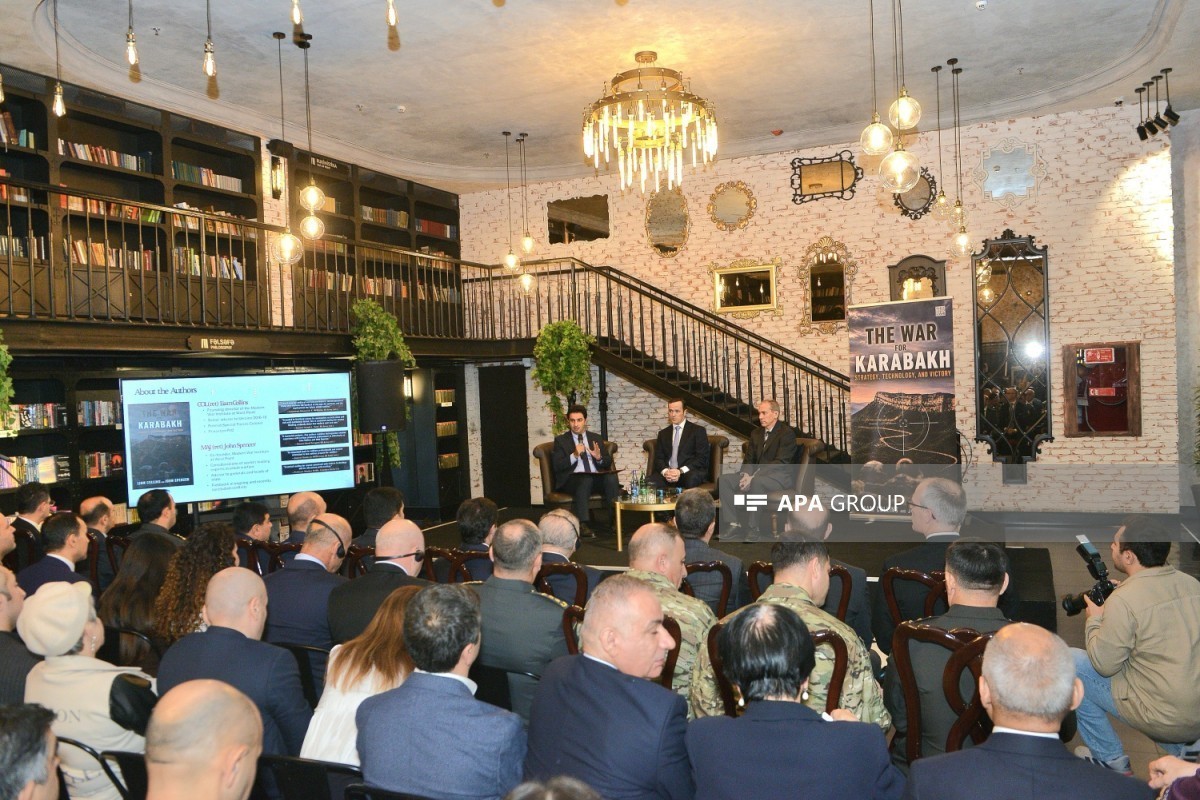
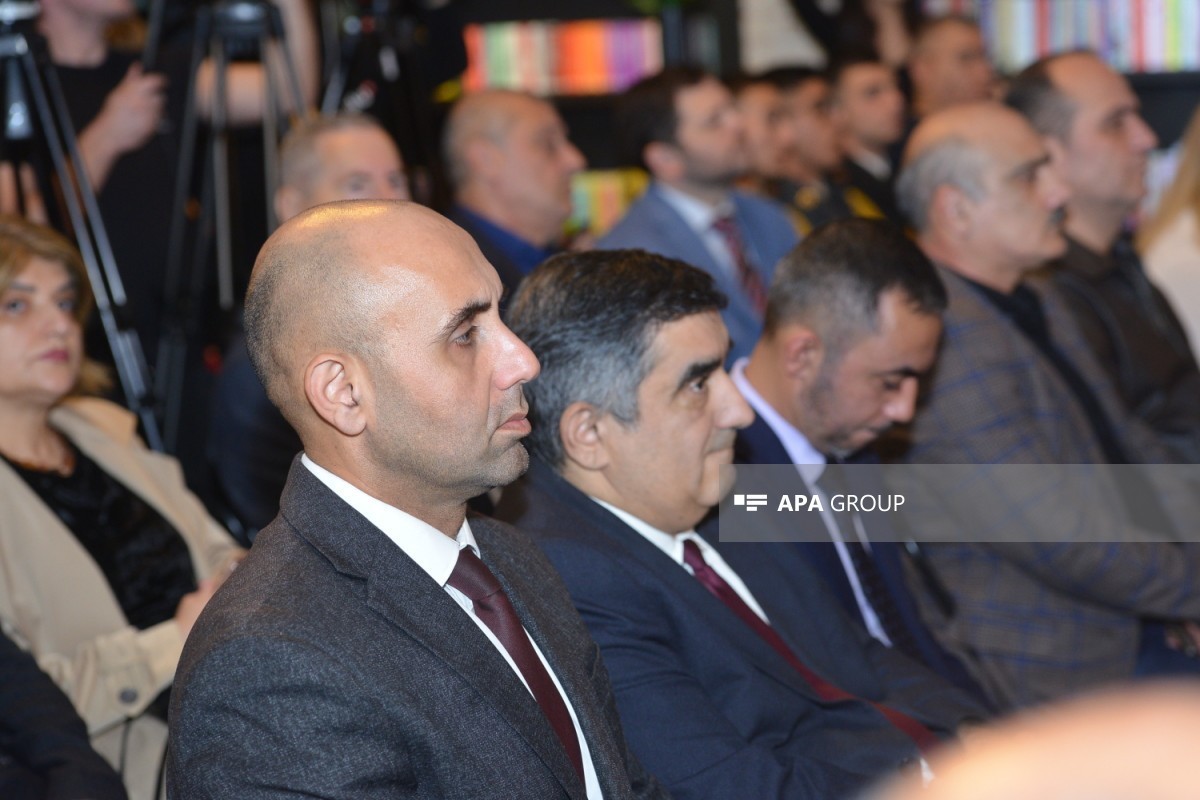
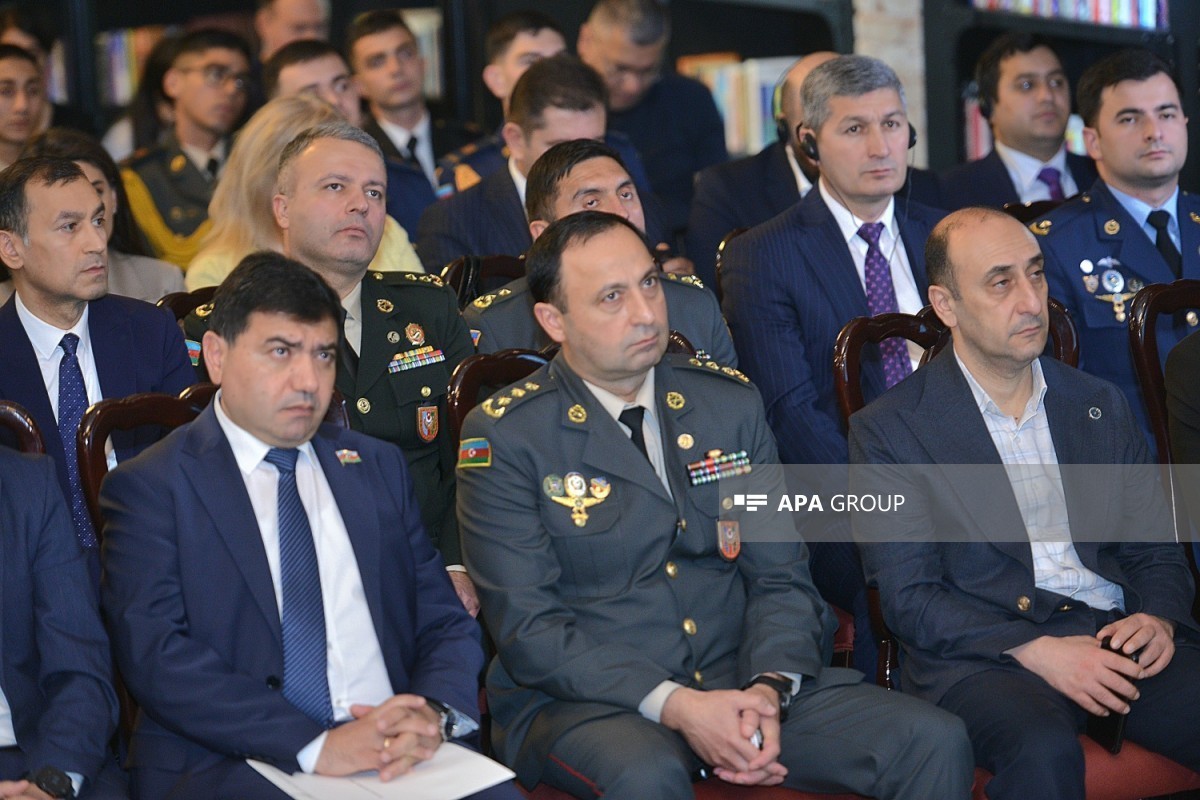
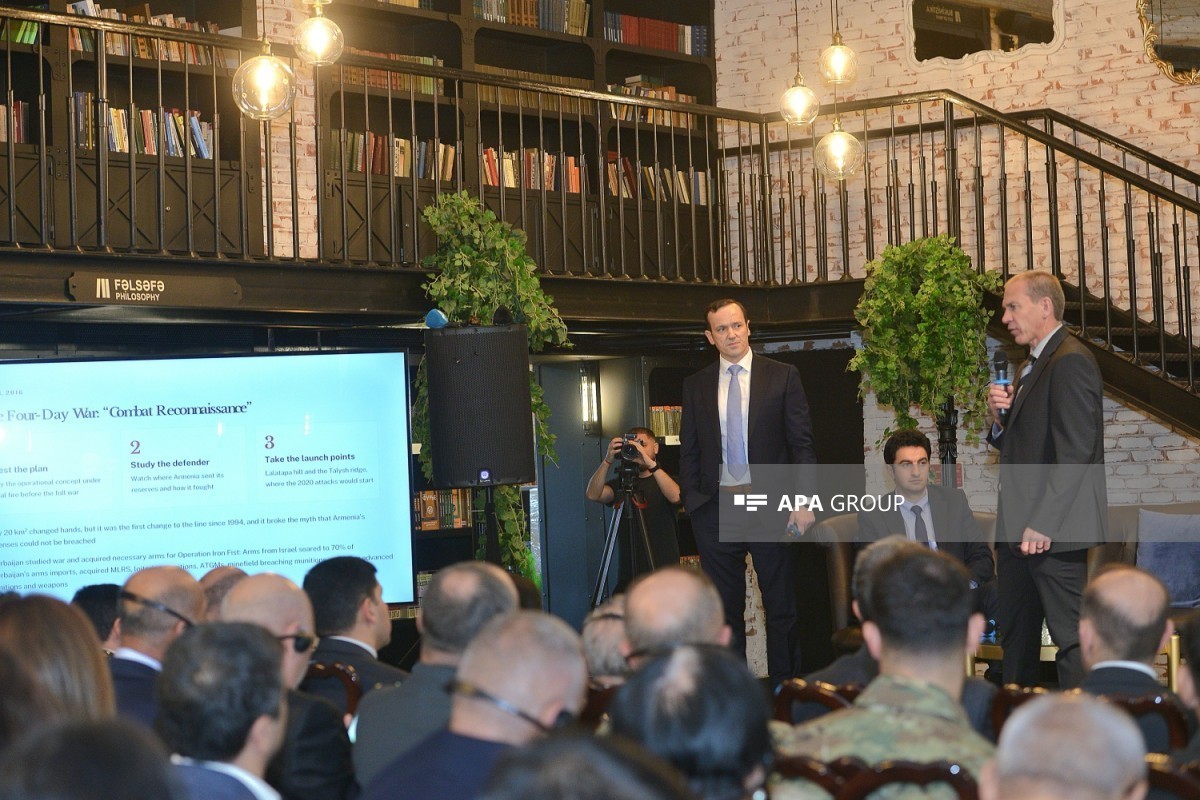
A presentation ceremony for the book “The War for Karabakh: Strategy, Technology, and Victory,” authored by retired US Army Colonel Liam Collins and Major John Spencer, was held in Baku, jointly organized by the Center for Analysis of International Relations and Multiculturalism (CAIRM) and the Baku Book Center, APA reports.
Along with the presentation of the book, the event featured extensive discussions on the military-strategic characteristics of Azerbaijan's victory in the 44-day Patriotic War, its impact on the nature of modern warfare, and the factors of national power behind the victory.
The authors provided detailed information about the preparation process, the main areas of research, and their findings. They noted that the book dedicated to Azerbaijan's victory in the 44-day Patriotic War had been prepared over approximately two years.
Liam Collins stated that Azerbaijan's victory in the 44-day Patriotic War was not solely related to the use of unmanned aerial vehicles (UAVs), but was the result of a long-term strategy implemented over more than 20 years.
“Undoubtedly, unmanned aerial vehicles played their role. However, victory in the war was the result of implementing a strategy pursued for more than 20 years aimed at liberating Karabakh, as well as building, developing, and employing armed forces capable of accomplishing this mission,” Collins emphasized.
John Spencer noted that wars are won not by technology but by the human factor, and that the 44-day Patriotic War was no exception. He said that during their research, the authors interviewed numerous participants in military operations, ranging from division commanders to individual soldiers, and visited the areas where the battles took place.
“We have visited the region more than six times. I made my first visit in 2021 to study the Battle of Shusha. This was the decisive battle that secured Azerbaijan's victory. We subsequently returned five more times to other battlefields discussed in the book. We wanted to better understand the terrain and the decisions made during those battles,” Spencer said.
According to him, particular attention was also paid to visualizing the battles on maps during the preparation of the book. The authors sought to examine each battle not in isolation, but in the context of how operations taking place simultaneously in different directions influenced the overall course of the war. Spencer emphasized that the outcome of wars is determined not by technology, but by decisions made by people under difficult circumstances.
“Wars are not won by technology. The key issue is making the right decisions under stress, often without knowing what the outcome of your decision will be,” he noted.
The expert added that during their research, they found that some of Armenia's defensive positions were sufficiently strong and should have provided certain advantages. Nevertheless, the outcome of the battles was determined by human effort and the decisions made.
A media briefing with the participation of the authors was held following the presentation ceremony.
It should be noted that the publication is one of the first large-scale and systematic military studies prepared abroad on Azerbaijan's victory in the 44-day war. The involvement of specialists from the West Point Military Academy, which specializes in military studies, further enhances the scientific and analytical significance of the work.
The book covers a broad historical period, from the historical roots of the Karabakh conflict and the First Karabakh War to Azerbaijan's victory in the 44-day Patriotic War and subsequent military-political developments. Separate sections analyze Azerbaijan's strategy for preparing for a large-scale war (Grand Strategy), Operation Iron Fist and the main stages of the 44-day Patriotic War, military operations carried out by the Azerbaijani Army in the directions of Hadrut, Amirvarli, Fuzuli, Zangilan and Gubadli districts, the battles for Shusha, as well as the anti-terrorist measures carried out in 2023.
One of the notable aspects of the book is its critical analysis of the widespread view that Azerbaijan's victory was solely attributable to the use of unmanned aerial vehicles (UAVs). The authors believe that a broader combination of factors lay behind the victory, including national power, state-building, economic development, sound military planning, and the adoption of modern combat concepts.
The book identifies Azerbaijan's thorough mastery of the concept of “modern combat systems employment” as one of the main reasons for its military success. This concept encompasses the concealment of positions, dispersion of forces, effective use of small-unit maneuver capabilities, suppression of enemy fire assets, and coordination of joint operations among different branches of the armed forces.
The authors' main conclusion is that military victory is not achieved solely on the battlefield. Such a victory is underpinned by important factors including national power, consistent state-building and military development policies, economic potential, an effective communication strategy, and ideological activities.
The book particularly emphasizes the role of Azerbaijan's Commander-in-Chief Ilham Aliyev in the strategic management of military operations, his active communication efforts domestically and internationally, and his fight against disinformation.
The book notes that the foundations of this victory were laid through years of state-building policies, economic development, the creation of a strong army, technological modernization, military training, effective governance, and national mobilization. In other words, the results achieved on the battlefield are presented as the logical outcome of national potential and systematic preparation developed in the years preceding the war.
During the presentation, particular attention was also paid to illustrating specific military operations on maps and analyzing the course of the battles. In particular, the planning of operations to liberate Hadrut and Shusha, the use of terrain, unit movement routes, maneuver capabilities, and decisions made under combat conditions were examined from the perspective of modern urban warfare.
According to the authors' approach, the Hadrut and Shusha operations have particular military-tactical significance in terms of urban combat. The protection of civilian infrastructure and residential areas, proper deployment of forces, and the use of terrain and small-unit maneuver capabilities during urban fighting are assessed as important characteristics of these operations.
The book notes that, in this regard, Azerbaijan's operations to liberate Hadrut and Shusha also represent interesting examples for comparison with urban combat in other modern wars. Large-scale destruction and the devastation of infrastructure have been observed during Israeli military operations in the Gaza Strip, US military operations in Iraq, the Vietnam War, and Russian army attacks on cities in Ukraine. The distinguishing feature of the Shusha and Hadrut operations, however, was the liberation of cities and settlements under difficult military conditions without exposing them to large-scale destruction. This approach demonstrates that urban warfare is not only about achieving military superiority, but also about responsible operational planning regarding territory, infrastructure, and the civilian environment.
The authors emphasize that Azerbaijan's military success was not limited to technological superiority, and that combining technology with appropriate military doctrine, operational planning, and troop coordination played a decisive role.
During the preparation of the book, nearly 100 military and civilian specialists were interviewed. The authors also visited the areas where the main battles took place and conducted on-site research. This approach made it possible to examine military operations not only on the basis of official information and theoretical analysis, but also by taking into account the experiences of participants and the characteristics of the terrain.
Another major conclusion reached by the authors is that the outcome of war is not determined solely by the balance of military forces on the front line. A state's economic capabilities, political will, institutional capacity, information policy, national unity, and long-term strategic objectives also directly influence the outcome of a war.
In this sense, the book presents Azerbaijan's victory in the Patriotic War as an example of mobilizing various components of national power within a unified strategy in the modern era.
It should be recalled that even before the publication of the book, the authors had conducted detailed research into the battles for Hadrut and Shusha during the 44-day war and published articles on the subject.
One of the book's authors, retired Colonel Liam Collins, is the director of the Madison Policy Forum, a senior fellow with the Future of Security Program at New America, and a distinguished military fellow at the Middle East Institute. He served in the US Army Special Forces and retired with the rank of colonel. From 2016 to 2018, he served as executive assistant to the US senior defense adviser for Ukraine. He holds a master's degree in public administration and a PhD from Princeton University.
The other author, retired Major John Spencer, is the chair of urban warfare studies at the Modern War Institute at West Point Military Academy and co-director of the Urban Warfare Project. He served in the US Army for more than 25 years and participated in combat operations in Iraq on two occasions. He is considered one of the world's leading experts on urban warfare.






 Follow us on Telegram
 t.me/apanewsaz
 Follow us on Instagram
 Follow us on TikTok
 Follow us on Facebook
 Follow us on X