










Istanbul. Mayis Alizadeh – APA. Secretary of the Council of Turkic-speaking Countries, Ambassador Halil Akinci gives an interview to APA
- Please accept our best wishes on your new post. This appointment is caused by a necessity, isn’t it?
- The Turkic countries held 10 summits in the past 18 years. First summit was held in 1992 in Ankara and second one in 1994 in Istanbul. The united organization was always on agenda. We decided to establish an organization in Tashkent in 1995, to systematize our activity, but this decision was not fulfilled. According to that decision, the organization should have headquarters in the country where it would hold its next summit. We passed a decision in Nakhchivan last year to establish the Council of Cooperation of the Turkic-speaking countries. This Council contains the councils of heads of states, foreign ministers, veteran officials, elders and secretariat. It is a full international organization with its program and charter.
-Turkey was first to recognize independence of the friendly countries separated from the USSR, but relations with those countries are not in a necessary level. Do you think so?
- What result do you expect? We are specking about the countries, which are separated from each other for thousand years. Azerbaijan, which is closest one to us, was under the Iranian hegemony until 1822 and then under the Russian hegemony. After the short period of independence in 1918-20, it became under the Soviet hegemony. The Central Asia is geographically far from us and it was broken off long ago. Is it possible to reach a thousand-year distance in 18 years? It demands endurance. All of these countries are independent now. They are making decisions about them. We don’t think to unite these countries as a single state. We speak about the cooperation between these countries.
- We realized that there is a question more about cultural and economic cooperation.
- Istanbul Declaration considers not only the cultural-economic cooperation, but the development of political solidarity between the countries as well, but upon that every country should save its identity.
- How can the cooperation be developed in this case?
- It can be developed because we have many joint interests. All of the Turkic-speaking countries have a political will. We will make all efforts to develop it. If there is a political will, the organization has to develop this cooperation.
- You are speaking about the political will, but Uzbekistan doesn’t attend these summits for along time. What do you think about that?
- This time Turkmenistan also attended the summit. Earlier Turkmenistan said that it wouldn’t attend these summits because of neutral status. I think Uzbekistan will also join us one day.
- Can you give information about the sub-councils united in the Council of Cooperation?
- The Council was established on September 16. First of all we have to complete some documentation. Our basic document is Nakhchivan agreement. We will sign a financial protocol now. It is necessary that all documents are adopted unanimously by all countries.
- What do you mean when you speak about the financial protocol?
-The question is the payment of membership fee by each state, because the employees of the council will receive salaries. Turkey will pay the expenses of this year. But after that each state must pay membership fee.
-How much will the membership fee be?
-I do not know it. Foreign ministers will discuss the issue. Budget will be prepared and membership fee will be paid in accordance with the national income of every country and the UN membership fee. Turkish Academy in Astana will also work in a similar manner. Baku paid the initial expenses of the Turk PA in Azerbaijan. The member states will confirm the financial protocol.
-Can the forms of government of the member states cause difficulty in future in terms of its activity?
-This is the intergovernmental organization. How to govern itself is the internal affair of each state. This organization only covers cooperation. This organization is not interested in the presidential or parliamentary systems.
-The achievements of the Turkey’s policy with respect to the Middle East are discussed. Sometimes it is said that Turkey should pursue this policy in the Caucasus. After the Russia-Georgia war two years ago, Ankara offered Moscow to establish Caucasus Platform for Stability and Cooperation. But the activities were not continued after being discussed on the technical level. How will your organization differ in this respect?
-Everything depends on the states’ will. Time will show. Our organization has been established for several days.
-Does the statute empower you to meet with the heads of states?
-The statute has not been adopted yet. Nakhchivan agreement does not impede my activity in this direction. If it does not impede then I have got authority.
-The biggest problem of the region is the occupation of 20 percent of Azerbaijani territories by Armenia. Will we witness the active interference of the new council in this issue?
- I have declared my opinions on this issue during the period of my last post (Turkish ambassador to Russia- APA). At that time I had authority to speak. But now as a secretary general of the organization I can not say anything about this matter. If you want to learn my own opinions then look at my former sayings. But, of course, we always support Turkish state.
- Middle Asian states’ carelessness towards Azerbaijani occupied territories and Nagorno Karabakh conflict is criticized. Hereupon, what measures will you take to attract attention of those countries to this issue?
- The last statement is the copy of the statement passed in Nakhchivan. Other countries supported Azerbaijan as well. If there such support in the statement signed by head of states then what else are you looking for?
- You quote Nakhchivan agreement and note political will behind the matter. But honestly speaking, we see issues on the agenda which may be solved easily. For example, member states of the organization want visa from each other. What measures do you thing to take in this direction?
- Appropriate works will be done in this direction. In truth, works are done between the states. These are joint issues and that is why our secretariat will also engage in it. Visa issue is a common problem.
- Fund for Protection of the Turkish Cultural Heritage will be established in Baku. Is the scope of this work clear?
- This will be a private fund. It will cooperate closely only with TURKSOY.
- Are the works done by TURKSOY not enough?
- There are so many works to be done…For example, in the sphere of archeological dig. Our archeological digs in Mongolian Altai have not been finished yet. The fund in Baku will give financial aid to these works. We are establishing Turkish History Museum in Astana. These are works needing time. We must be more patient.
- Does non-participation of Uzbekistan in the Council of Cooperation leave the work incomplete?
- We continue our way. The caravan is on the way. I believe that one day Uzbekistan will also join the caravan. Turkish president sent his greetings from the summit to everybody.
- There is a question about the joint language and alphabet. What does your secretariat plan to do toward this?
- We will do necessary work toward joint alphabet and we all will pass to the Latin graphic. We are using different letters in the Latin alphabet. The idea of single alphabet was put forward by Mirza Fatali Akhundzadeh. He came to the Ottoman Emperor’s Palace and proposed his project to simplify Arab graphic. 2-3 years later he proposed to use Latin alphabet. The first Turkic Studies Conference in Baku in 1920 decided to pass to Latin alphabet. In 1917, the Yakuts passed to Latin alphabet and Azerbaijan passed in 1926. We started to use Latin alphabet in 1929. I think there are problems in our alphabet. We have to solve these problems and to use joint alphabet. I have a copy of Turkic-Russian dictionary published in Baku in 1929. There was no Azerbaijani, but Turkic language in that time.
We decided in Nakhchivan to use English as a working language for the time being.
-Why English? Could you use Turkish?
- All international organizations use English. We also established an international organization and therefore it is normal that the organization uses English. We used Russian at the summits for long time and there was no problem with that.
- Azerbaijan and Turkey have no problem to understand each other. Is it so difficult for the Central Asian leaders to learn the Anatolian Turkish?
- It is their problem. Everything is going toward the joint language. For example I correct my Turkish using the Azerbaijani dialect.
Secretary General of the Council of Turkic-speaking countries: “There is no serious reason for Uzbekistan to remain beyond this cooperation†– INTERVIEW

 27 September 2010 09:00 (UTC +04:00)


 İDMAN XƏBƏR
 Follow us on Telegram
 t.me/apanewsaz
 Follow us on Instagram
 Follow us on TikTok
 Follow us on Facebook
 Follow us on X
Foreign
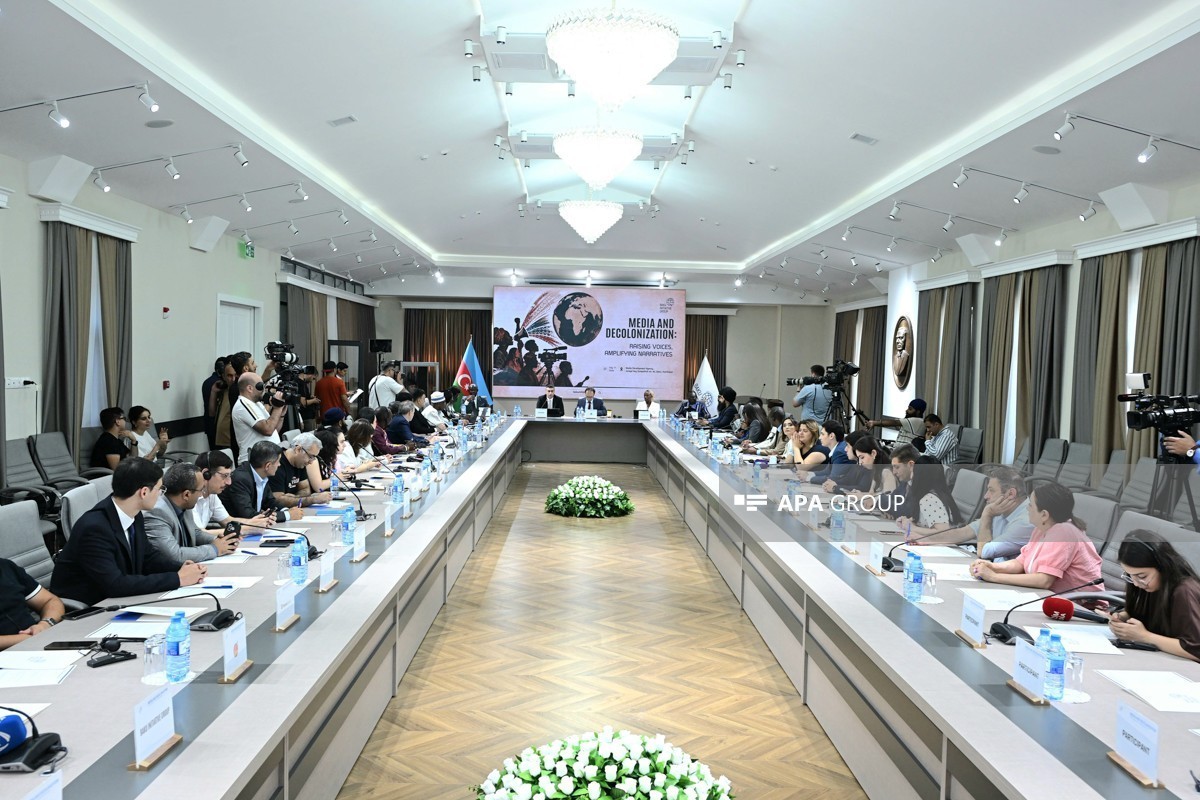
International conference on media and decolonization held in Baku - PHOTO
13:35
 11 July 2026
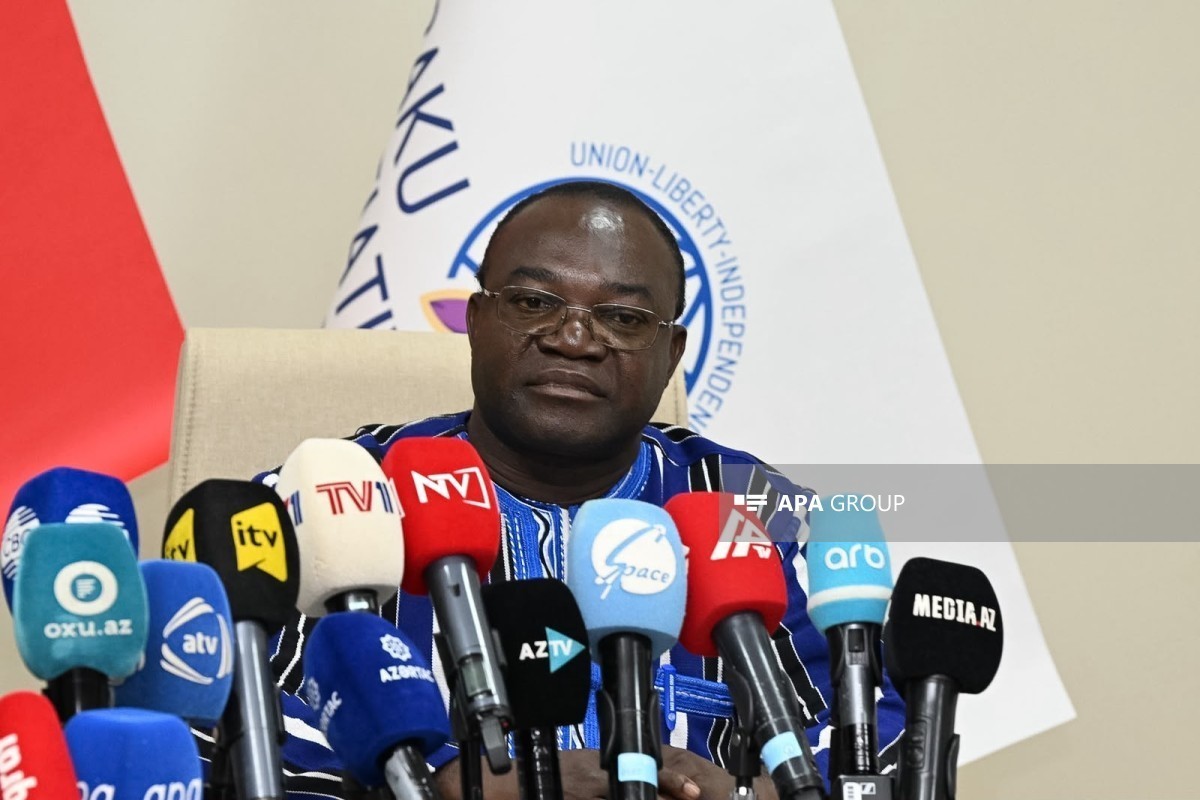
Burkina Faso official: Memorandum with BTG marks start of long-term cooperation
13:19
11 July 2026
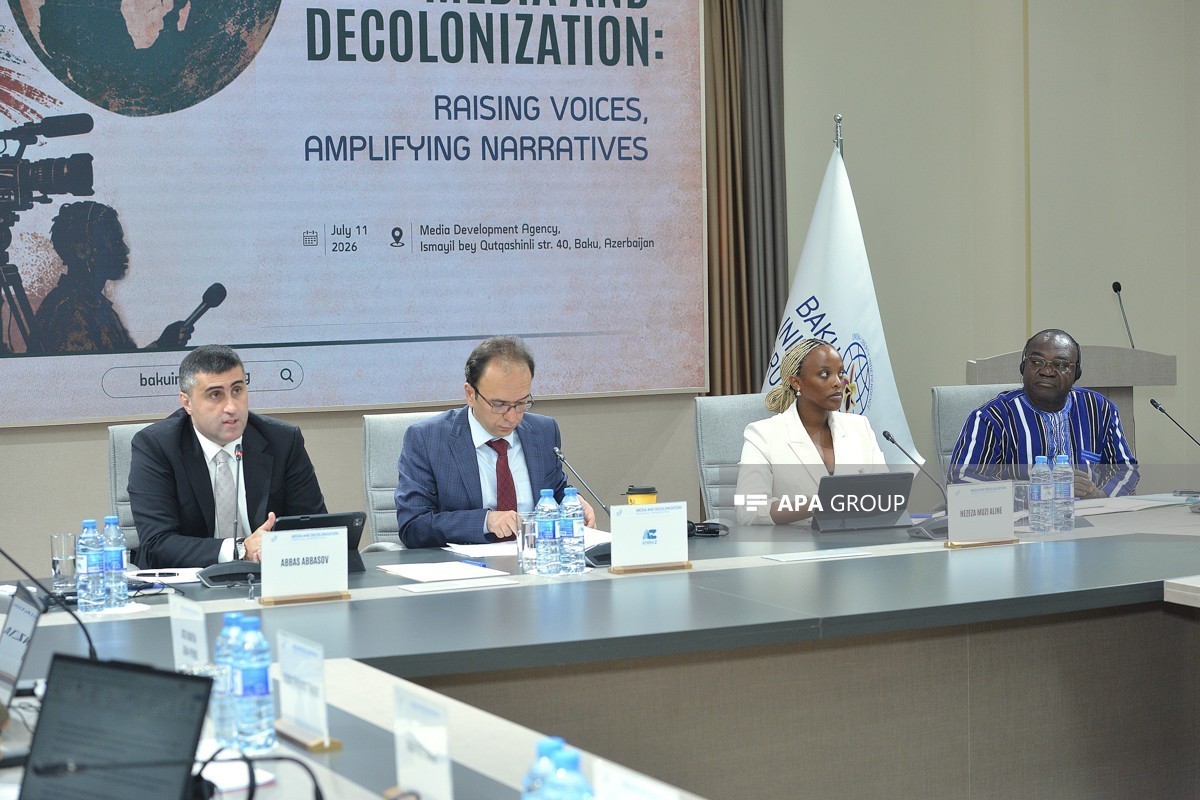
BTG signs first cooperation deal with foreign state institution
13:13
11 July 2026
 PHOTO'>
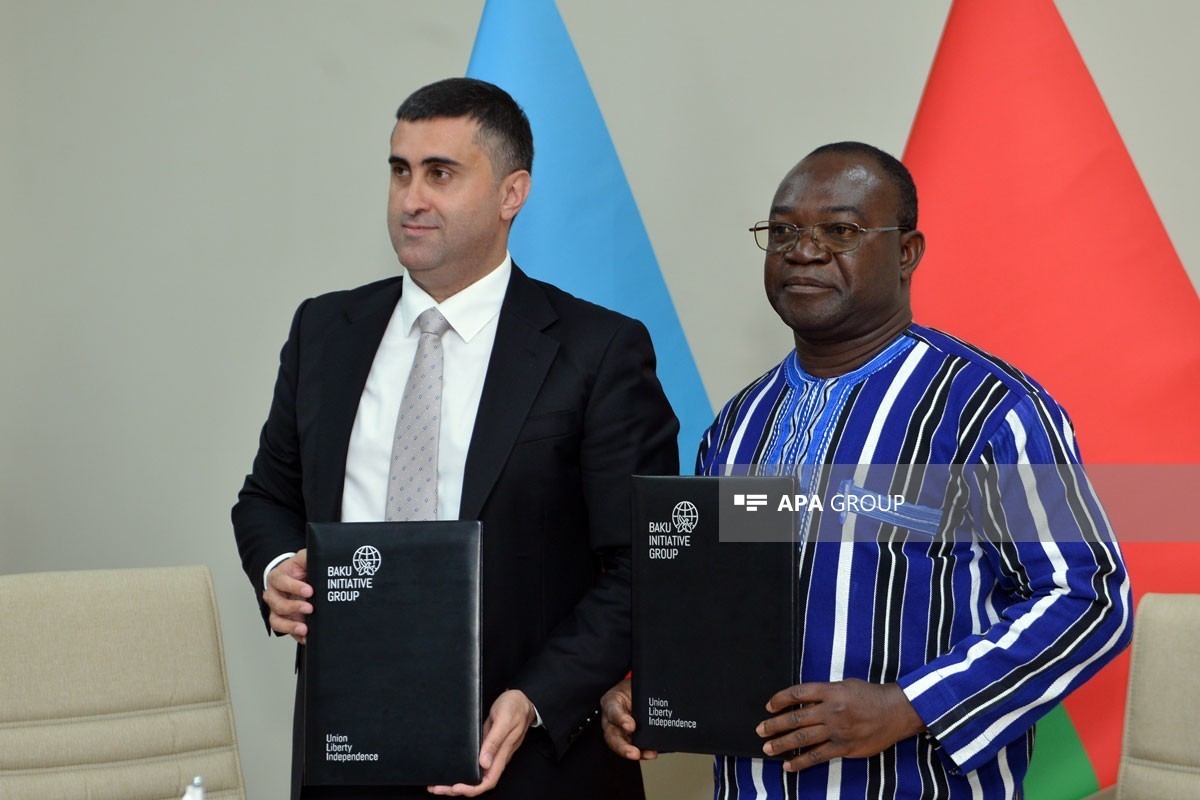
BTG signs memorandum with Burkina Faso Foreign Ministry's research institute - PHOTO
12:54
11 July 2026

NEWS FEED
Passenger bus overturns in central Azerbaijan, multiple people injured-PHOTO
07:23
12 July 2026
Report: Ukraine's air defences struggling to intercept Russia's latest attacks
06:25
12 July 2026
US launches new wave of strikes against Iran
05:19
12 July 2026
Iran declares Strait of Hormuz closed after firing warning shot at vessel
03:23
Audio
12 July 2026
Cuba's President calls US threat due to the island's energy collapse
02:48
12 July 2026
Guardian: Europe may agree to pay Hormuz toll
02:14
12 July 2026
US military officials discuss plan in Beirut to deploy the Lebanese army to “pilot zones”
02:00
12 July 2026
Oman proposes new Hormuz traffic plan as Trump sets deadline for Iran deal
01:50
12 July 2026
Death toll from Venezuela earthquake rises to 4,333
01:24
12 July 2026
No US officials attending consultations on Iran in Oman
00:14
12 July 2026
Six years pass since Tovuz battles
00:00
12 July 2026
Araghchi discusses Strait of Hormuz, diplomatic efforts with Omani foreign minister
23:30
11 July 2026
Trump claims he 'aced' his latest cognitive test
22:35
11 July 2026
Noskova beats Muchova, takes Wimbledon title
22:17
11 July 2026
Israeli Air Force attacks Hezbollah stronghold in Al-Mansouri in southern Lebanon
21:16
11 July 2026
President Ilham Aliyev’s social media accounts shared post on his meeting with residents of Guzeykhirman and Guneykhirman villages of Khojavend
20:56
11 July 2026
Rubio: Trump and I want better future for Cuba
20:44
11 July 2026
President Ilham Aliyev visited Guzeykhirman village in Khojavend district-UPDATED
20:15
11 July 2026
President: Every time I visit Garabagh and East Zangezur and see this beautiful development, my heart rejoices
19:54
11 July 2026
President of Azerbaijan: Our state is strong, our Army is strong, our will is firm
19:52
11 July 2026
President Ilham Aliyev: For the past 5-6 years, our people have rightfully lived with a sense of pride
19:50
11 July 2026
President: Every time former displaced persons return to their ancestral lands, it is a celebration for all of us
19:48
11 July 2026
Russian strikes on Sumy kill 5, including child, injure 30 - UPDATED
19:34
11 July 2026
President Ilham Aliyev attended opening of Khankendi Hotel - PHOTO
18:02
11 July 2026
President Ilham Aliyev’s social media accounts shared video from Kichik Galaderesi village in Shusha
17:39
11 July 2026
Historic oil pumping station in Kurdamir may be added to cultural heritage list
16:37
11 July 2026
President Ilham Aliyev reviewed new buildings of “Yasaman” Hotel in Shusha
16:02
11 July 2026
President Ilham Aliyev reviewed progress under public-private partnership project on Garabagh Street in Shusha
15:32
11 July 2026
Iran's Supreme Leader pledges revenge for Ali Khamenei's death, says people worldwide will help
15:22
11 July 2026
Sadigjan House opened after restoration in Shusha
15:10
11 July 2026
Russia launched a missile strike on Odesa - two dead, one wounded
14:32
11 July 2026
Boat carrying tourists capsizes off Vietnam's Phu Quoc island, killing 15
14:29
11 July 2026
President Ilham Aliyev inspected restoration works in Shusha’s Kichik Galaderesi village and met with returning residents - PHOTO
14:06
11 July 2026
International conference on media and decolonization held in Baku - PHOTO
13:35
11 July 2026
Burkina Faso official: Memorandum with BTG marks start of long-term cooperation
13:19
11 July 2026
China evacuates over one million as Typhoon Bavi nears
13:16
11 July 2026
BTG signs first cooperation deal with foreign state institution
13:13
11 July 2026
Russian strikes on Kharkiv and Zaporizhzhia leave dead and injured
13:08
11 July 2026
BTG signs memorandum with Burkina Faso Foreign Ministry's research institute - PHOTO
12:54
11 July 2026
Qatari mediators visit Iran to ease tensions
12:51
11 July 2026
Romania says five sea drones neutralized in Black Sea
12:43
11 July 2026
Azerbaijani oil trades at $77.91
12:17
11 July 2026
Ukraine creates new command to intensify long-range strikes against Russia
12:09
11 July 2026
Abbas Abbasov: BTG has succeeded in placing decolonization on the agenda of international organizations
11:47
11 July 2026
Suspect in murder of Azerbaijani citizen detained at Batumi airport, Georgian Interior Ministry says - PHOTO - VIDEO
11:39
11 July 2026
CNN: Iran attempting to restore nuclear facilities
11:31
11 July 2026
Investments in non-oil and gas sector increase by nearly 6% this year
11:29
11 July 2026
Dutch spy agencies: Russia hacked cameras to spy on military routes
11:16
11 July 2026
Azerbaijani President congratulates Mongolian counterpart on National Day
11:12
11 July 2026
Hydroelectric power stations on Hochaz River inaugurated in Lachin
11:06
11 July 2026


