










Baku-APA. An international conference on missile defense in Europe opened in Moscow on May 3. Washington and Moscow – the event’s major players – are still unable to find common ground: Russia insists that the missile defense system in Europe poses a threat, and the West deliberately shrugs off these concerns. The Russian General Staff is prepared to take strong measures to make its voice heard, APA reports quoting Ria Novosti.
Old words, new font
Both sides continued to recite their monologues in a vacuum. Russia highlights the threats presented by U.S. missile defense programs, while Washington pretends not to understand what Moscow is talking about.
In response, the Russian military are deliberately heating up what could have been a discussion if at least some formal features of a dialogue were present. Chief of Staff and Army General Nikolai Makarov reiterated that Russia could use its conventional (and other) weapons against U.S. missile defense facilities deployed at its border “if the situation deteriorates.â€
The deployment of new offensive weapons in southern and northwestern Russia, including the deployment of an Iskaner missile system in the Kaliningrad Region, is one way to destroy the missile defense infrastructure in Europe,†Makarov said.
There’s nothing shocking in the general’s comments at the conference: The rhetoric about using military force (including Iskander missiles) against the U.S. missile defense system in Europe has been on display for over a year now. President Dmitry Medvedev himself made this threat in no uncertain terms in November 2011.
But this time, rather that issuing unsubstantiated threats about “appropriate measures,†the Russian delegation briefed the conference participants about the reasons for their concerns that explain their violent reaction.
Apocalypse in a slideshow
Deputy Chief of Staff Colonel-General Valery Gerasimov (appointed Commander of the Central Military District just a week ago) showed the audience visual images of simulated missile launches from Russia if the Americans deploy their new information systems and weapons that work together with components of the national missile defense system in Alaska’s Fort Greely and the Californian base Vandenberg.
The findings by the Russian General Staff members were designed to boldly underline the dangers inherent in the U.S. global missile defense system.
The Russian military showed a sense of humor during the demonstration: Iranian missiles flying over Europe in a hypothetical attack against the United States were not intercepted by the U.S. missile defense system in Europe; or rather they were intercepted together with Russian missiles launched from European Russia, which seems to contradict the assertions of the Americans.
In a joint system, Russian advanced systems that have characteristics similar to their U.S. counterparts and are deployed in southern Russia, could intercept such threats coming from Iran. However, our friends from NATO are not willing to move forward and integrate our missile defense systems, Russian generals say.
The simulation didn’t show signs that the Russian missiles headed toward the U.S. territory were totally vulnerable. However, the simulation offered a good demonstration of the technical capabilities of U.S. missile defense against them (from different angles). The question of the vulnerability of combat patrols performed by Russian missile submarines was raised as well. So the main concerns of the Russian military were outlined rather graphically, inviting the opponents to bargaining.
In this regard, the response by Deputy Secretary General of NATO Alexander Vershbow is particularly noteworthy for its lack of focus. Stating his fundamental disagreement with the findings of the Russian General Staff, Vershbow said that Russia still had a lot of nuclear missiles, which are guaranteed to overcome the U.S. missile defense system, if need be.
Anyway, this system, Vershbow went on to say, was directed against single launches of imperfect ballistic missiles and, of course, nothing can stand in the way of a massive nuclear strike by modern Russian strategic nuclear forces.
U.S. Assistant Secretary of Defense Madelyn Creedon repeated the same points, extolling the power and technical excellence of Russian missile forces, which can break through the American missile defense system even in the long-term perspective, because, as she stressed at every opportunity, it is not directed against Russia’s deterrent capabilities in the first place.
If this is the case, then there’s nothing to bargain about: “We will not accept any restrictions either in terms of the number of missiles or the capabilities of this system [missile defense],†Creedon added.
The danger is the wall, not the bricks
Tactfully, the Americans perhaps failed to notice the main point in the remarks of Colonel-General Gerasimov about the close integration of information and weapon systems of both national and European components of the U.S. global missile defense system in real time. Moreover, Creedon pointedly emphasized that she will be looking at America’s national missile defense system separately from the European one, since they are different projects with different objectives.
The synergy effect of the American plan lies exactly in the close interaction of distributed components. Its individual building blocks do not pose a threat to Russia’s retaliatory capability, but when they come together to form a wall they create a totally different defensive capability. The Iron Curtain between the East and the West may descend again, but this time it will be more technologically advanced.
The potential flexibility of this shared network of information and weapon systems (including mobile and space ones, both existing and prospective) forces us to address this antimissile shield with all seriousness. Today, and even tomorrow, it will not threaten Russia’s strategic nuclear forces in any way, but who can guarantee what’s going to happen in the long run? What means of destruction could be easily integrated into the U.S. global defense system 10-20 years from now?
So far, even such a representative international forum as this Moscow conference has failed to establish at least some common ground on the issue, which is setting off a new nuclear arms race right before our eyes.


 Follow us on Telegram
 t.me/apanewsaz
 Follow us on Instagram
 Follow us on TikTok
 Follow us on Facebook
 Follow us on X
Europe
Russian army launches 973 strikes on 45 settlements in Ukraine's Zaporizhzhia region in 24 hours
 10:32
10:32
 29 June 2026
Latvia and Ukraine to build a UAV factory near the border with Russia and Belarus
09:51
29 June 2026
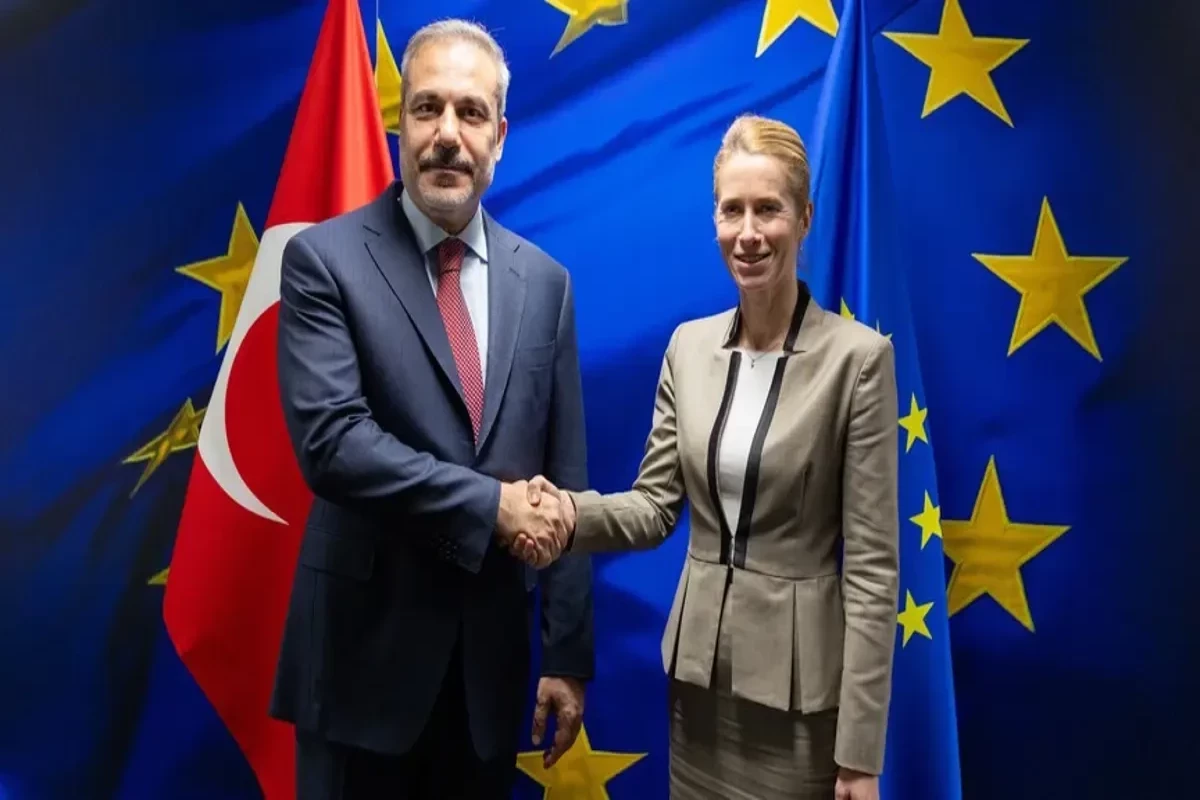
Kaja Kallas and Kos arrive in Türkiye ahead of NATO summit
09:25
29 June 2026

Starmer could run for NATO Secretary General
20:33
28 June 2026

NEWS FEED
Secretary General: Meeting held in Baku marks the beginning of a new stage in the history of the Turkic world
11:53
29 June 2026
Aghdam and Shusha to host Turkic World Week events
11:52
29 June 2026
Mirziyoyev: Turkology faces new tasks in the modern era
11:50
29 June 2026
IDF: In response to Hezbollah violations, we struck 3 headquarters in southern Lebanon
11:50
29 June 2026
Iran, Oman hold first meeting of joint committee on Hormuz, Iranian deputy FM says
11:41
29 June 2026
President Ilham Aliyev addresses participants of the First Turkological Congress centenary event - UPDATED
11:34
29 June 2026
Sadyr Japarov: The 100th anniversary of the First Turkological Congress will further strengthen friendship among Turkic peoples
11:25
29 June 2026
ANAMA discovers 73 more mines and 329 UXO in liberated territories
11:21
29 June 2026
Tokayev: Azerbaijan makes a significant contribution to strengthening ties among brotherly nations
11:19
29 June 2026
Pakistani strikes kill 36 civilians, wound 163: Afghan govt
11:07
29 June 2026
Projects implemented by the Organization of Turkic States are founded on the progressive ideas of the First Turkological Congress – President
11:04
29 June 2026
Erdoğan: Azerbaijan is contributing to the common goals of the Turkic states today
11:04
29 June 2026
President Ilham Aliyev: I am pleased that my initiative to mark the 100th anniversary of the First Turkological Congress is being realized today
10:59
29 June 2026
Four bodies found in burned-out car on Yerevan–Yeraskh highway
10:58
29 June 2026
Baku to host BSTDB Annual Meeting and Business Forum
10:54
29 June 2026
Presidents of Kazakhstan and Kyrgyz Republic address participants of Turkic World Week in Baku
10:51
29 June 2026
Leyla Aliyeva and Alona Aliyeva attend Charity Festival
10:43
29 June 2026
Russian army launches 973 strikes on 45 settlements in Ukraine's Zaporizhzhia region in 24 hours
10:32
29 June 2026
Official Baku calls on Israeli government to reconsider decision on the so-called "Armenian genocide"
10:14
29 June 2026
Baku hosts the 100th anniversary event of the First Turkological Congress
10:12
29 June 2026
Azerbaijan Army conducts demonstration classes with new officers
10:08
29 June 2026
Latvia and Ukraine to build a UAV factory near the border with Russia and Belarus
09:51
29 June 2026
Kaja Kallas and Kos arrive in Türkiye ahead of NATO summit
09:25
29 June 2026
Belarusian President Alexander Lukashenko is on a working visit to China
09:22
29 June 2026
Oil prices rise again on world markets
09:14
29 June 2026
Bitcoin price drops below $60,000
09:13
29 June 2026
Gold futures decline on commodity markets
09:07
29 June 2026
Israel announces destruction of Hezbollah underground facility in southern Lebanon
03:36
29 June 2026
Canadian national team qualifies for FIFA World Cup 1/8 finals
01:55
29 June 2026
Axios: U.S., Iran agree to ceasefire, Doha talks on Strait of Hormuz
01:27
29 June 2026
Putin: Ukrainian strikes on Russia's energy infrastructure undoubtedly create problems
01:26
Audio
29 June 2026
Türkiye says Israel using 1915 events decision to cover up crimes against Palestinians
23:20
28 June 2026
33 people rescued, thousands still missing after Venezuela quakes
22:44
28 June 2026
Qatari citizen died from shrapnel wounds on board ship
21:54
28 June 2026
Russian President held meeting on fuel supplies for domestic market
20:50
28 June 2026
Starmer could run for NATO Secretary General
20:33
28 June 2026
Azerbaijani MFA expresses condolences over helicopter crash in Saudi Arabia
19:03
28 June 2026
Mutual attacks between Iran and the US are increasing – LATEST SITUATION
17:13
28 June 2026
Israeli government unanimously votes to recognize the so-called "Armenian genocide," bill to be submitted to Knesset
15:06
28 June 2026
Another wheat shipment transits Azerbaijan from Russia to Armenia-PHOTO
13:06
28 June 2026
Venezuela quake death toll rises to 1,430
10:00
28 June 2026
IRGC says it struck U.S. military infrastructure in Kuwait and Bahrain
09:34
28 June 2026
Trump threatens more military action against Iran if strikes continue
03:52
Audio
28 June 2026
UN: Venezuela earthquake could affect more than 6.7 million people
02:44
28 June 2026
US launches more strikes against Iran
02:17
Audio
28 June 2026
Britain has zero active submarines at sea for now
02:00
28 June 2026
Israel will withdraw troops from two areas in southern Lebanon on June 28
01:48
28 June 2026
Netanyahu announces plans to form broad national government after elections
01:30
28 June 2026
Argentina cabinet chief resigns after corruption allegations
01:20
28 June 2026
Magnitude 5.4 earthquake struck Venezuela
00:56
28 June 2026


