












“And as for the situation in ’late’ Azerbaijan being ’not too bad,’ I think I would disagree. There was a high level of political tension between the Mutalibov government, the Popular Front, inside the PF itself, plus the looming war that everyone knew would happen. As for ’challenges,’ there were plenty, starting with the reality that I was in Azerbaijan illegally (no visa) and could not even stay in a hotel. Also, as pointed out in my book, communication was hellishly difficult. Not only was this in the pre-cell phone age, it was the pre-internet/email age as well. Thus, sending information was always a problem. When I was working in Turkey as a reporter, I would collect information on an event, call an editor in New York and confirm that the newspaper wanted the story at such and such a length and with such and such a focus, then I would write it and send it via international fax, which always worked. In Baku in 1991, there was seldom the possibility of consulting with editors about a story because the international (and local) telephone lines were just so bad. Thus, when I would run into a story, I would have to write it first and then spend hours trying to get a decent line out of the country, and usually have to dictate it because the fax was no guarantee. This was all very frustrating.
After awhile, I had stacks and stacks of unpublished stories building up on my computer. Either the editors did not want them or I was unable to file them in a timely manner. One day, I strung them all together in a news-letter format that I sent to some friends which I entitled ’Getting Out The News Blues,’ and realized I had several draft chapters of a book. The original idea was sort of a celebration of the Popular Front over Mutalibov and the ’crocodiles’ (old communists) and I thought I had finished it with Elchibey’s election. Was I wrong! Then the real war started more and more political chaos, then Surat’s putsch and Heydar Aliyev’s return. Once again I thought I had finished a book. Once again I was wrong...it still took several more years of frustration, anguish and reporting.
Thomas Goltz in his “Azerbaijan Diary†described the most important and tragic episodes of Azerbaijan.
“Khodjali was a big turning point for me emotionally; while I had covered violence here and there (Turkey, etc), February 25/6 1992 was the first time I had covered a massacre and its aftermath (including world indifference, assaults on my integrity, etc etc). But I think the most dramatic moment for me as a ’war correspondent’ was Kelbajar. In order to stop going crazy with fear, I took the decision that I was already dead until I got out of there. It was and is a very strange moment that will stay with me forever. Following Heydar Aliyev and Abulfaz Elchibey was child’s play in comparisonâ€
The information about Khodjali massacre, which I sent to the Washington Post, appeared in the paper on February 28, 1992 one day after massacre. No one wanted believe then that this massacre happened in Karabakh.
Had I NOT managed to talk my editors at the Post into believing my account of Khodjali, it is likely that the event would have been swept under the carpet and forgotten, or at least become dated news. I recall another massacre--Samashki in Chechnya--that I covered by accident, and news of that human catastrophe was almost immediately diluted by the fact that no major western paper covered it until my video footage (about 1 minute) appeared on ABC TV, and just when the reporters started to gather, all attention shifted to the Oklahoma City bombings of Timothy McVeigh and Samashki was forgotten.â€
Responding to the question that many Armenians sources claim that his book is one sided and bias, Goltz said: “’Read the book’ is what I tell them. I think I captured Azerbaijan, contradictions, warts and all. The nicest compliment I have received from an Armenian reader was the desire for ’a Thomas Goltz to have written such a fair book on Armenia,’ meaning that the reader is sick of all the books on Armenia that only praise and flatter.
The journalist said e has not really ’departed’ from Azerbaijan. “First, I have not really ’departed.’ I am in constant touch with Azerbaijani friends and travel there at least twice a year. I would say that the most surprising changes occured between 1995-1996, when I did stay away for a full year or more. Now, change is incremental. I notice things are better (services, salaries, etc) or worse (the destruction of the Oil Baron town by the insane construction boom in highrises) but nothing really shocks me any more.
On average, I would say I spend at least two or three month a year in Azerbaijan. In 2000, 2001 and 2002 for example, I organized the so-called ’Oil Odyssey’ motorcycle ride down the Baku-Tbilisi-Ceyhan pipeline, and with the pre- and post trip organization, I was spending upwards of five months in Azerbaijan a year then. More recently, this has diminished because of my teaching duties here at the University of Montana, where I have been a Visiting Scholar teaching on the Caucasus since 2005. And I have several projects related to Azerbaijan right now--the translation of my Azerbaijan Diary into Azerbaijani; a book on the Oil Odyssey, a one hour documentary for TV on the same, and a new project I call ’Mugham Comes To Montana’ about the recent tour of Ghadim Sharq group. You will see this piece soon on Azerbaijani TV as well as Azerbaijani-content friendly cable channels in the USA,†the reporter said. /APA/
Thomas Goltz: Khodjali tragic episode was a big turning point for me emotionally

 07 June 2007 10:21 (UTC +04:00)



 İDMAN XƏBƏR
 Follow us on Telegram
 t.me/apanewsaz
 Follow us on Instagram
 Follow us on TikTok
 Follow us on Facebook
 Follow us on X
Domestic
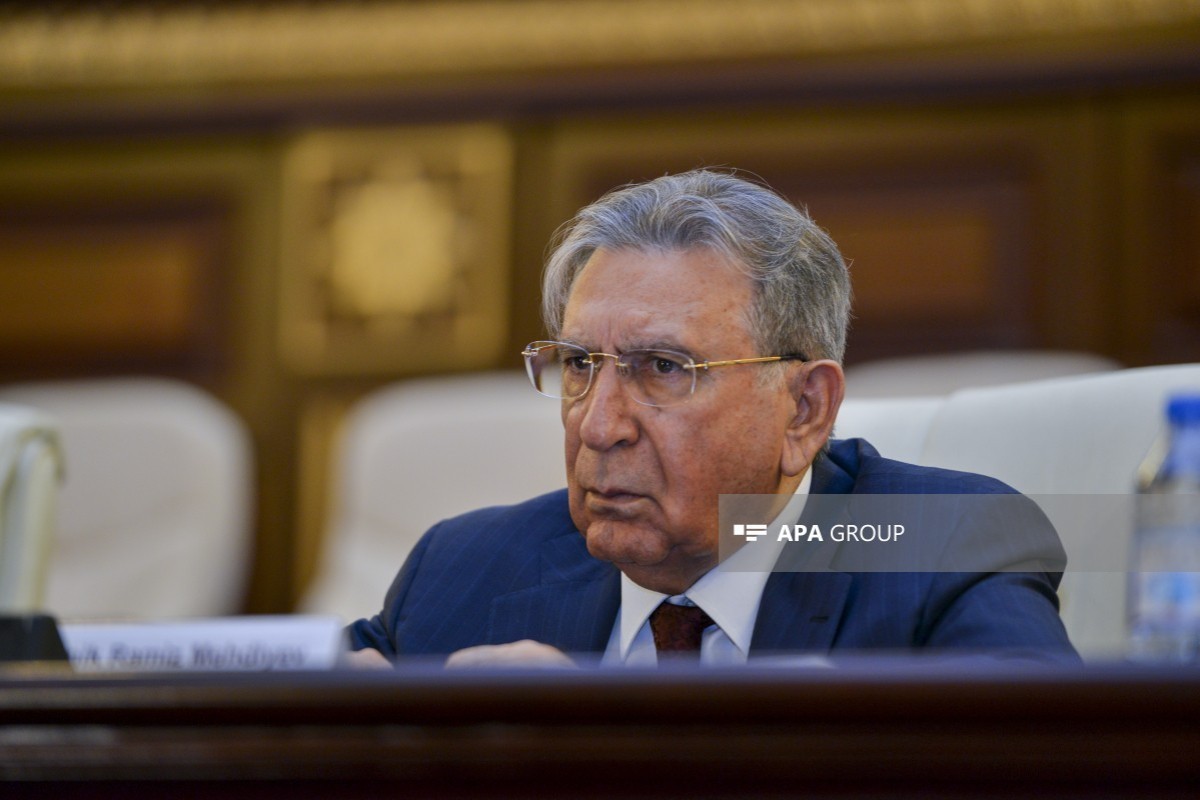
Ramiz Mehdiyev expelled from New Azerbaijan Party, deprivation of his awards proposed - UPDATED-4
01:09
 17 October 2026
Speaker: Ilham Aliyev’s election as President in 2003 holds special place in country’s history
11:42
16 October 2026
Azerbaijani Parliament sends congratulatory letter to President and First Vice-President on Independence Restoration Day
11:10
16 October 2026
Azerbaijani Parliament begins its next session
11:05
16 October 2026

NEWS FEED
US President says conflict in Ukraine must end
03:18
17 October 2026
Grynspan holds lead for next UN chief as race enters decisive stage
02:31
17 October 2026
Ukraine's Zelenskyy blasts US-Russian diesel deal, welcomes bigger European role in peace process
01:56
17 October 2026
US leader called on Saudi Arabia to accept Israeli assistance in the fight against the Houthis
01:31
17 October 2026
Ramiz Mehdiyev expelled from New Azerbaijan Party, deprivation of his awards proposed - UPDATED-4
01:09
17 October 2026
EU to launch Arctic surveillance program in 2027 — Bloomberg
00:24
17 October 2026
Six years pass since Armenia's fifth missile attack on Ganja
00:00
17 October 2026
Today marks Fuzuli City Day, 6 years since city's liberation from occupation
00:00
17 October 2026
US budget deficit nears $2T for fiscal 2026
23:45
16 October 2026
In recent days, Azerbaijani NGO organized actions in six European countries that raise questions about Armenia
23:16
16 October 2026
White House press secretary Zacharia fired in less than a week after facing criticism
22:55
16 October 2026
Trump denies ordering Starlink restrictions in Ukraine
22:39
16 October 2026
Iranian President: We discussed preparation of joint strategic document with Armenia
22:25
16 October 2026
Putin: Russian Armed Forces are advancing confidently along the entire front
21:51
16 October 2026
US leader teases nuclear arms deal with Russia, China
21:39
16 October 2026
Ukraine expects Gripen fighter jets to be delivered soon – Zelenskyy
21:14
16 October 2026
Columnist facing criminal charges apologizes to Azerbaijan: I regret causing offense with my words
20:45
16 October 2026
Video on Patriotic War shared on President Ilham Aliyev's social media accounts
20:15
16 October 2026
Kremlin: Putin held phone call with Pope Leo XIV
20:05
16 October 2026
“Environmental Protection First”: Hosting COP17 in a country that has committed ecocide is nothing but a double standard
19:52
16 October 2026
ICRC has not yet visited Azerbaijani serviceman Nasimi Musayev detained in Armenia
19:28
16 October 2026
President Ilham Aliyev congratulates participants of Paralympic movement on anniversary
19:24
16 October 2026
UAE delegation visits Azerbaijan
18:40
16 October 2026
Taleh Kazimov reveals implementation level of financial sector development strategy
18:36
16 October 2026
Central Bank plans to expand use of artificial intelligence in monetary policy
18:27
16 October 2026
Jeyhun Bayramov meets Bangladesh’s State Minister for Foreign Affairs
18:04
16 October 2026
MoD: Tasks successfully carried out during Azerbaijan-UAE joint tactical flight exercise
17:57
16 October 2026
Azerbaijan-Uzbekistan Second Rectors’ Forum held
17:51
16 October 2026
IMF positively assesses Azerbaijan’s results in increasing non-oil revenues
17:43
16 October 2026
Azerbaijan seeks expansion of IMF technical assistance
17:32
16 October 2026
Priest shoots three people dead in Ukraine
17:30
16 October 2026
World Bank's global conference on state-owned enterprises to be held in Baku in 2027
17:29
16 October 2026
Surgut gas plant reportedly targeted by drones in Russia
17:20
16 October 2026
Metsamor NPP director general: Armenia considering energy cooperation with Azerbaijan
17:09
16 October 2026
Azerbaijan extends funding for war-disabled persons and martyrs' families until 2029
16:58
16 October 2026
Zelenskyy: Ukraine in talks with US on new meeting
16:55
16 October 2026
Energy security in the South Caucasus discussed at Russian Energy Week
16:53
16 October 2026
Moscow airports overcrowded following Ukrainian drone attacks - PHOTO
16:37
16 October 2026
Azerbaijan's Deposit Insurance Fund and Uzbekistan's Deposit Guarantee Agency ink Memorandum
16:32
16 October 2026
At least twelve dead after migrant boat incident off Gambia
16:19
16 October 2026
Kogalym airport in Russia closed for first time due to drone threat
16:00
16 October 2026
Official Moscow warns of threat of militants crossing from Afghanistan into Central Asia
15:58
16 October 2026
Oil Fund earns nearly AZN 8 billion from oil and gas sales - EXCLUSIVE
15:58
16 October 2026
Polish FM: US has not spent a cent on Ukraine’s defense since January last year
15:42
16 October 2026
Chief of General Staff of Azerbaijan Army meets with NATO delegation
15:40
16 October 2026
Prospects for further development of Azerbaijan-Sri Lanka relations discussed
15:38
16 October 2026
Novak announced the actual solution to the issues of diesel supplies to the United States
15:36
16 October 2026
Armenia PM, Iran president meet in Yerevan, discuss bilateral agenda
15:12
16 October 2026
Criminal case opened over calls to seize power in Azerbaijan, Turkish citizen declared wanted
15:05
16 October 2026
Heydar Aliyev International Airport to switch to autumn-winter flight schedule
14:39
16 October 2026


