










Baku – APA. Three months after the United Nations Security Council enacted its harshest sanctions yet against Iran, global nuclear inspectors reported Monday that the country has dug in its heels, refusing to provide inspectors with information and access they need to determine whether the real purpose of Tehran’s program is to produce weapons, APA reports quoting “The New York Timesâ€.
For several weeks the Obama administration has argued that the sanctions are beginning to bite, cutting off Iran’s access to more foreign capital, halting investment in its energy sector and impeding its ability to send its ships in and out of some foreign ports. While there are strong indications that Iran is beginning to feel pain — largely from additional sanctions imposed by the United States and European and Asian nations over the summer — the report from the International Atomic Energy Agency indicates that so far, the sanctions have failed to force Iran to comply with longstanding inspectors’ requests.
The agency protested that Iran had banned two of its most experienced inspectors from the country. The report indicated that for two years, since August 2008, Iran has refused to answer questions “about the possible existence in Iran of past or current undisclosed nuclear related activities involving military-related organizations, including activities related to the development of a nuclear payload for a missile.†The report said it was “essential that Iran engage with the agency on these issues†because evidence can degrade with “the passage of time.â€
Iran argued that it has the right to throw out inspectors it does not trust, and said in case after case that the agency, a unit of the United Nations, had “no legal basis†to make its requests.
In recent weeks, top officials in the Obama administration have said they believe it would take Iran at least a year to convert its stockpiles to nuclear weapons, giving the United States, Israel and others considerable time to react to any effort at a “breakout,†a race for a bomb.
That estimate, officials acknowledge, assumes that Iran does not have any hidden production facilities. Little work has taken place at one such facility, near Qum, since it was revealed last year, the I.A.E.A. report indicated. But Iran is still refusing to lift the veil on the origins of that new enrichment plant, declining to give inspectors the design plans that they have demanded to understand its true purpose.
“The information requested,†the report said, “is essential.â€
In areas where inspectors have been allowed access, the report indicates slow but steady progress in the production of low-enriched uranium. Inspectors said that Iran has now produced 2,803 kilograms, or 6,108 pounds, of low-enriched uranium at it main facility at Natanz. That represents an increase of 15 percent in the country’s stockpile over the past three months. With further conversion, that is enough to produce roughly two weapons.
The new report cited case after case of Iran’s continuing defiance in providing information, material and access to inspectors as well as its failure to halt its increasingly aggressive program to enrich uranium, which can fuel both reactors and weapons.
The report also faulted Iran’s refusal to provide details of its projects to develop a plant for the production of heavy water, as well as a new reactor. Iran holds that it had renounced any legal obligation to give the agency such nuclear details.
In surprisingly blunt language, the report also strongly criticized Iran’s barring in June of two agency inspectors from entering Iran. The Iranian government said it did so because of their connection to “false and wrong statements.â€
But the agency in its report insisted that inspectors had done no wrong and rejected the criticism.
“The agency,†it said, “has full confidence in the professionalism and impartiality of the inspectors concerned.â€
The report also criticized a previous shutting out of inspectors that Iran engineered in early 2007, saying it needs “inspectors with experience in Iran’s nuclear fuel cycle and facilities.†The repeated bars to inquiries, the report charged, “hampers the inspection process.â€
In an interview, a European diplomat called the report’s language about the banning of the inspectors “quite strong.†Iran’s actions, he added on the condition of anonymity, citing the usual diplomatic rules, are slowly blinding the agency and undermining its ability to conduct inspections with the kind of freedom it needs to dig beneath official denials and disavowals.
The report, in its conclusion, declared that Tehran “has not provided the necessary cooperation to permit the agency to confirm that all nuclear material in Iran is in peaceful activities.†And as many reports have done in the past, it called on Iran to increase its cooperation.


 Follow us on Telegram
 t.me/apanewsaz
 Follow us on Instagram
 Follow us on TikTok
 Follow us on Facebook
 Follow us on X
Asia
Iran's Foreign Ministry reacts to U.S. airstrikes
 11:31
11:31
 27 June 2026
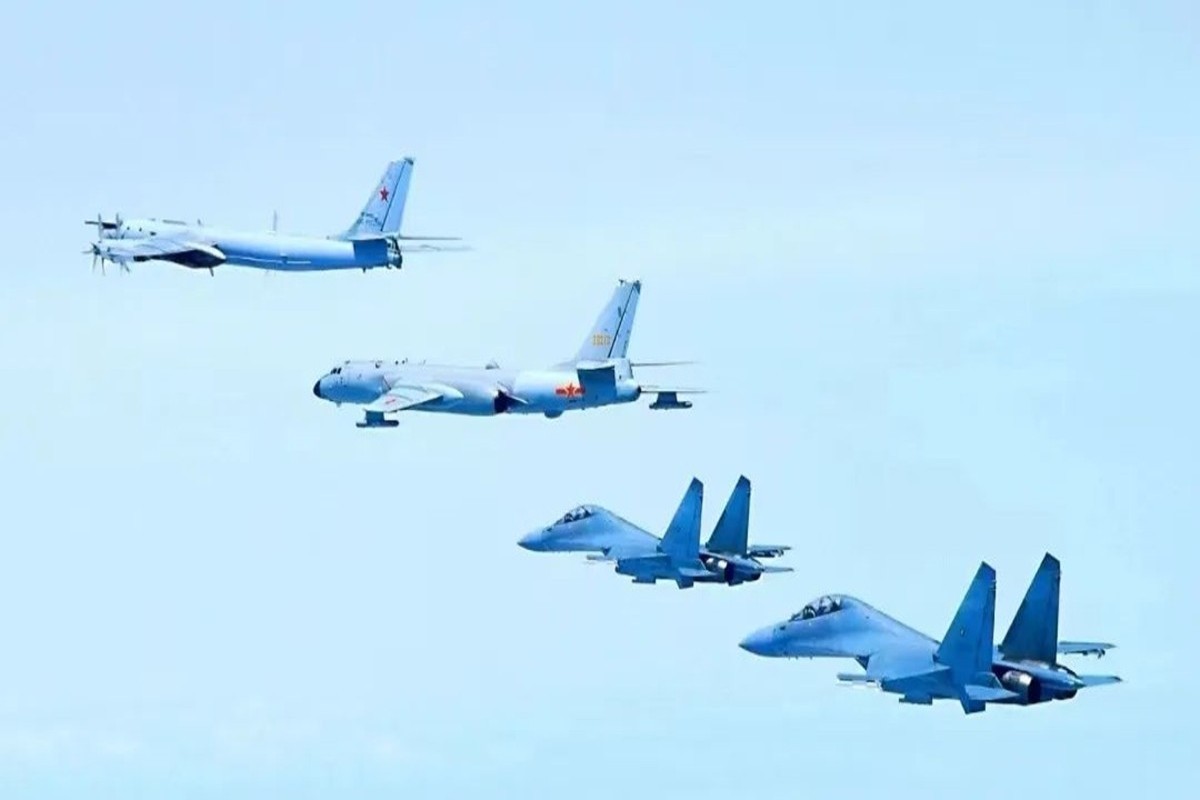
Seoul says Chinese, Russian military aircraft enter its air defense zone
10:51
27 June 2026
Two police officers killed in armed attack on police checkpoint in Iran
10:15
27 June 2026
Saudi Arabia resumes oil loading in the Persian Gulf
09:20
27 June 2026

NEWS FEED
Iran's Foreign Ministry reacts to U.S. airstrikes
11:31
27 June 2026
Leyla Aliyeva and Arzu Aliyeva visit "CandyFest" summer festival and watch "Magic Pearl" water circus show-PHOTO
11:24
27 June 2026
Leyla Aliyeva and Arzu Aliyeva participate in seasonal flower planting campaign on Baku Boulevard-PHOTO
11:21
27 June 2026
Leyla Aliyeva and Arzu Aliyeva attend opening and presentation ceremonies at the Seaside National Park-PHOTO
11:14
27 June 2026
Baltic states urge EU to speed up ban on Russian oil imports
11:07
27 June 2026
Seoul says Chinese, Russian military aircraft enter its air defense zone
10:51
27 June 2026
Ukraine strikes facility producing Iskander missile systems in Volgograd-VIDEO
10:48
27 June 2026
Gold and silver rise in commodity markets
10:24
27 June 2026
Natural gas falls on New York exchange
10:22
27 June 2026
Azerbaijani oil trades at $74
10:20
27 June 2026
Two police officers killed in armed attack on police checkpoint in Iran
10:15
27 June 2026
Brent oil falls by more than 4%
09:35
27 June 2026
Major global stock market indices
09:29
27 June 2026
State Department: Lebanon agreement envisages withdrawal of Israeli forces
09:24
27 June 2026
Saudi Arabia resumes oil loading in the Persian Gulf
09:20
27 June 2026
Vance: US ready to discuss memorandum disagreements with Iran
02:39
Audio
27 June 2026
IRGC says it struck US military positions in response to US airstrike on Iran
01:43
27 June 2026
France wins Group I after beating Norway 4-1
01:13
27 June 2026
US strikes Iranian targets in response to attack on cargo ship
00:47
Audio
27 June 2026
Netanyahu says Israeli army will remain in southern Lebanon ‘security zone’ until Hezbollah disarmed
23:49
26 June 2026
UK guarantees $1 billion World Bank loan to Ukraine
23:20
26 June 2026
Israel, Lebanon sign framework peace deal after US-mediated talks
22:36
Audio
26 June 2026
Venezuela quake death toll rises to 92
22:29
26 June 2026
Trump accuses Iran of violating ceasefire with US
20:24
Audio
26 June 2026
Scuffle breaks out during Georgian parliament session, proceedings suspended - PHOTO
20:00
26 June 2026
Turkish ships stranded in Strait of Hormuz safely leave the region
19:56
26 June 2026
Turkish actor Kadir İnanır dies at 77
19:33
26 June 2026
Putin meets with Belarusian President Lukashenko
19:22
26 June 2026
Putin bans deportation of foreigners serving under contract in Russian army
19:19
26 June 2026
Seven Hezbollah fighters killed in Lebanon
19:12
26 June 2026
Explosion followed by fire hits factory in Türkiye
19:10
26 June 2026
Death toll hits 55 in France as drownings rise amid Europe heatwave
19:07
26 June 2026
Baghaei: Joint statement by US and GCC is a distortion of truth
18:40
26 June 2026
Rosatom says plans Bushehr staff return
18:15
26 June 2026
Small aircraft crashes into Beijing’s tallest skyscraper - VIDEO
17:56
26 June 2026
If Iran attacks Israel, it will ‘commit its biggest mistake’: Katz
17:35
26 June 2026
Belarusian President Lukashenko departs for working visit to Russia
17:28
26 June 2026
Russia advises its citizens against traveling to Moldova
17:23
26 June 2026
Death toll from Venezuela earthquake rises to 589 - UPDATED - 4 - VIDEO
16:56
26 June 2026
Azerbaijan and Italian foreign ministers hold phone conversation
16:54
26 June 2026
Senior military ranks presented to servicemen of the Azerbaijan Ministry of Defense - PHOTO
16:23
26 June 2026
CIS Secretary General: Armenia is not considering leaving the CIS
16:16
26 June 2026
Former Russian Defense Minister Sergei Ivanov dies at 73
16:08
26 June 2026
European Commission President Ursula von der Leyen to visit Azerbaijan next week
16:03
26 June 2026
Leadership of the Ministry of Defense visits Alley of Honor, Victory Park, and Military Memorial Cemetery - PHOTO
16:00
26 June 2026
CIS Economic Council meeting held in Moscow, Armenia does not send high-level representative - PHOTO
15:54
26 June 2026
Russia and Ukraine conduct prisoner exchange
15:40
26 June 2026
Proposal made to lower the age of criminal responsibility to 12 in Russia
14:50
26 June 2026
Iran, South Korea discuss regional developments and diplomacy
14:42
26 June 2026
Hormuz shipping depends on coordination with Tehran, Iran deputy FM says
14:30
26 June 2026


