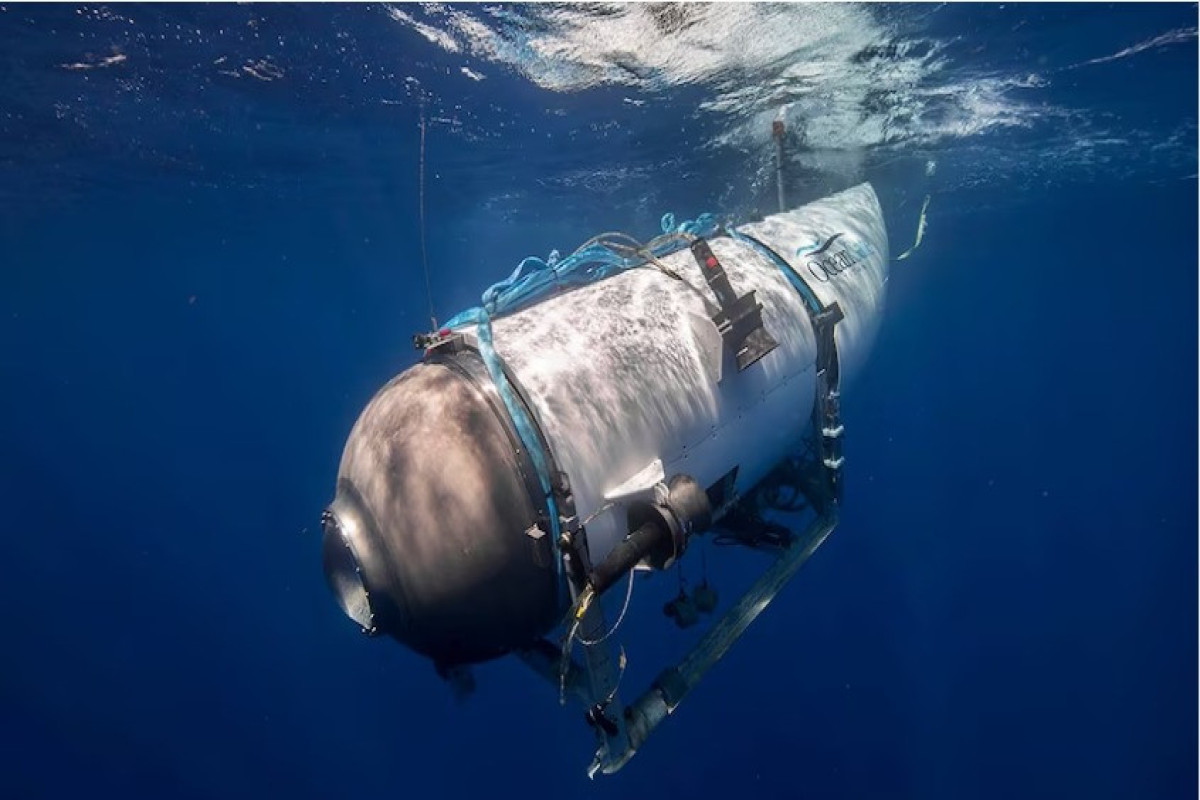

A Canadian military surveillance aircraft has detected underwater noises as a massive search continued early Wednesday in a remote part of the North Atlantic for a submersible that vanished while taking five people down to the wreck of the Titanic, APA reports citing Associated Press.
A statement from the U.S. Coast Guard did not elaborate on what rescuers believed the noises could be, though it offered a glimmer of hope for those lost abroad the Titan as estimates suggest as little as a day’s worth of oxygen could be left if the vessel is still functioning.
Meanwhile, questions remain about how teams could reach the lost submersible, which could be as deep as about 12,500 feet (3,800 meters) below the surface near the watery tomb of the historic ocean liner.
Lost aboard the vessel are pilot Stockton Rush, the CEO of the company leading the expedition. His passengers are a British adventurer, two members of a Pakistani business family and a Titanic expert.
The Coast Guard wrote on Twitter that a Canadian P-3 Orion had “detected underwater noises in the search area.” Searchers then moved an underwater robot to that area to search. However, those searches “have yielded negative results but continue.”
“The data from the P-3 aircraft has been shared with our U.S. Navy experts for further analysis which will be considered in future search plans,” the Coast Guard said.
Three C-17 transport planes from the U.S. military have been used to move commercial submersible and support equipment from Buffalo, New York, to St. John’s, Newfoundland, to aid in the search, a spokesperson for U.S. Air Mobility Command said.
The Canadian military said it provided a patrol aircraft and two surface ships, including one that specializes in dive medicine. It also dropped sonar buoys to listen for any sounds from the Titan.
Rescuers have been racing against the clock because even under the best of circumstances the vessel could run out of oxygen by Thursday morning.


 Follow us on Telegram
 t.me/apanewsaz
 Follow us on Instagram
 Follow us on TikTok
 Follow us on Facebook
 Follow us on X