













Baku – APA. The Somali al-Shabab group has claimed responsibility for two explosions that rocked the Ugandan capital Kampala, targeting innocent people watching the World Cup final, APA reports quoting “Al Jazeeraâ€.
The attacks, which left at least 74 people dead, were the first by al-Shabab outside of Somalia.
Uganda and Burundi have, in the past, dismissed threats by the group, which vowed to avenge what it called "massacres" committed by Ugandan and Burundian troops as part of the 6,000-strong African Union force propping up the weak Somali government.
National vs. global agenda
Contrary to popular perception, al-Shabab is not a monolithic movement. It is comprised of several wings that espouse different worldviews. Some - perhaps the majority - have a domestic agenda. But a small minority in the upper echelons of the group, and a significant number of foreign fighters, advocate global jihad as a guiding principle.
This diversity makes for multiple objectives and motives within the movement and among its leaders.
Those with a national agenda would certainly like to force foreign peacekeepers out of Somalia so that they can replace the government. But, if this was the objective of the Kampala attacks, the group made a strategic mistake.
For those who espouse the global jihadist agenda and seem to dominate the movement, this may have been a calculated move designed to invite additional intervention in Somalia in order to justify and legitimise their war on religious grounds. If so, they may be prepared for such an outcome.
Whatever the motives, the attack will certainly invoke an interventionist mood within the international community and among Somalia’s neighbours. Many countries in the region will now intervene in Somalia arguing that al-Shabab poses an existential threat to their national security.
Pre-emption will be the name of the game: let us fight extremist elements in Somalia rather than waiting for them to come to our own backyards. And the chances are that regional governments will find support for such an approach among their citizens.
Somali hearts and minds
However, addressing extremism and insecurity in Somalia needs a sober approach and, like al-Shabab, the international community must not make another blunder in order to mitigate the situation.
Any military intervention involving Somalia’s neighbouring states will exacerbate the security situation in the region.
In 2006, the US and much of the international community endorsed the Ethiopian invasion of Somalia. As a result of the conditions created by that invasion, al-Shabab was empowered at the expense of more moderate factions of the Islamic Courts Union, of which al-Shabab was a member.
Repeating the same mistake will not only fail to defeat extremism in Somalia but will likely empower it further.
Meles Zenawi, the Ethiopian prime minister, understands the sensitivities of this issue and the potential consequences of sending Ethiopian forces to Somalia. He, therefore, offered a public assurance in an interview with the AFP news agency that Ethiopian troops will not return to the country. This is prudent decision and we must hope that he honours this pledge.
The United Nations Security Council understood this fact as early as 2006 when it passed resolution 1725, which prohibited Somalia’s neighbours - known as frontline states - from intervening militarily in the country, although this was not implemented.
Any successful Somalia strategy will require winning the hearts and minds of the Somali people as their support is indispensable. Most Somalis - inside and outside of the country - do not support or condone extremism. They should, therefore, be considered the most important ally in the struggle to re-establish a Somali state and to defeat extremism.
There are two important issues that must be dealt with. Firstly, many innocent Somalis are victims of the atrocities committed by the Somali government and the African Union forces. This must end. Secondly, regional governments and the international community, particularly law enforcement agencies, must therefore do all they can to protect innocent Somalis who have fled their country’s civil war while apprehending criminals. This may be easier said than done, but it is necessary.
Creating Somali security forces
We must also understand that sending peacekeeping forces from Muslim countries and African states, excluding Somalia’s neighbours, is a temporary solution that cannot be sustained in the long-term. The best way to address extremism is, therefore, to help create professional and disciplined Somali security forces.
Since 2000, Somalia has had a number of transitional governments - created and supported by the international community. Military experts say it takes approximately one to two years to prepare a combat-ready army. But, after 10 years, Somalia does not have security forces that can protect the country and its people.
A lack of will from Somalia’s leaders has contributed to the current stalemate. The international community must pressure the government to make substantive changes if it wants it to face the pertinent challenges Somalia poses.
Finally, disuading Somali youngsters from joining extremist groups requires more than the presence of a strong military. Fortunately, most of Somalia’s religious scholars have begun to challenge extremism on the ideological front. This is a welcome development.
In sum, the Kampala attacks will have far-reaching implications for al-Shabab, Somalia and the whole region. Caution is now desperately needed.


 Follow us on Telegram
 t.me/apanewsaz
 Follow us on Instagram
 Follow us on TikTok
 Follow us on Facebook
 Follow us on X
Africa
Two killed, five injured in shooting in S. Africa
 16:09
16:09
 14 October 2026
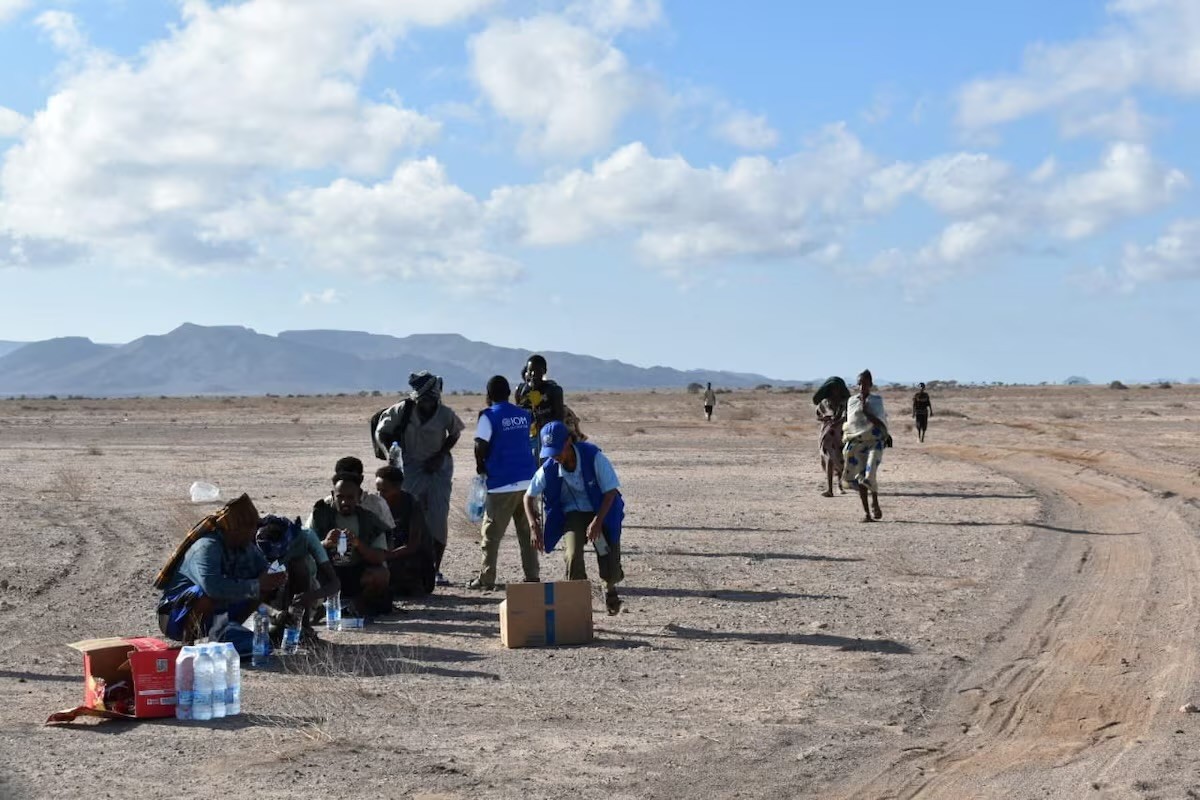
At least 139 migrants dead, including some children, after boat from Djibouti to Yemen capsizes, UN agency says
21:17
11 October 2026
Central African Republic foils planned large-scale militant attack
07:04
11 October 2026
Rebel attack kills 11 civilians in DR Congo
05:16
11 October 2026

NEWS FEED
Delegation from Italy visits Azerbaijan
10:10
15 October 2026
Georgian FM: Joint projects of Georgia, Azerbaijan and Türkiye serve as a solid foundation
10:08
15 October 2026
IMF: South Caucasus and Central Asia show resilience to Middle East crisis
10:05
15 October 2026
Investments in Middle Corridor open new opportunities for South Caucasus - Director
10:01
15 October 2026
Trump says government officials who leak to the media ‘should be shot’
09:55
15 October 2026
Azerbaijani oil sold above $124 per barrel
09:46
15 October 2026
Gold and silver prices rise in commodity markets
09:32
15 October 2026
Brent oil price falls below $105
09:25
15 October 2026
FM Bayramov meets Chinese FM - UPDATED
09:02
15 October 2026
US considers easing sanctions on shadow fleet vessels to cut freight rates, official says
09:00
15 October 2026
President of Turkmenistan arrives in Azerbaijan
08:57
15 October 2026
Eight US states sue OpenAI, claiming ChatGPT harms young users
08:44
15 October 2026
US proposes partial unfreezing of Russian assets to revive Ukraine talks — FT
07:02
15 October 2026
More than 40 flights to Istanbul have been diverted to other airports
04:09
15 October 2026
Houthis claim hit on Saudi fighter jet
03:41
15 October 2026
US destroys Iran-linked ship in Gulf of Oman
02:37
15 October 2026
Aston Villa beat Fenerbahce 6-0 in Champions League clash at Villa Park
02:10
15 October 2026
Media and Broadcasting Council and Ministry of Health release joint statement
01:37
15 October 2026
Trump: Canada will end up being 51st state
01:14
15 October 2026
Istanbul roads collapse, traffic hits 90% as flooding continues
00:52
15 October 2026
Banks, buildings burn as Albania's capital Tirana erupts into student violence
00:26
15 October 2026
Six years pass since Armenian army's shelling of Terter cemetery
00:00
15 October 2026
Haberturk: Teenager dies from electric shock during heavy rain in Istanbul
23:45
14 October 2026
Ukrainian President rules out resigning, holding elections
23:39
Audio
14 October 2026
FBI denies Patel's visit to Russia
23:16
14 October 2026
Britain will develop military equipment for Ukraine
23:00
14 October 2026
Dinner hosted on behalf of President Ilham Aliyev in honor of participants of 7th CICA Summit
22:44
14 October 2026
French President to visit Gulf states from October 19 to 21
22:34
14 October 2026
President Ilham Aliyev met with President of Tajikistan
22:18
14 October 2026
President Ilham Aliyev met with President of Uzbekistan-UPDATED
21:50
14 October 2026
US plans to deploy hundreds of thousands of kamikaze drones
21:41
14 October 2026
Zelenskyy says he feels 'betrayed' by Trump's actions
21:25
14 October 2026
FBI Director Patel visits in Russia
20:37
14 October 2026
Iranian FM, Lebanese President discuss developments in Lebanon and the region
20:27
14 October 2026
Le Pen and Melenchon gain momentum ahead of French 2027 election, poll shows
20:11
14 October 2026
Amir of Qatar arrives in Azerbaijan
19:35
14 October 2026
Hakan Fidan arrives in Baku - UPDATED
19:13
14 October 2026
President Ilham Aliyev met with President of Israel
19:11
14 October 2026
President Ilham Aliyev receives Bahrain’s Foreign Minister
19:09
14 October 2026
President Ilham Aliyev receives member of Political Bureau of CPC Central Committee
19:09
14 October 2026
Georgia not invited to EU forum
19:08
14 October 2026
President of Azerbaijan receives Sri Lankan minister
19:06
14 October 2026
President Ilham Aliyev met with Vietnamese Vice President
19:06
14 October 2026
State Migration Service: More than 30 Azerbaijani citizens readmitted from Germany
18:48
14 October 2026
MP from Pashinyan’s party denied entry to Russia
18:32
14 October 2026
Shavkat Mirziyoyev arrives in Baku - UPDATED
18:30
14 October 2026
Azerbaijani delegation familiarizes itself with operations of Kazakhstan’s leading ports and terminals
18:22
14 October 2026
Azerbaijani and Kyrgyz delegations hold meeting - VIDEO
18:15
14 October 2026
“Falcons Meet - 2026” joint tactical flight exercise continues - VIDEO
18:14
14 October 2026
Trump did not invite OSCE observers to the U.S. midterm elections
18:10
14 October 2026


