



Growing tensions between Russia and the West have prompted Russia to prepare nuclear bomb shelters. The media has reported that measures have been taken to restore Cold War-era nuclear shelters in the country. APA special correspondent in Russia Farid Akbarov visited one of the surviving and recently restored civilian nuclear bomb shelters from the Cold War, located in the center of Moscow.
APA present the reportage:
Nuclear shelter built 52 years ago
The center of Moscow... behind the skyscrapers of "Moscow City"... On an inconspicuous section of Mantulinskaya Street there is a gray "booth", on the door of which there is a sign with the inscription "entrance to the shelter"... Once upon a time there was a sugar factory in this area. Now the factory is gone, but the shelter built for it in case of a nuclear war stands safe and sound. This secret bunker, built in 1972, has everything necessary to save the civilian population in case of a nuclear war and to protect against weapons of mass destruction. Seven meters down the stairs... and we are underground. The air in the room is dry and warm. There is no mobile communication. At first glance, it looks like an old abandoned basement. In front of us is a hermetic protective door of a nuclear shelter weighing several tons. To get into the shelter, you need to go through these doors. Opening the heavy door with force, we find ourselves in the bunker. The structure of the shelter resembles a butterfly: two-block, symmetrical, like wings.
Why was a nuclear shelter built for a sugar factory?
We are at a depth of seven meters. This is considered a normal depth, sufficient for complete protection from nuclear weapons. Note that the shelter we are in now was put into operation in 1972, but was intended only for workers of the Mantulin sugar factory. Because the sugar factory had a dual strategic importance. As a strategically important enterprise for the production of food products, and for the mandatory provision of sugar production during the war...
A secret "bunker" abandoned after the collapse of the USSR
The shelter operated until the early 2000s. However, after the Mantulin sugar factory ceased operations in mid-2010, a residential complex was built on the site of the factory. The shelter is now practically abandoned. Nuclear shelter employee Petr Efimenko said that the shelter, which had been in a state of disrepair for a long time, had been restored and resumed operations since January of this year: "The space we are in is a nuclear shelter built during the Cold War. Such shelters were built on the territory of almost all strategic enterprises operating in the country."
Secret Cold War "bunker" is being restored
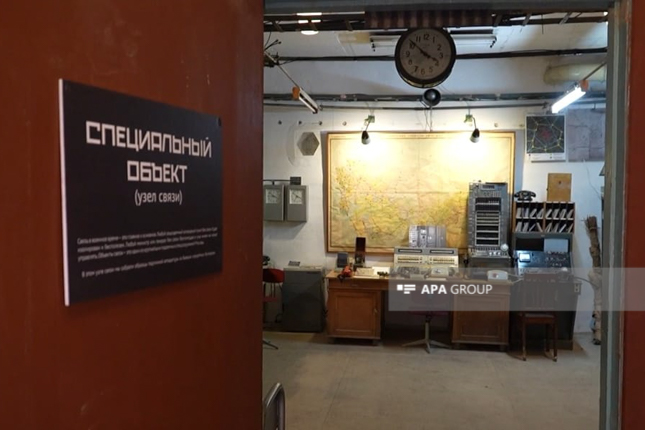
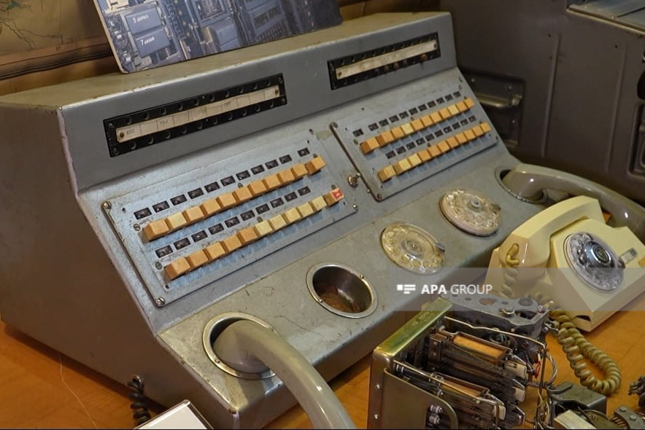
The shelter is equipped with communication systems with other secret bunkers in Moscow, a command post, devices for measuring radioactive and chemical background, a medical office, in short, all means of protection against nuclear danger.
Nuclear danger warning...
If a nuclear war is declared, the responsible shelter staff will sound the alarm. Then the non-evacuated population will be placed in civilian nuclear shelters, of which there are more than two thousand in Moscow. "Sometimes they say that people can stay in the shelter for a long time. However, in reality this is not so. People are placed in the shelter only when a threat of a nuclear strike is declared, when the alarm is sounded, they remain there for a maximum of two days. A similar alarm system is in all major cities of Russia, and is controlled from a single command post in each city. That is, the alarm is not sounded separately from each shelter," said Efimenko, introducing us to the shelter. Being in a nuclear shelter during peacetime, the sound of a siren, a flashing indicator with the inscription “siren on” in itself already causes anxiety in a person.
_1718031343.jpg)
A unique ventilation system that protects against radioactive and chemical poisoning
The most important part of a shelter when using weapons of mass destruction is its ventilation system. To protect against radioactive dust after a nuclear explosion, those in the shelter can breathe fresh air thanks to the ventilation system installed there. The shelter is equipped with a unique ventilation system. Thus, the system can function both with and without electricity. Even if problems arise with the Moscow power grid, that is, if the city's electrical grid is disabled, the shelter's ventilation system will still work thanks to manually started electric fans.
Gas masks, boxes with special filters that protect children from radiation...
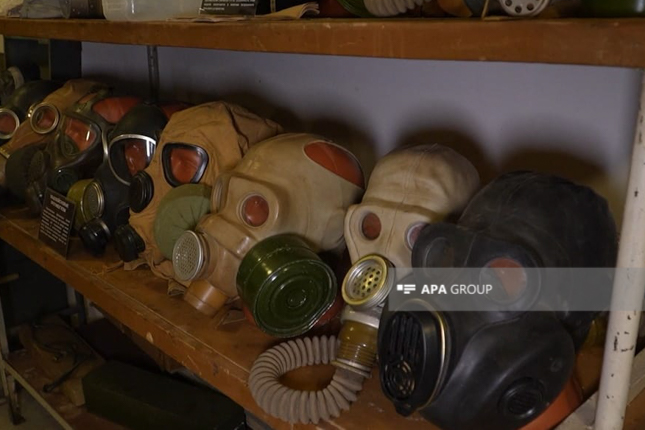
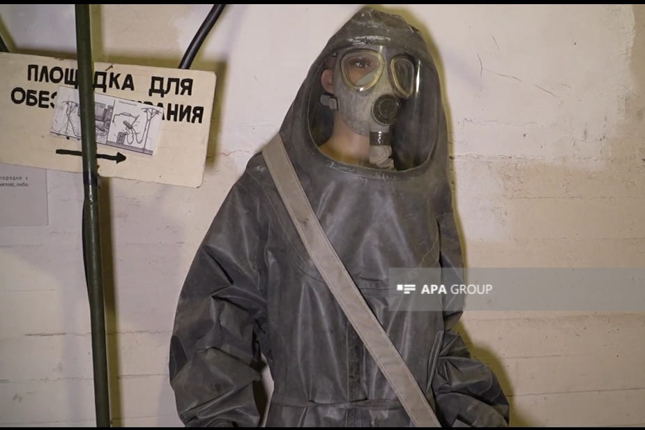
All equipment in the shelter is in working order. To protect against radioactive dust during a nuclear explosion, the bunker is equipped with gas masks. There are even small gas masks for children, as well as boxes with filters specially designed for babies. According to Efimenko, when placing citizens in a shelter after a nuclear attack, the risk that the shelter may be exposed to radioactive contamination is taken into account, and outerwear is disinfected with a special agent under high pressure: "People are allowed into the shelter after the radioactive dust has been completely washed off. There is no other way." In the event of the main entrance to the shelter being out of order, an emergency exit is used. Citizens in the shelter leave the bunker through the emergency exit, using the ventilation shaft. The nuclear shelter also has an exhibition called "underground Moscow", which presents a map of the underground system of the Russian capital with a subway, canals connecting underground rivers, as well as tunnels connecting the Kremlin with the outskirts of the capital.


 Follow us on Telegram
 t.me/apanewsaz
 Follow us on Instagram
 Follow us on TikTok
 Follow us on Facebook
 Follow us on X
 UPDATED'>