


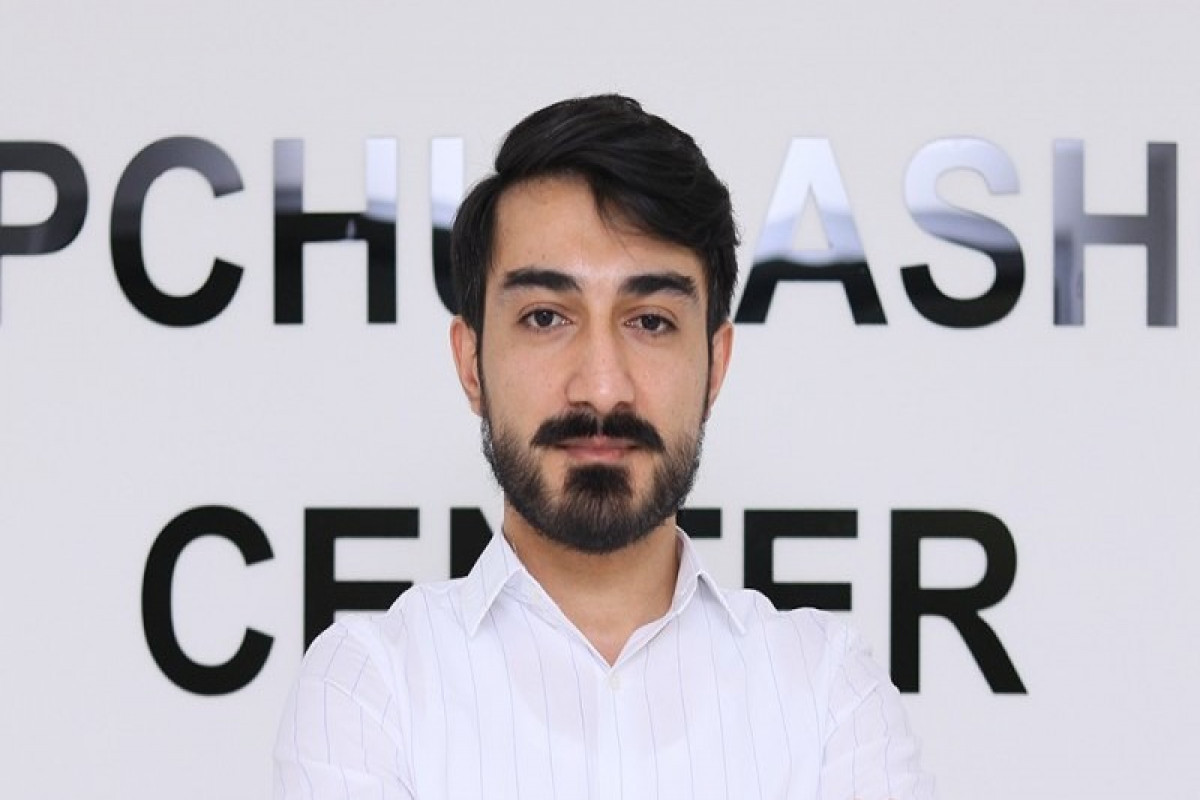
The visit of J.D. Vance, Vice President of the United States, to Baku is being assessed as the beginning of an important political and geopolitical stage in the development of Azerbaijan–U.S. relations, said Mahammad Mammadov, a regional security expert at the Topchubashov Center, in a statement to APA.
According to him, one of the key indicators of the development of Azerbaijan–U.S. relations is the open support expressed by Donald Trump, President of the United States, for the peace agenda put forward by Azerbaijan: “The clearest example of this was the Azerbaijan–Armenia agreements signed in Washington on August 8 last year under the witness of Donald Trump.”
He noted that the visit of J.D. Vance, Vice President of the United States, to Baku could add new momentum to this process and elevate bilateral relations to a qualitatively new level.
The expert said that this visit, the first at the vice-presidential level since 2008, is a clear indication of Washington’s strategic importance attached to Baku and demonstrates that the United States assigns a special role to Azerbaijan in the South Caucasus.
In his view, the United States is seeking not only to preserve and strengthen its positions in the Western Hemisphere but also in other strategically important regions. In this regard, the TRIPP project shows that Washington is interested in maintaining an active presence in the region.
The expert identified the 907th Amendment as the second important issue. He pointed out that Vance’s visit to Baku could create a positive impulse in this direction: “In recent times, as a result of Azerbaijan’s active diplomatic efforts, positive processes have been observed toward lifting the existing restrictions as part of the 907th Amendment. Trump’s indication of deepening U.S.–Azerbaijan military cooperation is also noteworthy in this regard.”
The expert emphasized that Trump’s personal role in this process is of particular importance. According to him, two main tendencies stand out in Trump’s approach: “First is the peace agenda. In various speeches, Trump highlights his role in resolving international conflicts. In this regard, the possibility of some acceleration in the Azerbaijan-Armenia peace negotiations process within the framework of Vance's visit is not ruled out.
The second tendency is Trump’s linking of foreign diplomatic initiatives with economic dividends.”
Mahammad Mammadov noted that the US's increased activity in the region could expand access to the South Caucasus, Black Sea, and Central Asian markets for American companies, which would mean both economic and political gains for the Trump administration.
According to the expert, one of the key questions after the August 8 meeting was whether the promises made by the United States regarding the South Caucasus would be backed by concrete actions: “The processes observed over the past six months show that the Trump administration is taking this issue seriously, and Vice President Vance’s visit should be assessed precisely in this context.”
He added that the August 8 meeting marked an important turning point for Azerbaijan’s foreign policy: “After that meeting, an agreement was reached on preparing a Strategic Partnership Charter between Azerbaijan and the United States, working groups were established, and intensive negotiations are underway. This process is expected to be finalized in the near future.”
The expert noted that Azerbaijan continues to pursue a balanced foreign policy: “Azerbaijan’s signing of a strategic cooperation agreement with China, its negotiations with the European Union in this direction, and a similar agreement being on the agenda with the United States enable the country to form a more stable and flexible position in the new world order.”



 Follow us on Telegram
 t.me/apanewsaz
 Follow us on Instagram
 Follow us on TikTok
 Follow us on Facebook
 Follow us on X