










Before visiting the region we collected enough materials about the conflict and met with the representatives of the international organizations which are addressing the problem.
The problem caused by the decision on language
The Transnistrian problem cannot be called as a conflict because there have not been casualties among civilians and militaries during 18 years since ceasefire reached in July, 1992. What did cause the problem? On August 31, 1989, the Supreme Soviet of the Moldavian SSR adopted Moldovan as the only official language, with Russian retained only for secondary purposes, returned Moldovan to the Latin alphabet, and declared a shared Moldova-Romanian linguistic identity. As plans for major cultural changes in Moldova were made public, tensions rose further. Ethnic minorities felt threatened by the prospects of removing Russian as the de facto official language, the possible future reunification of Moldova and Romania. The Transnistrian population accepted is as discrimination and organized resistance movement. On September 2, 1990, the Transnistrian Autonomous Republic was established within the USSR by the referendum and on the same day, the Transnistrian Moldovan republic was declared. In December, 1990 the Transnistrian Moldovan Republic declared its “independenceâ€. According to the referendum results, 97.7% of the voters voted for the “independenceâ€.
A gap between the sides resulted in the armed conflict in 1992. Nearly 700 people have been killed on both sides during the battles around Bender and Dubasari. People left their homes in Bender and Dubasari and moved to Ukraine. 14th Russian army led by General Lebed and deployed in Transnistria supported the separatists. Moldovan forces stepped back and the armed conflict was ended. On July 22, 1992, Russian and Moldovan leaders Boris Yeltsin and Mirca Snegur signed a ceasefire agreement. Leader of Transnistrian separatists Igor Smirnov also participated at the signing ceremony. Refugees returned home from Ukraine. According to the ceasefire agreement, a security zone was established and peacekeepers – 300 Moldovan, 300 Transnistrian and 500 Russian troops- were deployed there. The negotiations have been conducted since than towards the solution of the problem.
International organizations support united Moldova
Deputy Chief of the OSCE Office in Moldova Claus Neurath said they were working with both Moldova and Transnistria and non-governmental organizations of both sides are working together.
The diplomat said the OSCE was involved in the settlement of the conflict within 5+2 format (OSCE, Russia, Ukraine, US, European Union + Moldova, Transnistria). According to Neurath the working group of experts is working in normal conditions. “The working group of experts on economic, trade, healthcare, education and other spheres was established for strengthening of confidence between the sides. There are other problems alongside with political. For example, Transnistria can’t use national providers to phone to other regions of Moldova. There is no railway communication as well. Tiraspol oncology hospital suffers from lack of chemical agents. The sides have already signed an agreement on solution of non-political problems. We think that we have to attach much attention to the control of Transnistrian companies and projects directed to the welfare of populationâ€.
The OSCE representative said in 2005, the Moldovan parliament proposed to Transnistria same status with Gagauz Autonomy. The OSCE doesn’t support idea of confederation or independence for Transnistria and Moldova rejects the idea of federation, Neurath said and added that no one of the sides intended to begin a war.
Neurath said the negotiations between the sides passed into 5+2 format in 2006. Two meetings of this format were held this year: in Vienna in February and in Astana on May 24-25. The diplomat said Moldova insisted in the development of the negotiations without pre-conditions. “The issue of status is not on agenda because of unofficial character of the negotiationsâ€.
The diplomat said agreements on withdrawal of Russian troops from the region were signed in 1999 and 2004, but Transnistria was against it saying that there were no necessary conditions for withdrawal of Russian troops yet.
Representative of the EU delegation in Moldova Dirk Lorenz said EU was also trying to contribute to the solution of Transnistrian problem. It has attached much attention to the strengthening of confidence between Transnistria and Chisinau and organizing cooperation and donor conferences. “Transnistria and Moldova should be together. EU doesn’t recognize Transnistrian independence and it supports united Moldovaâ€.
Dirk Lorenz said EU could be more active in the solution of the problem, but it didn’t depend on them only. “We can make unilateral decision and we are participating in the accepted format onlyâ€.
The international organizations concern over the arms production in uncontrolled territory of Transnistria, which is seriously threatening whole Europe.
What do the separatists say?
So-called “Transnistrian foreign minister†Alexander Molyarchuk blames Chisinau in non-solution of the problem. “The OSCE joined the negotiations in 1993. Russia participates as a guarantor. The negotiations started earlier between Transnistria and Moldovan leaders. Ukraine also joined the negotiations as a guarantor in 1997. The most active phase of the settlement process was in 1997-1998. A document about normalization of the documents and establishing the mutual confidence was signed in 1998 in Odessa. There was approach in first years of the communist government in Moldova. 25 documents were signed in the fields of education, healthcare, culture, science, defense, law-enforcement and etc. Chisinau changed its position later in 2001. Moldovan government refused o implement about 80 documents signed in 1994-2001. As a result of negotiations, the advising document was signed in Bratislava in 2002. The United States and EU joined the negotiations in 2005, which made it 5+2. Chisinau left the negotiations in 2006â€.
Molyarchuk said Moldovan-Ukrainian agreement signed on March 3, 2006 restricted Transnistrian foreign trade operations.
Molyarchuk said Moldovan, Russian and Transnistrian representatives established joint staff and control commission in Bender. “The commission gathers every week. During the 18-year peacekeeping operations there were no casualties among the civilians and militaries. The conflict situations are resolved immediatelyâ€.
Molyarchuk said they were too close to the conflict solution once. “But Moldova refused to sign final document. Kozak memorandum signed in 2003 proposed to solve the problem on the federative basis. There was a point about Gagauz region too. Every page of the memorandum was initialed. But Chisinau stepped back a day before the signingâ€.
Molyarchuk said there was no problem among the population. “One third of 400-500 thousands of Transnistrian population are Moldovans, one third – Russians and one third – Ukrainians. Russian, Ukrainian and Moldovan are state languages in Transnistria. I am Ukrainian national. There is no problem in the communication between Moldovan and our populations. Transnistria and Moldova are working in the fields of healthcare, social protection, anti-criminal struggle, transport and others. Transnistrian population is negatively thinking about the pro-Romanian position of Moldova onlyâ€.
Regarding the relations with Russia, the Transnistrian “official†said 96% of the population voted for union with Russian in referendum conducted in September, 2006. Molyarchuk said claims about Russia’s arms production in Transnistria were groundless. “The Russian soldiers are controlling the armament left after USSR in Transnistria and there is no any arms production thereâ€.
Molyarchuk said Russia was supplying Transnistria with free natural gas. “We purchase free Russian gas for almost 20 years. There is no question about the payment because there is fantastic debt and everyone knows that it is impossible to pay it offâ€. But Moldovan deputy prime minister on re-integration and negotiator Voctor Osipov told journalists that two months ago Russian Gazprom brought a case against the Moldovagaz before the international court for payment of gas debts. He considers this action as an attempt by Russia to pressure on Moldova.
Local analyst doesn’t see way out
We have met with one of the local analysts, editor-in-chief of Novaya Gazeta and former presidential candidate Anderi safonov in Tiraspol. Safonov made brief excursion on the history. He said Tiraspol was founded by the Russian warlord Suvorov.
“So, there was an offer to unite Tiraspol and Bender and name Suvorovgrad. But it is still an offer,†he said.
Touching on the resolution of the conflict, the political analyst said the situation concerning the resolution is worse than a year before.
“There is an approximation in the positions of the sides, the negotiations should be continued in a 5+2 format. But it creates problem that president is elected by the parliament in Moldova. This variant should be refused. The majority of the population is against it. I would call the current situation a vacuum of prospects. A vacuum is observed in Moldova’s membership of the European Union, recognition of Transnistria. As the European Union and Russia do not want to lose control of Moldova, the resolution of the problem is impossible. Transnistria is already dependent on Russia. The majority of the enterprises have been bought by Russia. Moldova’s accession to the European Union, Transnistria’s unification with Russia is not real,†he said.
Touching on the political situation in Transnistria, the political analyst mentioned the upcoming “presidential electionsâ€. He said the struggle will be mainly between the current leader of the region Igor Smirnov from the Social Patriotic Bloc and former “speaker†Yevgeni Shevchuk. According to him, there is no restriction in the legislation concerning the term of the “presidentâ€, Smirnov has been holding this “post†for 20 years.
“Little USSRâ€
Observations in Tiraspol, before noting the position of the official Chisinau.
While walking in Transnistria, Tiraspol the first that comes into mind is that this is diminished model of the USSR. Actually, Transnistria is called “a little USSR†both in Moldova and Europe. Though Molyarchuk says that the state languages in Transnistria are Russian, Ukrainian and Moldovan, all posters in the streets are in Russian, it is impossible to find a poster in Ukrainian and Moldovan. Molyarchuk could not explain its reason. The slogans are also “Soviet-likeâ€, for example “Nasha sila v yedinstve s Rossiyey†… Actually, this slogan is the indicator of the essence of the so-called regime, manifestation of the relation to Russia. There are monuments to the leader of the proletariat Lenin in front of the “State and government†buildings of Tiraspol and other places of the city. These monuments are grandiose: they have been made of red granite. There are also monuments to other famous Russians in the city. For example, monument to Kutuzov… The residential and administrative buildings are also Soviet-era. But there are some new, modern buildings. The central park of Tiraspol reminds of the 70s of the past century… People’s clothes, appearance also resemble of those in the regions of Russia at that time. In one of the streets there is a portrait of the leaders of the separatist regimes of the former USSR – Igor Smirnov, Sergei Bagapsh and Eduard Kokoity. The leaders of Transnistria, Abkhazia and South Ossetia look very happy in this portrait. But for some reason the leader of Nagorno Karabakh separatists Bako Saakyan is not with them. Showing the portrait I said to the Georgian journalists “Yours are here…â€, they said to me “but yours is not hereâ€. In exchange for it on the wall of the “Foreign Ministry†we saw a gift from “ours†– a little carpet with the description of the statues of a man and woman, symbols of Nagorno Karabakh. Anyway, Molyarchuk said Transnistria does not have so close relations with Nagorno Karabakh like with Abkhazia and South Ossetia. Asked by an Armenian journalist about the level of the relations between the “statesâ€, he said Transnistria has more friendly and brotherly relations with the separatist regimes in Georgia. In other words, the Armenian journalist failed to get the reply he wanted from the “Foreign Ministerâ€.
Molyarchuk tried to give us a lesson about the democracy in Transnistria, but later it became known that his words were nonsense as the so-called regime he represented. The visit program envisaged interviews with ordinary people in the streets, but the application for accreditation was not approved. We were told at the OSCE Office in Tiraspol that the foreign journalists having no permission cannot take interviews in the streets, even take photos, it may result in their arrest. Just like in the former USSR…
Official Chisinau: We demand from Russia
Finally, the position of the official Chisinau… Victor Osipov, Moldovan Deputy Prime Minister for Reintegration Issues, who is representing the official Chisinau in the negotiations on the resolution of the conflict, says it is a big problem for Moldova that the non-constitutional regime is de facto in power in Transnistria. The state of conflict poses serious threat to the country, impacts its political life. Osipov said Transnistrian administration is arming, security agencies are strengthening and underlined that the separatist regime has a severe position towards Chisinau. Noting that the country is directly a neighbor with the European Union Deputy Prime Minister said Transnistria poses threat not only to Moldova, but also to entire Europe.
“Therefore, this issue must be solved in terms of Europe’s security,†he said.
According to Deputy Prime Minister, the official negotiations on Transnistrian problem were stopped in March, 2006, at present the negotiations continue in an informal 5+2 format.
“When the new forces came to power they said there would be problems in continuing the negotiations as we are pro-European, national government. But I should note that four-five meetings have been held in this format since November. The recent meeting was held in Astana. As a person representing Moldova in this format I can say that our aim is to switch the process from the informal format to the formal format, ensure the conduct of the negotiations on the official level. Moreover, I am holding negotiations with the political figures of the Transnistrian regime. We hold meetings almost every month. We are also holding bilateral negotiations with the sides included into 5+2 format. As a result of the consultations, there is a clarification and approximation in the positions of the sides. I want to underline that the only side, which does not want the continuation of the negotiations on the official level, is Transnistrian regime. The other sides included into 5+2 format – Moldova, Russia, Ukraine, US, OSCE and European Union support the continuation of the negotiations in the official format. The other important point is that all the sides included into this format support the resolution of the problem within the framework of Moldova’s sovereignty and territorial integrity,†he said.
As regards the deployment of the Russian troops in Transnistria, Osipov said official Chisinau demands Russia to withdraw its troops from the territory of Moldova.
“Moldovan state considers that the Russian peacekeepers must be replaced with the international civil peacekeepers under the aegis of OSCE. We demand Russia to withdraw its munitions and live forces from Transnistria. According to the agreements, most of the munitions and personnel have been withdrawn. But we want the commitment to be fulfilled completely. Moldova does not want foreign forces in its territory,†he said.
Touching upon the character of the conflict Osipov said Transnistria problem differed from other conflicts: “There is not any divergence between us. Insufficiency of religious, national and ethnic shades in this conflict makes our work easier. This conflict is an issue raised for holding under new independent states. Transnistria is a soviet state situated in the south-east of Europeâ€.
Assessing federation offer of separatist Transnistria regime connected with the solution to the conflict, Osipov said that official Chisinau excepted this variant: “This may be their wish. Nobody offer them a federation, it is their fantasy. The conflict may be solved only in the framework of sovereignty and territorial integrity of Moldova, by giving special wide autonomy to Transnistria. We do not speak about federation or confederationsâ€.
“We conducted negotiations on it with Romania. The position of official Bucharest is that, installation of US Missile Defence System in the territory of Romania has not directed against any state. This may be guarantee for the security of Romania. As regards statement on Transnistria, Russia has already took stance on this issue that they had not appealed with such propose. Separatist regime stated it in its own name. But I must say that without consent of official Chisinau, no country may install its military forces in the territory of Moldova. This term is connected also with Transnistria as it is the territory of Moldovaâ€, said Osipov while speaking about installation of US Missile Defence System in the territory of Romania. He also added that pretensions on Moldova’s joining policy pursued with Romania were groundless.
What stands in the root of the problem?
Visit to Moldova, Transnistria, meetings held there and our observations have changed our idea. Indeed, this problem is not so difficult as Nagorno Karabakh and other conflicts in the South Caucasus. For example, there are comings and goings, normal relations between the sides, people do not hate each other. Nearly 18 years, there was not any loss on the contact line. Even there is not any barricader or armed soldier. Religion, nation, ethnic belonging and territorial pretensions do not play a role in this conflict. National contingent of both Moldova and Transnistria are almost equal. It is a very simple problem. But the problem is not solved and the soonest solution is not waited in the near future. Then what stands in the root of this problem? Osipov told journalists one interesting moment. To him, when Moldovan President Mircea Snegu said that they wanted to declare independence during his visit to Moscow at the end of 80th of last century, he received such ultimative respond: “Moldova may declare its independence. But there are three independent states in Moldovaâ€. Indeed, along with Moldova, two more subjects announced their independency. They were Gagauz Yeri and Transnistria. Problem connected with Gagauz Yeri have been solved partly. But problem due to Transnistria is still remains as a black spot in Eastern Europe. The result is that, this problem is Russia’s method to keep Moldova under influence, prevent its approach with Romania and in general, with entire Europe. Created situation made confusion among the people of Transnistria too. One cannot imagine what do the people of this territory want really. To remain under government of Moldova, to be independent or to join with Ukraine?...
Transnistrian conflict: The complicated problem which is seen easy- REPORT

 08 June 2010 14:59 (UTC +04:00)


 İDMAN XƏBƏR
 Follow us on Telegram
 t.me/apanewsaz
 Follow us on Instagram
 Follow us on TikTok
 Follow us on Facebook
 Follow us on X
Foreign
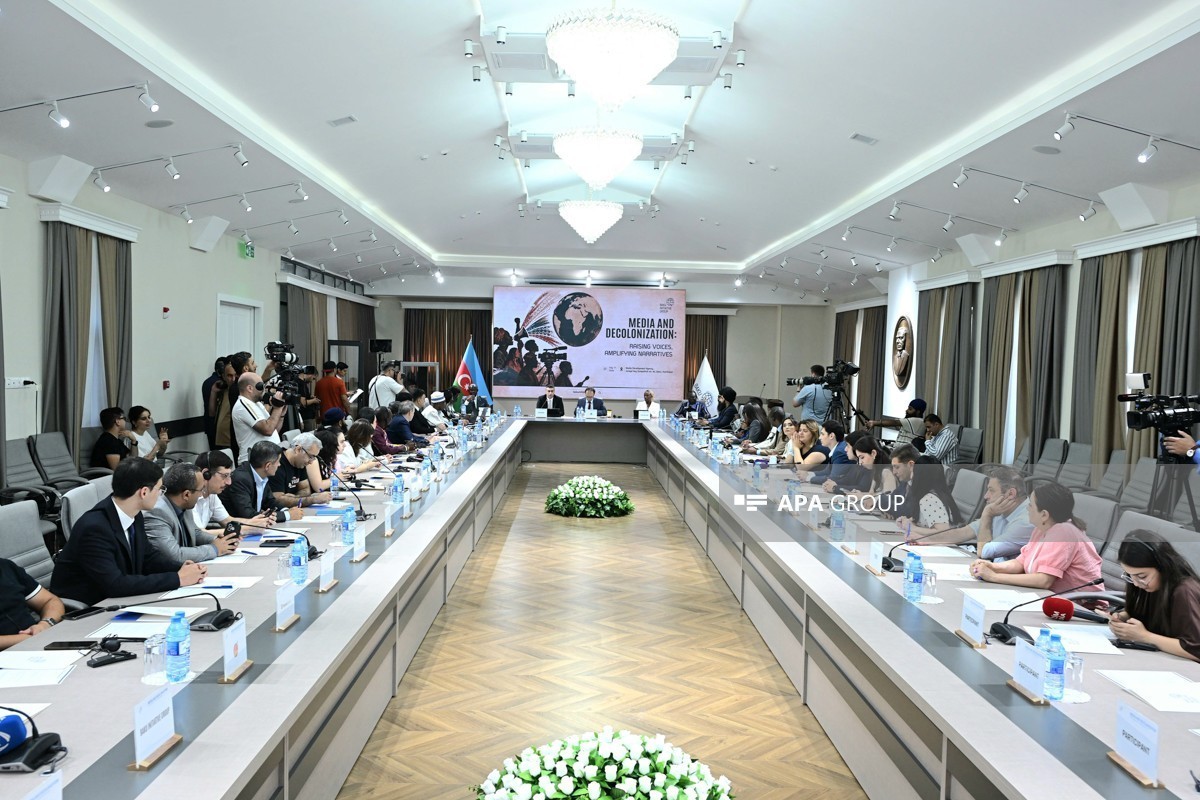
International conference on media and decolonization held in Baku - PHOTO
13:35
 11 July 2026
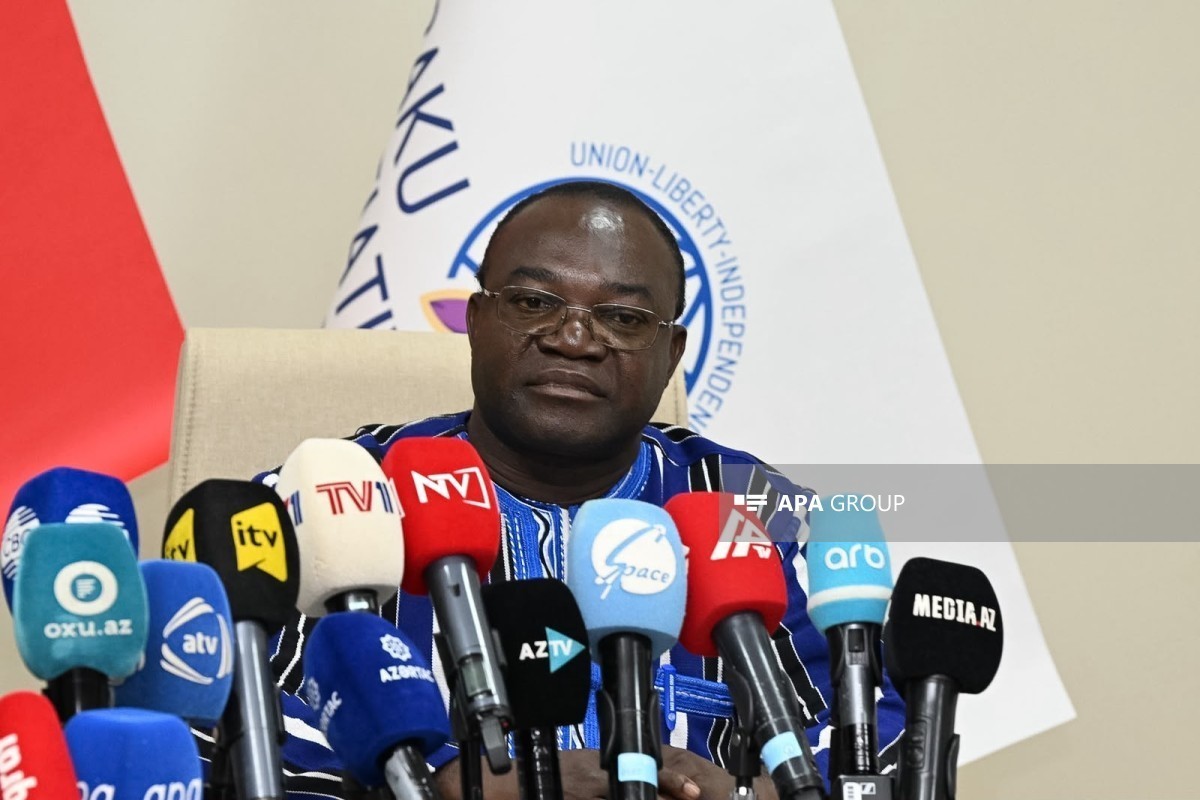
Burkina Faso official: Memorandum with BTG marks start of long-term cooperation
13:19
11 July 2026
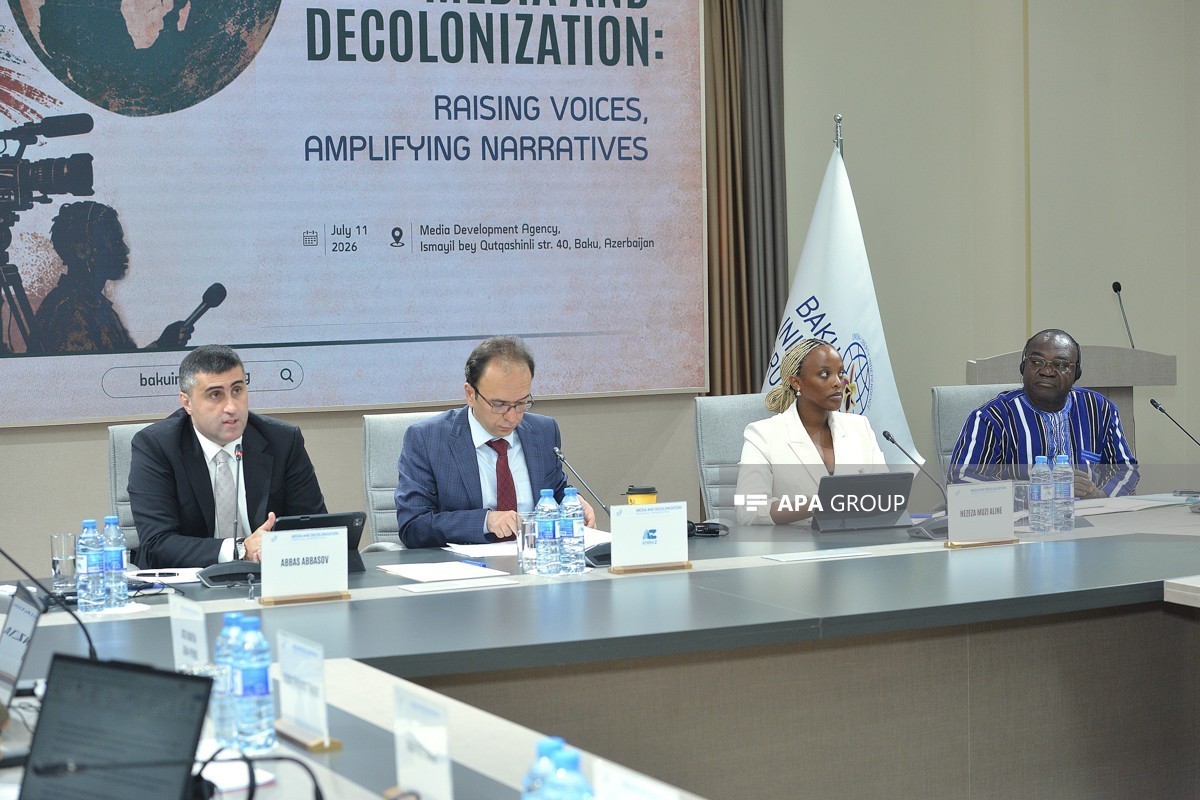
BTG signs first cooperation deal with foreign state institution
13:13
11 July 2026
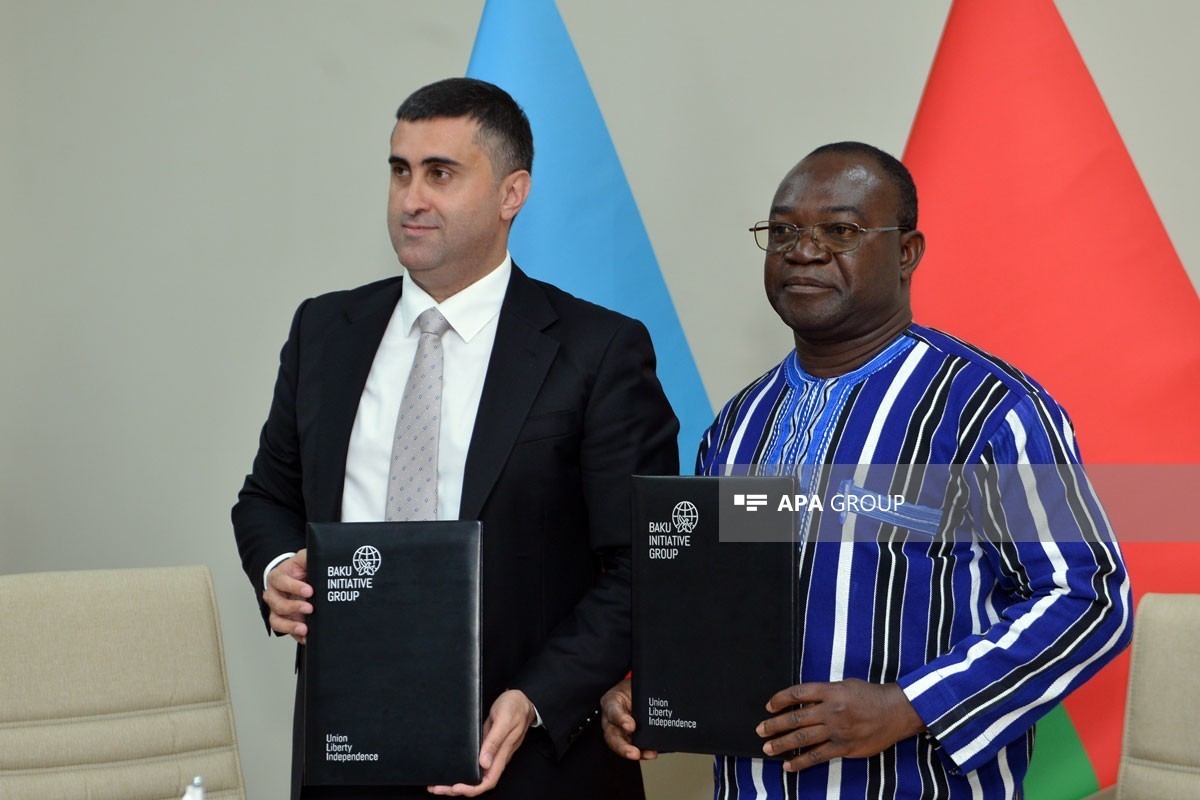 PHOTO'>
BTG signs memorandum with Burkina Faso Foreign Ministry's research institute - PHOTO
12:54
11 July 2026

NEWS FEED
President: My heart fills with joy every time I visit Karabakh and East Zangezur and witness their development
19:54
11 July 2026
President: Our state is strong, our Army is strong, and our determination is unwavering
19:52
11 July 2026
President: Our people have rightfully lived with a sense of pride over the past 5-6 years
19:50
11 July 2026
President: Every return of former IDPs to their ancestral lands is a celebration for all of us
19:48
11 July 2026
Russian strikes on Sumy kill 5, including child, injure 30 - UPDATED
19:34
11 July 2026
President Ilham Aliyev attended opening of Khankendi Hotel - PHOTO
18:02
11 July 2026
President Ilham Aliyev’s social media accounts shared video from Kichik Galaderesi village in Shusha
17:39
11 July 2026
President Ilham Aliyev visited Guzeykhirman village in Khojavend district
17:31
11 July 2026
Historic oil pumping station in Kurdamir may be added to cultural heritage list
16:37
11 July 2026
President Ilham Aliyev reviewed new buildings of “Yasaman” Hotel in Shusha
16:02
11 July 2026
President Ilham Aliyev reviewed progress under public-private partnership project on Garabagh Street in Shusha
15:32
11 July 2026
Iran's Supreme Leader pledges revenge for Ali Khamenei's death, says people worldwide will help
15:22
11 July 2026
Sadigjan House opened after restoration in Shusha
15:10
11 July 2026
Russia launched a missile strike on Odesa - two dead, one wounded
14:32
11 July 2026
Boat carrying tourists capsizes off Vietnam's Phu Quoc island, killing 15
14:29
11 July 2026
President Ilham Aliyev inspected restoration works in Shusha’s Kichik Galaderesi village and met with returning residents - PHOTO
14:06
11 July 2026
International conference on media and decolonization held in Baku - PHOTO
13:35
11 July 2026
Burkina Faso official: Memorandum with BTG marks start of long-term cooperation
13:19
11 July 2026
China evacuates over one million as Typhoon Bavi nears
13:16
11 July 2026
BTG signs first cooperation deal with foreign state institution
13:13
11 July 2026
Russian strikes on Kharkiv and Zaporizhzhia leave dead and injured
13:08
11 July 2026
BTG signs memorandum with Burkina Faso Foreign Ministry's research institute - PHOTO
12:54
11 July 2026
Qatari mediators visit Iran to ease tensions
12:51
11 July 2026
Romania says five sea drones neutralized in Black Sea
12:43
11 July 2026
Azerbaijani oil trades at $77.91
12:17
11 July 2026
Ukraine creates new command to intensify long-range strikes against Russia
12:09
11 July 2026
Abbas Abbasov: BTG has succeeded in placing decolonization on the agenda of international organizations
11:47
11 July 2026
Suspect in murder of Azerbaijani citizen detained at Batumi airport, Georgian Interior Ministry says - PHOTO - VIDEO
11:39
11 July 2026
CNN: Iran attempting to restore nuclear facilities
11:31
11 July 2026
Investments in non-oil and gas sector increase by nearly 6% this year
11:29
11 July 2026
Dutch spy agencies: Russia hacked cameras to spy on military routes
11:16
11 July 2026
Azerbaijani President congratulates Mongolian counterpart on National Day
11:12
11 July 2026
Hydroelectric power stations on Hochaz River inaugurated in Lachin
11:06
11 July 2026
Ukraine strikes nearly 28 vessels in Sea of Azov overnight, Russia closes sea access
11:00
11 July 2026
Azerbaijan Defense Minister pays a working visit to Türkiye - PHOTO
10:53
11 July 2026
Trump says thousands of missiles aimed at Iran as US sets Hormuz deadline
10:49
11 July 2026
President Ilham Aliyev laid foundation stone for Hakarichay Reservoir in Lachin
10:47
11 July 2026
Operation against Çankaya Municipality, arrest warrant for 36 people including Mayor Hüseyin Can Güner
10:44
11 July 2026
Road collapses in Türkiye's Rize, residents evacuated from three buildings - VIDEO
10:10
11 July 2026
Azerbaijani Prosecutor General's Office executes legal assistance request from Montenegro
10:04
11 July 2026
Bitcoin surpasses $64,000
10:00
11 July 2026
Oil prices decline on global markets
09:39
11 July 2026
BTG has made significant progress in raising global awareness of colonialism and decolonization, executive director says
09:32
11 July 2026
Attack on Kyiv: 10 injured, including a child, fires in three districts
09:14
11 July 2026
Saudi crown prince, Trump discuss US-Iran talks, Gulf security
09:10
11 July 2026
Patriot missiles for Ukraine may be produced in Germany
07:43
11 July 2026
Trump instructs Vance and Rubio to continue talks with Iran
07:10
11 July 2026
US rules out Iran deal without enriched uranium
06:12
11 July 2026
US demands Iran declare it will not attack ships in Hormuz
05:14
11 July 2026
Israeli Defense Minister says military ready for any scenario regarding Iran
04:24
11 July 2026


