










Baku – APA. U.S., European, and Arab and African officials have been invited to London next week for political talks about Libya and how the NATO alliance will assume responsibility for the no-fly zone over the North African nation to protect civilians, France and Britain said Wednesday, APA reports quoting “Associated Pressâ€.
In Paris, French Foreign minister Alain Juppe announced that a "contact group," including the United States, France, Britain and other countries involved in efforts to settle Libya’s tensions, will meet in London on Tuesday.
He told French legislators the gathering is aimed at showing that the "political piloting" of the international operation in Libya is not being handled by NATO, but by a broader group of countries. He said the African Union and the Arab League will be invited so a leadership structure can be put in place following initial command by the United States.
"Today we have agreed that this leadership structure would be both NATO and the European Union," Juppe said. "NATO for planning and operational supervision of the operations, and the EU for everything related to humanitarian action."
In London, Foreign Secretary William Hague confirmed that a wide group of nations will be invited, particularly to the meeting in London.
"It is critical that the international community continues to take united and coordinated action in response to the unfolding crisis," he said. "The meeting will form a contact group of nations to take forward this work."
A tentative draft outline of the arrangement would leave political supervision of the effort in the hands of the international coalition while transferring command of military operations from the United States to NATO, according to diplomats in Brussels who spoke on condition of anonymity because they were not authorized to discuss the matter.
NATO’s 28 members were in the final phases of drawing up the outline, and NATO Secretary-General Anders Fogh Rasmussen wanted it to be approved Wednesday night, the diplomats said.
Turkey’s Foreign Minister Ahmet Davutoglu warned that the rules of engagement must be restricted to protecting civilians, enforcing the arms embargo and no-fly zone, and the provision of humanitarian aid. This would exclude any further air strikes against Gadhafi’s ground forces.
"It is a framework that is not offensive," Davutoglu said.
The announcements came as NATO warships started patrolling off Libya’s coast Wednesday to enforce the U.N. arms embargo.
Canada’s Brig. General Pierre St. Amand said naval operation Unified Protector "is now under way" with six vessels involved during the first day of patrols. NATO had already received offers for up to 16 ships to patrol the Mediterranean off Libya, he said.
Turkey, NATO’s sole Muslim member, is an integral part of the naval blockade, having offered four frigates and one submarine, St. Amand said. Other nations offering vessels are the United States, Romania, Italy, Canada, Spain, Britain and Greece.
Separately, Turkey has been seen as holding up agreement on a command structure for a no-fly zone, but diplomats say an agreement is gradually emerging about the role NATO would play, after the United States — which has effectively commanded the operation until now — reiterated that it was committed to the transition.
The compromise proposal would see NATO take a key role in the military operation guided by a political committee of foreign ministers from the West and the Arab world. Officials said the North Atlantic Council — NATO’s top decision-making body, which already has approved military plans for enforcing the no-fly zone — may decide to start them later Wednesday.
"These are difficult discussions on very difficult issues," NATO spokeswoman Oana Lungescu said. "What you are seeing now is all 28 allies discussing them in a very constructive spirit."
Spanish Defense Minister Carme Chacon endorsed the proposal for handing over control of the Libya operation to a political committee. "We are comfortable with that," she said.
Germany is in a more difficult situation. The government, which is refusing to participate in the no-fly operation, approved on Wednesday sending air crews to man NATO’s surveillance planes over Afghanistan after withdrawing troops from the alliance’s Mediterranean Sea missions to avoid involvement in Libya.
The government’s decision to send up to 300 troops to man AWACS surveillance planes over Afghanistan is intended to help ease the strain on other NATO members, who may need to deploy to the Mediterranean.
Military experts say coordinating the enforcement of a no-fly zone over a nation the size of Libya requires a specialized and experienced staff of several hundred people. The U.N. Security Council authorized the no-fly zone to protect Libyan civilians after leader Moammar Gadhafi launched attacks against anti-government protesters who wanted him to leave after 42 years in power.
The mission to provide round-the-clock coverage of Libyan airspace would require not just fighter planes patrolling the skies, but also attack jets armed with anti-radar missiles to suppress any threat from the ground. It would entail several aerial tankers flying circular patterns over the Mediterranean to refuel the warplanes. At least one and probably two AWACS airborne surveillance and control aircraft would also have to be nearby to monitor and coordinate the entire operation.
The United States is one of the few nations with the operational headquarters capable of controlling such a complex mission. None of NATO’s European members have that capability and therefore rely on the alliance to provide it.
"The best outcome would be to have NATO handle military coordination, but hand political decisions to an ad hoc council of states participating in the coalition, including Arab countries," said Francois Heisbourg, director of the Foundation for Strategic Research, a think tank funded by France’s Defense Ministry.
If NATO assumes responsibility for the enforcing the no-fly zone over Libya and the U.N. arms embargo against Libya, this would be controlled from NATO’s operational center in Naples, which is also in control of the maritime blockade.
Lungescu said the naval action was to "cut off the flow of arms and mercenaries. We have intelligence reports that this activity is continuing, so it is quite important that NATO take action to stop this," she said.
The operation will be similar to a naval mission carried out by NATO ships in the Adriatic Sea during the 1992-1995 war in Bosnia that also enforced an arms embargo.
The European Union agreed Wednesday to increase financial pressure on Gadhafi by extending their assets freeze to the National Oil Corporation but went beyond U.N. requirements by adding five subsidiaries of the company.
Meanwhile, Turkey’s president called on Gadhafi to step down as soon as possible, saying that would help stop the bloodshed. Abdullah Gul said Wednesday such a move would also "deny the opportunity to others to plunder" their country.
Turkey has been insisting on a narrow military mandate for a NATO role in the military operation in Libya and assurances that no occupation of Libya will ensue.
In Moscow, Russia’s parliament passed a measure calling on the U.N. to impose a cease-fire in Libya and stop the violence against civilians.


 Follow us on Telegram
 t.me/apanewsaz
 Follow us on Instagram
 Follow us on TikTok
 Follow us on Facebook
 Follow us on X
Europe

UK guarantees $1 billion World Bank loan to Ukraine
 23:20
23:20
 26 June 2026
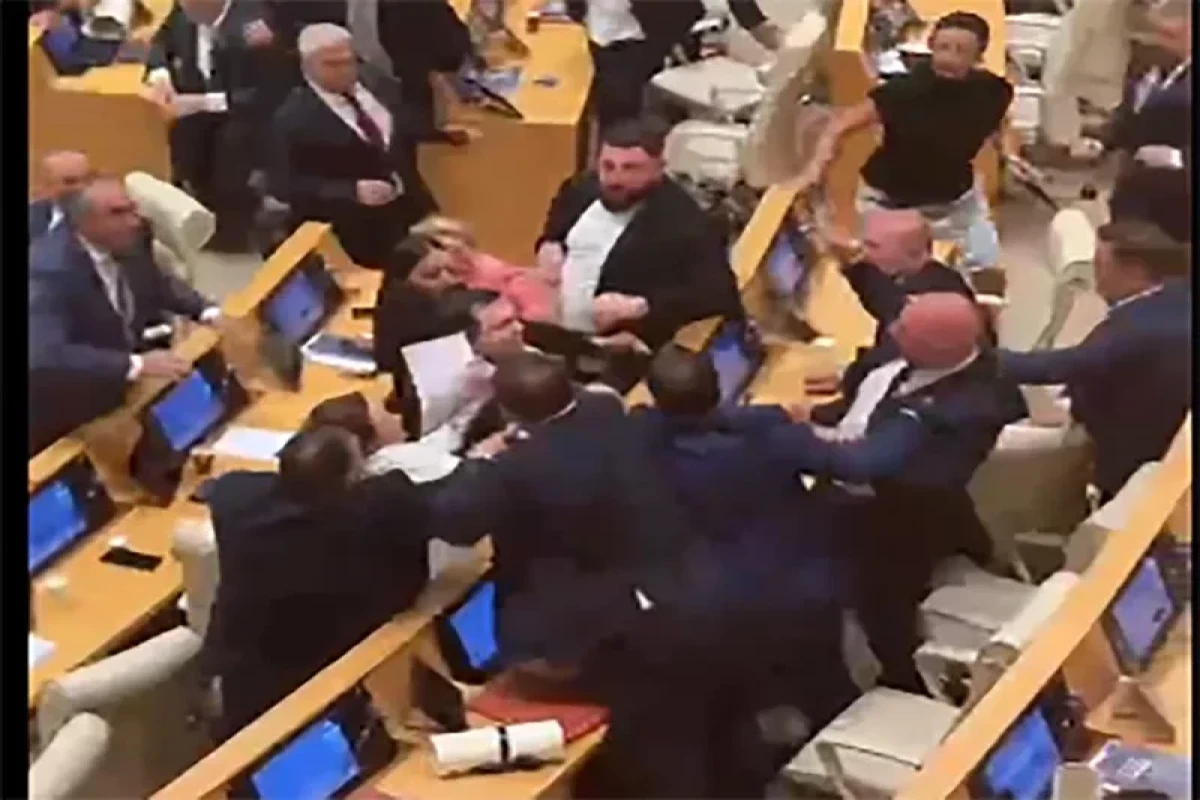
Scuffle breaks out during Georgian parliament session, proceedings suspended - PHOTO
20:00
26 June 2026

Death toll hits 55 in France as drownings rise amid Europe heatwave
19:07
26 June 2026
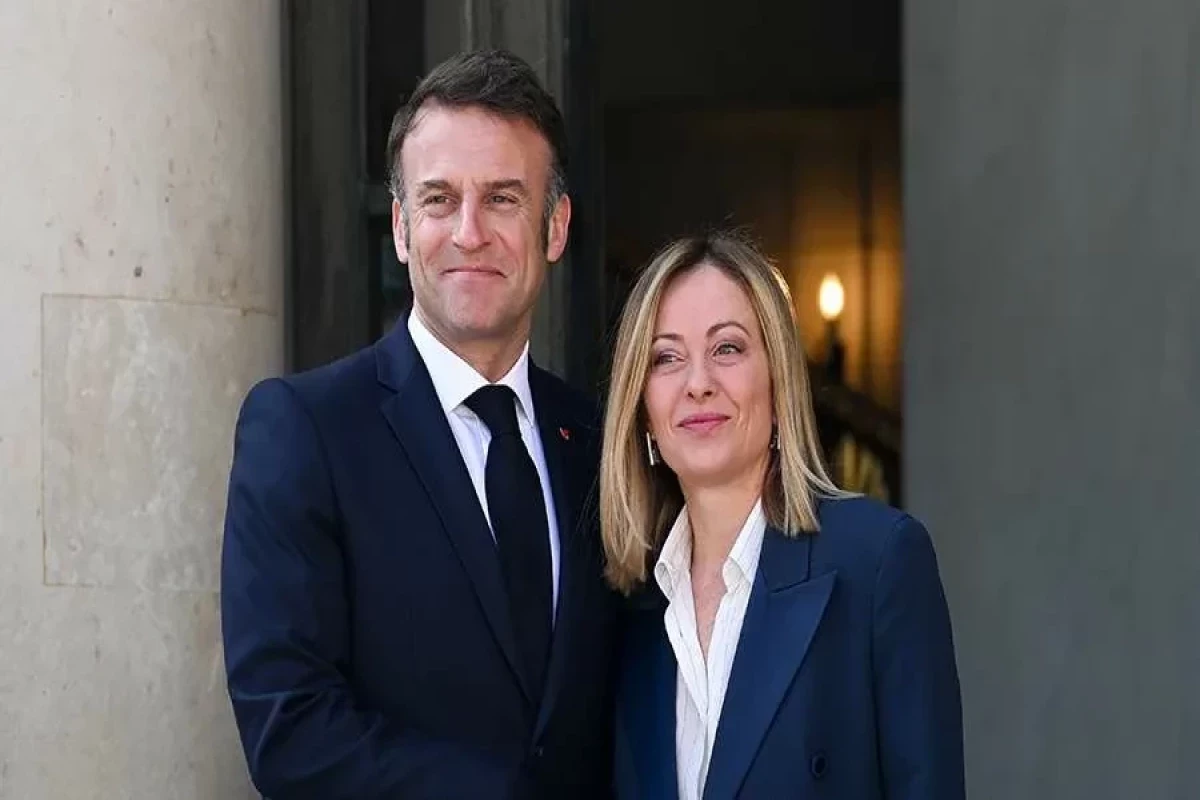
France, Italy seek multinational coalition to support Lebanon after UNIFIL withdrawal
09:02
26 June 2026

NEWS FEED
Wheat to be shipped to Armenia via transit through Azerbaijan
19:53
27 June 2026
Jeyhun Bayramov and Hakan Fidan hold phone conversation
19:04
27 June 2026
"Caucasus Eagle 2026" exercise concludes-VIDEO
18:43
27 June 2026
Tremors jolt Delhi-NCR, Kashmir as magnitude 6.2 earthquake hits Afghanistan
18:37
27 June 2026
Tanker hit by unidentified projectile in Hormuz, British maritime agency says
16:54
27 June 2026
Russian Defense Ministry claims two Ukrainian MiG-29 fighter jets destroyed at Mykolaiv airfield
16:51
27 June 2026
Iran accuses U.S. of violating two clauses of memorandum
16:48
27 June 2026
Service chief: Lowering military conscription age limit has reduced state expenses
16:09
27 June 2026
Ukrainian MiG-29 crashes during combat mission, Air Force says, pilot ejects safely
15:25
27 June 2026
Russia and Ukraine exchange civilian detainees
14:40
27 June 2026
Baku–Nakhchivan flights cancelled due to thunderstorms
14:16
27 June 2026
One killed, 11 injured in Ukraine's attack on Volgograd
13:58
27 June 2026
Bahrain says Iranian drones targeted its territory early Saturday
13:55
27 June 2026
Zelenskyy confirms strike on military plant in Volgograd-VIDEO-UPDATED
13:42
27 June 2026
Kremlin: Putin and Lukashenko continue talks
13:38
27 June 2026
Small aircraft crash in Beijing kills one person, injures 13, local govt says
13:30
27 June 2026
Iran's Foreign Ministry reacts to U.S. airstrikes
11:31
27 June 2026
Leyla Aliyeva and Arzu Aliyeva visit "CandyFest" summer festival and watch "Magic Pearl" water circus show-PHOTO
11:24
27 June 2026
Leyla Aliyeva and Arzu Aliyeva participate in seasonal flower planting campaign on Baku Boulevard-PHOTO
11:21
27 June 2026
Leyla Aliyeva and Arzu Aliyeva attend opening and presentation ceremonies at the Seaside National Park-PHOTO
11:14
27 June 2026
Baltic states urge EU to speed up ban on Russian oil imports
11:07
27 June 2026
Seoul says Chinese, Russian military aircraft enter its air defense zone
10:51
27 June 2026
Gold and silver rise in commodity markets
10:24
27 June 2026
Natural gas falls on New York exchange
10:22
27 June 2026
Azerbaijani oil trades at $74
10:20
27 June 2026
Two police officers killed in armed attack on police checkpoint in Iran
10:15
27 June 2026
Brent oil falls by more than 4%
09:35
27 June 2026
Major global stock market indices
09:29
27 June 2026
State Department: Lebanon agreement envisages withdrawal of Israeli forces
09:24
27 June 2026
Saudi Arabia resumes oil loading in the Persian Gulf
09:20
27 June 2026
Vance: US ready to discuss memorandum disagreements with Iran
02:39
Audio
27 June 2026
IRGC says it struck US military positions in response to US airstrike on Iran
01:43
27 June 2026
France wins Group I after beating Norway 4-1
01:13
27 June 2026
US strikes Iranian targets in response to attack on cargo ship
00:47
Audio
27 June 2026
Netanyahu says Israeli army will remain in southern Lebanon ‘security zone’ until Hezbollah disarmed
23:49
26 June 2026
UK guarantees $1 billion World Bank loan to Ukraine
23:20
26 June 2026
Israel, Lebanon sign framework peace deal after US-mediated talks
22:36
Audio
26 June 2026
Venezuela quake death toll rises to 92
22:29
26 June 2026
Trump accuses Iran of violating ceasefire with US
20:24
Audio
26 June 2026
Scuffle breaks out during Georgian parliament session, proceedings suspended - PHOTO
20:00
26 June 2026
Turkish ships stranded in Strait of Hormuz safely leave the region
19:56
26 June 2026
Turkish actor Kadir İnanır dies at 77
19:33
26 June 2026
Putin meets with Belarusian President Lukashenko
19:22
26 June 2026
Putin bans deportation of foreigners serving under contract in Russian army
19:19
26 June 2026
Seven Hezbollah fighters killed in Lebanon
19:12
26 June 2026
Explosion followed by fire hits factory in Türkiye
19:10
26 June 2026
Death toll hits 55 in France as drownings rise amid Europe heatwave
19:07
26 June 2026
Baghaei: Joint statement by US and GCC is a distortion of truth
18:40
26 June 2026
Rosatom says plans Bushehr staff return
18:15
26 June 2026
Small aircraft crashes into Beijing’s tallest skyscraper - VIDEO
17:56
26 June 2026


