











The ink had hardly dried on the agreements signed with participation of President Vladimir Putin, when Bulgarian President Georgi Pyrvanov stated that his country still gives political support to Nabucco gas pipeline. Prime Minister Sergey Stanyshev even claimed that South Stream and Nabucco pipelines supplement each other.
“Some say Bulgaria betrayed European Union and supported Russia’s interests and this project is the alternative of Nabucco. It’s nonsense.†It is interesting that this statement coincided with the statements of Sofia-accredited U.S. diplomats that Russia’s strengthening positions in the Balkans worry them. Prime Minister of Bulgaria refused these accusations and assured that relations with Russia will not change official Sofia’s geopolitical direction towards the West.
But it seems this assuredness does not suffice everybody. Happenings in Bulgaria’s Burgas city prove it. The residents of the city, which is the outfall of Burgas-Alexandroupolis oil pipeline, the second giant energy project between Moscow and Sofia, held mass rally and protested against the project. "Our rulers sold Bulgaria", "Don’t turn Burgas into a second Chernobyl," read the posters of the protestors, who even staged an auction and sold parts of the pipeline. The agreement signed by Bulgaria, Russia and Greece with participation of Russian president envisages transportation of Russian oil to Aegean Sea bypassing Turkey’s Bosphorus and Dardanelles. Question arises how “Borjomi scenario†is realized around the project, which is considered as the alternative to Baku-Tbilisi-Ceyhan pipeline. But the referendum in Burgas on February 17, which will decide the fate of the pipeline, shows seriousness of the situation. 51% of the city residents are to participate in the voting, so that the referendum can be considered valid. President Georgi Pyrvanov stated that local referendums will not influence the fate of the project.
On the other hand, Romanian President Traian Basescu’s speech about Constanza-Trieste before foreign diplomats accredited in Bucharest shows that the happenings in Burgas are no of local character.
“Nabucco pipeline is of strategic character for Romania and European Union. Direct, effective and safe delivery of the Caspian oil is possible through Constanza-Trieste pipeline,†he said.
President Basescu expressed his hope that European Union in its new policy on Central Asia will apply more suitable approach to this strategic region.
“Romania will try to achieve the goals of this policy through the relations with its strategic partners Azerbaijan and Kazakhstan,†he said. 1.400 kilometer- Constanza-Trieste pipeline or Pan-European Oil Pipeline which is a competitor of Burgas-Alexandroupolis and Bulgas-Vlore pipelines will link the Black and Adriatic Seas. Pan-European is a proposed oil pipeline from Constanţa in Romania via Serbia and Croatia to a point near Rijeka and from there through Slovenia to Trieste in Italy. It would carry around 60 million tonnes of oil per year. The feasibility study for the project has estimated that the pipeline will commence operations in 2012.
Viorel Palashka, Romanian deputy Minister of Economy stated in the middle of January that, the government supports the joining of “Gaz de France “Company and Kazakhstan to Constanza-Triesta pipeline project. This project was the focus of attention of Bucharest along January. This issue was debated during the visit of Romanian President Traian Basescu to Belgrade on January 29.Serbia is a key country for this project and Constanza-Triesta pipeline became insolvent because of Kosovo crisis in 1999.Official Bucharest assured Belgrade that its position will be close to Serbian positions.
“We debated this project with Boris Tadic I am sure that, our political and economical partnership will successfully develop,†he said. Serbian President Boris Tadic noted that they are interested in the necessity of Constanza port and in the development of cooperation on implementation of above-said project.
Against the back drop of South stream gas pipeline Romanian-Serbian dialogue was drawn more attention last month. Most parts of the pipeline are already built except for a connection between the city of Pitesti, Romania and the city of Pancevo, Serbia, and a section between Croatia’s northern Adriatic region through Slovenia to Trieste. Compared to the Burgas-Alexandroupolis and AMBO pipelines, a pipeline which runs entirely across land and directly joins the central European pipeline network carries smaller risks associated with oil spills. There is a threat that the number of tankers passing through the Turkish straits will not fall significantly and that oil pipelines would increase the total amount of oil being transported rather than replacing tanker traffic. Bucharest and Sofia, candidates to EU competes for Pan-European pipeline and South stream gas pipeline and these countries depend on Serbia. Serbian President Boris Tadic stated that the country intends to make investment in oil infrastructure of Constanza port. It is interesting, is Gazprom which bought Serbian Oil Company last month behind the investments? /APA Analytics /
Analytics: Europe’s response to Russia - Constanza-Trieste project

 05 February 2008 13:56 (UTC +04:00)



 İDMAN XƏBƏR
 Follow us on Telegram
 t.me/apanewsaz
 Follow us on Instagram
 Follow us on TikTok
 Follow us on Facebook
 Follow us on X
Domestic
Ramiz Mehdiyev expelled from New Azerbaijan Party, deprivation of his awards proposed - UPDATED-4
01:09
 17 October 2026
Speaker: Ilham Aliyev’s election as President in 2003 holds special place in country’s history
11:42
16 October 2026
Azerbaijani Parliament sends congratulatory letter to President and First Vice-President on Independence Restoration Day
11:10
16 October 2026
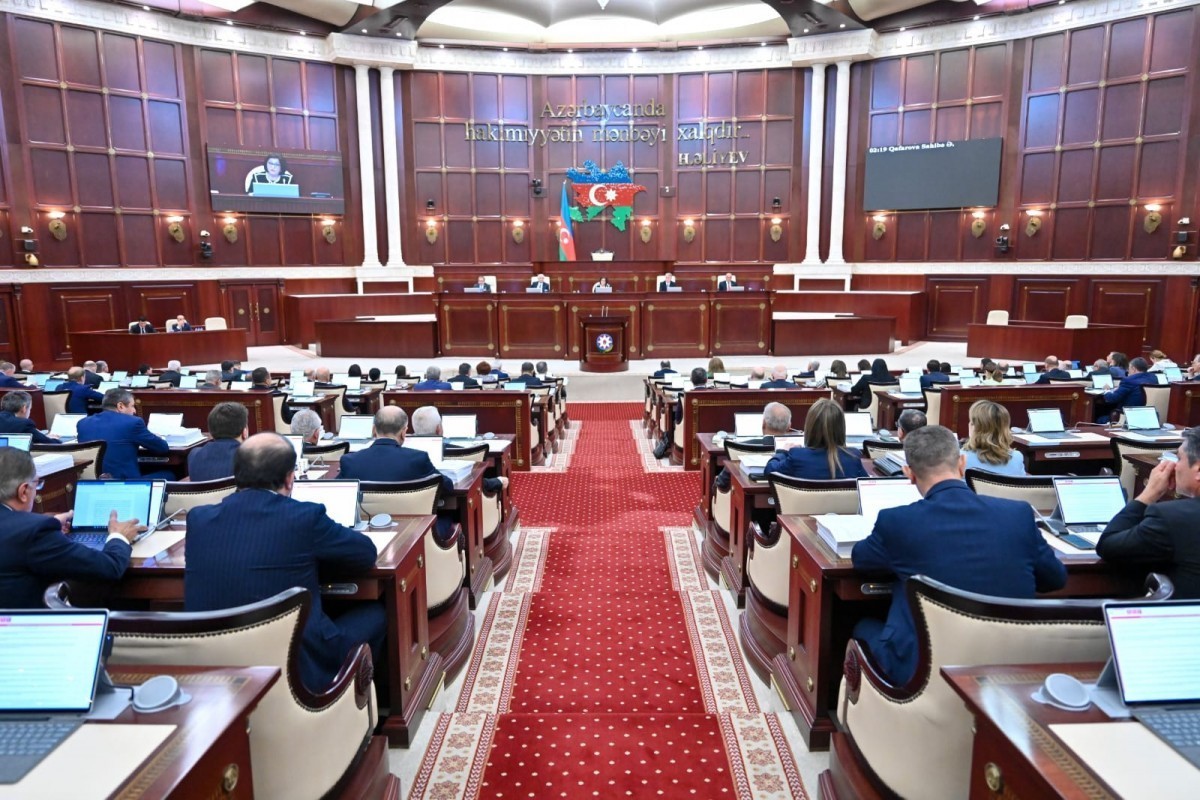
Azerbaijani Parliament begins its next session
11:05
16 October 2026

NEWS FEED
Erdoğan congratulates Azerbaijan on Restoration of Independence Day
15:48
18 October 2026
Iran’s new defence minister warns US against fresh attacks
14:07
18 October 2026
OTS Secretary General congratulates Azerbaijan on Restoration of Independence Day
13:22
18 October 2026
Turkish Foreign Ministry congratulates Azerbaijan on Restoration of Independence Day
11:29
18 October 2026
Ukraine currently lacks access to Starshield military communications system — Rubio
10:48
18 October 2026
Lithuanian foreign minister congratulates Azerbaijan on Restoration of Independence Day
09:31
18 October 2026
First VP Mehriban Aliyeva makes post on Restoration of Independence Day
09:01
18 October 2026
Saudi-led coalition says helicopter crash in Najran kills two crew members
08:10
18 October 2026
EU spending on Russian LNG imports rises 9.5%
06:38
18 October 2026
Trump’s decision to delay Russia sanctions draws bipartisan criticism in Congress
05:40
18 October 2026
Man shot and killed inside New York City subway station in Midtown Manhattan: NYPD
01:44
18 October 2026
Moscow mayor says nearly 200 Ukrainian drones destroyed while heading for city
01:23
18 October 2026
Trump accused Biden of handing over huge amount of weapons to Kyiv for free
00:55
18 October 2026
19 people detained for attempting to incident among fans during Qarabag–Neftchi match
00:46
18 October 2026
Azerbaijan marks 6th anniversary of Khudaferin village's liberation
00:00
18 October 2026
Azerbaijan marks 35 years since restoring independence
00:00
18 October 2026
US President expects gasoline prices to fall after the war with Iran ends
23:43
17 October 2026
Macron promised to punish those responsible for violence during protests in France
23:34
17 October 2026
Bayern Munich thrashed Leipzig 6-1 in a German championship match
23:02
17 October 2026
Trump: 'Amazing' Canada deal coming at some point
22:50
17 October 2026
Barcelona thrashed Betis thanks to Rodri's debut goal
22:45
17 October 2026
Iran and Pakistan temporarily suspended border crossings
22:10
17 October 2026
Kenya’s Ebola cases rise to 7, including health workers who cared for the first patient
21:53
17 October 2026
Match between Azerbaijani football clubs Neftchi and Qarabag ends with draw
21:30
17 October 2026
Merz warns of serious political rift in Germany
21:17
17 October 2026
Clashes on Pakistan-Afghanistan border leave fatalities
21:06
17 October 2026
Sounds of explosions heard in southern Iran, near Strait of Hormuz
20:30
17 October 2026
Galatasaray beat Genclerbirligi, Batrakov played the entire match
20:09
17 October 2026
French police clash with protesters as tens of thousands rally over cost of living
19:50
17 October 2026
Former White House press secretary calls working with Trump honor after leaving
19:26
17 October 2026
Pope Leo XIV discharged from hospital - UPDATED
18:35
17 October 2026
Hurricane Trudy threatens western Mexico with heavy rain, coastal flooding
18:25
17 October 2026
Fire destroys over 200 shacks in S. Africa's KwaZulu-Natal
18:09
17 October 2026
At least 10 killed in fire at Bangladesh beach resort
17:41
17 October 2026
Houthis release 159 prisoners affiliated with Yemeni government
17:26
17 October 2026
Tear gas, clashes hit French cities in cost-of-living protests
17:17
17 October 2026
Protest held in Kyiv demanding Klitschko's resignation
16:42
17 October 2026
Iranian FM: We have proposed seven-day plan to US to reopen Strait of Hormuz, choice is theirs
16:35
17 October 2026
Fuzuli City Day celebrated - PHOTO
16:10
17 October 2026
Zelenskyy believes US will continue lifting sanctions against Russia
15:53
17 October 2026
Azerbaijan's President awards Sharaf Order to Valeh Alasgarov
15:35
17 October 2026
Next phase of “Falcons Meet – 2026” exercise conduct training flights - VIDEO
15:00
17 October 2026
Two dead, three injured in car accident in Azerbaijan's Bilasuvar
14:32
17 October 2026
Azerbaijan plans to resettle residents in two Fuzuli villages by year-end
14:20
17 October 2026
NATO training course concludes in Baku - VIDEO
14:12
17 October 2026
Egypt’s Sisi says presidential term will end in 2030, rules out constitutional changes
13:58
17 October 2026
Mayor: Air defense systems shoot down 144 Ukrainian drones approaching Moscow overnight
13:28
17 October 2026
Zelenskyy expresses regret over Trump's decision to suspend new sanctions against Russia
13:25
17 October 2026
5.2-magnitude quake hits Off Coast of Ecuador - GFZ
13:11
17 October 2026
Azerbaijan announces value of electricity, gas and steam production
12:44
17 October 2026


