










Baku – APA. U.N. peacekeepers monitoring a fragile 2005 peace deal between north and south Sudan could not stop new hostilities between the northern and southern armies, the U.N. peacekeeping chief said on Monday, APA reports quoting “Reutersâ€.
Alain Le Roy, under-secretary-general for peacekeeping operations, was discussing some of the possibilities for boosting security ahead of a planned referendum on southern independence early next year.
U.S. Ambassador to the United Nations Susan Rice has said there is a possibility of temporarily increasing the 10,000-strong blue-helmet force in Sudan, known as UNMIS, so it could better monitor hot spots on the north-south border.
Le Roy suggested that an increase would not help.
"An increase in the number of troops would not enable UNMIS to prevent, or even to contain, a clash between the two armies," Le Roy told the 15-nation Security Council.
"Our best available tool against a return to war remains our commitment in favor of a political agreement ... of the parties on the key pending issues," he said.
He said preparations for the referendum on independence of the oil-producing south, and a separate plebiscite on whether the oil-rich central region of Abyei should join the south or remain with the north, were severely behind schedule.
U.S.-supervised talks in Addis Ababa to work out disagreements on talks that would enable the Abyei referendum to go ahead broke off in deadlock earlier this month. New talks are slated to begin later this week in the Ethiopian capital.
"It is absolutely essential that the parties should reach an agreement during these negotiations," Le Roy said. "As long as there is no agreement, tensions continue to increase on a daily basis in Abyei."
’TIME BOMB’
Sudanese Ambassador Daffa-Alla Elhag Ali Osman told the council that boosting the number of UNMIS troops would be ill-advised. Afterward, he told reporters it was crucial to reach agreements on unresolved political issues, such as border demarcation, which represent a "time bomb" for Sudan.
"If pending issues are not resolved ... it gives a chance for war to erupt," he said.
Both the north and the south have said they do not want a return to war. Analysts warn that a delay of the southern independence vote could spark renewed fighting.
The 2005 Comprehensive Peace Agreement ended more than two decades of civil war between the north and south. Some 2 million people died in that war, which was fueled by religion, ethnicity, ideology and resources, including oil.
Tensions have been increasing this month, Le Roy said, with the north and the south accusing each other of building up military forces along the north-south border. Le Roy said UNMIS has not been able to fully verify the security situation.
"However, it seems that there has been no major military mobilization, even if the Sudanese Armed Forces and the SPLA (southern army) seem to have heightened their level of preparations and strengthened their defensive positions along the borders," the U.N. peacekeeping chief said.
Le Roy added that UNMIS was increasing the number of patrols along the north-south border and had boosted its forces in Abyei, which has been a flashpoint in recent years.
The chief administrator of Abyei on Monday rejected U.S. calls for compromise over the area’s future that would split it without a referendum. Khartoum says the Abyei dispute must be resolved if the southern vote is to go ahead.


 Follow us on Telegram
 t.me/apanewsaz
 Follow us on Instagram
 Follow us on TikTok
 Follow us on Facebook
 Follow us on X
Asia
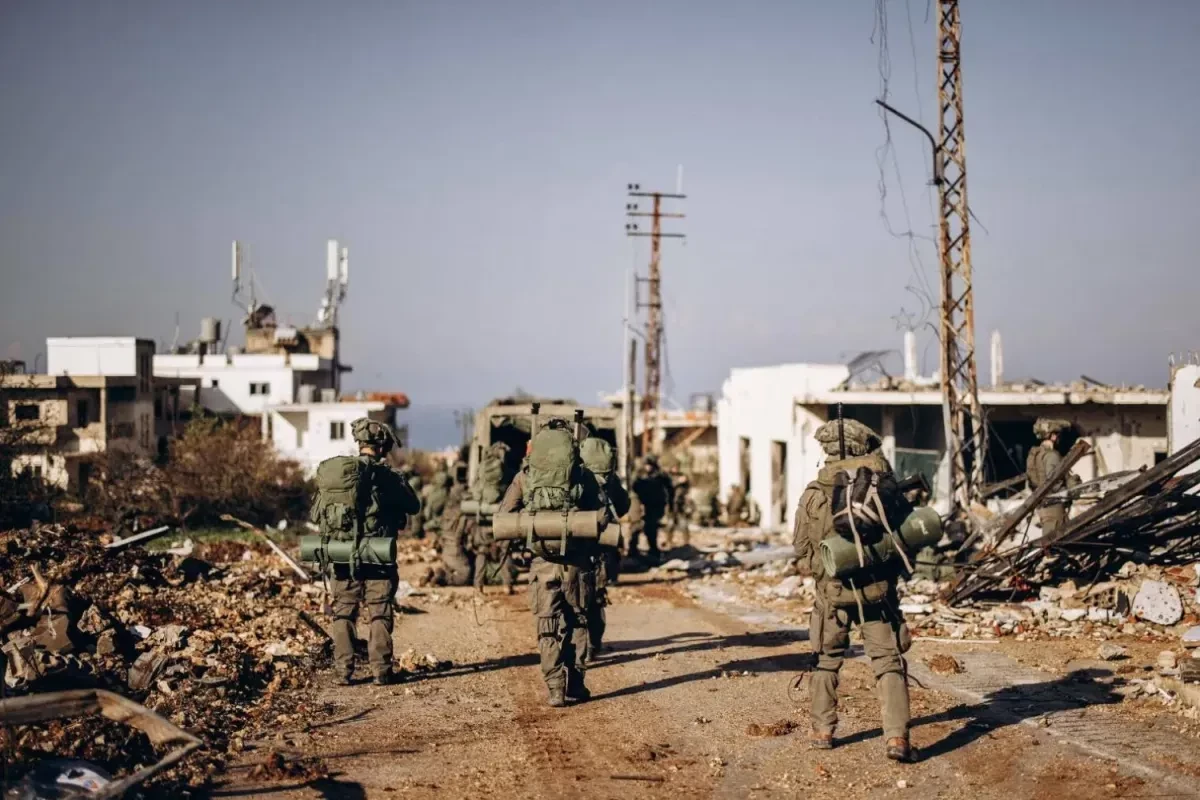
Israel will withdraw troops from two areas in southern Lebanon on June 28
 01:48
01:48
 28 June 2026
Netanyahu: Deal says Israel can keep security zone as long as needed
23:53
27 June 2026

Tremors jolt Delhi-NCR, Kashmir as magnitude 6.2 earthquake hits Afghanistan
18:37
27 June 2026
Iran accuses U.S. of violating two clauses of memorandum
16:48
27 June 2026

NEWS FEED
Israel will withdraw troops from two areas in southern Lebanon on June 28
01:48
28 June 2026
Netanyahu: Deal says Israel can keep security zone as long as needed
23:53
27 June 2026
UFC Baku: Rafael Fiziev defeats Manuel Torres in main event
23:14
Audio
27 June 2026
UFC: Abus Magomedov defeats Mikhal Oleksiychuk
21:22
27 June 2026
UFC: Farman Hasanov defeats his opponent from the United States
21:11
27 June 2026
Wheat to be shipped to Armenia via transit through Azerbaijan
19:53
27 June 2026
Jeyhun Bayramov and Hakan Fidan hold phone conversation
19:04
27 June 2026
"Caucasus Eagle 2026" exercise concludes-VIDEO
18:43
27 June 2026
Tremors jolt Delhi-NCR, Kashmir as magnitude 6.2 earthquake hits Afghanistan
18:37
27 June 2026
Tanker hit by unidentified projectile in Hormuz, British maritime agency says
16:54
27 June 2026
Russian Defense Ministry claims two Ukrainian MiG-29 fighter jets destroyed at Mykolaiv airfield
16:51
27 June 2026
Iran accuses U.S. of violating two clauses of memorandum
16:48
27 June 2026
Service chief: Lowering military conscription age limit has reduced state expenses
16:09
27 June 2026
Ukrainian MiG-29 crashes during combat mission, Air Force says, pilot ejects safely
15:25
27 June 2026
Russia and Ukraine exchange civilian detainees
14:40
27 June 2026
Baku–Nakhchivan flights cancelled due to thunderstorms
14:16
27 June 2026
One killed, 11 injured in Ukraine's attack on Volgograd
13:58
27 June 2026
Bahrain says Iranian drones targeted its territory early Saturday
13:55
27 June 2026
Zelenskyy confirms strike on military plant in Volgograd-VIDEO-UPDATED
13:42
27 June 2026
Kremlin: Putin and Lukashenko continue talks
13:38
27 June 2026
Small aircraft crash in Beijing kills one person, injures 13, local govt says
13:30
27 June 2026
Iran's Foreign Ministry reacts to U.S. airstrikes
11:31
27 June 2026
Leyla Aliyeva and Arzu Aliyeva visit "CandyFest" summer festival and watch "Magic Pearl" water circus show-PHOTO
11:24
27 June 2026
Leyla Aliyeva and Arzu Aliyeva participate in seasonal flower planting campaign on Baku Boulevard-PHOTO
11:21
27 June 2026
Leyla Aliyeva and Arzu Aliyeva attend opening and presentation ceremonies at the Seaside National Park-PHOTO
11:14
27 June 2026
Baltic states urge EU to speed up ban on Russian oil imports
11:07
27 June 2026
Seoul says Chinese, Russian military aircraft enter its air defense zone
10:51
27 June 2026
Gold and silver rise in commodity markets
10:24
27 June 2026
Natural gas falls on New York exchange
10:22
27 June 2026
Azerbaijani oil trades at $74
10:20
27 June 2026
Two police officers killed in armed attack on police checkpoint in Iran
10:15
27 June 2026
Brent oil falls by more than 4%
09:35
27 June 2026
Major global stock market indices
09:29
27 June 2026
State Department: Lebanon agreement envisages withdrawal of Israeli forces
09:24
27 June 2026
Saudi Arabia resumes oil loading in the Persian Gulf
09:20
27 June 2026
Vance: US ready to discuss memorandum disagreements with Iran
02:39
Audio
27 June 2026
IRGC says it struck US military positions in response to US airstrike on Iran
01:43
27 June 2026
France wins Group I after beating Norway 4-1
01:13
27 June 2026
US strikes Iranian targets in response to attack on cargo ship
00:47
Audio
27 June 2026
Netanyahu says Israeli army will remain in southern Lebanon ‘security zone’ until Hezbollah disarmed
23:49
26 June 2026
UK guarantees $1 billion World Bank loan to Ukraine
23:20
26 June 2026
Israel, Lebanon sign framework peace deal after US-mediated talks
22:36
Audio
26 June 2026
Venezuela quake death toll rises to 92
22:29
26 June 2026
Trump accuses Iran of violating ceasefire with US
20:24
Audio
26 June 2026
Scuffle breaks out during Georgian parliament session, proceedings suspended - PHOTO
20:00
26 June 2026
Turkish ships stranded in Strait of Hormuz safely leave the region
19:56
26 June 2026
Turkish actor Kadir İnanır dies at 77
19:33
26 June 2026
Putin meets with Belarusian President Lukashenko
19:22
26 June 2026
Putin bans deportation of foreigners serving under contract in Russian army
19:19
26 June 2026
Seven Hezbollah fighters killed in Lebanon
19:12
26 June 2026


