










Baku – APA. Suspected al Qaeda militants attacked two Western targets in Yemen on Wednesday, firing a rocket at a senior British diplomat’s car and killing a Frenchman at a gas and oil installation, APA reports quoting “Reutersâ€.
The attacks bore the hallmarks of al Qaeda, which has threatened to strike against Western targets and the Yemeni government, which declared war on the group’s local arm after it claimed a failed attack on a U.S.-bound airliner in December.
In London, the British Foreign Office said a British Embassy vehicle carrying the deputy chief of the British mission was attacked and that one British embassy staff member in the vehicle suffered a minor injury.
"The vehicle was on its way to the British embassy, with five embassy staff on board," a Foreign Office spokesman said.
"One member of staff suffered minor injuries and is undergoing treatment, all others were unhurt."
A security source in Yemen said three Yemeni bystanders were wounded in the rocket-propelled grenade (RPG) attack. President Ali Abdullah Saleh met the British envoy to discuss the attack.
The Frenchman died in a shooting incident inside the compound of Austrian-owned oil and gas group OMV, France’s Foreign Ministry said. A security source said a Yemeni guard working for a private security firm went on a shooting spree, and government forces subsequently disarmed him.
In London, Foreign Secretary William Hague called it a "shameful attack." He said the attack would only reinforce Britain’s determination to help Yemen confront its challenges.
Both attacks followed tightened security in the capital of the embattled country whose conflicts with a resurgent al Qaeda, secessionists in the south and Shi’ite rebels in the north has raised Western and Gulf Arab fears it is on the verge of becoming a failed state.
WORSENING SECURITY
Those fears worsened after the Yemen-based arm of al Qaeda claimed responsibility for the botched bombing of the U.S.-bound airliner. The group also said it was behind a failed assassination attempt on the deputy interior minister of Saudi Arabia, Yemen’s neighbor and the world’s top oil exporter.
"These twin attacks reinforce the overall picture that the security situation in Yemen has been deteriorating since the start of the year, since the Yemeni government and the U.S. stepped up their fight against al Qaeda," said Nicole Stracke of the Gulf Research Center in Dubai.
"Al Qaeda has been reacting to this. But these attacks are not an escalation - it’s clear they are under huge pressure and it shows in their operations. Shooting an RPG is not a complicated operation," she said.
Stracke also said the militants may have chosen to target the British embassy because it was easier to access than the heavily fortified U.S. embassy in Sanaa.
An al Qaeda suicide bomber attacked the British ambassador’s convoy in April, killing himself and injuring three others. Al Qaeda in the Arabian Peninsula said it was behind that attack, accusing the British envoy of leading a war on Muslims in the peninsula.
Yemen’s population of unemployed youths are seen as potential recruits for Islamist fighters, and Western donor nations including Britain backed Yemen in its fight against al Qaeda at a United Nations meeting in New York last month.
More than 40 percent of Yemen’s 23 million people live on less than $2 a day, and concerns about instability and corruption have hampered growth and made unemployment worse.
LINKS TO BIN LADEN
Yemen is the ancestral home of al Qaeda founder Osama bin Laden, who is thought to be in hiding somewhere in the border area of Afghanistan and Pakistan. Analysts say Yemenis have long formed a significant body of al Qaeda footsoldiers abroad.
Al Qaeda in Yemen announced last year that Yemen was the base for its Saudi and other Gulf operations. It stepped up attacks this year in apparent reprisal for the government’s increased collaboration with the United States.
Yemen’s Western allies and Saudi Arabia have long feared a resurgent al Qaeda wing could take advantage of rising insecurity and weak central control to use Yemen as a base for attacks that would destabilize the region and beyond.
The failed airliner bombing prompted Washington to step up training, intelligence and military aid to Sanaa. Yemen cooperated with Washington after the September 11 attacks of 2001 to stamp out the group’s presence.
Suspected U.S. drones -- unmanned aircraft also used against militants in Afghanistan and Pakistan -- have been criticized by rights watchdog Amnesty International as extrajudicial killings.
Al Qaeda and the Yemeni government have clashed for many years, but the group’s operations have typically focused on Western targets.
An al Qaeda attack on the U.S. embassy in Sanaa in 2008 killed 16 people, including six attackers.


 Follow us on Telegram
 t.me/apanewsaz
 Follow us on Instagram
 Follow us on TikTok
 Follow us on Facebook
 Follow us on X
Asia
Tremors jolt Delhi-NCR, Kashmir as magnitude 6.2 earthquake hits Afghanistan
 18:37
18:37
 27 June 2026
Iran accuses U.S. of violating two clauses of memorandum
16:48
27 June 2026
Bahrain says Iranian drones targeted its territory early Saturday
13:55
27 June 2026
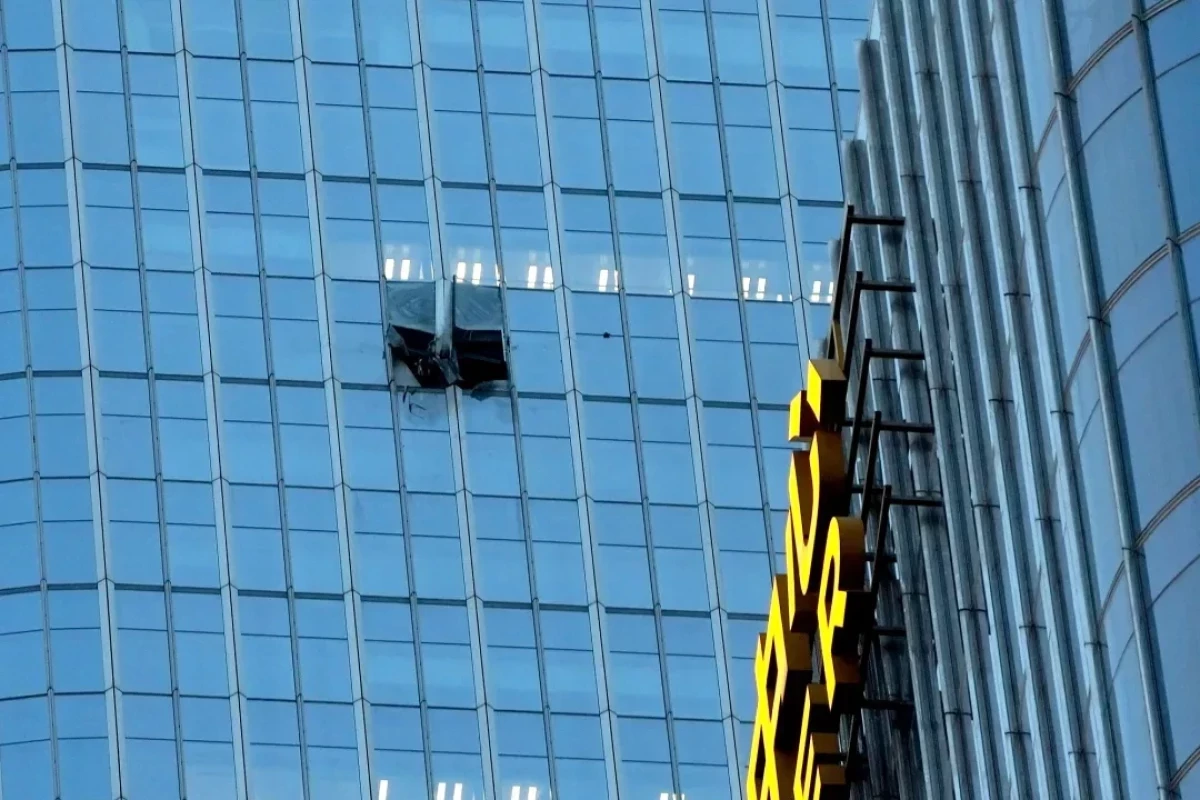
Small aircraft crash in Beijing kills one person, injures 13, local govt says
13:30
27 June 2026

NEWS FEED
Wheat to be shipped to Armenia via transit through Azerbaijan
19:53
27 June 2026
Jeyhun Bayramov and Hakan Fidan hold phone conversation
19:04
27 June 2026
"Caucasus Eagle 2026" exercise concludes-VIDEO
18:43
27 June 2026
Tremors jolt Delhi-NCR, Kashmir as magnitude 6.2 earthquake hits Afghanistan
18:37
27 June 2026
Tanker hit by unidentified projectile in Hormuz, British maritime agency says
16:54
27 June 2026
Russian Defense Ministry claims two Ukrainian MiG-29 fighter jets destroyed at Mykolaiv airfield
16:51
27 June 2026
Iran accuses U.S. of violating two clauses of memorandum
16:48
27 June 2026
Service chief: Lowering military conscription age limit has reduced state expenses
16:09
27 June 2026
Ukrainian MiG-29 crashes during combat mission, Air Force says, pilot ejects safely
15:25
27 June 2026
Russia and Ukraine exchange civilian detainees
14:40
27 June 2026
Baku–Nakhchivan flights cancelled due to thunderstorms
14:16
27 June 2026
One killed, 11 injured in Ukraine's attack on Volgograd
13:58
27 June 2026
Bahrain says Iranian drones targeted its territory early Saturday
13:55
27 June 2026
Zelenskyy confirms strike on military plant in Volgograd-VIDEO-UPDATED
13:42
27 June 2026
Kremlin: Putin and Lukashenko continue talks
13:38
27 June 2026
Small aircraft crash in Beijing kills one person, injures 13, local govt says
13:30
27 June 2026
Iran's Foreign Ministry reacts to U.S. airstrikes
11:31
27 June 2026
Leyla Aliyeva and Arzu Aliyeva visit "CandyFest" summer festival and watch "Magic Pearl" water circus show-PHOTO
11:24
27 June 2026
Leyla Aliyeva and Arzu Aliyeva participate in seasonal flower planting campaign on Baku Boulevard-PHOTO
11:21
27 June 2026
Leyla Aliyeva and Arzu Aliyeva attend opening and presentation ceremonies at the Seaside National Park-PHOTO
11:14
27 June 2026
Baltic states urge EU to speed up ban on Russian oil imports
11:07
27 June 2026
Seoul says Chinese, Russian military aircraft enter its air defense zone
10:51
27 June 2026
Gold and silver rise in commodity markets
10:24
27 June 2026
Natural gas falls on New York exchange
10:22
27 June 2026
Azerbaijani oil trades at $74
10:20
27 June 2026
Two police officers killed in armed attack on police checkpoint in Iran
10:15
27 June 2026
Brent oil falls by more than 4%
09:35
27 June 2026
Major global stock market indices
09:29
27 June 2026
State Department: Lebanon agreement envisages withdrawal of Israeli forces
09:24
27 June 2026
Saudi Arabia resumes oil loading in the Persian Gulf
09:20
27 June 2026
Vance: US ready to discuss memorandum disagreements with Iran
02:39
Audio
27 June 2026
IRGC says it struck US military positions in response to US airstrike on Iran
01:43
27 June 2026
France wins Group I after beating Norway 4-1
01:13
27 June 2026
US strikes Iranian targets in response to attack on cargo ship
00:47
Audio
27 June 2026
Netanyahu says Israeli army will remain in southern Lebanon ‘security zone’ until Hezbollah disarmed
23:49
26 June 2026
UK guarantees $1 billion World Bank loan to Ukraine
23:20
26 June 2026
Israel, Lebanon sign framework peace deal after US-mediated talks
22:36
Audio
26 June 2026
Venezuela quake death toll rises to 92
22:29
26 June 2026
Trump accuses Iran of violating ceasefire with US
20:24
Audio
26 June 2026
Scuffle breaks out during Georgian parliament session, proceedings suspended - PHOTO
20:00
26 June 2026
Turkish ships stranded in Strait of Hormuz safely leave the region
19:56
26 June 2026
Turkish actor Kadir İnanır dies at 77
19:33
26 June 2026
Putin meets with Belarusian President Lukashenko
19:22
26 June 2026
Putin bans deportation of foreigners serving under contract in Russian army
19:19
26 June 2026
Seven Hezbollah fighters killed in Lebanon
19:12
26 June 2026
Explosion followed by fire hits factory in Türkiye
19:10
26 June 2026
Death toll hits 55 in France as drownings rise amid Europe heatwave
19:07
26 June 2026
Baghaei: Joint statement by US and GCC is a distortion of truth
18:40
26 June 2026
Rosatom says plans Bushehr staff return
18:15
26 June 2026
Small aircraft crashes into Beijing’s tallest skyscraper - VIDEO
17:56
26 June 2026


