










Baku – APA. When Kim Jong-il disappeared from public view after a suspected stroke in 2008, world leaders fretted that North Korea might suddenly implode without its strongman, APA reports quoting “Financial Timesâ€.
Out came the dossiers of worst-case scenarios. Would Chinese and US special forces clash as they raced to secure North Korea’s crude nuclear warheads? Would the Korean People’s Army fight to the last of its million men? How many billions of dollars would be needed to ensure unification with South Korea?
Nerves have eased with this week’s official political debut of Kim Jong-eun, the leader’s third known son. The most important congress of the ruling Workers’ party for 30 years also appointed a new elite that should help him cut his teeth in roles in the party and armed forces. These titles in effect identify him as heir apparent.
With this structure in place, obituaries of North Korea may again prove premature. A regime that subjects 24m – often hungry – people to brainwashing and sends dissenters to a brutal network of gulags could yet survive for many years.
“Continuity is the most likely medium-term outlook,†said Andrew Gilholm, senior north-east Asia analyst at Control Risks consultancy.
Although the country is continually riven by flooding and famine, there is next to no sign of public opposition on a scale that would threaten national security. Authorities deal early with unrest and defectors recount tales of summary executions. Daniel Pinkston, north-east Asia deputy project director at the International Crisis Group, said: “I do not see anything coming spontaneously from civil society as we saw in eastern Europe.
“Sudden change could only come from the top and we would probably know about that only when they appear on television and announce they’re in power.
“In the short term, say, between one and five years, the system is stable.â€
Although fears of a sudden collapse have ebbed, analysts say Kim Jong-eun’s succession is by no means guaranteed. Many focus on the differences between this succession and that of Kim Jong-il, who was groomed for more than 20 years before his father, Kim Il-sung, died in 1994.
“Kim Jong-eun’s succession has been rushed through in 20 months,†said Yun Duk-min, from the Institute of Foreign Affairs and National Security in Seoul. “Kim Jong-il’s health has to hold for at least the next five or six years. If it doesn’t, that could destabilise the regime.â€
Judging from Kim Jong-il’s gaunt, rapidly dwindling physique, many South Korean analysts have speculated that he is suffering from a terminal illness, causing him to rush the succession. The length of time before a transfer of power will help determine whether Kim Jong-eun can fully take on his father’s aura, or whether he will end up being a puppet of senior officials.
“Kim Jong-eun remains many years from developing the kind of authority, credibility and independent power base that would allow him to play the same role as his father,†said Mr Gilholm at Control Risks.
He added that Kim Jong-eun could hardly command true respect in North Korea’s hierarchical Confucian society while aged only 27 or 28.
North Korea’s elite is not homogenous. Rival camps in the military and ruling party will be vying for influence. Analysts have identified signs of infighting in the recent disappearance of several senior officials: one killed in a car crash, one believed executed and one ignominiously sacked.
Kim Jong-eun will need help from his uncle and aunt, Chang Sung-taek and Kim Kyong-hui. Despite periods in the wilderness, both have been elevated to high positions marking them out as mentors for the newly appointed four-star general.
Brian Myers, an expert in propaganda and a professor at Dongseo university in Busan, South Korea, has suggested that North Korea may try to consolidate Kim Jong-eun’s grasp on power through military victories, similar to the sinking of a South Korean warship in March. Mr Gilholm suggests a third nuclear test could be used for this purpose.
Most analysts believe that no liberalisation is in the offing – with a focus on stability outweighing risky reforms. Prof Yun said: “In the economy, North Korea will maintain its current level of openness. So, about as easy to penetrate as a mosquito net.â€


 Follow us on Telegram
 t.me/apanewsaz
 Follow us on Instagram
 Follow us on TikTok
 Follow us on Facebook
 Follow us on X
Asia
Iran accuses U.S. of violating two clauses of memorandum
 16:48
16:48
 27 June 2026
Bahrain says Iranian drones targeted its territory early Saturday
13:55
27 June 2026
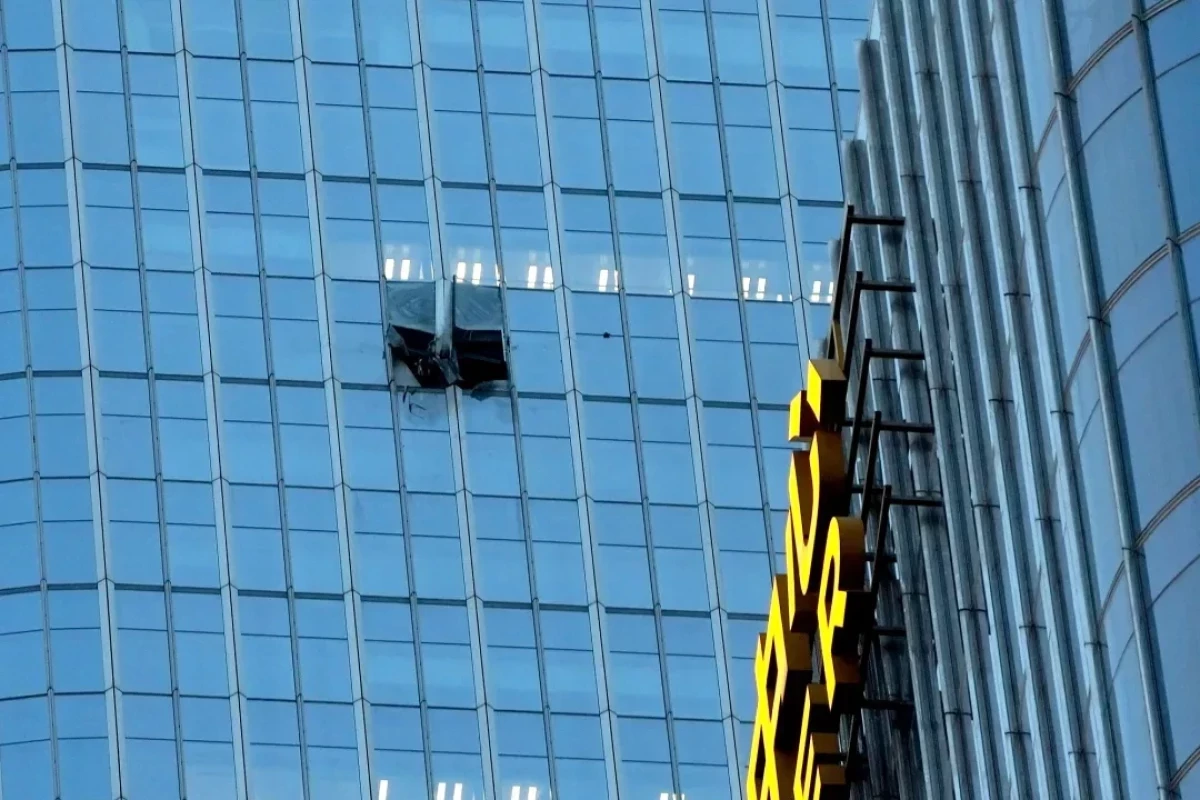
Small aircraft crash in Beijing kills one person, injures 13, local govt says
13:30
27 June 2026
Iran's Foreign Ministry reacts to U.S. airstrikes
11:31
27 June 2026

NEWS FEED
Tanker hit by unidentified projectile in Hormuz, British maritime agency says
16:54
27 June 2026
Russian Defense Ministry claims two Ukrainian MiG-29 fighter jets destroyed at Mykolaiv airfield
16:51
27 June 2026
Iran accuses U.S. of violating two clauses of memorandum
16:48
27 June 2026
Service chief: Lowering military conscription age limit has reduced state expenses
16:09
27 June 2026
Ukrainian MiG-29 crashes during combat mission, Air Force says, pilot ejects safely
15:25
27 June 2026
Russia and Ukraine exchange civilian detainees
14:40
27 June 2026
Baku–Nakhchivan flights cancelled due to thunderstorms
14:16
27 June 2026
One killed, 11 injured in Ukraine's attack on Volgograd
13:58
27 June 2026
Bahrain says Iranian drones targeted its territory early Saturday
13:55
27 June 2026
Zelenskyy confirms strike on military plant in Volgograd-VIDEO-UPDATED
13:42
27 June 2026
Kremlin: Putin and Lukashenko continue talks
13:38
27 June 2026
Small aircraft crash in Beijing kills one person, injures 13, local govt says
13:30
27 June 2026
Iran's Foreign Ministry reacts to U.S. airstrikes
11:31
27 June 2026
Leyla Aliyeva and Arzu Aliyeva visit "CandyFest" summer festival and watch "Magic Pearl" water circus show-PHOTO
11:24
27 June 2026
Leyla Aliyeva and Arzu Aliyeva participate in seasonal flower planting campaign on Baku Boulevard-PHOTO
11:21
27 June 2026
Leyla Aliyeva and Arzu Aliyeva attend opening and presentation ceremonies at the Seaside National Park-PHOTO
11:14
27 June 2026
Baltic states urge EU to speed up ban on Russian oil imports
11:07
27 June 2026
Seoul says Chinese, Russian military aircraft enter its air defense zone
10:51
27 June 2026
Gold and silver rise in commodity markets
10:24
27 June 2026
Natural gas falls on New York exchange
10:22
27 June 2026
Azerbaijani oil trades at $74
10:20
27 June 2026
Two police officers killed in armed attack on police checkpoint in Iran
10:15
27 June 2026
Brent oil falls by more than 4%
09:35
27 June 2026
Major global stock market indices
09:29
27 June 2026
State Department: Lebanon agreement envisages withdrawal of Israeli forces
09:24
27 June 2026
Saudi Arabia resumes oil loading in the Persian Gulf
09:20
27 June 2026
Vance: US ready to discuss memorandum disagreements with Iran
02:39
Audio
27 June 2026
IRGC says it struck US military positions in response to US airstrike on Iran
01:43
27 June 2026
France wins Group I after beating Norway 4-1
01:13
27 June 2026
US strikes Iranian targets in response to attack on cargo ship
00:47
Audio
27 June 2026
Netanyahu says Israeli army will remain in southern Lebanon ‘security zone’ until Hezbollah disarmed
23:49
26 June 2026
UK guarantees $1 billion World Bank loan to Ukraine
23:20
26 June 2026
Israel, Lebanon sign framework peace deal after US-mediated talks
22:36
Audio
26 June 2026
Venezuela quake death toll rises to 92
22:29
26 June 2026
Trump accuses Iran of violating ceasefire with US
20:24
Audio
26 June 2026
Scuffle breaks out during Georgian parliament session, proceedings suspended - PHOTO
20:00
26 June 2026
Turkish ships stranded in Strait of Hormuz safely leave the region
19:56
26 June 2026
Turkish actor Kadir İnanır dies at 77
19:33
26 June 2026
Putin meets with Belarusian President Lukashenko
19:22
26 June 2026
Putin bans deportation of foreigners serving under contract in Russian army
19:19
26 June 2026
Seven Hezbollah fighters killed in Lebanon
19:12
26 June 2026
Explosion followed by fire hits factory in Türkiye
19:10
26 June 2026
Death toll hits 55 in France as drownings rise amid Europe heatwave
19:07
26 June 2026
Baghaei: Joint statement by US and GCC is a distortion of truth
18:40
26 June 2026
Rosatom says plans Bushehr staff return
18:15
26 June 2026
Small aircraft crashes into Beijing’s tallest skyscraper - VIDEO
17:56
26 June 2026
If Iran attacks Israel, it will ‘commit its biggest mistake’: Katz
17:35
26 June 2026
Belarusian President Lukashenko departs for working visit to Russia
17:28
26 June 2026
Russia advises its citizens against traveling to Moldova
17:23
26 June 2026
Death toll from Venezuela earthquake rises to 589 - UPDATED - 4 - VIDEO
16:56
26 June 2026


