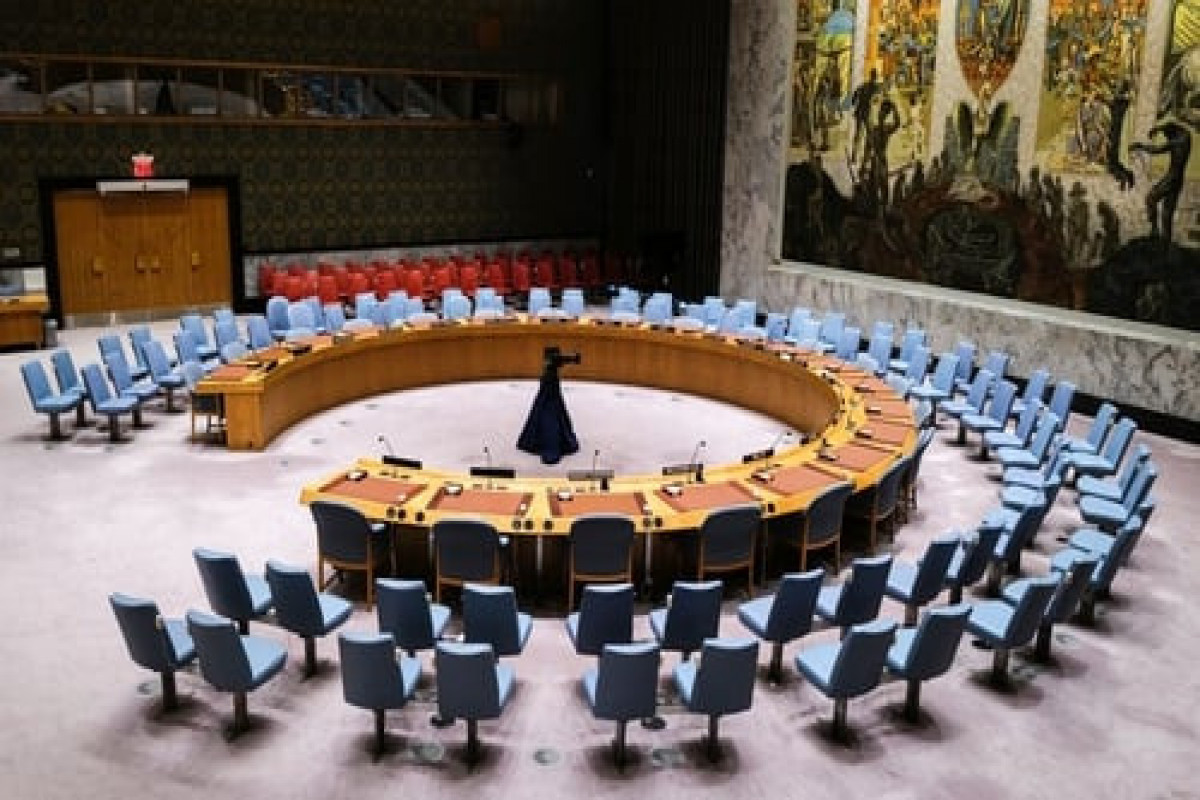

U.N. Security Council diplomats delayed until Friday a vote on a resolution to increase humanitarian aid into Gaza and another round of talks took place in Egypt to try to get warring Israel and Hamas to agree on a new truce so hostages can be released, APA reports.
The U.N. vote was delayed despite the United States saying it can now support an amended proposal that would demand that Israel and Hamas allow the use of "all available routes" for humanitarian deliveries.
Even as diplomatic efforts continued, fighting in the Gaza Strip intensified with Israeli bombardments in the north and south of the 41 km (25 mile)-long Palestinian territory and Hamas firing rockets on Israel's commercial capital Tel Aviv, officials said on Thursday.
Iraq's Kataeb Hezbollah, which goes by the Islamic Resistance in Iraq, in a statement on Telegram claimed responsibility for an attack on Israel's Eilat. There was no immediate comment from Israel.
Fourteen Palestinians were killed by Israeli forces in three separate attacks on Thursday in northern, central and southern Gaza Strip, medics said. Medics and Hamas media said the Hamas-appointed director of the police station in Khan Younis was killed along with members of his family in a strike on their house.
An Israeli air strike targeted the house of Dr. Munir Al-Bursh, the director of Gaza Health Ministry, medics said. Bursh was wounded and one of his daughters was killed, the medics said.
Israel's government under Prime Minister Benjamin Netanyahu says it wants to eradicate Hamas, the Islamist group that sent fighters over the border from Gaza into southern Israel on Oct. 7, taking some 240 hostages and killing 1,200 people.
But the high death toll of around 20,000 people reported by Gaza's health ministry during the Israeli military campaign of retaliation has drawn increasing international condemnation.
The Israeli military has expressed regret for civilian deaths but blamed Iran-backed Hamas for operating in densely populated areas or using civilians as human shields, an allegation the group denies.
For journalists, the first 10 weeks of the war have been the deadliest recorded, the U.S.-based Committee to Protect Journalists (CP) said in a report on Thursday. Most of the journalists and media workers killed - 61 out of 68 - were Palestinian, it said.


 Follow us on Telegram
 t.me/apanewsaz
 Follow us on Instagram
 Follow us on TikTok
 Follow us on Facebook
 Follow us on X