













Baku-APA. Egypt’s Islamist president swore in his first new government Thursday, led by a devout Muslim and including five members of his Muslim Brotherhood in unglamorous but ideal ministries for a group whose long-term aim is to Islamize the most populous Arab nation, APA reports quoting AFP.
The Cabinet is a far cry from the inclusive administration that President Mohammed Morsi has repeatedly promised. No other political factions came on board to join. Women and Christians received only token representation, and figures from the uprising that ousted Hosni Mubarak last year were left out.
The choices seemed aimed at playing down fears that the country’s first ever government formed under the Muslim Brotherhood’s aegis will seek to impose quick and radical change. Seven members of the outgoing, military-backed government, including the foreign, finance and culture ministers, have also kept their jobs, a move by Morsi and Prime Minister Hesham Kandil that may have been designed to inspire stability.
Also keeping his post as defense minister is Field Marshal Hussein Tantawi, who served in the role for 20 years under Mubarak and was Egypt’s military ruler for 17 months after Muabrak’s ouster. The military said several weeks ago that it will decide who serves in the post, and Morsi and Kandil made no move to resist, a reflection of the overwhelming powers retained by the military after Morsi took office June 30.
Kandil, the obscure water and irrigation minister that Morsi picked to lead the new government as prime minister, sought to defend the makeup of his Cabinet. He called on Egyptians to rally behind it, promising it would represent all the people.
"We are all Egyptians in the Arab Republic of Egypt. The coming period is not easy, to say the least, and we are all in the same boat," he told a news conference hours ahead of the swearing-in ceremony. "This is the people’s government. It does not belong to this or that trend." He also paid tribute to last year’s 18-day anti-Mubarak uprising, saying his government will work toward realizing the goals of its slogan: "Bread, freedom and social justice."
The government takes office at a time when tensions are mounting over the country’s seemingly endless woes — from tenuous security and sectarian violence to growing popular discontent over widespread power and water outages and shortages.
In a sign of the chaos, one person was shot to death by police Thursday when a crowd of hundreds went on a rampage against a Nile-side luxury hotel in central Cairo. The crowd threw firebombs at the hotel, smashed its lobby and set fire to 10 cars parked outside, a security official said, speaking on condition of anonymity because he was not authorized to talk the press. Police used tear gas and opened fire on the crowd, killng one person.
The crowd came from a slum located just behind the hotel, which is a twin-tower skyscraper complex that includes a glitzy shopping center and offices. Earlier in the day, several residents of the slum who had been hired by the hotel for protection had tried to get into the hotel to collect back payments. Police stopped them, an altercation ensued, and a policeman shot and wounded one of the men who later died. The larger crowd of nearly 500 returned later and attacked the hotel, the security official said.
Also Thursday, armed villagers in Bani Suef south of Egypt attacked a police camp after reports that a policeman harassed a local woman. The gunbattle at the camp left one villager dead and five others wounded. Residents then attacked the governor’s office, shattering windows and setting fire to police cars.
Earlier this week, sectarian violence in the village of Dahshour south of Cairo saw a Muslim mob torching Christian homes and shops and damaging the local church, events that forced many Christian families to flee the village Wednesday. The attack was sparked when a personal dispute last week swelled into violence and a Muslim man died.
Also, the process of bringing in a longtime leader of the Muslim Brotherhood, Morsi, to head a ruling system that for decades shunned the group seems to have caused confusion at times.
Last week, Israel said Morsi wrote back to Israeli President Shimon Peres, who had sent the Egyptian president a letter wishing him well on the start of the Islamic holy month of Ramadan. The president’s office angrily denied sending any reply. The letter was a potential embarrassment since the Muslim Brotherhood has long been hostile to Israel and has said its members in government will have no contact with it — though they have promised to preserve the two countries’ landmark 1979 peace treaty.
The letter, made public in Israel, was sent by the Egyptian Embassy in Tel Aviv and sent to Peres by fax and by courier. It is on the mission’s stationary, not the presidency’s, though it is written in the name of Morsi.
The confusion may have been from a protocol mix-up.
An Egyptian Foreign Ministry official and a source close to the presidency told The Associated Press that Morsi has no intention to communicate directly with the Israelis and that he mandated the Foreign Ministry to take over routine contacts with the Jewish state. Both spoke on condition of anonymity because they were not authorized to speak to the media.
In the new Cabinet, Brotherhood members were given the key ministerial posts of information, higher education, housing and labor. A fifth Brotherhood member was named minister of state for youth.
The information ministry gives the Brotherhood control over the state media, a powerful tool in influencing public opinion. The media had long been mouthpieces for denunciations of the long-banned Brotherhood, and Islamists have criticized the media in turn as lax in safeguarding against Western cultural inroads.
The higher education portfolio gives the Brotherhood control over the country’s universities, a traditional recruitment ground for the fundamentalist group. The Youth portfolio could give it an even wider area for recruitment and religious indoctrination.
The labor portfolio allows the Brotherhood access to labor unions, traditionally the domain of leftist and liberal groups, in which the group has been seeking to gain a foothold. Housing gives the group a key service sector that millions of poor Egyptians look to for construction of lower-cost housing.
The choices of the five ministries may have been made with an eye on the upcoming parliamentary election expected before the end of the year. The Brotherhood dominated the first post-Mubarak legislature, seated in early 2012, but the military generals dissolved it in June following a court ruling that a third of its members were illegally elected.
But Morsi and Kandil reportedly struggled to bring others into the government. Media reports have spoken of many first-choice candidates for the Cabinet from among non-Islamist groups turning down offers for a place in the Cabinet. Egypt expert Michael W. Hannah of New York’s Century Foundation attributed the rejections to the growing lack of trust in Morsi and his Brotherhood.
"Their actions don’t match their words," he said. "There is a fundamental lack of trust in them along with the Brotherhood’s institutional self-promotion."
Samer Shehata of Washington’s Georgetown University explains the lack of diversity and inclusion in the Cabinet as partially the outcome of the uncertainty of the powers the new government will have and the weakness of Morsi’s own authority compared to the military’s.
"Morsi does seem to be in a very difficult dilemma ... he has been handed a bad set of cards," he said.
The only two women in his lineup are leftovers from outgoing prime minister Kamal el-Ganzouri’s government — Social Affairs Minister Nagwa Khalil and Scientific Research Minister Nadia Iskandar Zakhari, the only representative of Egypt’s Christian minority in the Cabinet. The relative low level of the ministries mirrored the symbolic representation women and Christians had for decades of Mubarak governments.
"We wanted to see a woman in charge of a powerful ministry like education or health," said women’s rights activist Dalia Abdel-Hamid.
Morsi has said that women and Christians would be named to his presidential team, possibly including a vice president post. The only team member named thus far is el-Ganzouri, who is in his late 70s and served for years as Mubarak’s prime minister, and was appointed as an adviser to Morsi.


 Follow us on Telegram
 t.me/apanewsaz
 Follow us on Instagram
 Follow us on TikTok
 Follow us on Facebook
 Follow us on X
Africa
At least twelve dead after migrant boat incident off Gambia
 16:19
16:19
 16 October 2026
Two killed, five injured in shooting in S. Africa
16:09
14 October 2026
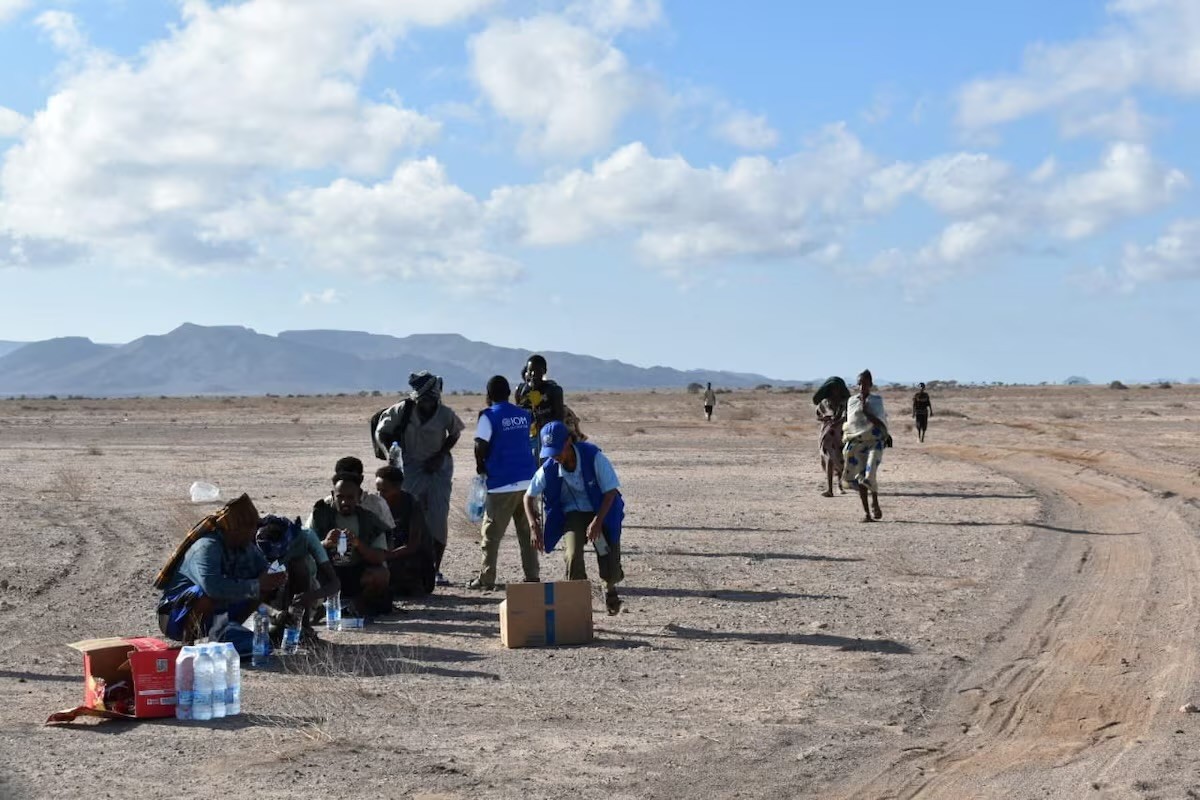
At least 139 migrants dead, including some children, after boat from Djibouti to Yemen capsizes, UN agency says
21:17
11 October 2026
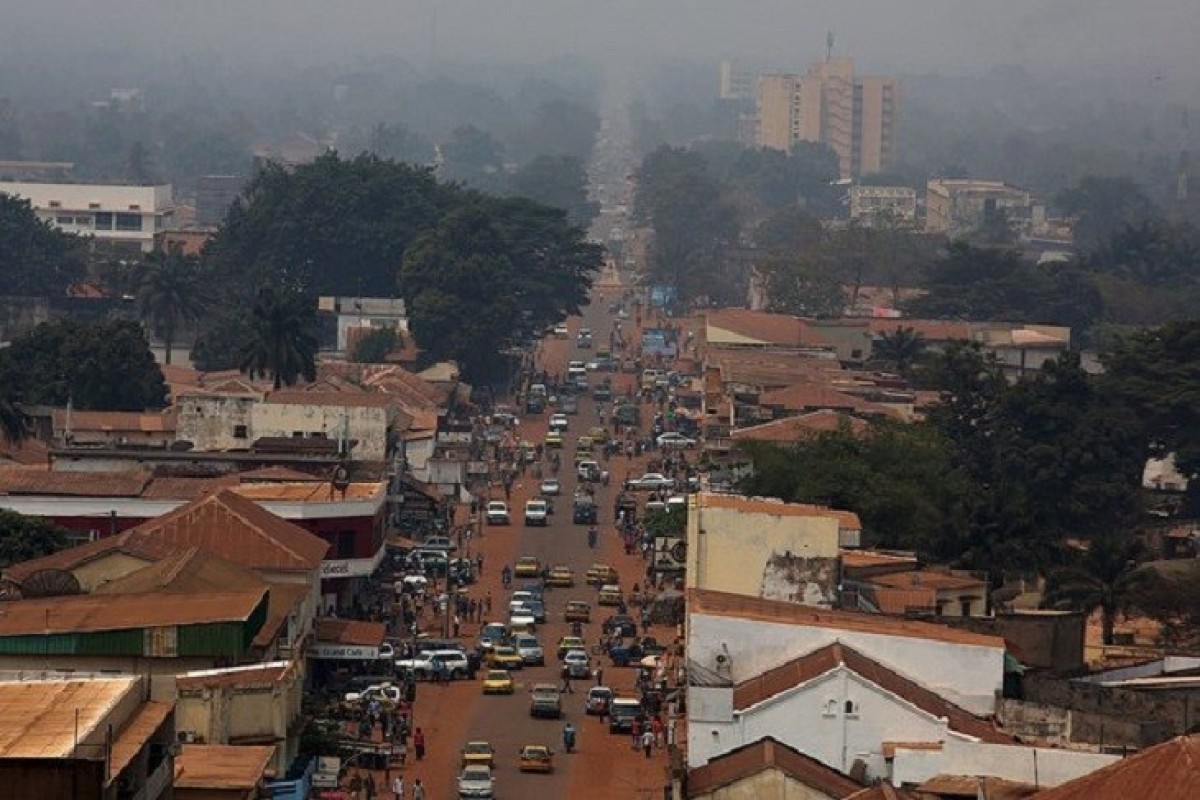
Central African Republic foils planned large-scale militant attack
07:04
11 October 2026

NEWS FEED
Six years pass since Armenia's fifth missile attack on Ganja
00:00
17 October 2026
Today marks Fuzuli City Day, 6 years since city's liberation from occupation
00:00
17 October 2026
US budget deficit nears $2T for fiscal 2026
23:45
16 October 2026
In recent days, Azerbaijani NGO organized actions in six European countries that raise questions about Armenia
23:16
16 October 2026
White House press secretary Zacharia fired in less than a week after facing criticism
22:55
16 October 2026
Trump denies ordering Starlink restrictions in Ukraine
22:39
16 October 2026
Iranian President: We discussed preparation of joint strategic document with Armenia
22:25
16 October 2026
Putin: Russian Armed Forces are advancing confidently along the entire front
21:51
16 October 2026
US leader teases nuclear arms deal with Russia, China
21:39
16 October 2026
Ukraine expects Gripen fighter jets to be delivered soon – Zelenskyy
21:14
16 October 2026
Columnist facing criminal charges apologizes to Azerbaijan: I regret causing offense with my words
20:45
16 October 2026
Video on Patriotic War shared on President Ilham Aliyev's social media accounts
20:15
16 October 2026
Kremlin: Putin held phone call with Pope Leo XIV
20:05
16 October 2026
“Environmental Protection First”: Hosting COP17 in a country that has committed ecocide is nothing but a double standard
19:52
16 October 2026
ICRC has not yet visited Azerbaijani serviceman Nasimi Musayev detained in Armenia
19:28
16 October 2026
President Ilham Aliyev congratulates participants of Paralympic movement on anniversary
19:24
16 October 2026
UAE delegation visits Azerbaijan
18:40
16 October 2026
Taleh Kazimov reveals implementation level of financial sector development strategy
18:36
16 October 2026
Central Bank plans to expand use of artificial intelligence in monetary policy
18:27
16 October 2026
Jeyhun Bayramov meets Bangladesh’s State Minister for Foreign Affairs
18:04
16 October 2026
MoD: Tasks successfully carried out during Azerbaijan-UAE joint tactical flight exercise
17:57
16 October 2026
Ramiz Mehdiyev expelled from New Azerbaijan Party, deprivation of his awards proposed - UPDATED-3
17:55
16 October 2026
Azerbaijan-Uzbekistan Second Rectors’ Forum held
17:51
16 October 2026
IMF positively assesses Azerbaijan’s results in increasing non-oil revenues
17:43
16 October 2026
Azerbaijan seeks expansion of IMF technical assistance
17:32
16 October 2026
Priest shoots three people dead in Ukraine
17:30
16 October 2026
World Bank's global conference on state-owned enterprises to be held in Baku in 2027
17:29
16 October 2026
Surgut gas plant reportedly targeted by drones in Russia
17:20
16 October 2026
Metsamor NPP director general: Armenia considering energy cooperation with Azerbaijan
17:09
16 October 2026
Azerbaijan extends funding for war-disabled persons and martyrs' families until 2029
16:58
16 October 2026
Zelenskyy: Ukraine in talks with US on new meeting
16:55
16 October 2026
Energy security in the South Caucasus discussed at Russian Energy Week
16:53
16 October 2026
Moscow airports overcrowded following Ukrainian drone attacks - PHOTO
16:37
16 October 2026
Azerbaijan's Deposit Insurance Fund and Uzbekistan's Deposit Guarantee Agency ink Memorandum
16:32
16 October 2026
At least twelve dead after migrant boat incident off Gambia
16:19
16 October 2026
Kogalym airport in Russia closed for first time due to drone threat
16:00
16 October 2026
Oil Fund earns nearly AZN 8 billion from oil and gas sales - EXCLUSIVE
15:58
16 October 2026
Official Moscow warns of threat of militants crossing from Afghanistan into Central Asia
15:58
16 October 2026
Polish FM: US has not spent a cent on Ukraine’s defense since January last year
15:42
16 October 2026
Chief of General Staff of Azerbaijan Army meets with NATO delegation
15:40
16 October 2026
Prospects for further development of Azerbaijan-Sri Lanka relations discussed
15:38
16 October 2026
Novak announced the actual solution to the issues of diesel supplies to the United States
15:36
16 October 2026
Armenia PM, Iran president meet in Yerevan, discuss bilateral agenda
15:12
16 October 2026
Criminal case opened over calls to seize power in Azerbaijan, Turkish citizen declared wanted
15:05
16 October 2026
Heydar Aliyev International Airport to switch to autumn-winter flight schedule
14:39
16 October 2026
Foreign Minister Jeyhun Bayramov meets with CICA Secretary General Kairat Sarybay
14:11
16 October 2026
Azerbaijan prevents smuggling of 35 kg of drugs from Iran
14:10
16 October 2026
FM Mirzoyan: Armenia-Türkiye border could open at any moment
14:05
16 October 2026
Media representatives familiarize themselves with demining operation carried out by MES in Aghdam - PHOTO
14:01
16 October 2026
Peskov accuses Zelenskyy of refusing to assume responsibility
14:00
16 October 2026


