













Baku-APA. Christians and Muslims have clashed for years in central Nigeria, a conflict that took an unexpected turn when Islamist insurgents based in the northeast claimed responsibility for deadly weekend raids on Christian villages, APA reports quoting Associated Press.
Many initially blamed Muslim herdsmen for the raids in Plateau state. Hundreds of assailants armed with guns and machetes stormed a dozen Christian villages on Saturday, said Capt. Mustapha Saliu, a spokesman for a special unit of police and soldiers deployed to halt violence in the area. Some attackers wore police uniforms and bullet-proof vests, he said.
The following day, as dignitaries attended a mass burial, a federal senator and a state lawmaker lost consciousness and died during an attack. Saliu said it was unclear how they died.
The Nigerian Red Cross said at least 58 people died in the attacks and from security forces fighting back. Most of the victims of the initial attacks are presumed to be Christians. Reprisals from both Christians and Muslims have killed more from both sides, a rescue official said on condition of anonymity because he does not have authority to speak to the press on the matter.
A statement attributed to the Islamist radical sect Boko Haram and obtained by The Associated Press claimed it was responsible for the attacks and warned that Christians "will not know peace again" if they do not accept Islam.
The claim fits into the sect’s previously expressed plan to increase attacks on Christians. Earlier, Boko Haram claimed responsibility for bomb attacks on churches in the Plateau state capital of Jos as well as in cities and towns further north. The group has also said it would avenge the deaths of Muslims in Plateau state.
The claim by Boko Haram could not be substantiated. Authorities noted the weekend attacks did not involve bombs or other explosives — Boko Haram’s weapons of choice. Raiding villages would be a dangerous escalation for Boko Haram; the tactic has been used in the past by Muslim herdsmen of the Fulani tribe.
The violence in central Nigeria, though it crosses religious lines, often has more to do with local politics, economics and grazing rights. The government of Plateau state is controlled by Christians who have blocked Muslims from being legally recognized as citizens. That has locked many Muslims out of government jobs in a region where tourism and the tin mining industry have collapsed.
Human Rights Watch has said at least 1,000 people died in 2010 communal clashes in Plateau state. Clashes between Muslim Fulani herdsmen and Christian farmers of the Berom tribe remain common despite the declaration of a state of emergency.
Andronicus Adeyemo, an official with the Nigerian Red Cross, said the conflict in Plateau state has displaced nearly 4,000 people.
In most parts of Nigeria, a large-scale attack on Christians would have been quickly blamed on Boko Haram, but analysts were divided about the claim for the raids in Plateau state.
"Authorities are investigating but I don’t think that Boko Haram could, out of nowhere, have raided these villages," said criminal justice consultant Innocent Chukwuma, "they couldn’t do that without local support and collaboration."
Shehu Sani, an activist and author of "The Killing Fields," a history of religious violence in Nigeria, disagreed.
"From my knowledge and experience about the Boko Haram group, I believe 100 percent that they were responsible," Sani said. "I think they operated alone," he said, adding that Boko Haram has deployed a large number of attackers in other cities before.
Special unit spokesman Saliu said Boko Haram’s claim of responsibility was not "conclusive" but that "it could help."
"It can help because at least we know that we are all fighting a common enemy," he said, adding that he hoped the claim would dissuade further reprisal attacks.
Boko Haram members and most Fulani herdsmen are Muslims. But the ethnic composition of Boko Haram is believed to be different from the Fulani people, and Boko Haram has been known to turn against Muslims who do not share its extremist views.
"Given that there have already been cycles of violence going on in Plateau state, I wonder if Boko Haram isn’t trying to cash in on that," said Alex Thurston, a Northwestern University expert on reformist Islam and electoral politics in northern Nigeria. "It seems that some people have an interest in localizing it and keeping it to local grievances while some people have an interest in nationalizing it and Boko Haram is one of those groups."
As investigators try to determine who carried out the attacks, local groups hope the Boko Haram claim will not draw attention away from their grievances.
"We don’t protect (Boko Haram) and they don’t protect us," said Saleh Bayari, national chairman for the Miyetti Allah Cattle Breeders Association of Nigeria which protects the rights of the Fulani people. "Some people may have written this statement to give the tag ’Boko Haram’ to our communities which will give them a justification to treat our people like outlaws."
"We are not outlaws," Bayari said.
Mark Lipdo, director of the Stefanos Foundation, a Jos-based Christian organization, said the claim does not exculpate the Fulani herdsmen. "Boko Haram are settling (scores for) their own. If Fulanis are taking that call, it is a big problem to Nigeria; it means Fulani are becoming Boko Haram."
Boko Haram has been trying to fan religious conflict in the country with recent attacks focusing on areas with religious tensions and a history of reprisal attacks.
The sect claimed responsibility last month for deadly blasts at churches that led to reprisal attacks in Kaduna, a state bordering Plateau.
Both states are in central Nigeria, the region between the predominantly Muslim north and the mainly Christian south in the nation of more than 160 million people.


 Follow us on Telegram
 t.me/apanewsaz
 Follow us on Instagram
 Follow us on TikTok
 Follow us on Facebook
 Follow us on X
Africa
At least twelve dead after migrant boat incident off Gambia
 16:19
16:19
 16 October 2026
Two killed, five injured in shooting in S. Africa
16:09
14 October 2026
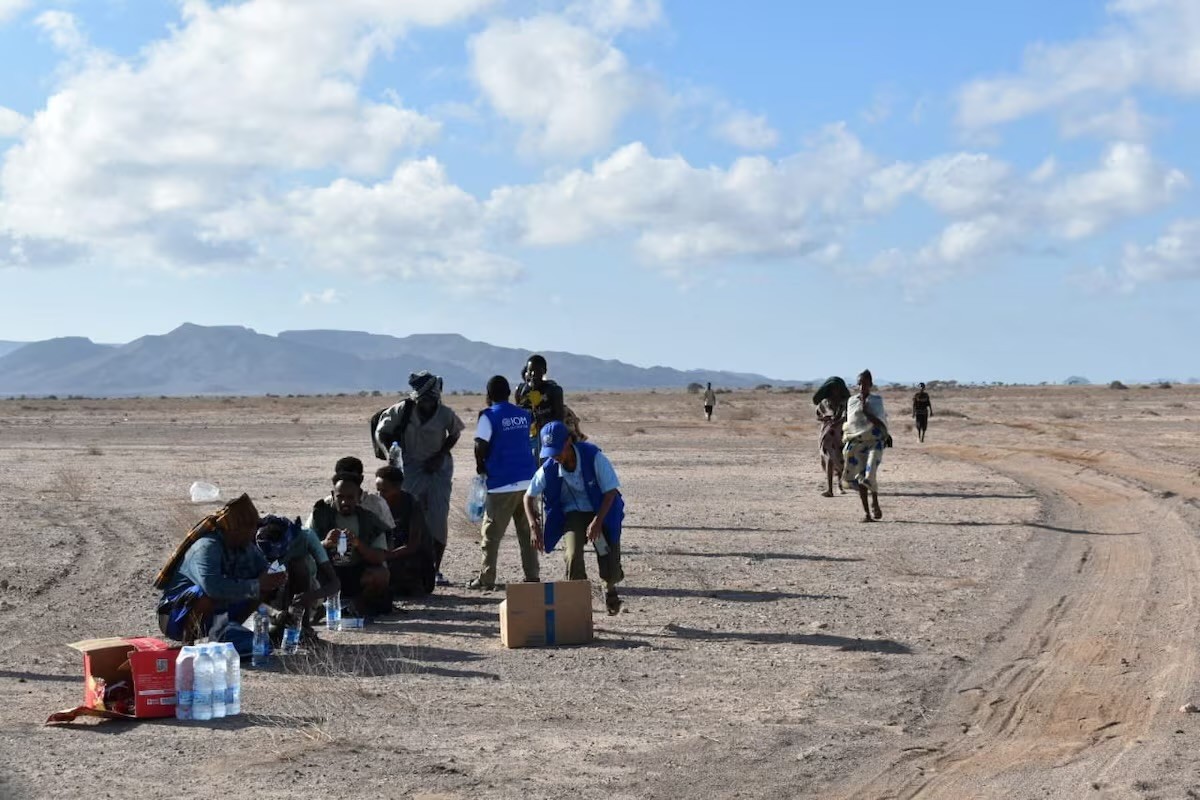
At least 139 migrants dead, including some children, after boat from Djibouti to Yemen capsizes, UN agency says
21:17
11 October 2026
Central African Republic foils planned large-scale militant attack
07:04
11 October 2026

NEWS FEED
In recent days, Azerbaijani NGO organized actions in six European countries that raise questions about Armenia
23:16
16 October 2026
Trump denies ordering Starlink restrictions in Ukraine
22:39
16 October 2026
Iranian President: We discussed preparation of joint strategic document with Armenia
22:25
16 October 2026
Putin: Russian Armed Forces are advancing confidently along the entire front
21:51
16 October 2026
US leader teases nuclear arms deal with Russia, China
21:39
16 October 2026
Ukraine expects Gripen fighter jets to be delivered soon – Zelenskyy
21:14
16 October 2026
Columnist facing criminal charges apologizes to Azerbaijan: I regret causing offense with my words
20:45
16 October 2026
Video on Patriotic War shared on President Ilham Aliyev's social media accounts
20:15
16 October 2026
Kremlin: Putin held phone call with Pope Leo XIV
20:05
16 October 2026
“Environmental Protection First”: Hosting COP17 in a country that has committed ecocide is nothing but a double standard
19:52
16 October 2026
ICRC has not yet visited Azerbaijani serviceman Nasimi Musayev detained in Armenia
19:28
16 October 2026
President Ilham Aliyev congratulates participants of Paralympic movement on anniversary
19:24
16 October 2026
UAE delegation visits Azerbaijan
18:40
16 October 2026
Taleh Kazimov reveals implementation level of financial sector development strategy
18:36
16 October 2026
Central Bank plans to expand use of artificial intelligence in monetary policy
18:27
16 October 2026
Jeyhun Bayramov meets Bangladesh’s State Minister for Foreign Affairs
18:04
16 October 2026
MoD: Tasks successfully carried out during Azerbaijan-UAE joint tactical flight exercise
17:57
16 October 2026
Ramiz Mehdiyev expelled from New Azerbaijan Party, deprivation of his awards proposed - UPDATED-3
17:55
16 October 2026
Azerbaijan-Uzbekistan Second Rectors’ Forum held
17:51
16 October 2026
IMF positively assesses Azerbaijan’s results in increasing non-oil revenues
17:43
16 October 2026
Azerbaijan seeks expansion of IMF technical assistance
17:32
16 October 2026
Priest shoots three people dead in Ukraine
17:30
16 October 2026
World Bank's global conference on state-owned enterprises to be held in Baku in 2027
17:29
16 October 2026
Surgut gas plant reportedly targeted by drones in Russia
17:20
16 October 2026
Metsamor NPP director general: Armenia considering energy cooperation with Azerbaijan
17:09
16 October 2026
Azerbaijan extends funding for war-disabled persons and martyrs' families until 2029
16:58
16 October 2026
Zelenskyy: Ukraine in talks with US on new meeting
16:55
16 October 2026
Energy security in the South Caucasus discussed at Russian Energy Week
16:53
16 October 2026
Moscow airports overcrowded following Ukrainian drone attacks - PHOTO
16:37
16 October 2026
Azerbaijan's Deposit Insurance Fund and Uzbekistan's Deposit Guarantee Agency ink Memorandum
16:32
16 October 2026
At least twelve dead after migrant boat incident off Gambia
16:19
16 October 2026
Kogalym airport in Russia closed for first time due to drone threat
16:00
16 October 2026
Official Moscow warns of threat of militants crossing from Afghanistan into Central Asia
15:58
16 October 2026
Oil Fund earns nearly AZN 8 billion from oil and gas sales - EXCLUSIVE
15:58
16 October 2026
Polish FM: US has not spent a cent on Ukraine’s defense since January last year
15:42
16 October 2026
Chief of General Staff of Azerbaijan Army meets with NATO delegation
15:40
16 October 2026
Prospects for further development of Azerbaijan-Sri Lanka relations discussed
15:38
16 October 2026
Novak announced the actual solution to the issues of diesel supplies to the United States
15:36
16 October 2026
Armenia PM, Iran president meet in Yerevan, discuss bilateral agenda
15:12
16 October 2026
Criminal case opened over calls to seize power in Azerbaijan, Turkish citizen declared wanted
15:05
16 October 2026
Heydar Aliyev International Airport to switch to autumn-winter flight schedule
14:39
16 October 2026
Foreign Minister Jeyhun Bayramov meets with CICA Secretary General Kairat Sarybay
14:11
16 October 2026
Azerbaijan prevents smuggling of 35 kg of drugs from Iran
14:10
16 October 2026
FM Mirzoyan: Armenia-Türkiye border could open at any moment
14:05
16 October 2026
Media representatives familiarize themselves with demining operation carried out by MES in Aghdam - PHOTO
14:01
16 October 2026
Peskov accuses Zelenskyy of refusing to assume responsibility
14:00
16 October 2026
Lukashenko orders expansion of volunteer defense units in Belarus
13:50
16 October 2026
Death toll from Istanbul floods reaches 4, three people missing
13:39
16 October 2026
Araghchi: Iran concerned about US presence in region, but trusts Armenia
13:37
16 October 2026
Prospects for LNG supplies to Vietnam discussed in Baku
13:16
16 October 2026


