












Baku-APA> The United Nations is in talks to impose sanctions on Libya after Muammar Qaddafi told loyalists in the capital, Tripoli, he’s prepared to arm them to fight opposition forces holding the eastern part of the country, APA reports quoting businessweek.com website.
“When needed, all the weapons stores will be opened,†Qaddafi told a crowd in Green Square Feb. 25. In New York, Libya’s ambassador to the UN, Mohammed Shalgham, pleaded for the Security Council to act and “save Libya.â€
With French President Nicolas Sarkozy and U.S. President Barack Obama saying it’s time for Qaddafi to go, the U.S. and its allies are working out how to quell the violence without intervening militarily.
Britain and France have circulated a draft resolution that would impose an arms embargo on Libya and refer reported violence to the International Criminal Court in The Hague. Signaling that political unity may be hard to achieve, Turkish Prime Minister Recep Tayyip Erdogan said he opposes sanctions.
The UN Security Council is meeting in New York as leaders from Washington to Ankara engage in a flurry of phone calls to discuss the next steps. UN Secretary-General Ban Ki-moon says more than 1,000 people have died in the unrest.
“There was clear agreement that the actions of the Libyan regime were totally unacceptable and that brutality and intimidation would not be tolerated,†U.K. Prime Minister David Cameron’s office said in an e-mail yesterday after calls with Erdogan, Germany’s Angela Merkel and Italy’s Silvio Berlusconi.
Obama Freezes Assets
Obama, who has signed an order freezing Qaddafi’s assets, also has consulted leaders.
Obama told Merkel in a phone call yesterday that “when a leader’s only means of staying in power is to use mass violence against his own people, he has lost the legitimacy to rule and needs to do what is right for his country by leaving now.â€
The leaders “reaffirmed their support for the Libyan people’s demand for universal rights†and a responsive government, according to a statement from the White House.
Qaddafi is digging himself into the Libyan capital after army units defected in the east of the country. The regime is giving weapons to civilian supporters to set up roving patrols and checkpoints around Tripoli, the Associated Press reported.
Shooting on Crowds
Several witnesses in Tripoli said forces loyal to Qaddafi had shot people from ambulances and used antiaircraft guns against crowds, the New York Times reported. Witnesses to the violence also said the government had removed dead bodies from hospitals to try to obscure the death toll, the Times reported.
Saif al-Islam Qaddafi, Qaddafi’s son, said three-quarters of the country is under the control of the regime and “living in peace†even amid signs of civil war.
Libya should move toward a regime change and a new constitution peacefully after Qaddafi called for the changes, his son said in an interview with Al-Arabiya television aired yesterday. Otherwise, it “risks becoming like Somalia,†he said, denying that mercenaries were brought in to fight anti- government protesters.
Libya’s Deputy Ambassador to the UN, Ibrahim Dabbashi, said Feb. 25 he expects “thousands†more fatalities.
“There isn’t a clear end-game here,†Shadi Hamid, director of research at the Brookings Doha Center in Qatar, said in a telephone interview. “There isn’t a rebel army marching on Tripoli attempting to take it over from Qaddafi.â€
Oil Rises
The prospect of civil war in North Africa’s biggest oil producer has pushed crude prices to a 2 1/2-year high, and led to calls for action to stop the worst violence seen in the two months of unrest across the Middle East and North Africa.
Protesters streamed into squares across the region Feb. 25 after Friday prayers to demand more rights two weeks after the ouster of Hosni Mubarak as Egyptian president. Demonstrations took place in Yemen, Jordan, Egypt, Iraq and Tunisia, the country that sparked the unrest sweeping the Middle East when President Zine El Abidine Ben Ali was ousted.
U.K. Defense Secretary Liam Fox said yesterday two Royal Air Force C130 Hercules aircraft have evacuated more than 150 other civilians from desert locations south of Benghazi, an eastern city that’s under rebel control, according to an e- mailed statement distributed by the Foreign Office in London.
The U.K. has also arranged for HMS Cumberland, which Feb. 25 evacuated 207 civilians to Malta from Libya, to return to Benghazi today “to evacuate any remaining entitled persons from there,†the statement said.
Maritime Evacuation
A chartered ferry carrying mostly U.S. citizens and diplomatic staff arrived at Malta late Feb. 25, where many were rushed into treatment for dehydration and sea sickness.
A ship chartered by the Chinese government to evacuate its citizens arrived in Malta yesterday bringing 3,000 nationals. At Tripoli airport, panicked crowds tried to storm the terminal to get on flights leaving the city, the Financial Times reported yesterday, citing eyewitnesses.
The first team from Doctors Without Borders has reached Benghazi and visited three medical facilities, the aid group said in a statement. Each facility has managed to deal with the wounded, though they are facing shortages of medical material and drugs, according to the statement.
“West of Tripoli in Zawiyah city, government security forces firing on demonstrators are causing bloodshed and chaos,†said a statement from Human Rights Watch, citing Sarah Leah Whitson, the group’s regional director. “Pro-Qaddafi thugs have terrorized Egyptian migrant workers, causing hundreds to flee to Tunisia.â€
Qaddafi “has lost the confidence of his people and he should go without further bloodshed and violence,†U.S. Secretary of State Hillary Clinton said today in a statement.
In Turkey, Erdogan said sanctions would do more harm than good for Libyans.
“Libyans who face starvation and death will face more difficulties and desperation in the event of sanctions,†he said. “The Middle East and Africa have been viewed by the West as merely sources of oil and used as pawns in oil wars for decades. People take to the streets because they are fed up with being used as pawns in oil wars for decades.â€
UN Debates Libya Sanctions as Qaddafi Arms His Supporters

 27 February 2011 00:45 (UTC +04:00)


 İDMAN XƏBƏR
 Follow us on Telegram
 t.me/apanewsaz
 Follow us on Instagram
 Follow us on TikTok
 Follow us on Facebook
 Follow us on X
Africa
Two killed, five injured in shooting in S. Africa
16:09
 14 October 2026
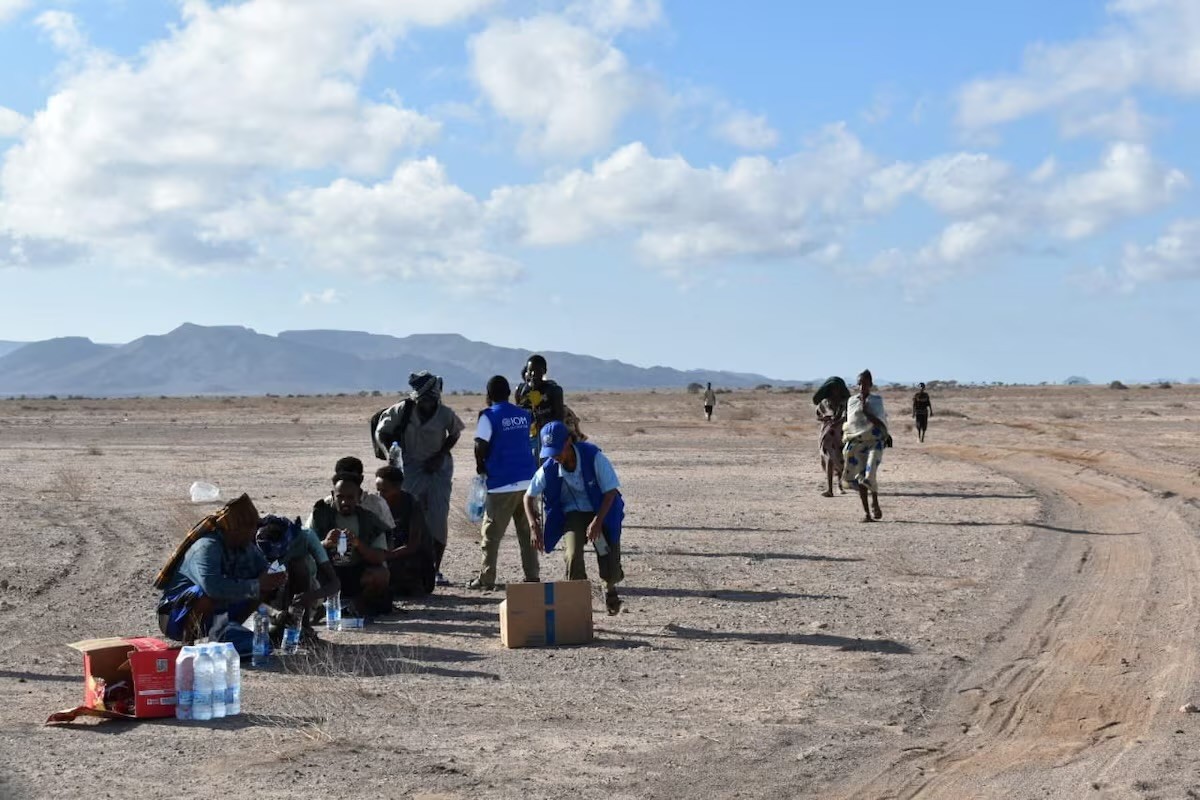
At least 139 migrants dead, including some children, after boat from Djibouti to Yemen capsizes, UN agency says
21:17
11 October 2026
Central African Republic foils planned large-scale militant attack
07:04
11 October 2026
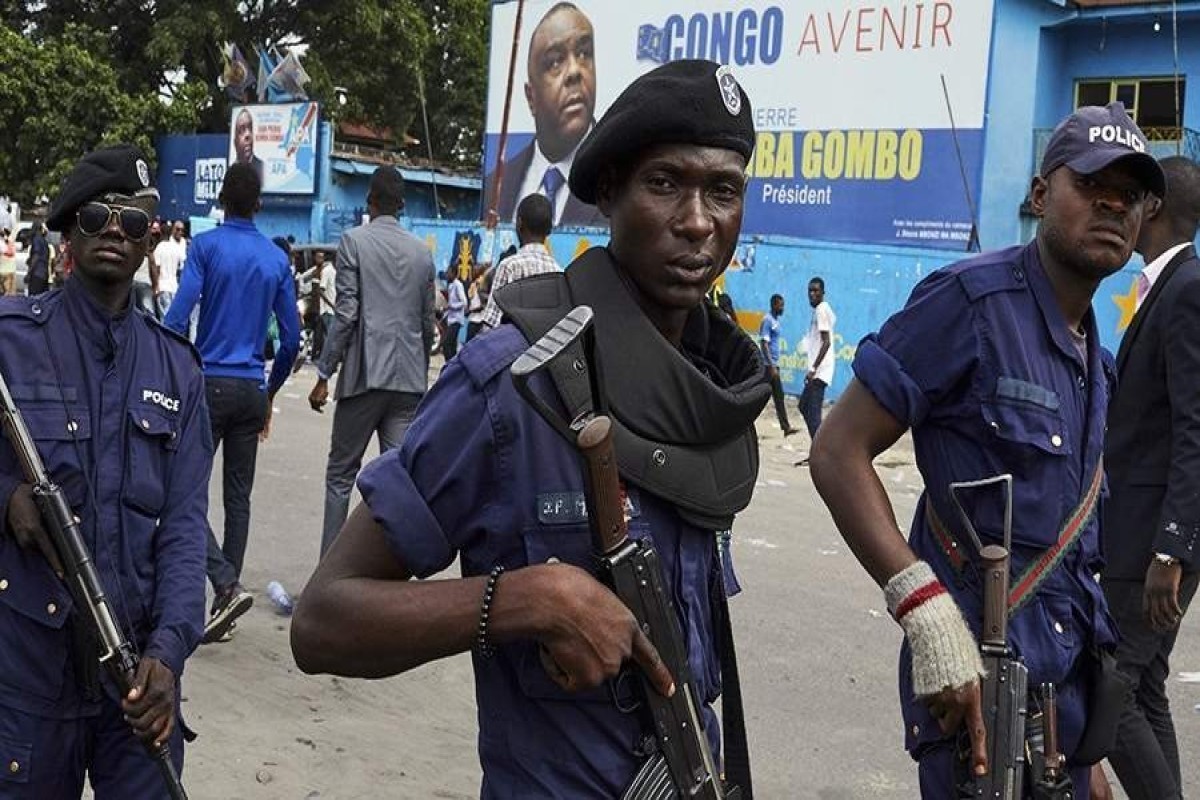
Rebel attack kills 11 civilians in DR Congo
05:16
11 October 2026

NEWS FEED
Putin: Ukrainian Armed Forces are again attempting to strike Russian oil refineries
22:23
15 October 2026
US has expanded sanctions against Iran
21:50
15 October 2026
UK provides Ukraine with additional long-range Storm Shadow missiles
21:20
15 October 2026
Video shared on President Ilham Aliyev’s social media accounts on his meeting with Amir of the State of Qatar Sheikh Tamim bin Hamad Al Thani
21:00
15 October 2026
President Ilham Aliyev’s social media accounts shared video on inauguration of Trans-Caspian Fiber-Optic Cable Line
20:55
15 October 2026
Baku hosted 7th CICA Summit, President Ilham Aliyev addressed the event - UPDATED-5
20:40
15 October 2026
Ukrainian President discusses air defense with NATO Secretary General
20:31
15 October 2026
Ukraine runs out of Patriot interceptor missiles as Zelenskyy and Trump clash over war
19:52
15 October 2026
Iran's navy says "violating" oil tanker caught fire east of Hormuz Strait
19:43
15 October 2026
White House official: Trump considering all options to keep Iran from nuclear weapon
19:37
15 October 2026
Houthis fire missiles at presidential palace in Yemen's Aden, officials say
19:00
15 October 2026
President Ilham Aliyev’s social media accounts shared video on 7th CICA Summit
18:28
15 October 2026
President Ilham Aliyev met with Amir of Qatar - UPDATED
18:12
15 October 2026
Armenian and Turkish businesspeople discuss joint cooperation
17:56
15 October 2026
Journalist Alexander Nevzorov added to Russia’s list of terrorists and extremists
17:53
15 October 2026
New head of Republic of Dagestan elected
17:46
15 October 2026
Kobakhidze visits Armenia
17:17
15 October 2026
Georgian opposition announces protest rallies
17:05
15 October 2026
Pashinyan establishes working group to resolve railway issues with Russia
17:02
15 October 2026
Pope Leo recovering as planned after lung cancer surgery, doctors say
16:58
15 October 2026
Papuashvili: EU takes disruptive stance in relations with Georgia
16:40
15 October 2026
Azerbaijan to chair CICA in 2026–2028
16:27
15 October 2026
UN considers CICA's role more important now than ever
16:26
15 October 2026
Meeting held with delegation of international and foreign national Paralympic committees
16:23
15 October 2026
President Ilham Aliyev received Türkiye’s Minister of Foreign Affairs
16:16
15 October 2026
7th CICA Summit concludes
16:12
15 October 2026
CICA Secretary General replaced
16:11
15 October 2026
Lavrov considers it appropriate to hold next "3+3" meeting in Azerbaijan
16:08
15 October 2026
Baku Declaration adopted following 7th CICA Summit
16:05
15 October 2026
Large amount of drugs prevented from being smuggled from Iran into Azerbaijan - PHOTO
16:02
15 October 2026
Signed documents exchanged between Azerbaijan and Kazakhstan
16:00
15 October 2026
Lavrov: Russia ready to participate in TRIPP, but has not yet received invitation
15:50
15 October 2026
Lavrov: Zelenskyy is challenging Trump, not interested in elections
15:47
15 October 2026
Presidents of Azerbaijan and Kazakhstan met in Baku and inaugurated Trans-Caspian Fiber-Optic Cable Line
15:44
15 October 2026
9th Congress of Azerbaijani Journalists to be held tomorrow, candidates for Press Council Board announced
15:43
15 October 2026
Gharibabadi: Current difficulties in Strait of Hormuz caused by military aggression and naval blockade against Iran
15:42
15 October 2026
ING: $10 rise in oil prices could increase Azerbaijan’s exports by 2–4% of GDP
15:39
15 October 2026
UAE Minister: Priorities set during Azerbaijan’s CICA chairmanship align with UAE’s vision
15:33
15 October 2026
Palestinian issue raised at CICA Summit
15:31
15 October 2026
Indian FM: Changing geopolitical landscape necessitates more active participation of Global South countries
15:15
15 October 2026
Azerbaijan takes over chairmanship of CIS Advisory Council on Labor, Employment and Social Protection
15:14
15 October 2026
Death toll from Istanbul floods reaches 3, four people missing
15:12
15 October 2026
Azerbaijani Special Forces conduct training sessions for reservists
15:07
15 October 2026
Home of Novaya Gazeta editor-in-chief searched
15:04
15 October 2026
Lavrov: Russia has always supported CICA's development through practical cooperation
14:58
15 October 2026
Foreign ministers of Azerbaijan, Uzbekistan and Turkmenistan hold trilateral meeting
14:55
15 October 2026
Turkish and Russian FMs meet in Baku
14:53
15 October 2026
Türkiye committed to strengthening CICA as Asia's most comprehensive security platform - Turkish FM
14:51
15 October 2026
Bahrain calls for ensuring safety of maritime and air navigation
14:44
15 October 2026
Pashinyan: Armenia has never had strained relations with Russia
14:40
15 October 2026


