









Wael Ghonim, a Google executive detained then released for his part in the uprising that overthrew President Hosni Mubarak, said members of the military council had told him a referendum would be held on constitutional amendments in two months.
British Foreign Secretary William Hague said Egyptian Prime Minister Ahmed Shafik had told him that he would reshuffle his cabinet in the coming week to bring opposition figures into the line-up appointed by Mubarak last month.
Earlier, Egypt’s new military rulers urged workers to return to their jobs on Monday and help restart an economy damaged by the uprising which ended Mubarak’s 30-year rule but also sparked a growing wave of strikes.
In a televised address three days after Mubarak was forced to step down as president and hand power to the armed forces, the Higher Military Council appealed for national unity.
In "Communique No. 5" read out on state television, an army spokesman said: "Noble Egyptians see that these strikes, at this delicate time, lead to negative results." It added that work stoppages were harming security and economic production.
The military council now governing the Arab world’s most populous nation said it "calls on citizens and professional unions and the labor unions to play their role fully."
Egypt’s generals, who played an important role in the anti-Mubarak revolt by making no effort to crush it, are asserting their control and trying to return life to normal. They have pledged to supervise a transition to civilian rule.
Political analysts questioned how long it would take to amend the constitution, hold a referendum on the amendments and then hold the elections to the legislature and executive.
The comments by Ghonim and Hague indicated a willingness to move swiftly, though skeptics will want to see real action.
Pro-democracy leaders say Egyptians will demonstrate again if their demands for radical change are not met. They plan a big "Victory March" on Friday to celebrate the revolution -- and perhaps to remind the military of the power of the street.
Using their new-found freedom of expression and protest, angry employees on Monday rallied in Cairo and other cities to complain about low pay and poor working conditions.
Protests, sit-ins and strikes have occurred at state-owned institutions across Egypt, including the stock exchange, textile and steel firms, media organisations, the postal service, railways, the Culture Ministry and the Health Ministry.
Workers cite a series of grievances. What unites them is a new sense of being able to speak out in the post-Mubarak era.
SPEAKING OUT
Hundreds of employees demonstrated outside a branch of the Bank of Alexandria in central Cairo on Monday, urging their bosses to "leave, leave!" in an echo of an anti-Mubarak slogan.
At least 500 people staged a wage protest outside the state television building.
The military cleared the last few dozen protesters from Cairo’s Tahrir Square, nerve-center of anti-Mubarak protests.
But shortly after that, hundreds of police officers marched through to demonstrate solidarity with pro-democracy activists and again stopped traffic flowing through the city center.
In a sign of nervousness, Egypt’s stock exchange, closed since January 27 because of the turmoil, said it would remain shut until stability returned to the economy, an official said.
The military rulers called a bank holiday on Monday after disruption in the banking sector. Tuesday will be a national holiday to mark the Prophet Mohammad’s birthday.
In a communique on Sunday, the military suspended the constitution and dissolved parliament, moves welcomed by those who saw both as tailored to reinforcing Mubarak’s iron rule.
Egyptians generally respect the 470,000-strong military, which receives about $1.3 billion annually in U.S. aid and was shielded from public criticism or scrutiny in the Mubarak era. But some in the opposition still mistrust its intentions.
The top U.S. military officer voiced admiration on Monday for the way Egypt’s army had peacefully handled the power shift.
"I think they have handled this situation exceptionally well ... it’s been done peacefully, and we have every expectation that that will continue," Admiral Mike Mullen told Reuters during a visit to Israel.
TRANSITION TIMEFRAME
Free and fair elections will be held under a revised constitution, the military said. But it gave no timetable beyond saying it would be in charge "for a temporary period of six months or until the end of elections to the upper and lower houses of parliament, and presidential elections."
"The Egyptian regime is still there, still controlled by old generals," said the political risk consultancy Stratfor, adding:
"They have promised democracy, but it is not clear that they mean it. If they mean it, it is not clear how they would do it, certainly not in a timeframe of a few months."
As the "Revolution on the Nile" sent shockwaves around the Middle East, troubling global financial markets worried about oil supplies, there were clashes in both Bahrain and Yemen, neighbors of the world’s biggest oil exporter Saudi Arabia.
In Tehran, too, police fired teargas at demonstrators.
Algeria said on Monday a 19-year-old state of emergency there would be lifted in days, brushing off concerns that recent protests could escalate as in Tunisia and Egypt.
Egypt’s army said it would lift the country’s own hated state of emergency, implemented after the 1981 assassination of Mubarak’s predecessor Anwar Sadat by Islamist soldiers and kept in place by Mubarak to stifle dissent. It has yet to say when this will happen, troubling pro-democracy campaigners.
The cabinet, appointed by Mubarak last month to try to persuade protesters he was introducing a fresh team to introduce reforms, stays in place. It now reports to the army chiefs.
"OLD SOLDIERS"
"The week began with an old soldier running Egypt. It ended with different old soldiers running Egypt with even more formal power than Mubarak had," Stratfor said.
Any transition to democracy will be fraught with difficulty, and old ways of doing things may die hard in a country where the ruling party routinely rigged elections and candidates used bribery, hired thugs and dirty tricks to ensure victory.
Existing registered parties are mostly small, weak and fragmented. The Islamist Muslim Brotherhood, which under the now suspended constitution could not form a party, may be the best organized group but its true popularity has yet to be tested.
Its strength worries some in the United States, which backed Mubarak, as well as in Israel, for which Mubarak’s Egypt was an important ally in a predominantly hostile region.
The army has pledged to uphold Egypt’s international obligations, which include a peace treaty with Israel.
The widely loathed police were withdrawn from the streets on January 28 after failing to crush protesters with batons, teargas, rubber bullets and live fire. The army stood by during those confrontations, without helping the protesters or the police.
There have been several police protests since Mubarak quit. On Monday in Tahrir, some complained about wages, others wanted immunity from prosecution over the policing of the revolt.
"We are with the people. We ask the people of Egypt not to ostracize us," Lieutenant Mohammed Mestekawy told Reuters, as scuffles broke out between the marchers and bystanders.
"I do not believe them. Where were they when my brother was killed by thugs?" cried Samah Hassan, who picked a fight with one officer as the marchers headed to the Interior Ministry.
"They are free riders," she shouted. "They want to claim the revolution for themselves. They are agents."


 Follow us on Telegram
 t.me/apanewsaz
 Follow us on Instagram
 Follow us on TikTok
 Follow us on Facebook
 Follow us on X
Africa
Two killed, five injured in shooting in S. Africa
 16:09
16:09
 14 October 2026
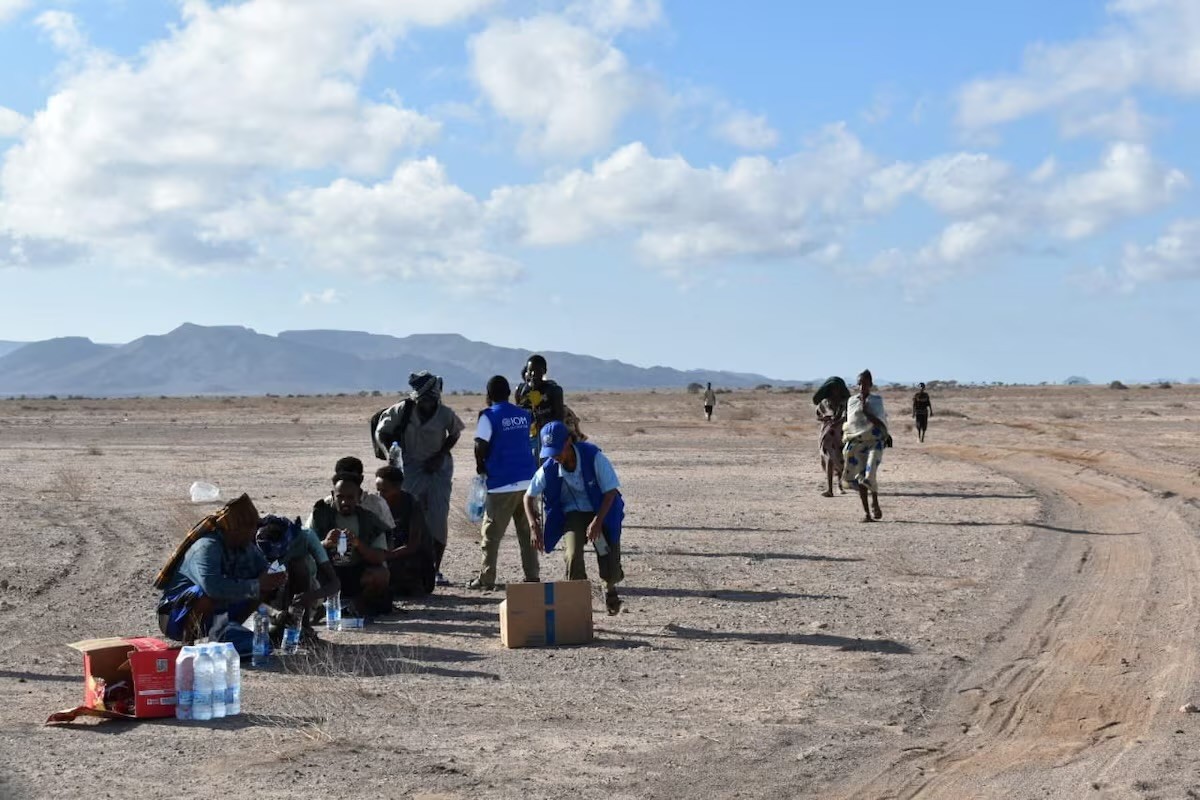
At least 139 migrants dead, including some children, after boat from Djibouti to Yemen capsizes, UN agency says
21:17
11 October 2026
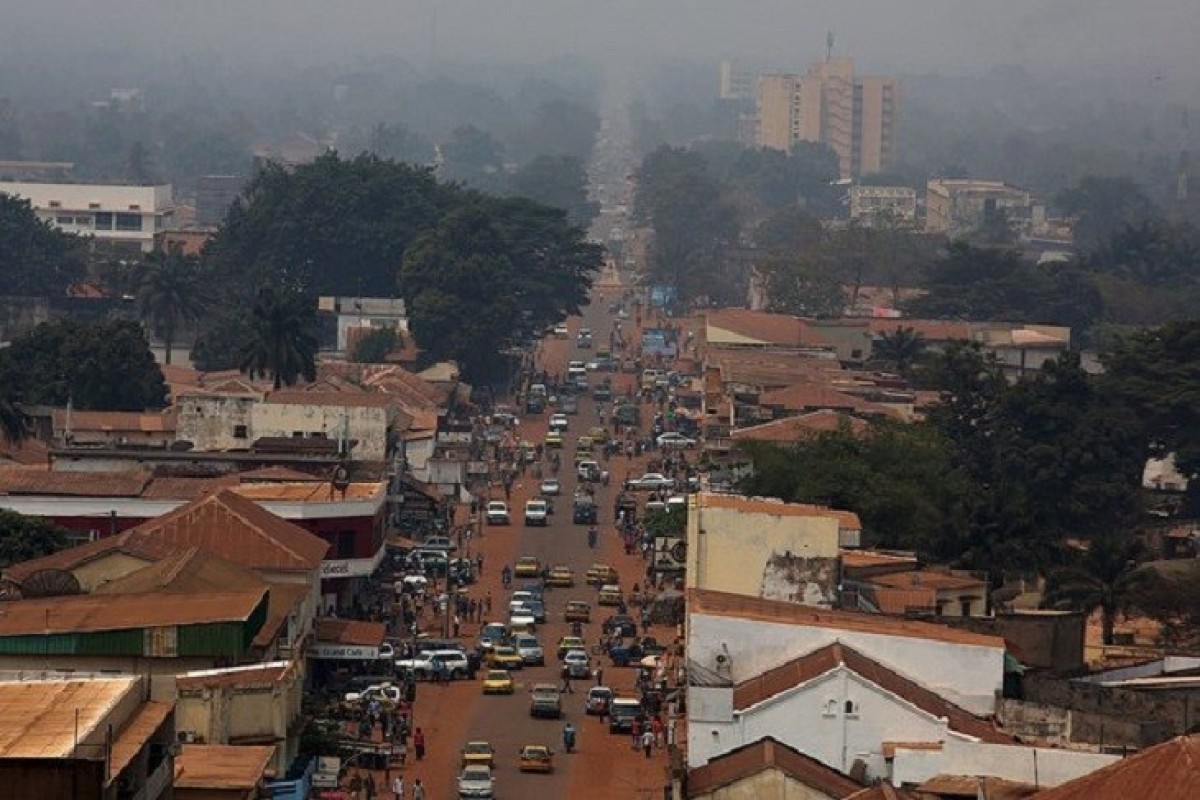
Central African Republic foils planned large-scale militant attack
07:04
11 October 2026
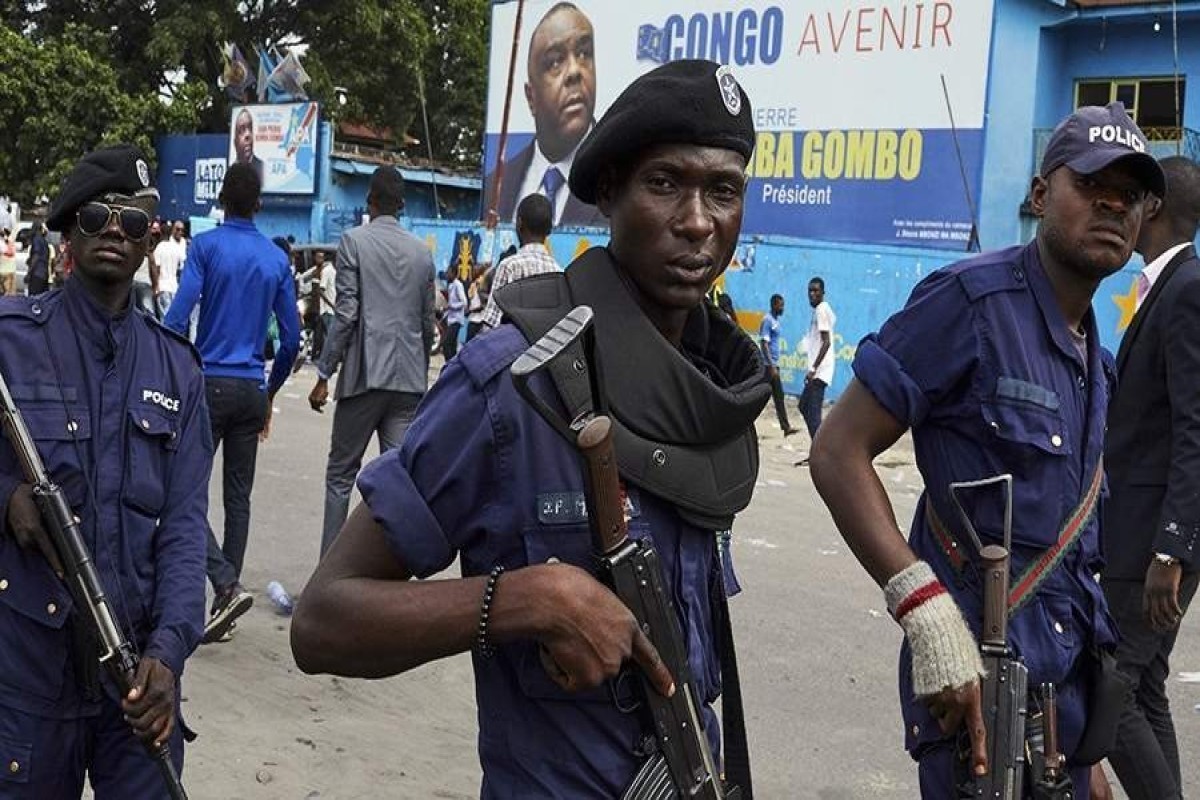
Rebel attack kills 11 civilians in DR Congo
05:16
11 October 2026

NEWS FEED
Ukrainian President discusses air defense with NATO Secretary General
20:31
15 October 2026
Ukraine runs out of Patriot interceptor missiles as Zelenskyy and Trump clash over war
19:52
15 October 2026
Iran's navy says "violating" oil tanker caught fire east of Hormuz Strait
19:43
15 October 2026
White House official: Trump considering all options to keep Iran from nuclear weapon
19:37
15 October 2026
Houthis fire missiles at presidential palace in Yemen's Aden, officials say
19:00
15 October 2026
President Ilham Aliyev’s social media accounts shared video on 7th CICA Summit
18:28
15 October 2026
President Ilham Aliyev met with Amir of Qatar - UPDATED
18:12
15 October 2026
Armenian and Turkish businesspeople discuss joint cooperation
17:56
15 October 2026
Journalist Alexander Nevzorov added to Russia’s list of terrorists and extremists
17:53
15 October 2026
New head of Republic of Dagestan elected
17:46
15 October 2026
Kobakhidze visits Armenia
17:17
15 October 2026
Georgian opposition announces protest rallies
17:05
15 October 2026
Pashinyan establishes working group to resolve railway issues with Russia
17:02
15 October 2026
Pope Leo recovering as planned after lung cancer surgery, doctors say
16:58
15 October 2026
Papuashvili: EU takes disruptive stance in relations with Georgia
16:40
15 October 2026
Baku hosted 7th CICA Summit, President Ilham Aliyev addressed the event - UPDATED - 4
16:34
15 October 2026
Azerbaijan to chair CICA in 2026–2028
16:27
15 October 2026
UN considers CICA's role more important now than ever
16:26
15 October 2026
Meeting held with delegation of international and foreign national Paralympic committees
16:23
15 October 2026
President Ilham Aliyev received Türkiye’s Minister of Foreign Affairs
16:16
15 October 2026
7th CICA Summit concludes
16:12
15 October 2026
CICA Secretary General replaced
16:11
15 October 2026
Lavrov considers it appropriate to hold next "3+3" meeting in Azerbaijan
16:08
15 October 2026
Baku Declaration adopted following 7th CICA Summit
16:05
15 October 2026
Large amount of drugs prevented from being smuggled from Iran into Azerbaijan - PHOTO
16:02
15 October 2026
Signed documents exchanged between Azerbaijan and Kazakhstan
16:00
15 October 2026
Lavrov: Russia ready to participate in TRIPP, but has not yet received invitation
15:50
15 October 2026
Lavrov: Zelenskyy is challenging Trump, not interested in elections
15:47
15 October 2026
Presidents of Azerbaijan and Kazakhstan met in Baku and inaugurated Trans-Caspian Fiber-Optic Cable Line
15:44
15 October 2026
9th Congress of Azerbaijani Journalists to be held tomorrow, candidates for Press Council Board announced
15:43
15 October 2026
Gharibabadi: Current difficulties in Strait of Hormuz caused by military aggression and naval blockade against Iran
15:42
15 October 2026
ING: $10 rise in oil prices could increase Azerbaijan’s exports by 2–4% of GDP
15:39
15 October 2026
UAE Minister: Priorities set during Azerbaijan’s CICA chairmanship align with UAE’s vision
15:33
15 October 2026
Palestinian issue raised at CICA Summit
15:31
15 October 2026
Indian FM: Changing geopolitical landscape necessitates more active participation of Global South countries
15:15
15 October 2026
Azerbaijan takes over chairmanship of CIS Advisory Council on Labor, Employment and Social Protection
15:14
15 October 2026
Death toll from Istanbul floods reaches 3, four people missing
15:12
15 October 2026
Azerbaijani Special Forces conduct training sessions for reservists
15:07
15 October 2026
Home of Novaya Gazeta editor-in-chief searched
15:04
15 October 2026
Lavrov: Russia has always supported CICA's development through practical cooperation
14:58
15 October 2026
Foreign ministers of Azerbaijan, Uzbekistan and Turkmenistan hold trilateral meeting
14:55
15 October 2026
Turkish and Russian FMs meet in Baku
14:53
15 October 2026
Türkiye committed to strengthening CICA as Asia's most comprehensive security platform - Turkish FM
14:51
15 October 2026
Bahrain calls for ensuring safety of maritime and air navigation
14:44
15 October 2026
Pezeshkian to visit Armenia for biodiversity summit
14:40
15 October 2026
Pashinyan: Armenia has never had strained relations with Russia
14:40
15 October 2026
FM Hakan Fidan: We want COP31 to become an opportunity to strengthen climate justice
14:38
15 October 2026
Turkish FM: We support CICA's transformation into a full-fledged international organization
14:33
15 October 2026
Peskov: Moscow unaware of US proposals to Europe on unfreezing Russian assets
14:31
15 October 2026
Azerbaijani Parliament Speaker meets with Chairman of House of Representatives of Belarusian National Assembly
14:29
15 October 2026