










Baku - APA-Economics. As Germany’s robust economic recovery continues, the country’s companies are finding it increasingly hard to find enough skilled workers. Kyle James reports on the impending labour shortage, Local reported.
A recent study by the German Chamber of Commerce found that Europe’s largest economy lacks about 400,000 skilled workers. The need is especially acute in the engineering, high-tech and health care sectors.
Bernd Völcker, a founder and the marketing director of the Berlin-based web services firm Infopark, has been experiencing the problem first hand. His business has been doing well over the past year and he would like to hire at least ten new employees. But that is proving difficult, and time consuming.
"We can’t fill the open positions that we have quickly, sometimes it takes months," he said. "We can’t grow as fast as we would like to and in the worst case, it means we have to turn down work that comes our way."
The German high-tech industry association BITKOM estimates there are about 28,000 unfilled positions in the IT sector, primarily in software development and support. In health care, an increasingly important sector for Germany’s greying society, the situation is worse – some 50,000 additional workers are needed.
The long-term prognosis is not good, especially due to demographic developments. Germany’s birthrate is about 1.4 babies per woman, well under the rate to maintain current population levels.
"When older workers retire and there are fewer young ones to take their place, this problem is just going to get worse," said Hardege of the Chamber of Commerce.
Much worse, in fact. The Chamber estimates the shortage could grow around 10 percent annually, meaning by 2030 the country could need some 2.7 million skilled workers it doesn’t have.
One way labour experts say Germany can tackle the problem is by recruiting more experts from abroad, but that has proven to be a challenge. A survey and report published in November by Germany’s Federal Institute for Population Research showed that the country was not all that attractive to foreign workers. On a scale of one (attractive) to five (unattractive), Germany scored a middling 2.8.
According to the report, a main problem with attracting skilled immigrants is the language. German is not an international language like English, and is not as popular with foreigners as French is, for example.
The country could also simplify confusing rules around visas and work permits as well as recognize more university degrees from overseas, the report recommended. In addition, a recent undertone of anti-immigrant sentiment hasn’t helped matters. Labour experts say the country needs to be more welcoming all around.
But there are those who have come to Germany who say the country has welcomed them just fine. Cade McCall moved to Leipzig from Santa Barbara, California last fall to work as a researcher at the Max Planck Institute for Human Cognitive and Brain Sciences.
His integration into the workplace and life in Leipzig has been problem free, he said. According to him, Germany likely hasn’t performed well in surveys because it hasn’t sold itself like it should.


 Follow us on Telegram
 t.me/apanewsaz
 Follow us on Instagram
 Follow us on TikTok
 Follow us on Facebook
 Follow us on X
Social

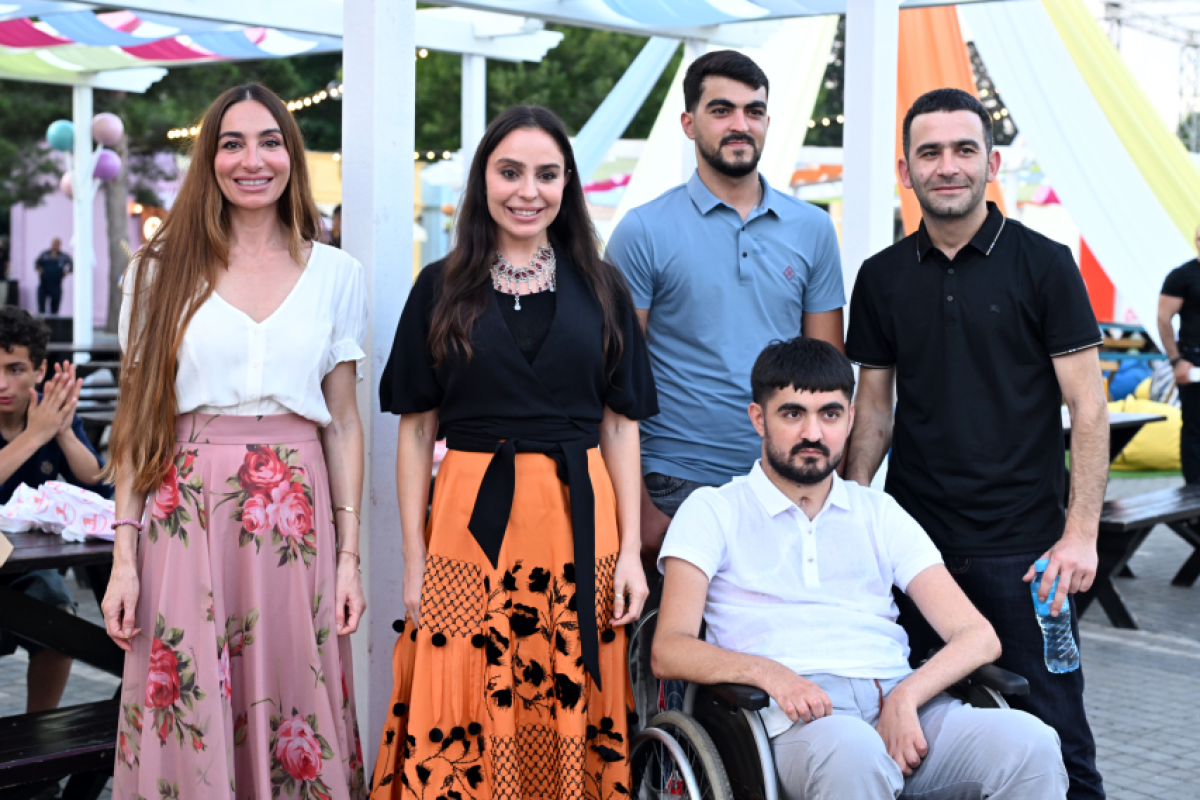
Leyla Aliyeva and Alona Aliyeva attend Charity Festival
 10:43
10:43
 29 June 2026
Leyla Aliyeva and Arzu Aliyeva visit "CandyFest" summer festival and watch "Magic Pearl" water circus show-PHOTO
11:24
27 June 2026

Leyla Aliyeva and Arzu Aliyeva participate in seasonal flower planting campaign on Baku Boulevard-PHOTO
11:21
27 June 2026

Leyla Aliyeva and Arzu Aliyeva attend opening and presentation ceremonies at the Seaside National Park-PHOTO
11:14
27 June 2026

NEWS FEED
Pakistani strikes kill 36 civilians, wound 163: Afghan govt
11:07
29 June 2026
Projects implemented by the Organization of Turkic States are based on the progressive ideas of the First Turkology Congress – President
11:04
29 June 2026
Erdoğan addresses participants of the 100th anniversary event of the First Turkology Congress
11:04
29 June 2026
President Ilham Aliyev: It is gratifying that my initiative to mark the 100th anniversary of the First Turkology Congress has become a reality
10:59
29 June 2026
Four bodies found in burned-out car on Yerevan–Yeraskh highway
10:58
29 June 2026
Baku to host BSTDB Annual Meeting and Business Forum
10:54
29 June 2026
Presidents of Kazakhstan and Kyrgyz Republic address participants of Turkic World Week in Baku
10:51
29 June 2026
Leyla Aliyeva and Alona Aliyeva attend Charity Festival
10:43
29 June 2026
President Ilham Aliyev addresses participants of the First Turkology Congress centenary event
10:41
29 June 2026
Russian army launches 973 strikes on 45 settlements in Ukraine's Zaporizhzhia region in 24 hours
10:32
29 June 2026
Official Baku calls on Israeli government to reconsider decision on the so-called "Armenian genocide"
10:14
29 June 2026
Baku hosts the 100th anniversary event of the First Turkology Congress
10:12
29 June 2026
Azerbaijan Army conducts demonstration classes with new officers
10:08
29 June 2026
Latvia and Ukraine to build a UAV factory near the border with Russia and Belarus
09:51
29 June 2026
Kaja Kallas and Kos arrive in Türkiye ahead of NATO summit
09:25
29 June 2026
Belarusian President Alexander Lukashenko is on a working visit to China
09:22
29 June 2026
Oil prices rise again on world markets
09:14
29 June 2026
Bitcoin price drops below $60,000
09:13
29 June 2026
Gold futures decline on commodity markets
09:07
29 June 2026
Israel announces destruction of Hezbollah underground facility in southern Lebanon
03:36
29 June 2026
Canadian national team qualifies for FIFA World Cup 1/8 finals
01:55
29 June 2026
Axios: U.S., Iran agree to ceasefire, Doha talks on Strait of Hormuz
01:27
29 June 2026
Putin: Ukrainian strikes on Russia's energy infrastructure undoubtedly create problems
01:26
Audio
29 June 2026
Türkiye says Israel using 1915 events decision to cover up crimes against Palestinians
23:20
28 June 2026
33 people rescued, thousands still missing after Venezuela quakes
22:44
28 June 2026
Qatari citizen died from shrapnel wounds on board ship
21:54
28 June 2026
Russian President held meeting on fuel supplies for domestic market
20:50
28 June 2026
Starmer could run for NATO Secretary General
20:33
28 June 2026
Azerbaijani MFA expresses condolences over helicopter crash in Saudi Arabia
19:03
28 June 2026
Mutual attacks between Iran and the US are increasing – LATEST SITUATION
17:13
28 June 2026
Israeli government unanimously votes to recognize the so-called "Armenian genocide," bill to be submitted to Knesset
15:06
28 June 2026
Another wheat shipment transits Azerbaijan from Russia to Armenia-PHOTO
13:06
28 June 2026
Venezuela quake death toll rises to 1,430
10:00
28 June 2026
IRGC says it struck U.S. military infrastructure in Kuwait and Bahrain
09:34
28 June 2026
Trump threatens more military action against Iran if strikes continue
03:52
Audio
28 June 2026
UN: Venezuela earthquake could affect more than 6.7 million people
02:44
28 June 2026
US launches more strikes against Iran
02:17
Audio
28 June 2026
Britain has zero active submarines at sea for now
02:00
28 June 2026
Israel will withdraw troops from two areas in southern Lebanon on June 28
01:48
28 June 2026
Netanyahu announces plans to form broad national government after elections
01:30
28 June 2026
Argentina cabinet chief resigns after corruption allegations
01:20
28 June 2026
Magnitude 5.4 earthquake struck Venezuela
00:56
28 June 2026
Netanyahu: Deal says Israel can keep security zone as long as needed
23:53
27 June 2026
UFC Baku: Rafael Fiziev defeats Manuel Torres in main event
23:14
Audio
27 June 2026
UFC: Abus Magomedov defeats Mikhal Oleksiychuk
21:22
27 June 2026
UFC: Farman Hasanov defeats his opponent from the United States
21:11
27 June 2026
Wheat to be shipped to Armenia via transit through Azerbaijan
19:53
27 June 2026
Jeyhun Bayramov and Hakan Fidan hold phone conversation
19:04
27 June 2026
"Caucasus Eagle 2026" exercise concludes-VIDEO
18:43
27 June 2026
Tremors jolt Delhi-NCR, Kashmir as magnitude 6.2 earthquake hits Afghanistan
18:37
27 June 2026


