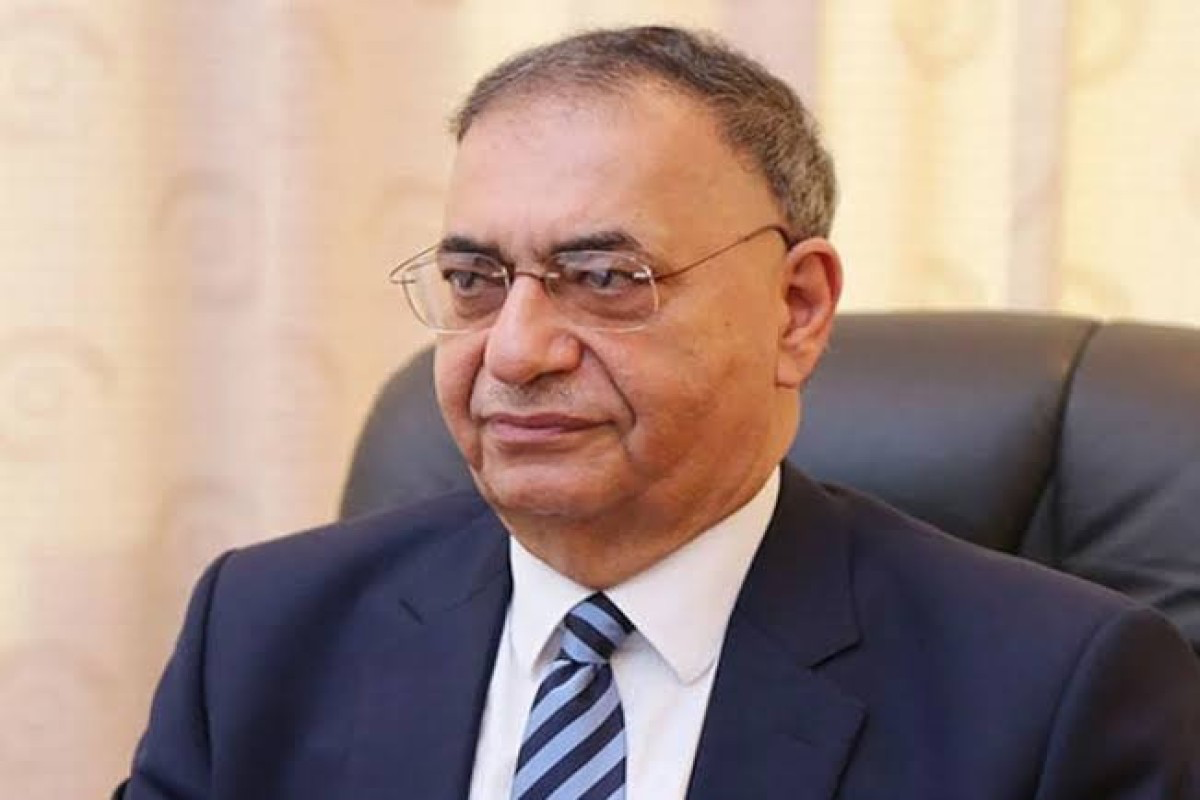


Interview of Member of Azerbaijan's Parliament Asim Mollazade with APA
- The visit of representatives of the diplomatic corps accredited in Azerbaijan to Karabakh and East Zangezur has sparked a strong reaction in Armenia. How do you assess this attitude of Armenian society?
- The reaction of Armenian society to the visit of diplomatic corps representatives to Karabakh and East Zangezur is unacceptable and regrettable. Karabakh is the sovereign territory of Azerbaijan. Such reactions contradict Armenia's recognition of Azerbaijan's sovereignty and territorial integrity.
- Can this reaction be considered interference in Azerbaijan's internal affairs?
- Certainly, this is a gross interference in Azerbaijan's internal affairs. By what right does Armenian society lash out at foreign diplomats for traveling within Azerbaijan's sovereign territory? The recent visit of the diplomatic corps to Karabakh and East Zangezur demonstrates once again that the countries they represent unequivocally recognize and support Azerbaijan's territorial integrity and accept this reality.
- Issues regarding historical and cultural heritage are also being highlighted in the Armenian side's reaction. They claim that monuments of alleged Armenian heritage are being "Albanized." How do you assess Armenia’s presentation of the Gandzasar and Khudavang monuments as Armenian heritage?
- There is a serious contradiction here. How can it be that Armenia presents Gandzasar and Khudavang as Armenian heritage while denying the existence of Azerbaijani historical and cultural heritage within its own territory? A narrative is being constructed claiming that Armenians historically lived in the territory of Azerbaijan, yet—allegedly—Azerbaijanis did not live in the territory of modern-day Armenia. This is, in itself, a racist approach. Armenia’s general attitude toward the heritage of Caucasian Albania can be characterized as racism. The existence of Caucasian Albania on Azerbaijani lands is well-established in global historical scholarship. The denial of Caucasian Albania and its cultural heritage within Armenian society is, in effect, racism. Armenia is intolerant of the truth.
All historical and cultural monuments within the territory of the Republic of Azerbaijan belong to the Azerbaijani state and people and are protected by the state with full responsibility.
- It is no secret that revanchist forces exist within Armenia. In previous interviews, you have stated that these forces are not linked solely to the opposition. What is the basis for this view?
- Yes, there are revanchist forces within Armenia. However, they are not confined to the opposition. Analyses indicate that the Armenian authorities themselves are behind the circulating information and the ongoing campaign. The fact that many posts and articles appear on platforms close to the ruling party demonstrates this. On one hand, the authorities play to the public and the international community, pretending not to repeat the mistakes of previous administrations. On the other hand, they covertly keep certain forces poised for a revanche.
- So, do you believe this is not merely spontaneous discontent within Armenian society, but involves a degree of political orchestration?
- Yes. Recent statements and posts bear the hallmarks of a campaign. It appears that this campaign is being conducted with the support—or under the direction—of the Armenian authorities. Therefore, it would be incorrect to view the matter simply as the activity of isolated revanchist groups.
- How do you assess the statement made by the Speaker of the Armenian Parliament, Ruben Rubinyan, regarding this issue?
- Ruben Rubinyan's statement is also unacceptable and constitutes interference in Azerbaijan's internal affairs. The Armenian side must understand that the matter concerns Azerbaijan's internationally recognized sovereign territory; it is not within Armenia's purview to comment on—let alone object to—visits by foreign diplomats to this area.
- On September 14, the Armenian parliament observed a minute of silence to honor the servicemen who died in the clashes of September 12–13, 2022. What purpose do you think this move serves?
- That action can also be viewed as a step intended to fuel revanchist sentiment. The border clashes of September 12–13, 2022, were triggered by Armenia's military provocations, compelling Azerbaijan to respond. Highlighting such an event in this specific manner within the political arena risks strengthening revanchist sentiments.


 Follow us on Telegram
 t.me/apanewsaz
 Follow us on Instagram
 Follow us on TikTok
 Follow us on Facebook
 Follow us on X