










Baku – APA. Minutes before a midnight deadline, President Barack Obama signed into law a four-year extension of post-Sept. 11 powers to search records and conduct roving wiretaps in pursuit of terrorists, APA reports quoting “Associated Pressâ€.
"It’s an important tool for us to continue dealing with an ongoing terrorist threat," Obama said Friday after a meeting with French President Nicolas Sarkozy.
With Obama in France, the White House said the president used an autopen machine that holds a pen and signs his actual signature. It is only used with proper authorization of the president.
Congress sent the bill to the president with only hours to go on Thursday before the provisions expired at midnight. Votes taken in rapid succession in the Senate and House came after lawmakers rejected attempts to temper the law enforcement powers to ensure that individual liberties are not abused.
The Senate voted 72-23 for the legislation to renew three terrorism-fighting authorities. The House passed the measure 250-153 on an evening vote.
A short-term expiration would not have interrupted ongoing operations but would have barred the government from seeking warrants for new investigations.
Congress bumped up against the deadline mainly because of the stubborn resistance from a single senator, Republican freshman Rand Paul of Kentucky, who saw the terrorist-hunting powers as an abuse of privacy rights. Paul held up the final vote for several days while he demanded a chance to change the bill to diminish the government’s ability to monitor individual actions.
The measure would add four years to the legal life of roving wiretaps, authorized for a person rather than a communications line or device; court-ordered searches of business records; and surveillance of non-American "lone wolf" suspects without confirmed ties to terrorist groups.
The roving wiretaps and access to business records are small parts of the USA Patriot Act enacted after the Sept. 11, 2001, attacks. But unlike most of the act, which is permanent law, those provisions must be renewed periodically because of concerns that they could be used to violate privacy rights. The same applies to the "lone wolf" provision, which was part of a 2004 intelligence law.
Paul argued that in the rush to meet the terrorist threat in 2001 Congress enacted a Patriot Act that tramples on individual liberties. He had some backing from liberal Democrats and civil liberties groups who have long contended the law gives the government authority to spy on innocent citizens.
Sen. Dick Durbin, D-Ill., said he voted for the act in 2001 "while ground zero was still burning." But "I soon realized it gave too much power to government without enough judicial and congressional oversight."
Sen. Mark Udall, D-Colo., said the provision on collecting business records can expose law-abiding citizens to government scrutiny. "If we cannot limit investigations to terrorism or other nefarious activities, where do they end?" he asked.
"The Patriot Act has been used improperly again and again by law enforcement to invade Americans’ privacy and violate their constitutional rights," said Laura W. Murphy, director of the ACLU Washington legislative office.
Still, coming just a month after intelligence and military forces tracked down and killed Osama bin Laden, there was little appetite for tampering with the terrorism-fighting tools. These tools, said Senate Republican leader Mitch McConnell of Kentucky, "have kept us safe for nearly a decade and Americans today should be relieved and reassured to know that these programs will continue."
Intelligence officials have denied improper use of surveillance tools, and this week both FBI Director Robert Mueller and Director of National Intelligence James Clapper sent letters to congressional leaders warning of serious national security consequences if the provisions were allowed to lapse.
The Obama administration says that without the three authorities the FBI might not be able to obtain information on terrorist plotting inside the U.S. and that a terrorist who communicates using different cell phones and email accounts could escape timely surveillance.
"When the clock strikes midnight tomorrow, we would be giving terrorists the opportunity to plot attacks against our country, undetected," Senate Majority Leader Harry Reid said on the Senate floor Wednesday. In unusually personal criticism of a fellow senator, he warned that Paul, by blocking swift passage of the bill, "is threatening to take away the best tools we have for stopping them."
The nation itself is divided over the Patriot Act, as reflected in a Pew Research Center poll last February, before the killing of bin Laden, that found that 34 percent felt the law "goes too far and poses a threat to civil liberties. Some 42 percent considered it "a necessary tool that helps the government find terrorists." That was a slight turnaround from 2004 when 39 percent thought it went too far and 33 percent said it was necessary.
Paul, after complaining that Reid’s remarks were "personally insulting," asked whether the nation "should have some rules that say before they come into your house, before they go into your banking records, that a judge should be asked for permission, that there should be judicial review? Do we want a lawless land?"
Paul agreed to let the bill go forward after he was given a vote on two amendments to rein in government surveillance powers. Both were soundly defeated. The more controversial, an amendment that would have restricted powers to obtain gun records in terrorist investigations, was defeated 85-10 after lawmakers received a letter from the National Rifle Association stating that it was not taking a position on the measure.
According to a senior Justice Department national security official testifying to Congress last March, the government has sought roving wiretap authority in about 20 cases a year between 2001 and 2010 and has sought warrants for business records less than 40 times a year, on average. The government has yet to use the lone wolf authority.
But the ACLU also points out that court approvals for business record access jumped from 21 in 2009 to 96 last year, and the organization contends the Patriot Act has blurred the line between investigations of actual terrorists and those not suspected of doing anything wrong.
Two Democratic critics of the Patriot Act, Sen. Ron Wyden of Oregon and Udall of Colorado, on Thursday extracted a promise from Senate Intelligence Committee chairman Dianne Feinstein, D-Calif., that she would hold hearings with intelligence and law enforcement officials on how the law is being carried out.
Wyden says that while there are numerous interpretations of how the Patriot Act works, the official government interpretation of the law remains classified. "A significant gap has developed now between what the public thinks the law says and what the government secretly claims it says," Wyden said.


 Follow us on Telegram
 t.me/apanewsaz
 Follow us on Instagram
 Follow us on TikTok
 Follow us on Facebook
 Follow us on X
Europe

UK guarantees $1 billion World Bank loan to Ukraine
 23:20
23:20
 26 June 2026
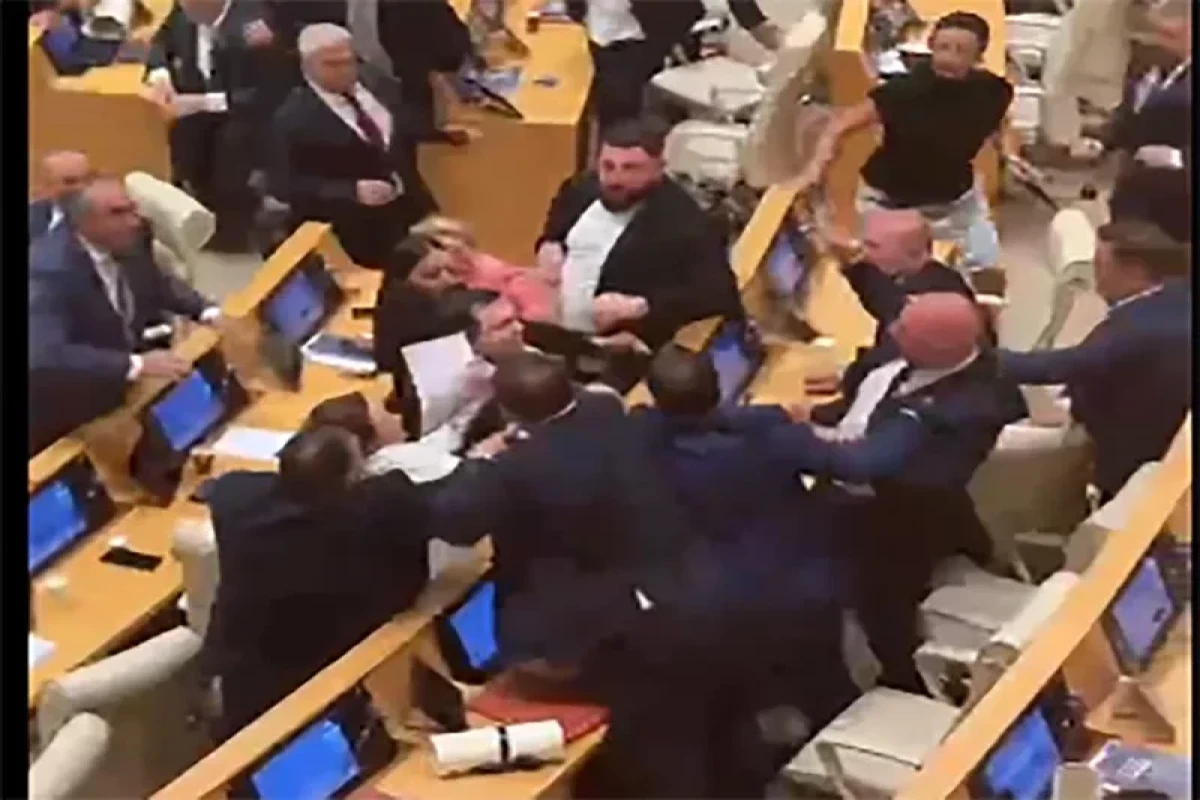
Scuffle breaks out during Georgian parliament session, proceedings suspended - PHOTO
20:00
26 June 2026

Death toll hits 55 in France as drownings rise amid Europe heatwave
19:07
26 June 2026
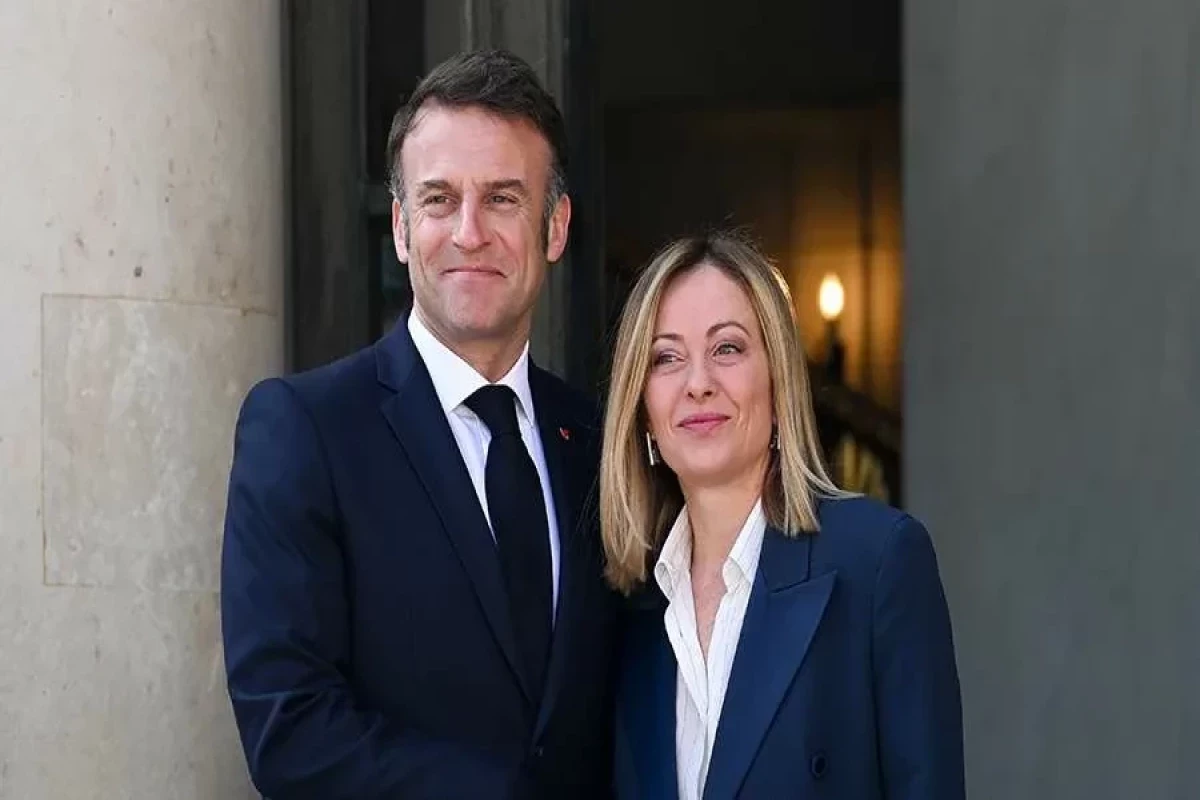
France, Italy seek multinational coalition to support Lebanon after UNIFIL withdrawal
09:02
26 June 2026

NEWS FEED
Netanyahu: Deal says Israel can keep security zone as long as needed
23:53
27 June 2026
UFC Baku: Rafael Fiziev defeats Manuel Torres in main event
23:14
Audio
27 June 2026
UFC: Abus Magomedov defeats Mikhal Oleksiychuk
21:22
27 June 2026
UFC: Farman Hasanov defeats his opponent from the United States
21:11
27 June 2026
Wheat to be shipped to Armenia via transit through Azerbaijan
19:53
27 June 2026
Jeyhun Bayramov and Hakan Fidan hold phone conversation
19:04
27 June 2026
"Caucasus Eagle 2026" exercise concludes-VIDEO
18:43
27 June 2026
Tremors jolt Delhi-NCR, Kashmir as magnitude 6.2 earthquake hits Afghanistan
18:37
27 June 2026
Tanker hit by unidentified projectile in Hormuz, British maritime agency says
16:54
27 June 2026
Russian Defense Ministry claims two Ukrainian MiG-29 fighter jets destroyed at Mykolaiv airfield
16:51
27 June 2026
Iran accuses U.S. of violating two clauses of memorandum
16:48
27 June 2026
Service chief: Lowering military conscription age limit has reduced state expenses
16:09
27 June 2026
Ukrainian MiG-29 crashes during combat mission, Air Force says, pilot ejects safely
15:25
27 June 2026
Russia and Ukraine exchange civilian detainees
14:40
27 June 2026
Baku–Nakhchivan flights cancelled due to thunderstorms
14:16
27 June 2026
One killed, 11 injured in Ukraine's attack on Volgograd
13:58
27 June 2026
Bahrain says Iranian drones targeted its territory early Saturday
13:55
27 June 2026
Zelenskyy confirms strike on military plant in Volgograd-VIDEO-UPDATED
13:42
27 June 2026
Kremlin: Putin and Lukashenko continue talks
13:38
27 June 2026
Small aircraft crash in Beijing kills one person, injures 13, local govt says
13:30
27 June 2026
Iran's Foreign Ministry reacts to U.S. airstrikes
11:31
27 June 2026
Leyla Aliyeva and Arzu Aliyeva visit "CandyFest" summer festival and watch "Magic Pearl" water circus show-PHOTO
11:24
27 June 2026
Leyla Aliyeva and Arzu Aliyeva participate in seasonal flower planting campaign on Baku Boulevard-PHOTO
11:21
27 June 2026
Leyla Aliyeva and Arzu Aliyeva attend opening and presentation ceremonies at the Seaside National Park-PHOTO
11:14
27 June 2026
Baltic states urge EU to speed up ban on Russian oil imports
11:07
27 June 2026
Seoul says Chinese, Russian military aircraft enter its air defense zone
10:51
27 June 2026
Gold and silver rise in commodity markets
10:24
27 June 2026
Natural gas falls on New York exchange
10:22
27 June 2026
Azerbaijani oil trades at $74
10:20
27 June 2026
Two police officers killed in armed attack on police checkpoint in Iran
10:15
27 June 2026
Brent oil falls by more than 4%
09:35
27 June 2026
Major global stock market indices
09:29
27 June 2026
State Department: Lebanon agreement envisages withdrawal of Israeli forces
09:24
27 June 2026
Saudi Arabia resumes oil loading in the Persian Gulf
09:20
27 June 2026
Vance: US ready to discuss memorandum disagreements with Iran
02:39
Audio
27 June 2026
IRGC says it struck US military positions in response to US airstrike on Iran
01:43
27 June 2026
France wins Group I after beating Norway 4-1
01:13
27 June 2026
US strikes Iranian targets in response to attack on cargo ship
00:47
Audio
27 June 2026
Netanyahu says Israeli army will remain in southern Lebanon ‘security zone’ until Hezbollah disarmed
23:49
26 June 2026
UK guarantees $1 billion World Bank loan to Ukraine
23:20
26 June 2026
Israel, Lebanon sign framework peace deal after US-mediated talks
22:36
Audio
26 June 2026
Venezuela quake death toll rises to 92
22:29
26 June 2026
Trump accuses Iran of violating ceasefire with US
20:24
Audio
26 June 2026
Scuffle breaks out during Georgian parliament session, proceedings suspended - PHOTO
20:00
26 June 2026
Turkish ships stranded in Strait of Hormuz safely leave the region
19:56
26 June 2026
Turkish actor Kadir İnanır dies at 77
19:33
26 June 2026
Putin meets with Belarusian President Lukashenko
19:22
26 June 2026
Putin bans deportation of foreigners serving under contract in Russian army
19:19
26 June 2026
Seven Hezbollah fighters killed in Lebanon
19:12
26 June 2026
Explosion followed by fire hits factory in Türkiye
19:10
26 June 2026


