



Our southern neighbor Iran has always acted jealous of Azerbaijan's successes. This manifests itself both in the creation and incitement of radical groups under the guise of religion in Azerbaijan, in the statements of officials from time to time questioning the sovereignty and existence of Azerbaijan, and establishment of close political and economic cooperation with Armenia, which occupied the Karabakh region and not accepting new favorable geopolitical reality arisen for our country after 44-day Patriotic War.
It is not a secret that Iran has actively participated in the looting of the surface and underground resources of Karabakh, which has been under the occupation of Armenia for nearly 30 years and has turned a blind eye to the destruction of religious and historical cultural monuments, including mosques.
A clear example of this fact was the publication of a list involving more than 50 Iranian companies working in Karabakh in 2017 by Iran Mellat Bank after the dismissal of the former head of the Yerevan branch of the same bank, Armenian citizen Hrachya Hovhannisyan. The secret list found that companies of various profiles, from food and construction to mining and military, worked in Karabakh. That secret list disclosed that companies of various profiles, including food, construction, mining, and military, operated in Karabakh.
The full scope of activity of Iranian companies in Karabakh during the occupation was more than it and requires special investigation.
Stressing kind neighborhood, the solidarity of religion and sectarian solidarity, joint history and cultural points with Azerbaijan in statements over the years, Iranian officials were speaking about the so-called “development” of relations. However, the reality of the past years showed that there is a great avalanche between statements and practical activity of the official Tehran.
It manifested itself during the Patriotic War especially.
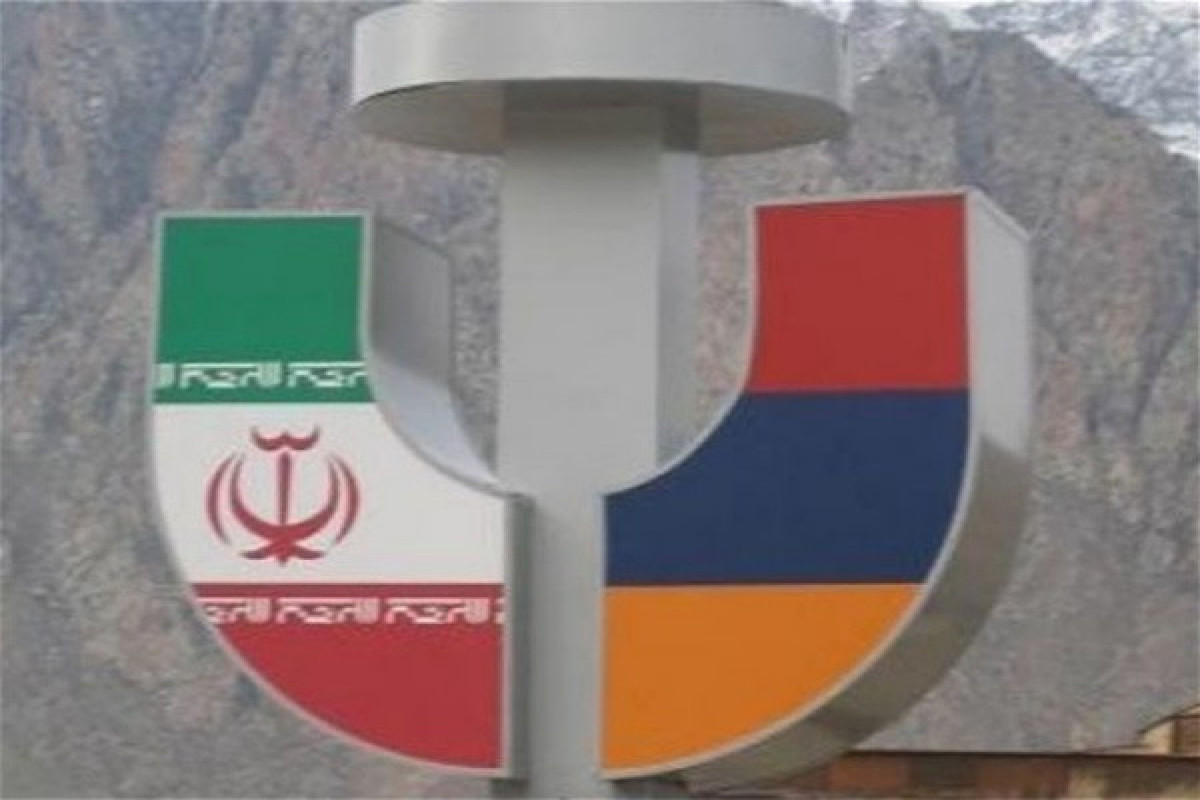
Video footage, reflecting the transport of military products with trucks on the Iranian-Armenian border, was repeatedly disseminated during the war. On the other side, military assistance, sent by the third countries to Armenia during the war, was also delivered to Armenia through the Iranian area due to the closure of the airspace of Georgia.
As it was in the First Karabakh War, Iran took the function of a political, military, and economic “window” for Armenia this time.
Certainly, Tehran denied pro-Armenian policy at the official level and released insincere statements calling the parties for peace, regarding their willingness to be mediators in negotiations, which aimed at pulling the wool over their eyes.
Even Armenian politicians clearly spoke about Iran’s support. For example, the head of the Tehran Office of the Dashnaktsutyun Party Issac Yunanesyan said that the Iranian authority suggested Armenia radio-electronic combat vehicles to shoot down Bayraktar TB 2 drones, but he noted the Armenian side said “no” to it.
No doubt, although Iran did not have effective fighting tools and technological power against weapons, actively used by Azerbaijani Army and produced by Türkiye and Israel, Tehran's authority was ready to do its best for Armenia’s not being defeated.
But Iran, which could not hinder the glorious victory of our Army, this time tried not to accept the new geopolitical reality that existed after the Patriotic War and to reduce the impact of Azerbaijan's success in a long perspective. These works also continue today and are especially, aimed at the prevention of the implementation of the Zangazur Corridor of Azerbaijan which was established to provide an unobstructed direct connection between the territory of Azerbaijan and the Nakhchivan Autonomous Republic in accordance with the relevant Article of the trilateral statement dated November 10, 2020.
This concern is primarily caused by the absence of a powerful Azerbaijani state on its borders and the lack of direct contact between all Turkic states. The corridor is a promising global communication line that will connect the Turkic states of Central Asia, and in a broader sense, the Asian continent, including China, to Europe through Turkiye, and will increase economic welfare many times over. Iran which fears that it will be left out of the corridor, alongside it, from global economic paths, considers that the new road will reduce its regional importance many times.
It is no coincidence that media resources and experts close to Iran's ruling circles call this road the Turan Corridor.
In fact, the Turan Corridor has become an existential threat to Iran. Official Tehran strongly opposes the realization of this project and often declares that Armenia's territorial integrity is a "red line".
Almost all high-ranking officials, from Iranian President Ibrahim Raisi, Supreme Leader of the country Ali Khamenei, Chief of the General Staff of the Armed Forces Mohammad Bagheri to Foreign Minister Amir Hossein Abdullahian said that the borders of the countries in the region are inviolable and that they will not allow any changes in the borders.
Another element of Iran's behind-the-scenes diplomatic game was exposed by the ex-president of Armenia, Robert Kocharyan. At a press conference held on September 28, 2022, he expressed Iran's support for Armenia and concern about the Zangezur Corridor.
"Many serious statements were made in Iran, from the Supreme Leader to the president and high-ranking military personnel. Iran seemed to be telling us, "let's negotiate and see what kind of help we can give you", Kocharyan said. He openly stated that, along with Armenia, only Iran is against the operation of the Zangezur Corridor in this status.
It is interesting that our southern neighbor did not show that he was so sensitive to the inviolability of borders in the South Caucasus during the nearly 30-year occupation of Azerbaijani lands. On the contrary, it directly supported and sponsored the occupation of Karabakh by keeping its borders with the occupying Armenia open.
On the other hand, there is no contradiction between the opening of the Zangezur corridor and the principle of territorial integrity of the countries. Because the corridor will operate on the basis of the international document signed by the leader of Armenia and does not pose any threat to the territorial integrity of this country. On the contrary, all the countries of the region, including Armenia and Iran, can gain a serious dividend from the opening of the corridor and further revival of trade. Because this project can play the role of a "breather" for Iran, which is oppressed under sanctions and often shaken by internal unrest, and Armenia, which has been left out of all regional infrastructure projects for 30 years. Only Azerbaijan and Turkey can give them this "breathing space".
But as you can see, Iran continues its foreign policy based on emotions and fear rather than a biased and pragmatic approach towards Azerbaijan towards the Caucasus. The continuation of this policy in the future may raise questions about Iran's regional influence and its existence as a state in the longer term.


 Follow us on Telegram
 t.me/apanewsaz
 Follow us on Instagram
 Follow us on TikTok
 Follow us on Facebook
 Follow us on X