










Baku – APA. With talks between Israel and the Palestinians in limbo, those in the region are wondering whether the U.S. has lost the necessary muscle to have influence on players across the Middle East, APA reports quoting CNN.
For the past month, Mideast followers have painfully watched as the U.S. tried to secure an extension of the settlement freeze from Israeli Prime Minister Benjamin Netanyahu, which would keep Palestinian President Mahmoud Abbas at the table and save the recently jump-started peace talks from completely breaking down.
While disappointed, nobody was surprised that Netanyahu didn’t extend the freeze, even after President Obama expended serious political capital by calling for the freeze in his speech last month to the United Nations General Assembly.
We’ve seen this happen several times over the past year. The Obama administration demands a settlement freeze. Netanyahu says no. And the U.S. is forced to plead with Abbas to negotiate anyway, giving in on the position the U.S. laid out in the first place.
Now the U.S. is willing to give all kinds of goodies to Israel for a two-month moratorium on settlements in the hopes that will give the parties time to negotiate a deal on borders before they are back in the same exact place asking for another freeze, including security guarantees, military hardware and support at the United Nations.
It almost reminds you of the Charlie Brown cartoon in which Lucy always pulls away the football when Charlie Brown goes to kick it. Yet he keeps stepping up, hoping this time will be different.
More than one Middle Eastern diplomat has called it "amateur hour."
"This administration is the most friendly to the Palestinians ever but the execution is appalling," one senior Palestinian official said. "They have fallen into every trap the Israelis have set for them. And they have fallen into every trap we have set for them." Ironically, but not surprisingly, this official didn’t want to cause tensions in the relationship with the Obama administration by speaking on the record.
Beyond getting a settlement freeze and getting the parties in a room with George Mitchell and his magic bag of negotiating tricks, diplomats worry there is no coherent plan for moving the region to a comprehensive peace deal between Israel and its neighbors.
Rather they say it’s the same cautious, incremental approach that has failed for the past 19 years since the U.S. promised in Madrid, Spain, to be the broker of Mideast peace.
Given the international goodwill Obama had upon taking office for simply not being President Bush, his appointment of Mitchell as his Mideast peace envoy during his administration’s first week and the transformational agenda he offered for a "new era" in U.S. relations with the Arab and Muslim world in his Cairo, Egypt, speech, it is surprising to see the U.S. in the position it now finds itself in.
But although it came into office hoping to seduce the region rather than fight it, the Obama administration has not delivered on the tantalizing promises it made since taking office, not only to show progress on solving the Israeli-Palestinian conflict, but to encourage democratic reform. These dashed expectations Obama has created in the region are not just disappointing, they are damaging U.S. credibility in the region and have diplomats and Middle East experts scratching their heads about just what Obama’s vision for the region is.
"This administration came with good intentions, it came with renewed willingness to deal with the region, and not from a big brother sort of perspective, but through partnership," said Marwan Muasher, a former Jordanian foreign minister now at the Carnegie Endowment. "But President Obama has not translated his Cairo speech and all these good intentions into a coherent program and that is why his credibility among the Arab public has declined."
Part of the problem, diplomats say, is that Obama has yet to form close bonds with any Arab leader. Many diplomats in Washington and abroad lament that between the administration’s plethora of special envoys and the various camps within both the White House and the State Department, it’s hard to know exactly who is making policy or what the policy is.
"Let’s be honest, nobody agreed with the Bush policies," a senor Arab diplomat told me. "But he sat across from you and looked you in the eye and told you what he was going do, and why. And then he did it. In our region we want to sit with you, get to know who you are. No leader wants to hear about U.S. policy from a podium."
To many in the Middle East, this failure to guide Obama’s ideas from podium to policy is perceived as a U.S. retreat from the region, which has opened up a qualitative and destructive shift in the region, most evident with respect to Lebanon.
The Obama administration has stepped up its engagement with Syria in the belief of the centrality of Damascus in dealing with the Middle East peace process, Iraq and Iran. Yet Syria, emboldened by Saudi Arabia, has interpreted the lack of U.S. pressure it faced during the Bush administration as a green light to once again meddle in Lebanon.
As a result, Syria is turning up the pressure on the government of Saad Hariri to quash the U.N. tribunal into his father’s murder before it indicts members of Hezbollah.
Even as Washington was delivering tough warnings to President Bashar al-Assad that the U.S. would hold Syria responsible for destabilization of Lebanon, the Syrian leader hosted Iranian President Mahmoud Ahmadenijad, where he blasted the U.S. peace process and pledged his "eternal stance of Syria to be on the side of Iran."
In a visit that is raising tensions in the region, Ahmadenijad will land in Lebanon next week, where he will undoubtedly thumb his nose at the U.S. fecklessness in stopping his and Assad’s plan to aid Hezbollah in trying to topple the Hariri government, which runs the risk of either civil war or Israeli military intervention.
At best Washington has gotten precious little for its cozying up to Syria. At worst, this complete lack of fear of the U.S. leaves Lebanon as the battleground in a proxy war.
In Iraq, the U.S. has deflected repeated requests from leaders to engage a high-level, sustained mediation process to help the Iraqis form a government. Iran, meanwhile, has a delegation on the ground working around the clock to help form a government that tilts toward Tehran’s Shiia interests.
"Everything the U.S. has established depends on the formation of a workable government," Iraqi foreign Minister Hoshar Zebari tells me. "The Iraqis have not succeeded and we need help from our friends. And this help is in short supply."
America’s inability to play a meaningful role in shaping these troubling events has many diplomats in the Mideast questioning whether the indispensable power in the region is really so indispensable anymore. As one senior Arab diplomat put it, "it’s pretty demoralizing."
With the departure of National Security Advisor James Jones last week, the hope is that the Obama administration will get its house in order and articulate a vision for the region.
If it doesn’t, there are several other countries who will, starting with Iran. Turkey and even Qatar are both becoming more assertive in filling the leadership vacuum, which could fundamentally alter the balance of power in the Middle East.
As peace talks sway, questions arise about U.S. influence in Mideast

 11 October 2010 21:01 (UTC +04:00)


 İDMAN XƏBƏR
 Follow us on Telegram
 t.me/apanewsaz
 Follow us on Instagram
 Follow us on TikTok
 Follow us on Facebook
 Follow us on X
Asia
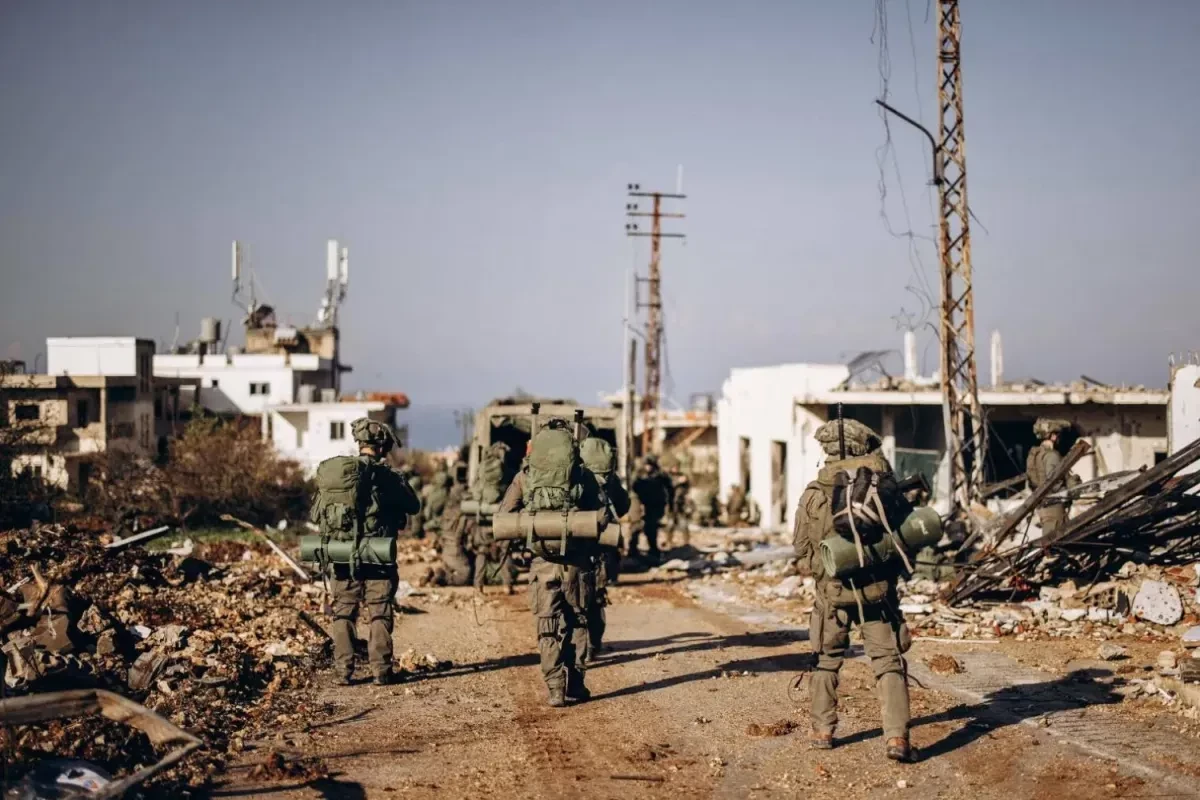
Israel will withdraw troops from two areas in southern Lebanon on June 28
01:48
 28 June 2026
Netanyahu: Deal says Israel can keep security zone as long as needed
23:53
27 June 2026
Tremors jolt Delhi-NCR, Kashmir as magnitude 6.2 earthquake hits Afghanistan
18:37
27 June 2026
Iran accuses U.S. of violating two clauses of memorandum
16:48
27 June 2026

NEWS FEED
UN: Venezuela earthquake could affect more than 6.7 million people
02:44
28 June 2026
US launches more strikes against Iran
02:17
Audio
28 June 2026
Britain has zero active submarines at sea for now
02:00
28 June 2026
Israel will withdraw troops from two areas in southern Lebanon on June 28
01:48
28 June 2026
Netanyahu: Deal says Israel can keep security zone as long as needed
23:53
27 June 2026
UFC Baku: Rafael Fiziev defeats Manuel Torres in main event
23:14
Audio
27 June 2026
UFC: Abus Magomedov defeats Mikhal Oleksiychuk
21:22
27 June 2026
UFC: Farman Hasanov defeats his opponent from the United States
21:11
27 June 2026
Wheat to be shipped to Armenia via transit through Azerbaijan
19:53
27 June 2026
Jeyhun Bayramov and Hakan Fidan hold phone conversation
19:04
27 June 2026
"Caucasus Eagle 2026" exercise concludes-VIDEO
18:43
27 June 2026
Tremors jolt Delhi-NCR, Kashmir as magnitude 6.2 earthquake hits Afghanistan
18:37
27 June 2026
Tanker hit by unidentified projectile in Hormuz, British maritime agency says
16:54
27 June 2026
Russian Defense Ministry claims two Ukrainian MiG-29 fighter jets destroyed at Mykolaiv airfield
16:51
27 June 2026
Iran accuses U.S. of violating two clauses of memorandum
16:48
27 June 2026
Service chief: Lowering military conscription age limit has reduced state expenses
16:09
27 June 2026
Ukrainian MiG-29 crashes during combat mission, Air Force says, pilot ejects safely
15:25
27 June 2026
Russia and Ukraine exchange civilian detainees
14:40
27 June 2026
Baku–Nakhchivan flights cancelled due to thunderstorms
14:16
27 June 2026
One killed, 11 injured in Ukraine's attack on Volgograd
13:58
27 June 2026
Bahrain says Iranian drones targeted its territory early Saturday
13:55
27 June 2026
Zelenskyy confirms strike on military plant in Volgograd-VIDEO-UPDATED
13:42
27 June 2026
Kremlin: Putin and Lukashenko continue talks
13:38
27 June 2026
Small aircraft crash in Beijing kills one person, injures 13, local govt says
13:30
27 June 2026
Iran's Foreign Ministry reacts to U.S. airstrikes
11:31
27 June 2026
Leyla Aliyeva and Arzu Aliyeva visit "CandyFest" summer festival and watch "Magic Pearl" water circus show-PHOTO
11:24
27 June 2026
Leyla Aliyeva and Arzu Aliyeva participate in seasonal flower planting campaign on Baku Boulevard-PHOTO
11:21
27 June 2026
Leyla Aliyeva and Arzu Aliyeva attend opening and presentation ceremonies at the Seaside National Park-PHOTO
11:14
27 June 2026
Baltic states urge EU to speed up ban on Russian oil imports
11:07
27 June 2026
Seoul says Chinese, Russian military aircraft enter its air defense zone
10:51
27 June 2026
Gold and silver rise in commodity markets
10:24
27 June 2026
Natural gas falls on New York exchange
10:22
27 June 2026
Azerbaijani oil trades at $74
10:20
27 June 2026
Two police officers killed in armed attack on police checkpoint in Iran
10:15
27 June 2026
Brent oil falls by more than 4%
09:35
27 June 2026
Major global stock market indices
09:29
27 June 2026
State Department: Lebanon agreement envisages withdrawal of Israeli forces
09:24
27 June 2026
Saudi Arabia resumes oil loading in the Persian Gulf
09:20
27 June 2026
Vance: US ready to discuss memorandum disagreements with Iran
02:39
Audio
27 June 2026
IRGC says it struck US military positions in response to US airstrike on Iran
01:43
27 June 2026
France wins Group I after beating Norway 4-1
01:13
27 June 2026
US strikes Iranian targets in response to attack on cargo ship
00:47
Audio
27 June 2026
Netanyahu says Israeli army will remain in southern Lebanon ‘security zone’ until Hezbollah disarmed
23:49
26 June 2026
UK guarantees $1 billion World Bank loan to Ukraine
23:20
26 June 2026
Israel, Lebanon sign framework peace deal after US-mediated talks
22:36
Audio
26 June 2026
Venezuela quake death toll rises to 92
22:29
26 June 2026
Trump accuses Iran of violating ceasefire with US
20:24
Audio
26 June 2026
Scuffle breaks out during Georgian parliament session, proceedings suspended - PHOTO
20:00
26 June 2026
Turkish ships stranded in Strait of Hormuz safely leave the region
19:56
26 June 2026
Turkish actor Kadir İnanır dies at 77
19:33
26 June 2026


