












Baku-APA. In Tunisia’s continuing tumult, security forces fired warning shots in the air on Thursday as protesters paraded outside the headquarters of the former ruling party demanding that the country break decisively with the symbols and structures of its past under Zine el-Abidine Ben Ali, the ousted president, APA reports quoting The New York Times.
The protests seemed to be taking their toll.
State television said all eight ministers in Tunisia’s interim unity government who had previously been linked to Mr. Ben Ali’s party had resigned. Later, the broadcaster reported that the party’s once-powerful central committee had been dissolved because many of its members who were in the new government had quit. Mr. Ben Ali fled into exile in Saudi Arabia last week, ending 23 years of increasingly autocratic rule.
Several hundred largely peaceful demonstrators, including some with children and some women wearing Islamic headgear, paraded past the Interior Ministry and the deserted-looking headquarters of Mr. Ben Ali’s former party, the Democratic Constitutional Rally.
The high-rise, glass-flanked building soars over central Tunis, but its parking lot was occupied Thursday only by soldiers backed by armored vehicles mounted with machine guns. At one point, reflecting a widespread clamor to be rid of the symbols of Mr. Ben Ali’s rule, the crowd surged toward a high padlocked gate demanding that the party’s sign be torn from the building.
But an army officer, who did not identify himself to the demonstrators, told them through a bull horn: “This building does not belong to the party. It belongs to the people.â€
The protesters chanted, “Better bread and water than the R.D.C.,†using the party’s initials.
As the demonstration continued, Reuters said, police officers fired shots into the air to try to disperse the protesters, but they refused to give ground. Other reports said the army opened fire into the air as the numbers swelled and protesters tore down the party emblem from the building.
Opposition to the old guard also seemed to be spreading far from the capital.
In the town of Gafsa, about 200 miles south of Tunis, 3,000 to 4,000 people gathered to demand the ouster of ministers who worked with Mr. Ben Ali, and state television said another antigovernment protest erupted in Kef, 110 miles southwest of the capital, Reuters reported. Both sides of the unity government — the new minority from the ranks of Tunisia’s tiny legal opposition parties and the leaders from the old ruling party — seem now to be responding to popular anger that so many of the same faces remained in influential posts in the government even though Mr. Ben Ali has fled.
In a televised address on Wednesday, the interim president, Fouad Mebazaa, the speaker of Parliament and a longtime stalwart of the ruling party, hailed the “revolution†and declared, “We want a clean break with the past.â€
State television reported the arrest for “crimes against Tunisia†of 33 members of Mr. Ben Ali’s family, many of whom grew rich from their connections.
The government also said its prosecutors had opened an investigation into the family’s overseas assets, while the Swiss government moved to freeze their assets in Swiss banks. The prime minister declared that 1,800 political prisoners had been released from jail, and said that others with sentences of less than six months would also be freed.
Opposition leaders, meanwhile, portrayed the new government as walking a tightrope, balancing the public’s demand for a purge of the old ruling party against their fears of a government collapse that could invite a military takeover. “We are walking on eggs,†said Ahmed Bouazzi, a member of the executive committee of the Progressive Democratic Party, the largest and most credible legal opposition group.
And all concerned feel the eyes of the region on them: In the shabby and disordered headquarters of the Progressive Democrats, young men were debating whether Egypt would soon rise up like Tunisia, if its fledgling revolution survived.
At a meeting in Sharm el Sheik, Amr Moussa, the Egyptian head of the Arab League and a popular figure in his home country often considered a potential challenger to its authoritarian president, Hosni Mubarak, warned, “The Arab citizen has entered a stage of anger that is unprecedented.â€
More people in North African autocracies tried to burn themselves like the vegetable seller whose self-immolation kicked off the Tunisian revolt, bringing the total as of Wednesday to 11 — 8 in Algeria, 2 in Egypt and 1 in Mauritania. At least one, an Egyptian who set himself on fire in Alexandria, has died.
Mr. Bouazzi of the Progressive Democratic Party, which has only about a thousand members, said that after decades under Mr. Ben Ali’s one-party rule, the opposition had miscalculated in settling for only relatively minor positions in the unity government.
“We — I personally — did not realize the balance of forces, that the ruling party was so weak as a party†when the prime minister called about forming a unity government, Mr. Bouazzi said. “If it was now, we would say, ‘No, you should fire this one and this one and this one, and give us that one,’ †he said before an internal party meeting to prepare demands for the first cabinet session on Thursday.
For now, the government owes its tenuous grip on stability to Gen. Rashid Ammar, who is believed to have prompted the end of Mr. Ben Ali’s rule by refusing an order to fire at demonstrators. “He is controlling the country, the heavy weapons,†Mr. Bouazzi said.
There were signs on Wednesday that the new government was beginning to achieve a measure of stability. The capital’s main Avenue Bourguiba was clear of tear gas for the first day in more than a week. No gunshots rang out. Cafes reopened. The government pushed the curfew back from 6 p.m. to 8 p.m.
Hundreds of protesters once again poured into the streets by 11 a.m., demanding the elimination of any ties to the old ruling party. “We want to eradicate all of the people who participated in the hierarchical pyramids of this tyrannical regime,†said Ahmed Khalil Rais, a graduate student. “They have to resign — all the people with blood on their hands.â€
Others in the crowd debated the return of the banned Islamic political party. Several said they welcomed or even cheered its revival, but all insisted that any Islamist political movement must be distinctively Tunisian, predicated on democracy, pluralism and women’s rights.


 Follow us on Telegram
 t.me/apanewsaz
 Follow us on Instagram
 Follow us on TikTok
 Follow us on Facebook
 Follow us on X
Africa
Two killed, five injured in shooting in S. Africa
 16:09
16:09
 14 October 2026
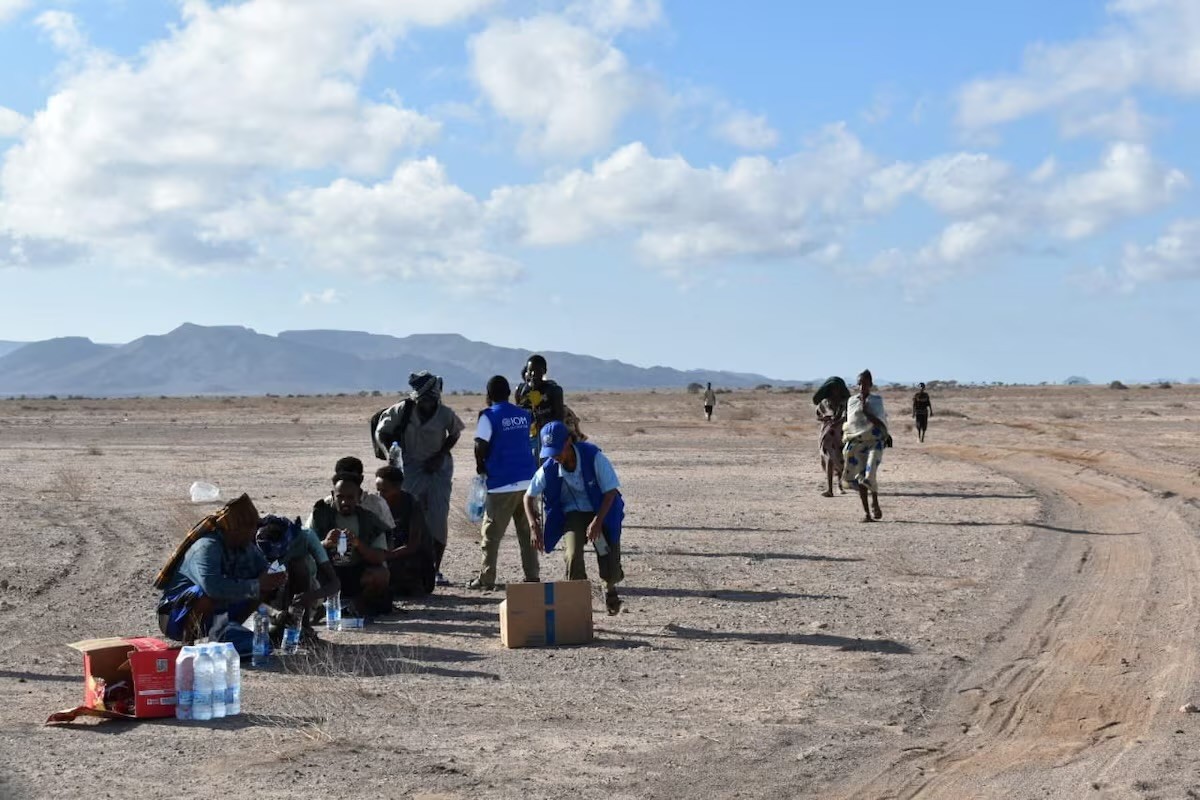
At least 139 migrants dead, including some children, after boat from Djibouti to Yemen capsizes, UN agency says
21:17
11 October 2026
Central African Republic foils planned large-scale militant attack
07:04
11 October 2026
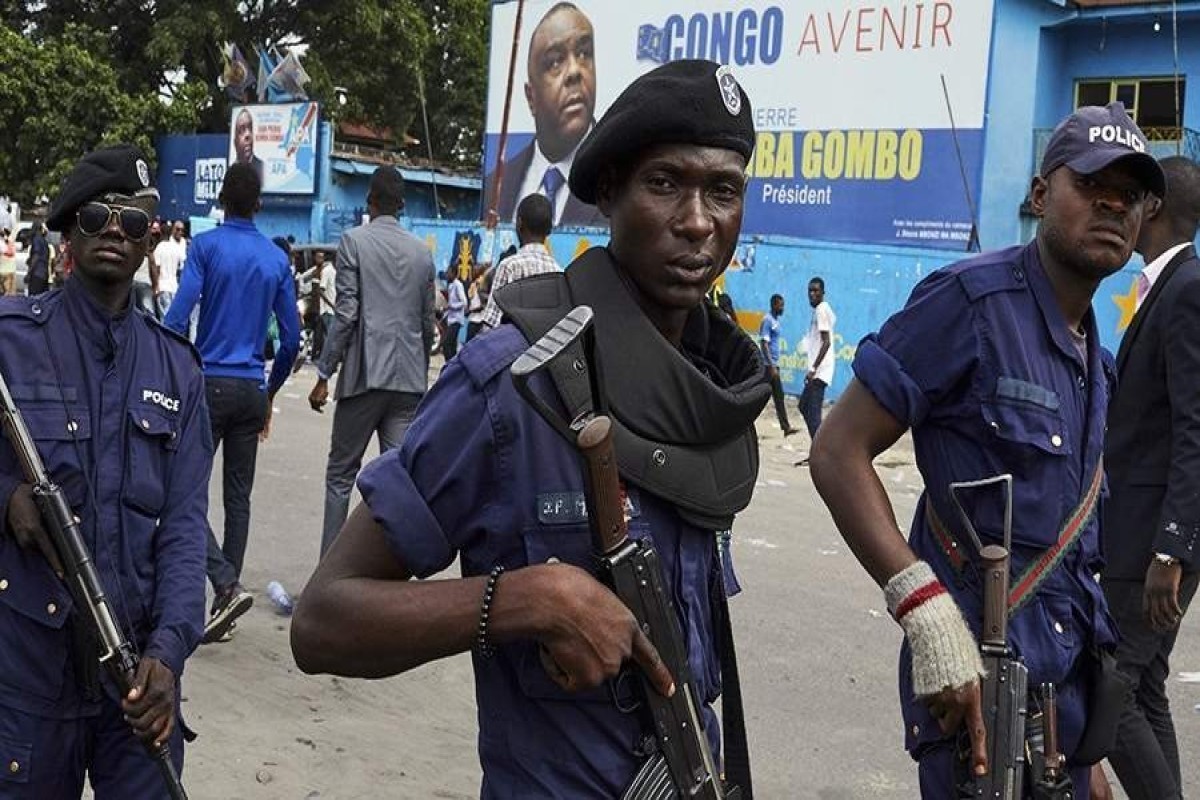
Rebel attack kills 11 civilians in DR Congo
05:16
11 October 2026

NEWS FEED
Georgian opposition announces protest rallies
17:05
15 October 2026
Pashinyan establishes working group to resolve railway issues with Russia
17:02
15 October 2026
Pope Leo recovering as planned after lung cancer surgery, doctors say
16:58
15 October 2026
Papuashvili: EU takes disruptive stance in relations with Georgia
16:40
15 October 2026
Baku hosted 7th CICA Summit, President Ilham Aliyev addressed the event - UPDATED - 4
16:34
15 October 2026
Azerbaijan to chair CICA in 2026–2028
16:27
15 October 2026
UN considers CICA's role more important now than ever
16:26
15 October 2026
Meeting held with delegation of international and foreign national Paralympic committees
16:23
15 October 2026
President Ilham Aliyev received Türkiye’s Minister of Foreign Affairs
16:16
15 October 2026
President Ilham Aliyev met with Amir of the State of Qatar
16:14
15 October 2026
7th CICA Summit concludes
16:12
15 October 2026
CICA Secretary General replaced
16:11
15 October 2026
Lavrov considers it appropriate to hold next "3+3" meeting in Azerbaijan
16:08
15 October 2026
Baku Declaration adopted following 7th CICA Summit
16:05
15 October 2026
Large amount of drugs prevented from being smuggled from Iran into Azerbaijan - PHOTO
16:02
15 October 2026
Signed documents exchanged between Azerbaijan and Kazakhstan
16:00
15 October 2026
Lavrov: Russia ready to participate in TRIPP, but has not yet received invitation
15:50
15 October 2026
Lavrov: Zelenskyy is challenging Trump, not interested in elections
15:47
15 October 2026
Presidents of Azerbaijan and Kazakhstan meet in Baku, inaugurate Trans-Caspian Fiber-Optic Cable Line
15:44
15 October 2026
9th Congress of Azerbaijani Journalists to be held tomorrow, candidates for Press Council Board announced
15:43
15 October 2026
Gharibabadi: Current difficulties in Strait of Hormuz caused by military aggression and naval blockade against Iran
15:42
15 October 2026
ING: $10 rise in oil prices could increase Azerbaijan’s exports by 2–4% of GDP
15:39
15 October 2026
UAE Minister: Priorities set during Azerbaijan’s CICA chairmanship align with UAE’s vision
15:33
15 October 2026
Palestinian issue raised at CICA Summit
15:31
15 October 2026
Indian FM: Changing geopolitical landscape necessitates more active participation of Global South countries
15:15
15 October 2026
Azerbaijan takes over chairmanship of CIS Advisory Council on Labor, Employment and Social Protection
15:14
15 October 2026
Death toll from Istanbul floods reaches 3, four people missing
15:12
15 October 2026
Azerbaijani Special Forces conduct training sessions for reservists
15:07
15 October 2026
Home of Novaya Gazeta editor-in-chief searched
15:04
15 October 2026
Lavrov: Russia has always supported CICA's development through practical cooperation
14:58
15 October 2026
Foreign ministers of Azerbaijan, Uzbekistan and Turkmenistan hold trilateral meeting
14:55
15 October 2026
Turkish and Russian FMs meet in Baku
14:53
15 October 2026
Türkiye committed to strengthening CICA as Asia's most comprehensive security platform - Turkish FM
14:51
15 October 2026
Bahrain calls for ensuring safety of maritime and air navigation
14:44
15 October 2026
Pashinyan: Armenia has never had strained relations with Russia
14:40
15 October 2026
Pezeshkian to visit Armenia for biodiversity summit
14:40
15 October 2026
FM Hakan Fidan: We want COP31 to become an opportunity to strengthen climate justice
14:38
15 October 2026
Turkish FM: We support CICA's transformation into a full-fledged international organization
14:33
15 October 2026
Peskov: Moscow unaware of US proposals to Europe on unfreezing Russian assets
14:31
15 October 2026
Azerbaijani Parliament Speaker meets with Chairman of House of Representatives of Belarusian National Assembly
14:29
15 October 2026
Kremlin: Russian diesel has begun entering global markets
14:22
15 October 2026
FM: China highly appreciates Azerbaijan's efforts to strengthen CICA
14:18
15 October 2026
Chairman: Azerbaijan is effectively chairing CICA
14:14
15 October 2026
Kremlin: Ukraine's strikes on Russian oil refineries contradict US peace initiatives
14:06
15 October 2026
Belarusian representative: We are united by commitment to international law and UN Charter
13:59
15 October 2026
Cambodia strongly supports transformation of CICA into full-fledged international organization
13:56
15 October 2026
Vietnam highly appreciates Azerbaijan’s CICA chairmanship
13:53
15 October 2026
Russia may begin diesel supplies to US within 2-3 weeks
13:46
15 October 2026
President: It was an analogue of the Nuremberg Tribunal, only this time Armenian fascists sat in the dock
13:45
15 October 2026
President: Laos’s accession to CICA demonstrates commitment to promoting peace and cooperation
13:42
15 October 2026


