











Baku – APA. West African leaders met in Nigeria on Friday to discuss options for Ivory Coast, where an election standoff has killed up to 200 and threatens to tip the country back into civil war, APA reports quoting “Reutersâ€.
World powers and African states have heaped political and financial pressure on incumbent leader Laurent Gbagbo to step down after the November 28 poll, in which electoral commission results showed he lost by 8 points to rival Alassane Ouattara.
"At this meeting (heads of state) will be deciding what more we can do to help the situation in the Ivory Coast," a spokesman for West African regional bloc ECOWAS told Reuters as the meeting started in the Nigerian capital Abuja.
Newspapers in Ivory Coast’s main city Abidjan on Thursday speculated the regional body would consider sending an intervention force after a top Ouattara aide said force was the "only solution" to oust Gbagbo.
The United States and the European Union have imposed travel sanctions on Gbagbo and his inner circle while the World Bank and the West African central bank have cut off his funding in an attempt to pressure him to step down.
But Gbagbo has shown no sign of caving and insists he won the election after the Constitutional Court, which is headed by one of his allies, threw out hundreds of thousands of votes from pro-Ouattara constituencies.
The standoff turned violent last week after gun battles broke out briefly between government soldiers loyal to Gbagbo and rebels who now back Ouattara.
Residents of pro-Ouattara neighborhoods have said masked gunmen are now breaking into homes by night, kidnapping and in some cases killing people.
A statement issued by the U.N. mission in Ivory Coast on Thursday said that masked supporters of Gbagbo armed with rocket launchers have been blocking a road to Anyama, around N’Dotre, which it said is "a village outside Abidjan where allegations point to existence of a mass grave."
The U.N. Human Right Council issued a declaration of condemnation on the human rights violations and called for reconciliation to prevent civil war.
The standoff between the two presidential claimants has caused the deaths of more than 170 people, according to the United Nations Human Rights Council, which condemned what it said was evidence of human rights violations.
MONEY CRUNCH
Gbagbo faces a cash crunch that could make it hard for him to continue paying the wages of soldiers who back him, after the West African regional central bank cut his access to funds.
Ministers from the Central Bank of the West African Economic and Monetary Union said late on Thursday that the bank would no longer recognize Gbagbo’s authority as president, and that access to funds would only be given to Ouattara’s "legitimate government."
The move follows a World Bank decision on Wednesday to freeze some $800 million in committed financing, adding to expectations that Gbagbo may soon struggle to pay wages -- including to troops.
Military support for Gbagbo is seen as one of the main reasons he is able to defy calls to step down.
Gbagbo’s Finance Minister Desire Dalo did not comment when reached by telephone late on Thursday. A spokesman for Ouattara’s government said the decision by the central bank was "a very important move toward controlling the economic power."
Ivory Coast’s $2.3 billion bond due 2032 fell to a record low on Thursday as investors worried that the country would be unable to meet a $30 million bond payment on December 31.
Turmoil in the world’s top cocoa-producing country has also boosted cocoa prices to recent four-month highs, disrupting export registrations and raising the possibility that fighting could block transport and shipping.
The crisis was also taking its toll on gold mining operations in Ivory Coast. Mining company Randgold Resources saw its shares fall sharply in London after it announced that production at its Tongon mine would be adversely affected.
RISK OF WAR
Charles Ble Goude, leader of the powerful pro-Gbagbo "Young Patriots" movement, warned that sending a military force could lead to renewed war in Ivory Coast, still divided from a 2002-03 civil war.
"In a union such as ECOWAS, when one country is in difficulties, you don’t come and start a war in that country, but try to help find a solution. I don’t know what would be the objective of an intervention force. Kill Ivorians?," Ble Goude said in an interview on RFI radio.
In New York, the 192-nation U.N. General Assembly recognized Ouattara by unanimously deciding that the list of diplomats he submitted to the world body be recognized as the sole official representatives of Ivory Coast at the United Nations.
Thursday’s move will strengthen Ouattara’s claim to be the legitimate leader of Ivory Coast and deepen the isolation of Gbagbo, who has few supporters across the international community, U.N. diplomats told Reuters.
The United States, the United Nations, the European Union, the African Union and ECOWAS have all recognised provisional electoral commission results showing Ouattara as the winner, with Washington and Brussels issuing sanctions on Gbagbo and his inner circle.
Tensions in the former French colony led France this week to ask its 13,000 citizens in the country to leave.
The Dutch Defense Ministry said on Friday it was sending a warship to Ivory Coast which could be used to help evacuate European expatriates if violence escalates.


 Follow us on Telegram
 t.me/apanewsaz
 Follow us on Instagram
 Follow us on TikTok
 Follow us on Facebook
 Follow us on X
Africa
Two killed, five injured in shooting in S. Africa
 16:09
16:09
 14 October 2026
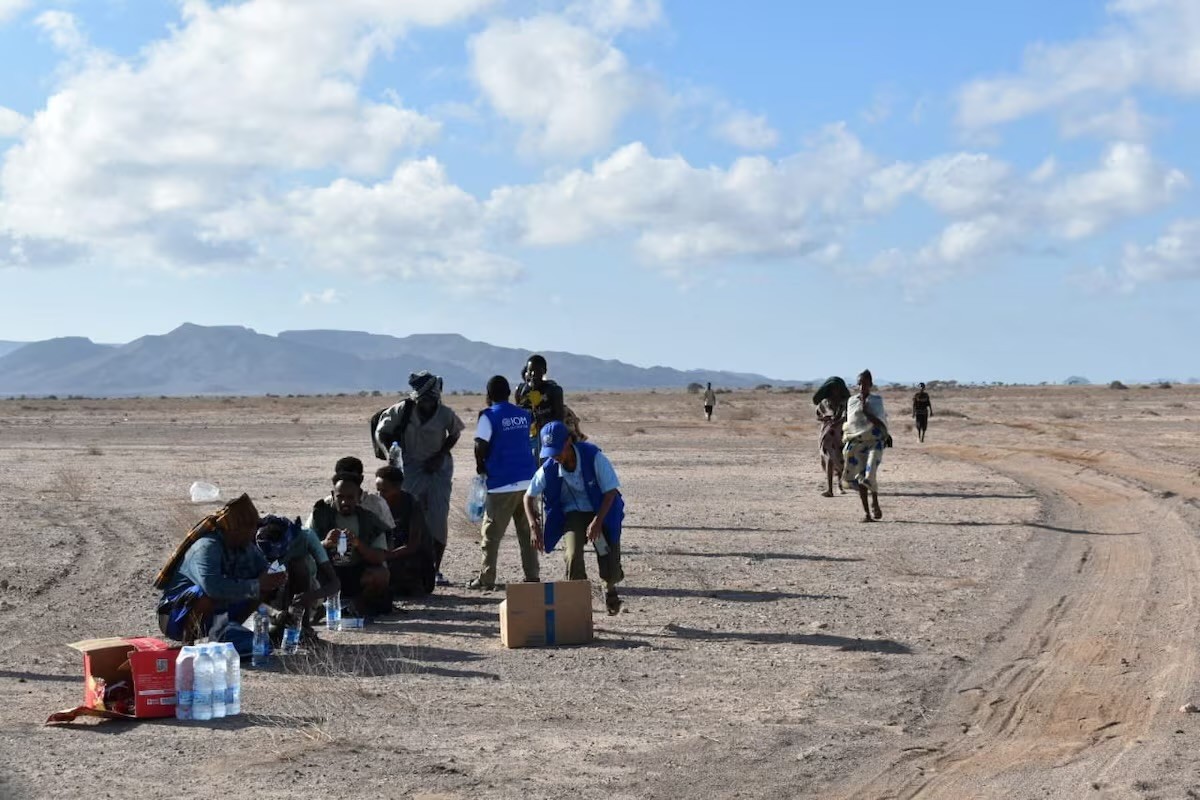
At least 139 migrants dead, including some children, after boat from Djibouti to Yemen capsizes, UN agency says
21:17
11 October 2026
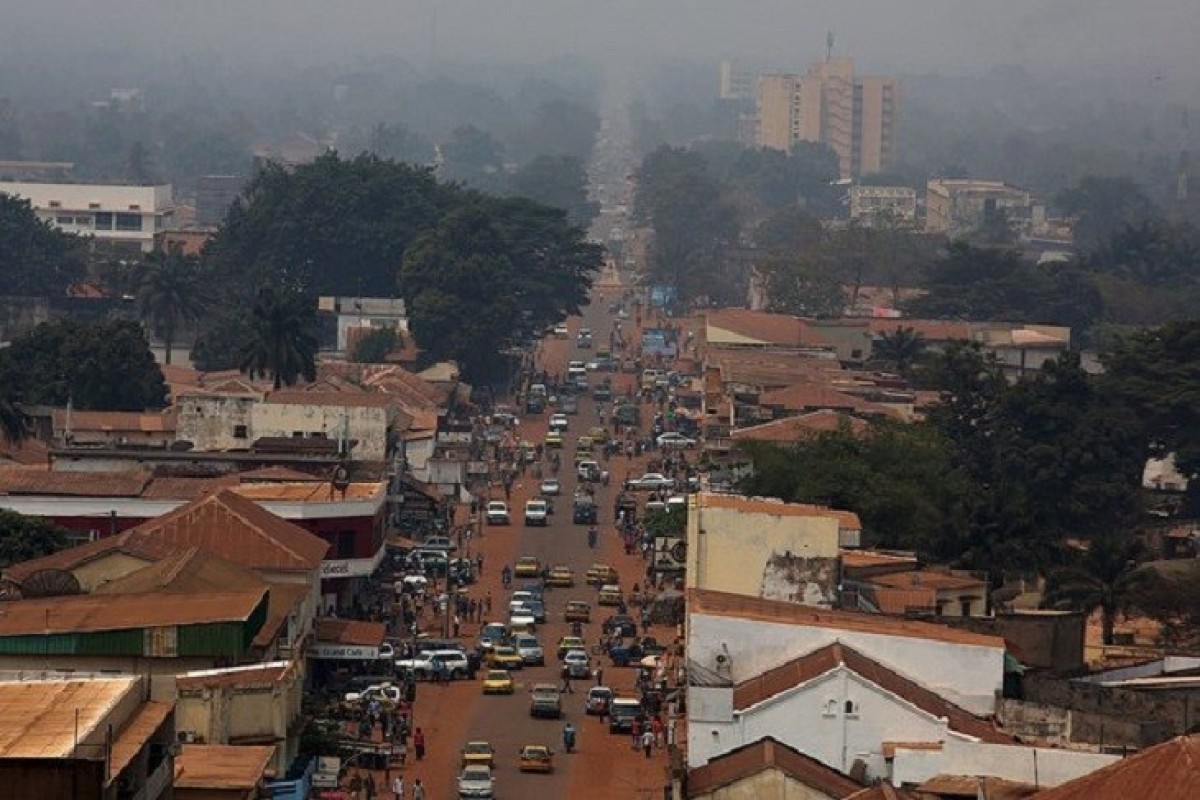
Central African Republic foils planned large-scale militant attack
07:04
11 October 2026
Rebel attack kills 11 civilians in DR Congo
05:16
11 October 2026

NEWS FEED
Gharibabadi: Current difficulties in Strait of Hormuz caused by military aggression and naval blockade against Iran
15:42
15 October 2026
ING: $10 rise in oil prices could increase Azerbaijan’s exports by 2–4% of GDP
15:39
15 October 2026
UAE Minister: Priorities set during Azerbaijan’s CICA chairmanship align with UAE’s vision
15:33
15 October 2026
Palestinian issue raised at CICA Summit
15:31
15 October 2026
Baku hosts 7th CICA Summit, President Ilham Aliyev addressed the event - UPDATED - 3
15:26
15 October 2026
Indian FM: Changing geopolitical landscape necessitates more active participation of Global South countries
15:15
15 October 2026
Azerbaijan takes over chairmanship of CIS Advisory Council on Labor, Employment and Social Protection
15:14
15 October 2026
Death toll from Istanbul floods reaches 3, four people missing
15:12
15 October 2026
Azerbaijani Special Forces conduct training sessions for reservists
15:07
15 October 2026
Home of Novaya Gazeta editor-in-chief searched
15:04
15 October 2026
Lavrov: Russia has always supported CICA's development through practical cooperation
14:58
15 October 2026
Foreign ministers of Azerbaijan, Uzbekistan and Turkmenistan hold trilateral meeting
14:55
15 October 2026
Turkish and Russian FMs meet in Baku
14:53
15 October 2026
Türkiye committed to strengthening CICA as Asia's most comprehensive security platform - Turkish FM
14:51
15 October 2026
Bahrain calls for ensuring safety of maritime and air navigation
14:44
15 October 2026
Pashinyan: Armenia has never had strained relations with Russia
14:40
15 October 2026
Pezeshkian to visit Armenia for biodiversity summit
14:40
15 October 2026
FM Hakan Fidan: We want COP31 to become an opportunity to strengthen climate justice
14:38
15 October 2026
Turkish FM: We support CICA's transformation into a full-fledged international organization
14:33
15 October 2026
Peskov: Moscow unaware of US proposals to Europe on unfreezing Russian assets
14:31
15 October 2026
Azerbaijani Parliament Speaker meets with Chairman of House of Representatives of Belarusian National Assembly
14:29
15 October 2026
Kremlin: Russian diesel has begun entering global markets
14:22
15 October 2026
FM: China highly appreciates Azerbaijan's efforts to strengthen CICA
14:18
15 October 2026
Chairman: Azerbaijan is effectively chairing CICA
14:14
15 October 2026
Kremlin: Ukraine's strikes on Russian oil refineries contradict US peace initiatives
14:06
15 October 2026
Belarusian representative: We are united by commitment to international law and UN Charter
13:59
15 October 2026
Cambodia strongly supports transformation of CICA into full-fledged international organization
13:56
15 October 2026
Vietnam highly appreciates Azerbaijan’s CICA chairmanship
13:53
15 October 2026
Russia may begin diesel supplies to US within 2-3 weeks
13:46
15 October 2026
President: It was an analogue of the Nuremberg Tribunal, only this time Armenian fascists sat in the dock
13:45
15 October 2026
President: Laos’s accession to CICA demonstrates commitment to promoting peace and cooperation
13:42
15 October 2026
Serdar Berdimuhamedov: Turkmenistan gives special support to Azerbaijan’s CICA chairmanship
13:35
15 October 2026
President: Peace remains fragile and must be protected and strengthened
13:34
15 October 2026
Israeli President calls Rubio’s expected visit to Central Asia very important
13:29
15 October 2026
Isaac Herzog: Under President Ilham Aliyev’s wise leadership, Azerbaijan has become a model of stability
13:26
15 October 2026
Isaac Herzog: Israeli people also have sufficient resources to contribute to Asia
13:16
15 October 2026
Israeli President: Azerbaijan is a very tolerant country, Baku taking important steps for international peace under such circumstances
13:11
15 October 2026
Tajik President puts forward several proposals at CICA
13:10
15 October 2026
Sadyr Japarov: Azerbaijan has done extensive work to strengthen CICA
13:08
15 October 2026
CICA has become more substantive and effective thanks to Azerbaijan's chairmanship - Uzbekistan President
13:01
15 October 2026
Tajikistan thanks Azerbaijan for high-level organization of CICA Summit
12:58
15 October 2026
President of Kazakhstan: Peace between Azerbaijan and Armenia creates new prospects for East-West connectivity
12:52
15 October 2026
Azerbaijan's CICA chairmanship extended for another two years
12:46
15 October 2026
Azerbaijan is doing extensive work to turn CICA into an important organization in the world - Kazakhstan President
12:40
15 October 2026
President Ilham Aliyev: We took revenge on the battlefield and offered peace to Armenia
12:38
15 October 2026
President Ilham Aliyev: Azerbaijan actively opposes harmful practice of applying double standards
12:34
15 October 2026
Azerbaijan Defense Minister meets with his Kyrgyz counterpart
12:32
15 October 2026
Laos joins CICA as a member state
12:25
15 October 2026
President Ilham Aliyev: War was not our choice, Armenia forced us into it
12:21
15 October 2026
Azerbaijani President: No one condemned Armenia, UN did not insist on implementation of its resolutions
12:17
15 October 2026


