

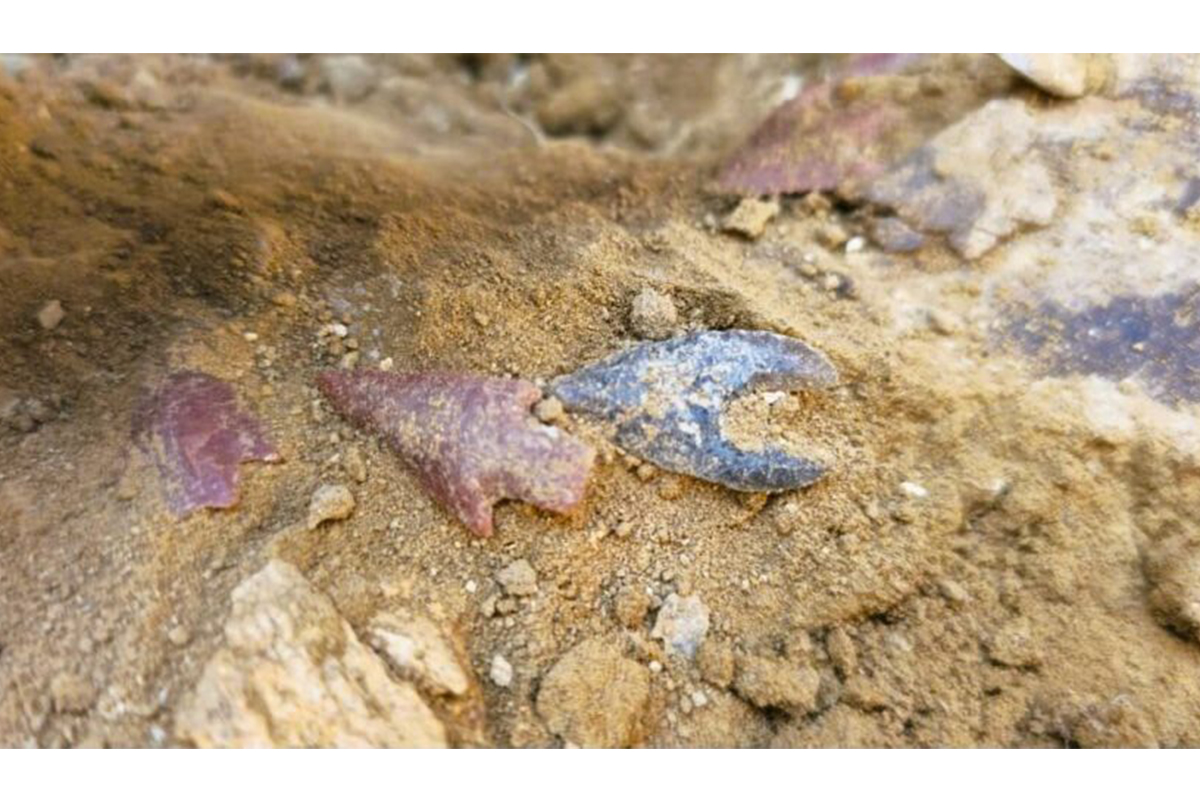
Archaeologists investigating a 3,600-year-old burial mound in western Azerbaijan have discovered a collection comprising a rare stone mace head, a bronze dagger, and arrowheads, indicating the burial of an individual of significant military and social status during the Middle Bronze Age, APA reports citing Arkernews.
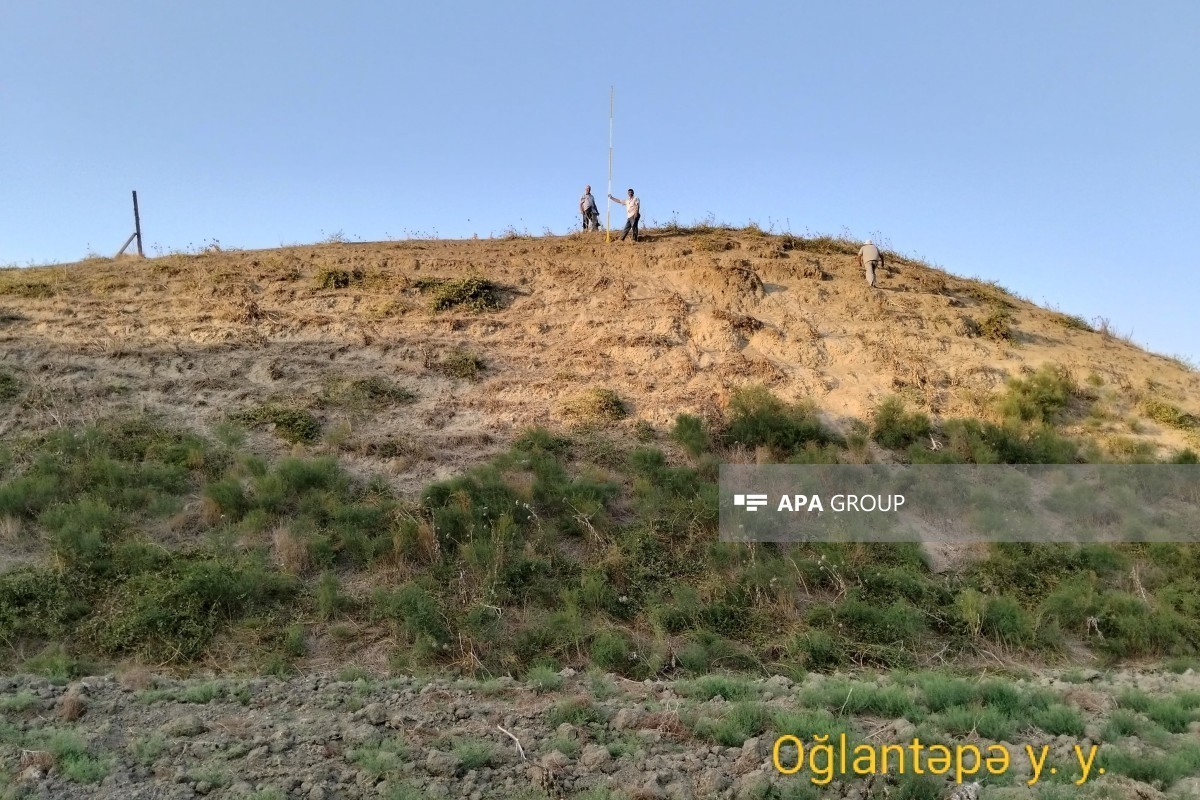
Artifacts were recovered from burial mound No. 4 in the Sariyokush area of the "Keshikchidag" State Historical-Cultural Reserve, located in the Aghstafa district.
According to archaeologists, the warrior was buried approximately between the 17th and 16th centuries BC. This period remains crucial for understanding the political organization and social hierarchy of Bronze Age communities in the South Caucasus.
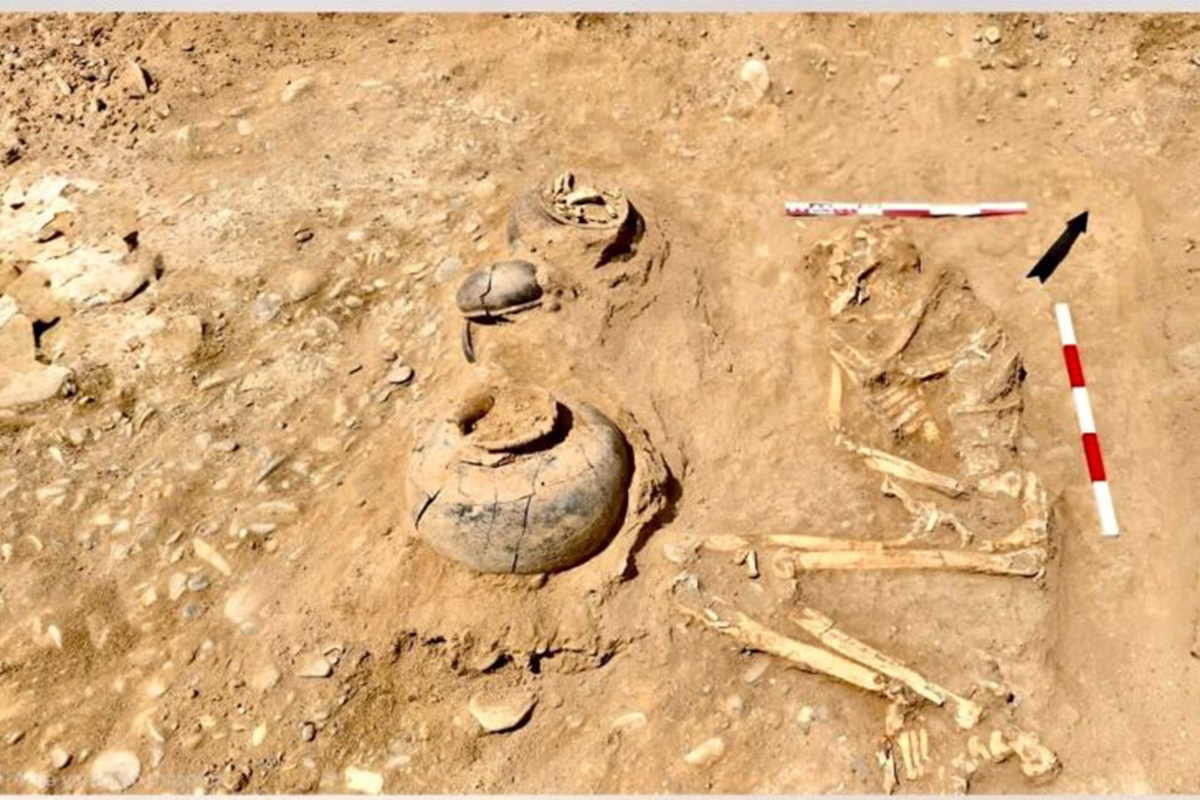
A tomb built for a high-status individual
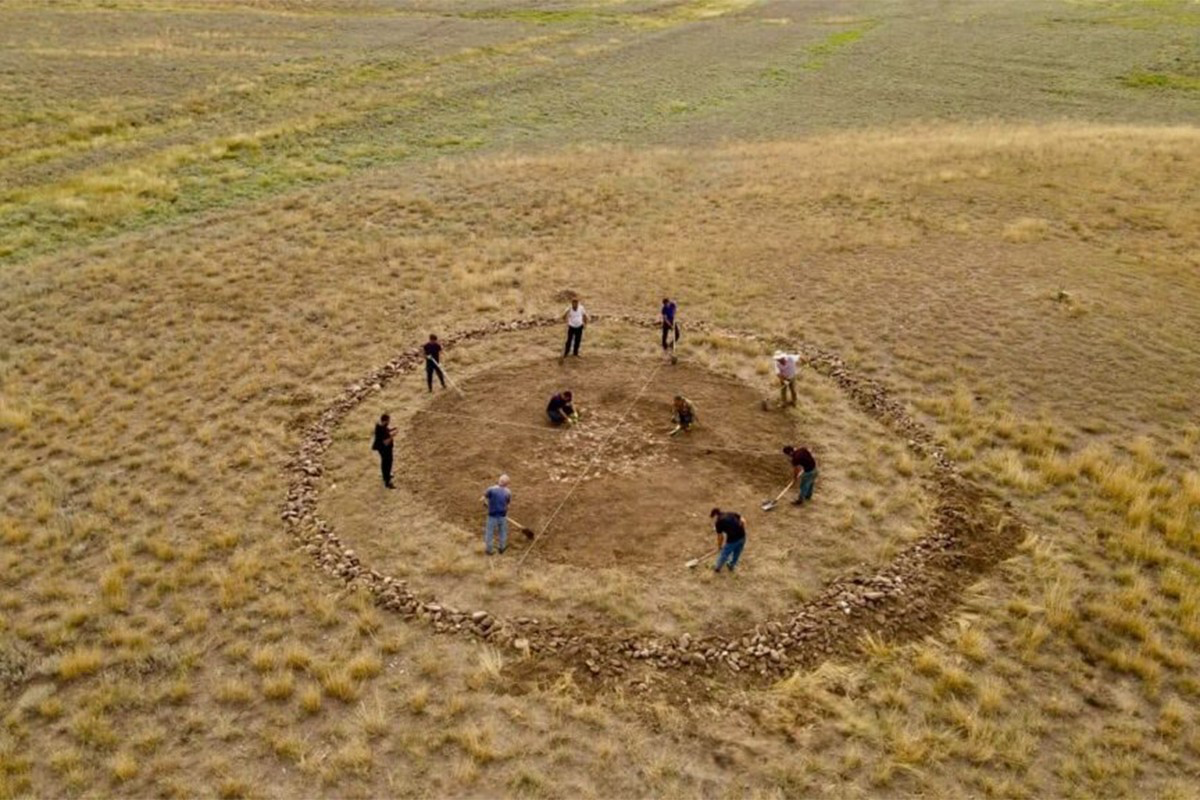
The stone-covered burial mound has a diameter of approximately 12 meters and rises about 80 centimeters above the surrounding terrain. Its burial chamber extends to a depth of roughly 1 to 1.2 meters.
What makes the tomb particularly significant is the discovery of weapons alongside items indicative of high status within the burial chamber. Researchers believe these objects belonged to an individual who held a prominent position in the community's military and social hierarchy—likely a warrior, a commander, or a member of the ruling elite.
Among the finds is a bronze dagger directly associated with close-quarters combat. Archaeologists view the presence of the dagger as one of the clearest indicators that the deceased held a military role, rather than simply possessing weapons as personal valuables.
However, the dagger is only part of the picture.
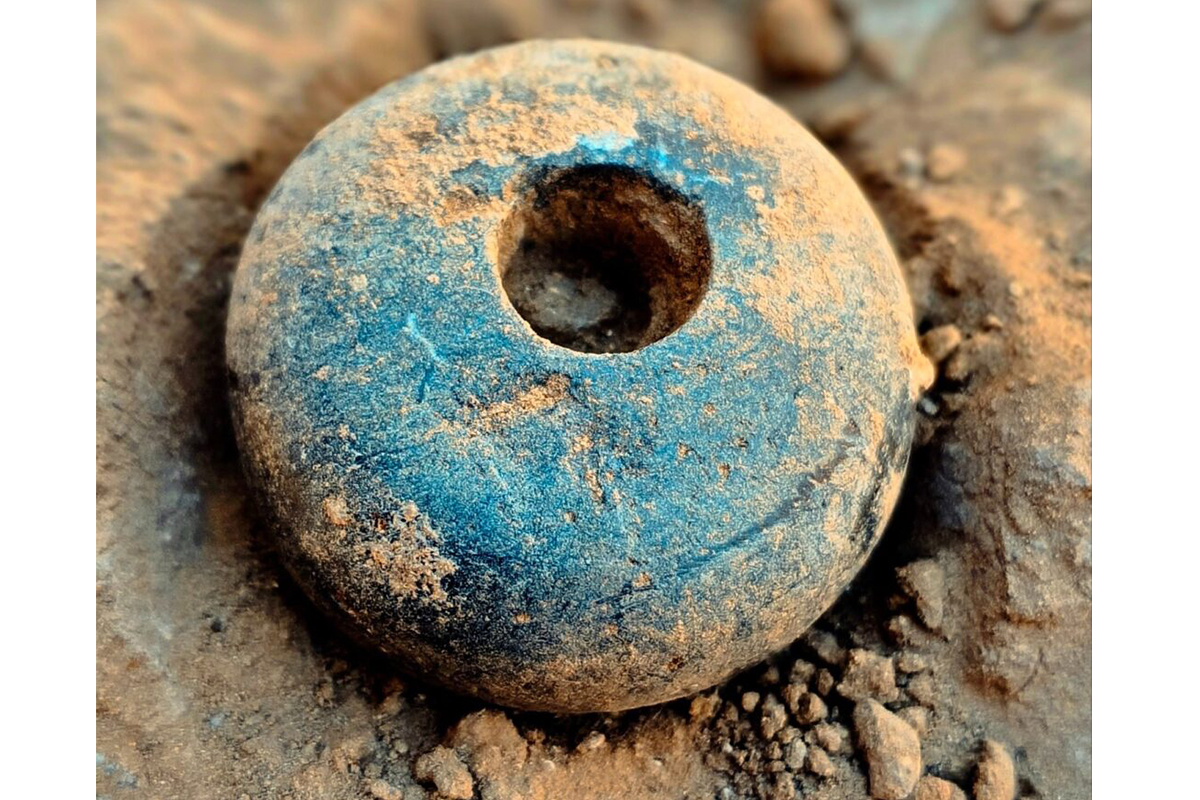
A Stone Mace-Head as a Symbol of Authority
One of the notable artifacts discovered in the kurgan is a mace-head made of diorite. Weighing approximately 400–500 grams, this carefully shaped and polished stone features a central hole drilled from both sides, allowing it to be attached to a wooden or bone handle.
Researchers believe that such objects may have held significance beyond mere practical function. In Bronze Age societies, the mace could signify rank and authority, serving as a ceremonial or symbolic object associated with military aristocrats, tribal leaders, or commanders.
Its carefully balanced, symmetrical form is also significant. The manufacturing technique attests to a sophisticated tradition of stone craftsmanship in the South Caucasus, where artisans were capable of creating objects that combined practical design with a visual expression of status.
When considered alongside the dagger, the mace-head reinforces the likelihood that the burial belonged to an individual whose identity was closely linked to warfare and authority.


 Follow us on Telegram
 t.me/apanewsaz
 Follow us on Instagram
 Follow us on TikTok
 Follow us on Facebook
 Follow us on X