Moscow. Farid Akberov – APA. APA Moscow correspondent’s interview with Director of the Institute for International Studies of the Moscow State Institute of International Relations under the MFA of Russia, doctor of political sciences Andrei Kazantsev
- How do you assess geopolitical situation in the South Caucasus?
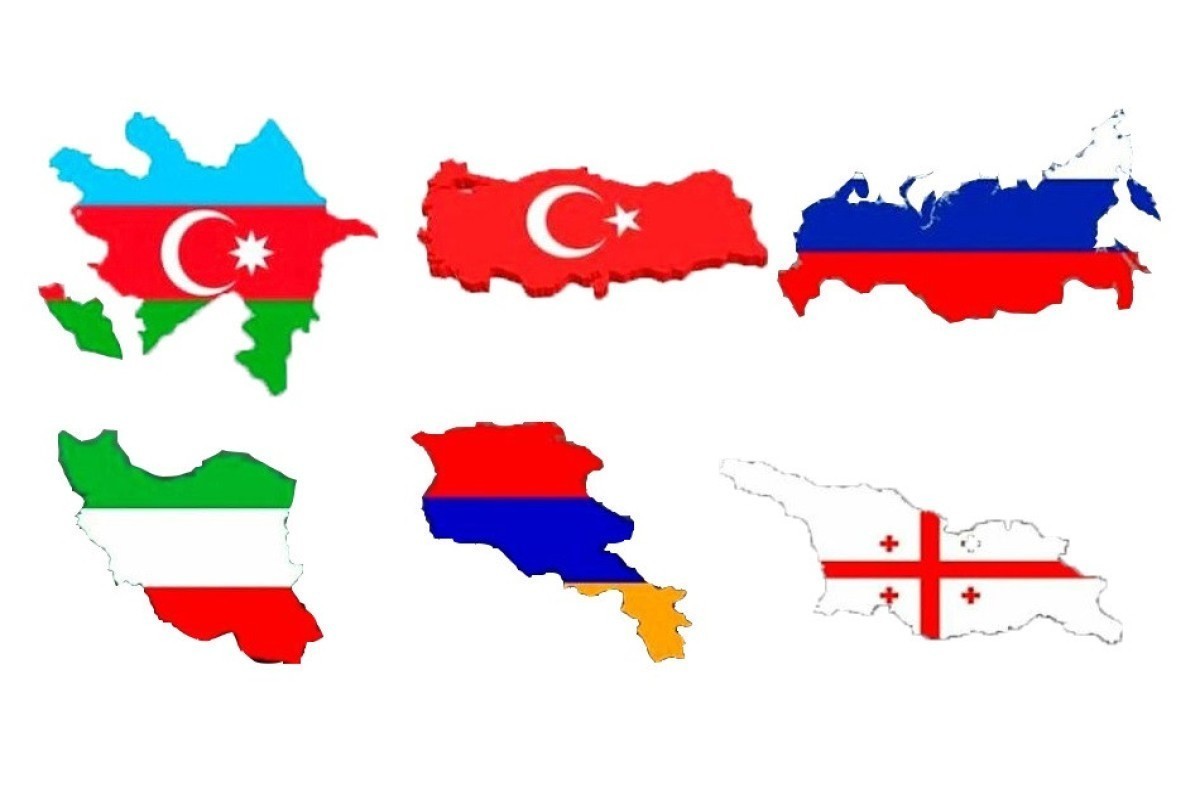
- In fact, there is no change in the geopolitical situation of the South Caucasus region. The current situation has been established long time ago and it will not change soon. It should be noted that South Caucasus region is the most "colorful" region in the post-Soviet area. What do Azerbaijanis, Georgians and Armenians have in common except geography? - Religious differences and the history of the nations. Long-lasting conflicts play an important role in this sense. This is one of main reasons of instability and constant interference of the players beyond the region. Multi-vector policy of the regional countries is rooted here. This multi-vector policy is balanced with Russia, the West, the Muslim neighbours like Turkey and Iran. We always observe all of this after the collapse of the USSR.
The only change in the region is Georgia's return to multi-vector policy following the victory of Ivanishvili. Thus, Russian factor had been fully excluded during the reign of Saakashvili. Despite Erdogan's "zero problems with neighbours" policy, Armenia's relations with Turkey have not been improved. As a member of Collective Security Treaty Organization (CSTO), Armenia has received security guarantees from Russia to create a united front against Turkey. Currently, Russian military base including CSTO united air base plan dislocation of Transcaucasian military forces in Armenia. Azerbaijan continues traditionally balanced policy with foreign players (Russia and the West). However, there are some problems with Iran.
- What is the reason for the desire of European integration in the foreign policy of the South Caucasus countries?
- The first reason is the economy. The EU provides a great economic power covering the entire post-Soviet countries in terms of trade and investment. Therefore, the South Caucasus countries rightly see opportunities for economic development to strengthen cooperation within eurospace. There are also political projects like "Eastern Partnership” covering all the countries of the South Caucasus. Though the European Union is a major economic power in many regions of the world, including Europe, it is accepted as a non-arbitrary player.
By the way, this "Eurocentric" orientation of the economy has a long history. Its covers pre-Soviet era, Tsarist period. The only thing changed is the Central Asia, where the role of China is growing. China has become the main trade partner for Russia, leaving behind Germany. Similar trends have occurred in Belarus, despite major role of political factor. I think that the European Union will always have defining economic impact on the South Caucasus, because China is far from here.
- According to many of experts, Azerbaijan-Russia relations are in their difficult period. What can you say about it?
- Indeed, there are common complex problems. Russia has closed the Gabala RLS due to the lack of agreement on rental fee. Due to economic problems, transportation of Azeri oil via Baku-Novorossiysk oil pipeline was halted. In the content of Trans Adriatic gas pipeline project Azerbaijan has a plan to turn into a huge gas supplier of Europe. In this respect, competitiveness with Gazprom gas (especially, Qatar’s compressed gas) becomes more serious.
On the other hand, there are also positive improvements. Azerbaijan ranked the 5th in the Russian military trade structure in 2012. Earlier, it was known that new arms deal was realized between Azerbaijan and Russia. According to conditions of this transaction, Moscow will deliver to Baku tank, artillery equipments worth of $1bn. The related agreement was reached long ago, but the reports about the suspension of arms delivery were not proved.
I think Azerbaijani leadership acts and will act within its traditional multi-vector policy. In one case, when it meets the interests of Baku, great closeness to the West will be observed. In other cases, cooperation with Russia will be difficult. It’s unlikely that Baku will reckon with Moscow in everything. But Azerbaijan will not turn its back on Russia completely. Because Saakashvili example showed how it is ineffective. This does not accord with the interests of the west too, especially of Germany. A new conflict would appear, which the European Union and US try to avoid.
- Preparations are being made for Russian President Vladimir Putin's visit to Azerbaijan. How do you think, why Russian President will visit Azerbaijan?
- The presidents need to have conversation and there are many topics to be discussed. I suppose that the topic to be discussed first of all is the cooperation within oil-gas projects. A while ago, Rosneft President Igor Sechin was on a visit to Azerbaijan and this issue was discussed. The second is the development of new agreement on oil delivert via Baku-Novorossiysk pipeline as the Russian Foreign Minister Sergei Lavrov stated. The third is the military-technical cooperation. Azerbaijan, as I noted, is a significant purchaser of Russian arms and probably, Putin will want to discuss continuation of this cooperation with Azerbaijan. By the way, if we take into account the increasing economic problems of Russia, such a “present” will be very effective for Russian Military-Industrial Complex. The fourth, the Kremlin will approve the position of standing in the same distance from Azerbaijan-Armenia conflict. So, the increasing military cooperation with Armenia within Collective Security Treaty Organization (CSTO) is balanced with arms sales to Azerbaijan. The fifth is the complex problems of the maintenance of stability in the Caspian region. The sixth issue to be discussed is the differences of opinion regarding foreign policies of the countries, developments in the Near East (pressure around Iran and Syrian crisis).
- Presidential elections will be held in Azerbaijan in October. Can we regard Vladimir Putin’s visit as support for President Ilham Aliyev?
- First of all, Putin will demonstrate that all the rumors on Kremlin’s support for Azerbaijan’s opposition are false. Secondly, it will demonstrate the intention to improve the relations with Baku. By the way, though it has been repeatedly announced that Putin will pay an informal visit to Armenia, the ally in CSTO, this visit has not taken place yet. Moreover, taking into account the statement of the European Union and Armenia that the negotiations on the free trade zone agreement were completed successfully and the policy the Kremlin regarding the enlargement of Customs Union, Russia takes such issues serious. Therefore, Putin will visit Baku before paying a visit to Yerevan.
- There are views that Moscow will support film director Rustam Ibrahimbekov, who is running for presidency in Azerbaijan. What can you say about it?
-There is theoretical position that establishment of the National Council of democratic forces in Azerbaijan is indirectly supported by the Azerbaijani Diaspora in Russia. I think it can be interpreted as follows: Following the Washington style, Moscow is studying to support both the authorities and opposition simultaneously. I do not think it means that Putin has decided to personally support Ibrahimbekov. First of all, it is not difficult to predict the results of the elections, the opposition has no chance to win the elections, even if they are united. Secondly, pro-western vectors are strong among the opposition forces in Azerbaijan and therefore, taking into account the tendency of increasing confrontation with the US, the Kremlin will hardly strongly support them.


 Follow us on Telegram
 t.me/apanewsaz
 Follow us on Instagram
 Follow us on TikTok
 Follow us on Facebook
 Follow us on X