




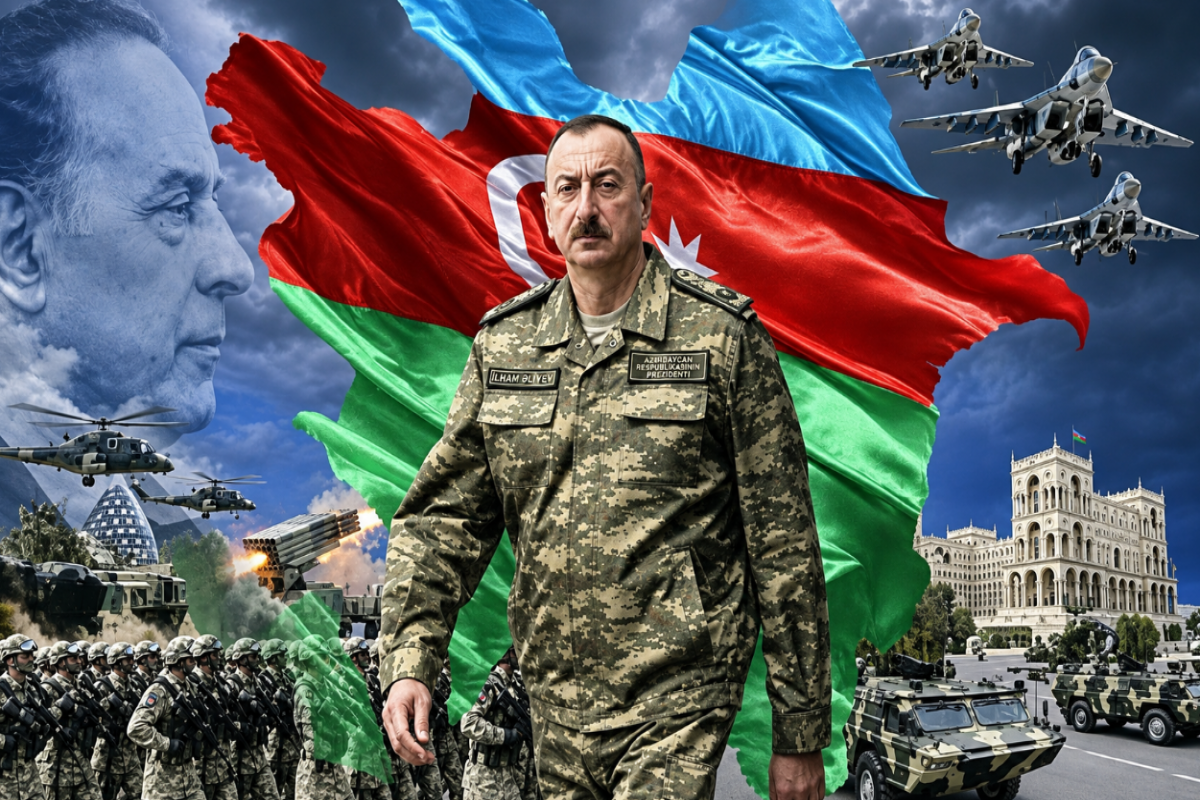


Today, Azerbaijan is celebrating another anniversary of its magnificent Victory. However, the historic Victory achieved by Azerbaijan in the 44-day Patriotic War was not merely the result of successful military operations carried out in the autumn of 2020. Behind this Victory stood nearly three decades of state-building, the strengthening of economic independence, the modernisation of the army, the consolidation of international positions and consistent diplomatic activity. The continuation of the strategic course established by Heydar Aliyev by President Ilham Aliyev in accordance with the requirements of a new era transformed Azerbaijan from a country facing difficult political and economic circumstances in the 1990s into a state that restored its territorial integrity through military and political means, established new realities in the region and shaped the peace agenda.
The Patriotic War, which reached its decisive stage with the liberation of Shusha from occupation on November 8, 2020, and ended on November 10 with the Trilateral Statement formalising Armenia's severe military defeat, marked the beginning of a new chapter in Azerbaijan's history. As a result of the anti-terrorist measures carried out in September 2023, our sovereignty was restored throughout the country's entire territory.
The early withdrawal of Russian peacekeepers from Karabakh in 2024, the arrest of the former separatist regime's leaders and their prosecution before Azerbaijani courts, and the initialing of the peace agreement with Armenia in 2025 demonstrated the subsequent political, legal and diplomatic consequences of the military Victory.
A comprehensive analysis of these events shows that Azerbaijan's path was the result of combining military strength, economic potential and diplomatic capabilities within a unified state strategy.
The strategic course established by Heydar Aliyev: From strengthening the state to restoring territorial integrity

In the early 1990s, Azerbaijan faced an extremely difficult situation. The war with Armenia, the occupation of territories, the displacement of hundreds of thousands of people from their native lands, political instability, the economic crisis and the weakness of state institutions made even the preservation of independence a serious challenge.
Following Heydar Aliyev's return to power in 1993, ensuring stability in public administration, strengthening central government institutions and creating the initial conditions for economic development became priorities.
The ceasefire reached in 1994 gave Azerbaijan time to strengthen its political and economic potential. During this period, the principal task was not only to secure international recognition of the occupation but also to build a strong state capable of ensuring the restoration of territorial integrity in the future.
One of the most important pillars of that strategy was ensuring economic independence.
The "Contract of the Century", signed on September 20, 1994, marked a turning point in Azerbaijan's economic history. The agreement made it possible to attract substantial foreign investment, bring the country's energy resources to international markets and establish the financial foundations for future economic development.
In subsequent years, steps towards implementing the Baku–Tbilisi–Ceyhan oil pipeline, the establishment of the State Oil Fund in 1999 and long-term cooperation with international energy companies expanded Azerbaijan's economic capabilities.
The strategic significance of this policy was not limited to economic indicators alone. Energy projects increased Azerbaijan's weight in the system of international relations, established long-term partnerships with leading countries and expanded the country's foreign policy room for manoeuvre.
Thus, the fundamental principle of statehood established during Heydar Aliyev's leadership was that, in order to restore territorial integrity, Azerbaijan first had to become a politically stable, economically independent country capable of developing its military potential.
The Ilham Aliyev era: Transforming economic power into military and diplomatic superiority

One of the principal strategic tasks facing Ilham Aliyev, who was elected President in 2003, was to direct the economic opportunities already created towards the state's long-term security and development objectives.
In the following years, the expansion of Azerbaijan's economy, the implementation of large-scale infrastructure projects and the development of energy and transport corridors significantly strengthened the country's regional and international positions.
The commissioning of the Baku–Tbilisi–Ceyhan oil pipeline, the Baku–Tbilisi–Erzurum gas pipeline, the Southern Gas Corridor, TANAP and TAP created the conditions for Azerbaijan to become an important partner in Europe's energy security.
The country's growing geopolitical significance also influenced its opportunities for international partnership. Azerbaijan deepened its strategic alliances with individual countries and established relations based on mutual interests with various centres of power.
In parallel, military development became one of the main directions of state policy.
Increasing defence expenditure, equipping the Armed Forces with modern weapons and equipment, improving the military education system, training special forces, conducting international military exercises and increasing the army's professionalism were all components of the long-term strategy.
One of the important aspects of the Azerbaijani Army's development was not merely the modernisation of its weapons arsenal but also the adoption of modern combat concepts. Strengthening coordination among intelligence units, unmanned aerial vehicles, artillery, special forces and various branches of the military laid the groundwork for the successful conduct of future military operations.
The main point worth noting here was the establishment of a direct link between economic development and military strength. Azerbaijan directed its energy revenues not only towards meeting current socioeconomic needs but also towards improving the state's defence capabilities.
At the same time, Baku consistently defended its position under international law concerning the occupied territories. UN Security Council Resolutions 822, 853, 874 and 884, adopted in 1993, the international recognition of Azerbaijan's territorial integrity and other diplomatic documents formed part of the legal foundations of the country's position.
Nevertheless, negotiations that continued for many years did not result in an end to the occupation.
Under these circumstances, strengthening Azerbaijan's military capabilities became not an alternative to diplomatic activity but an instrument that increased its effectiveness.
The 44-day Patriotic War: A distinctive operational model in modern military history

The Patriotic War, which began on September 27, 2020, represented the application of the military potential Azerbaijan had developed over many years under actual combat conditions.
From the first days of the war, the Azerbaijani Army conducted offensive operations in several directions, succeeded in weakening the defensive system of Armenian forces and began capturing strategic positions.
The liberation of Jabrayil, Fuzuli, Zangilan and Gubadli not only expanded the scale of combat operations but also resulted in the gradual collapse of the opposing side's defensive lines.
One of the main factors behind Azerbaijan's military success was the integration of conventional ground-force operations with modern technological capabilities.
The extensive use of unmanned aerial vehicles, precision strikes, the rapid processing of intelligence information and the destruction of the enemy's air defence systems and military equipment created superiority on the battlefield.
At the same time, it would be incorrect to assume that the war was won solely through technological superiority.
Professional command, operational planning, coordination among military units, personnel training and fighting spirit were of decisive importance in the Azerbaijani Army's success.
From this perspective, the operation to liberate Shusha occupies a special place in the Patriotic War.
The liberation of Shusha on November 8, 2020, a city distinguished by its mountainous terrain, complex geographical location and defensive advantages, is regarded as one of the most important operations in Azerbaijan's military history.
The activities of special forces, the use of manoeuvring capabilities in difficult terrain and the combat readiness of personnel during the approach to the city and the fighting itself were the distinguishing features of this operation.
The liberation of Shusha did not simply mean gaining control of important strategic heights. It was also an event that seriously affected the military positions of Armenian forces in Karabakh and determined the final outcome of the war.
As a result, Azerbaijan liberated a significant part of its occupied territories directly on the battlefield and created a situation that forced the opposing side to accept harsh conditions for the cessation of military operations.
The principal political outcome of the 44-day war was that Azerbaijan achieved, through military superiority, territorial changes that it had been unable to secure through diplomacy for many years.
This fundamentally changed Azerbaijan's position in subsequent diplomatic processes.
Armenia's capitulation: Three districts returned without a single shot being fired

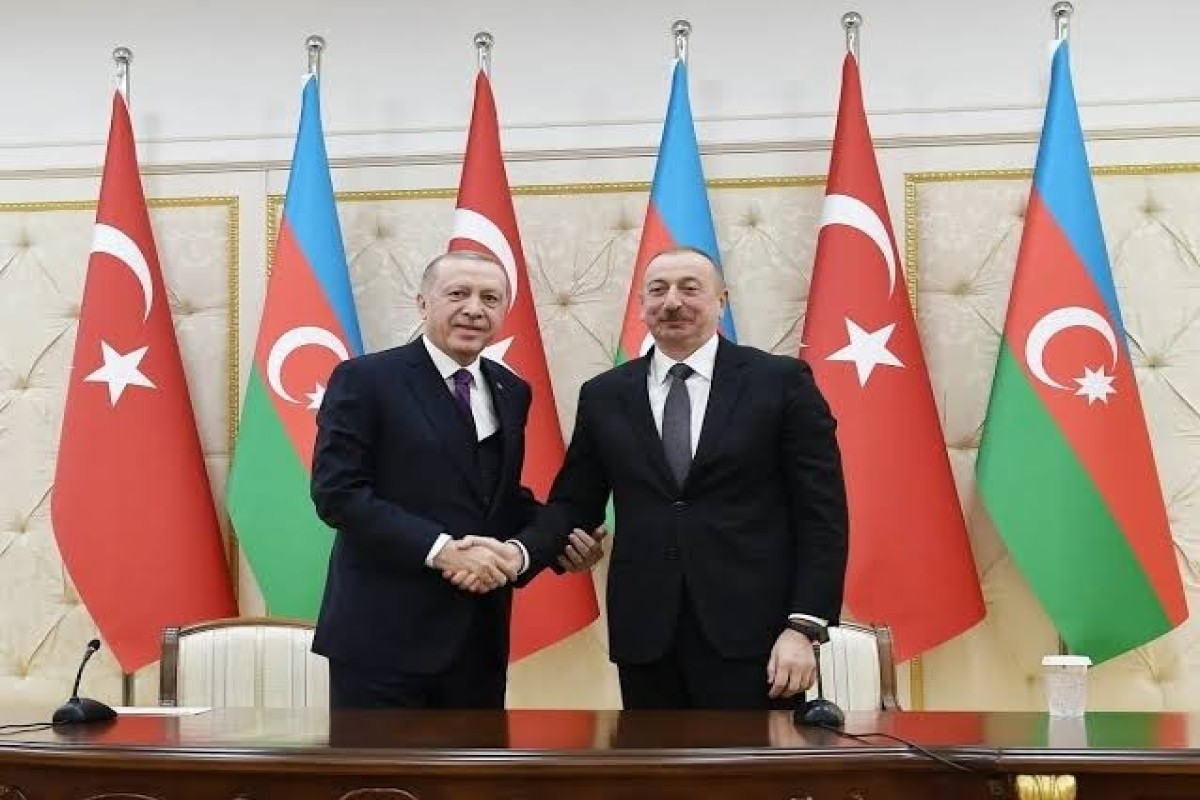
On the night of November 9–10, 2020, a Trilateral Statement was adopted by Azerbaijani President Ilham Aliyev, Armenian Prime Minister Nikol Pashinyan and Russian President Vladimir Putin.
The document, which came into effect on November 10, brought the 44-day war to an end and formalised the new military and political situation in the region.
The terms of the Trilateral Statement confirmed Armenia's severe military defeat and its de facto capitulation.
One of the most important outcomes was Armenia's commitment to return three strategically important districts of Azerbaijan without military operations.
Thus, Aghdam district was returned to Azerbaijan on November 20, 2020, Kalbajar district on November 25, and the remaining part of Lachin district, excluding the territories belonging to the Lachin corridor, on December 1, without a single shot being fired. Actual control over the city of Lachin was restored in August 2022.
These developments were a clear example of military victory being transformed into a diplomatic result.
Without launching new military operations, suffering additional human losses or engaging in large-scale fighting, Azerbaijan regained control over important territories.
The principal cause-and-effect relationship here is clear: had the Azerbaijani Army not achieved decisive superiority on the battlefield, Armenia would not have returned strategically important districts without military resistance.
In other words, the main factor that ensured the return of Aghdam, Kalbajar and Lachin was the military superiority achieved over 44 days.
However, the Statement did not resolve every post-conflict issue.
The deployment of a Russian peacekeeping contingent in part of Karabakh, the continued presence of Armenian armed formations in Karabakh and the ongoing activities of the former separatist entity left open the question of fully exercising sovereignty throughout Azerbaijan's entire territory.
For this reason, Azerbaijan faced another strategic stage.
The 2023 anti-terrorist measures: The complete restoration of sovereignty

After 2020, Azerbaijan's principal task was to disarm illegal armed formations in Karabakh and restore state authority throughout all its territories.
In accordance with the relevant provisions of the Trilateral Statement, Azerbaijan repeatedly raised the necessity of withdrawing the remnants of Armenian armed forces from its territory.
However, the continued presence of armed formations in the region until September 2023 prevented the full normalisation of the situation. Russian peacekeeping forces also played a role in Armenia's and illegal Armenian armed formations' failure to comply with the terms of the Trilateral Statement.
Under these circumstances, on September 19, 2023, the Azerbaijani Armed Forces carried out local anti-terrorist measures in Karabakh.
As a result of the operation, which lasted just 24 hours, the illegal armed formations were crushed, and this unique operation dealt a fatal blow to the remnants of separatist forces remaining in Karabakh. The leaders of the former separatist regime were arrested and brought to Baku, while the junta regime that had operated illegally on Azerbaijani territory for more than 30 years announced its self-dissolution.
Azerbaijani state authority was restored in Khankendi and other territories, and sovereignty was ensured throughout the entire country.
This event marked the political and legal completion of the 2020 Victory.
While the 44-day war ensured the liberation of most occupied territories and Armenia's military defeat, the measures of September 2023 made it possible to apply the Constitution of Azerbaijan and state authority throughout the country's entire territory.
Thus, the decisive result achieved in 2020 towards restoring territorial integrity entered a new stage in 2023 with the complete restoration of sovereignty.
This also marked the end of the separatist administrative system that had existed in the region for decades.
For Azerbaijan, the main task of the new stage was not only to ensure security in the region but also to fully restore public administration, social services and economic life.
The early withdrawal of Russian peacekeepers: A new geopolitical stage

Under the 2020 Statement, the initial term of the Russian peacekeeping contingent deployed in Karabakh was set at five years.
However, following the restoration of Azerbaijan's sovereignty throughout its entire territory in September 2023, the previous military and political circumstances that had justified the peacekeepers' presence in the region changed fundamentally.
The withdrawal of Russian peacekeepers from Azerbaijani territory began in April 2024.
On June 12 of that year, it was officially announced that the process had been fully completed.
The significance of this event was not limited to the departure of a foreign military contingent from the country's territory.
The withdrawal of Russian military forces before the expiry of their initial mandate, which had been scheduled to end in 2025, demonstrated the strengthening of Azerbaijan's position within the post-conflict security architecture.
Thus, Azerbaijan succeeded in removing the previous security mechanisms that could have obstructed the full exercise of state sovereignty on its territory.
The fact that the process was carried out in an agreed manner between Baku and Moscow also made it possible to resolve military and political issues through diplomatic mechanisms.
The return of four non-enclave villages of the Gazakh district to Azerbaijan in 2024 as part of the delimitation of the border with Armenia was another important outcome of the new political situation that emerged after the military Victory.
Through this, Azerbaijan demonstrated its ability to use both the political opportunities arising from military superiority and negotiation mechanisms to resolve territorial issues.
Bringing the leaders of the former separatist regime to trial: An analogue of the Nuremberg Trials

Following the restoration of state authority in Karabakh, one of the important issues that came to the forefront was holding the leaders of the former separatist regime and other individuals accused of serious crimes accountable.
Among those detained by Azerbaijani law enforcement agencies and brought to Baku were leaders and senior officials of the former separatist entity.
They faced charges relating to crimes against peace and humanity, war crimes, terrorism and other serious offences.
Within these proceedings, the trials held at the Baku Military Court concluded with significant legal outcomes.
On February 5, 2026, a number of former separatist leaders, including Arayik Harutyunyan, were sentenced to various terms of imprisonment, including life imprisonment. On February 17, Ruben Vardanyan was sentenced to 20 years in prison.
These trials, described as an analogue of the Nuremberg Trials held after the defeat of German fascism, went down in history as an important step taken by the Azerbaijani state towards ensuring legal accountability for criminal acts committed in Karabakh over many years.
Another important aspect of the issue is that the results achieved through military operations were subsequently accompanied by the activities of the state's law enforcement and judicial institutions.
Thus, alongside military, political and administrative stages, the resolution of the Karabakh issue continued in the legal sphere.
Reconstruction of Karabakh and East Zangezur: The economic and social consequences of Victory

One of the principal stages of the post-war period was the launch of large-scale restoration and reconstruction work in the liberated territories.
The destruction of a significant proportion of settlements, road and transport infrastructure, social facilities and economic activity during nearly thirty years of occupation created complex challenges for the state.
Azerbaijan approached this process not as the restoration of individual buildings but as the reconstruction of entire regions.
The construction of Fuzuli, Zangilan and Lachin international airports, the building of new highways and railways, the establishment of electricity and water supply systems, and the reconstruction of cities and villages according to modern planning principles are the main directions of this strategy.
The strategic objective here is not only to return former internally displaced persons to their native lands but also to transform Karabakh and East Zangezur into active participants in Azerbaijan's economy.
The First State Programme on the Great Return, approved on November 16, 2022, established the main framework for systematically implementing the resettlement process.
The return, which began in the village of Aghali in Zangilan, subsequently expanded to Lachin, Fuzuli, Shusha, Khankendi, Khojaly, Aghdam and other settlements.
According to official information released in October 2026, the number of people living, working and studying in Karabakh and East Zangezur had reached 96,000. By that period, 28 billion manats had been allocated to the development of these regions, and former internally displaced persons had returned and settled in 48 settlements.
These indicators demonstrate the extensive scale of the post-war reconstruction process.
At the same time, the success of the Great Return is not measured solely by the number of apartments built or roads constructed. Sustainable employment, access to education and healthcare services, entrepreneurship development, mine clearance and the creation of a safe living environment are also essential conditions for the process.
Restoring the economic potential of the liberated territories opens new opportunities for Azerbaijan's overall development.
The Aghdam Industrial Park, the Araz Valley Economic Zone, and projects in agriculture, tourism, energy and logistics are intended to change the regions' positions on the economic map.
All this demonstrates that the long-term outcome of the military Victory is not merely the restoration of control over territory but the establishment of sustainable socioeconomic life in those territories.
The Washington agreements and the initialing of the peace treaty: A new diplomatic stage
Azerbaijan's military Victory in 2020 and the complete restoration of its sovereignty in 2023 significantly changed the balance of power and the political substance of negotiations in the South Caucasus.
While international mediators had focused primarily on resolving the Karabakh conflict for many years, the new stage placed the normalisation of relations between two sovereign states, the determination of borders and the opening of regional communications on the agenda.
Azerbaijan's unique approach also came to the forefront at this new stage. Despite inflicting a crushing defeat on Armenia on the battlefield, Baku itself put forward a peace initiative. This step, rarely seen in world history, once again demonstrated that Azerbaijan and its leader genuinely sought to bring peace and stability to the region.
During this period, Azerbaijan emphasised the necessity of establishing relations with Armenia on the basis of mutual recognition of sovereignty and territorial integrity.
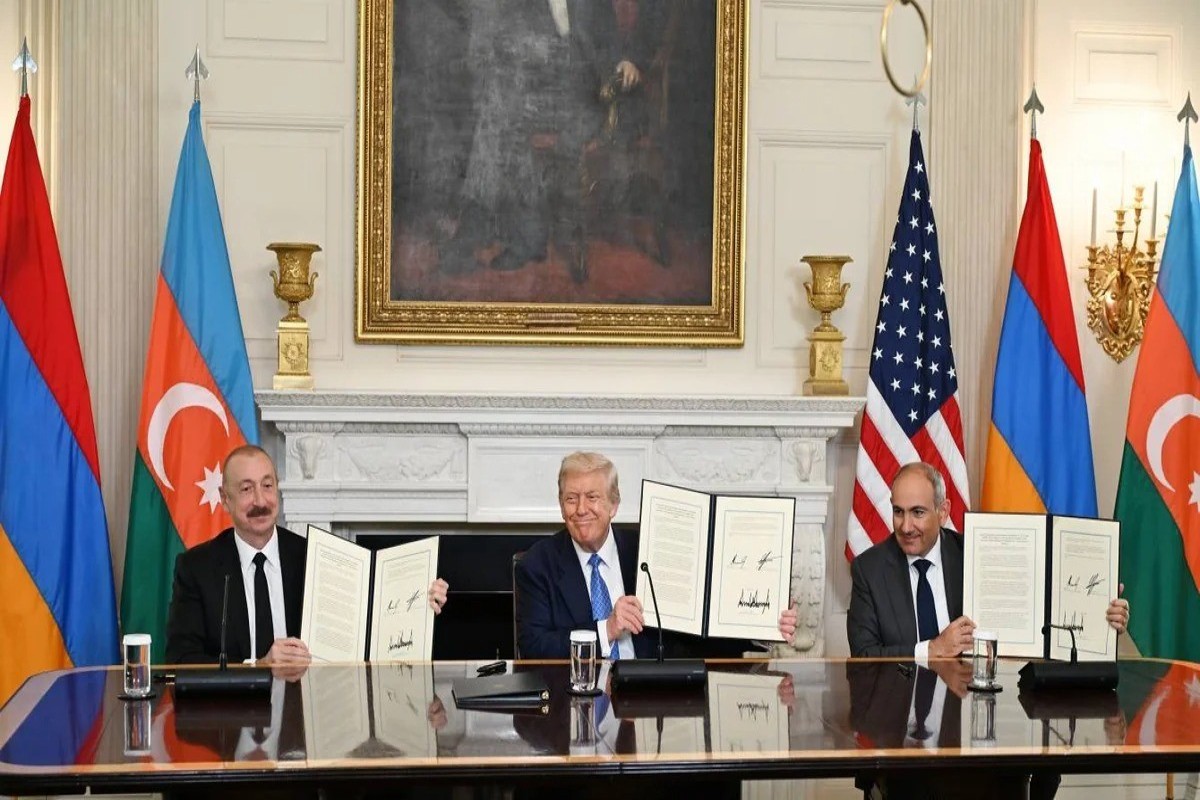
The meeting held in Washington on August 8, 2025, was an important diplomatic event in this respect.
Azerbaijani President Ilham Aliyev and Armenian Prime Minister Nikol Pashinyan signed a Joint Declaration in the presence of US President Donald Trump.
At the same time, the foreign ministers of Azerbaijan and Armenia initialed the agreed text of the "Agreement on Establishment of Peace and Inter-State Relations between the Republic of Azerbaijan and the Republic of Armenia".
The draft agreement reflected principles such as the parties' recognition of each other's sovereignty, territorial integrity and the inviolability of international borders, the renunciation of mutual territorial claims and the non-use of force in their relations.
This was an important step towards resolving problems that had formed the basis of military and political confrontation for many years within the framework of interstate legal relations.
The closure of the OSCE Minsk Process and its related structures following the Washington agreements also demonstrated that the previous conflict-resolution mechanisms had become part of history. The OSCE completed the relevant closure process on November 30, 2025.
Nevertheless, the initialing of a peace agreement does not mean that it has been signed or entered into force.
As of November 2026, the final signing of the document had not yet taken place. Azerbaijan considers the removal of provisions in the Armenian Constitution that it regards as territorial claims to be an essential condition.
The parties' agreement on and initialing of the text of the peace treaty have created new diplomatic opportunities for normalising relations in the region.
Azerbaijan's principal advantage is that Baku now enters negotiations not as a state whose territories are under occupation but as a party that has restored sovereignty throughout its territory and occupies a leading position in shaping the region's security agenda.
A new regional reality: From military victory to a peace initiative
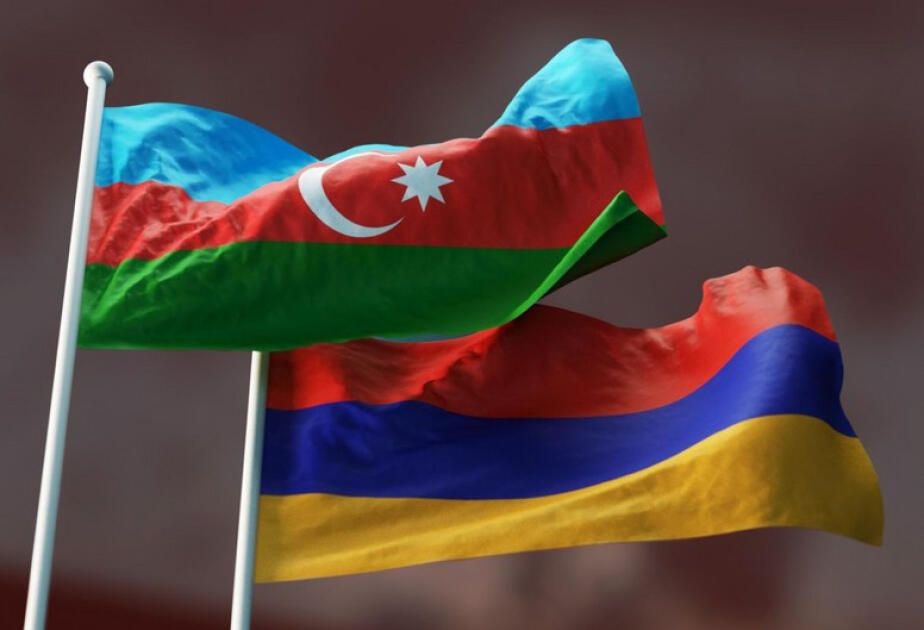
The nature of the changes that have taken place in the South Caucasus since 2020 is not limited to the shift in the balance of power in Azerbaijan–Armenia relations.
The region's security, transport, economic cooperation and international partnership opportunities have entered a new stage.
As a result of Azerbaijan's initiatives, the agenda long characterised by military confrontation has increasingly been replaced by border delimitation, the opening of communications, regional trade and economic integration.
Azerbaijan's role in developing the East–West and North–South transport corridors, the growing strategic importance of the Middle Corridor and the prospect of establishing new transport links between Nakhchivan and mainland Azerbaijan are important components of this process.
The TRIPP project envisaged in the Washington agreements has also brought the issue of regional connectivity into a new framework of international cooperation.
Azerbaijan's strategic interest is to transform the South Caucasus from a region of persistent confrontation into one of economic cooperation, transit and trade.
The significance of this approach lies in Azerbaijan's efforts to consolidate the security advantages achieved through military power by means of economic and diplomatic opportunities.
However, ensuring sustainable peace does not depend solely on one side's military superiority. It requires the existence of a peace agreement signed by Azerbaijan and Armenia and brought into force, the resolution of border issues, the mutual fulfilment of commitments and the establishment of a climate of long-term trust.
From this perspective, Azerbaijan's next strategic objective is to transform the political opportunities created by the military Victory into mechanisms for lasting peace and regional stability.
The historical and strategic significance of Victory
An analysis of Azerbaijan's path over more than the past thirty years reveals several important conclusions.
The formula of this magnificent Victory is very simple, yet equally meaningful: the unbreakable unity of the People, the Army and the Leader.
First, the Victory of 2020 was not the result of an immediate military success but of a long-term state strategy. The political and economic development course established by Heydar Aliyev enabled the strengthening of the Azerbaijani state, while the policies implemented during President Ilham Aliyev's leadership made it possible to transform that potential into military, diplomatic and geopolitical superiority.
Second, the successes achieved by the Azerbaijani Army over 44 days demonstrated what results could be achieved when military strength was combined with sound strategy, professional command and modern technologies.
Third, the Victory was not achieved solely on the battlefield; its results were also consolidated through diplomacy. The return of Aghdam, Kalbajar and Lachin without military operations was one of the clearest examples of this.
Fourth, the complete restoration of sovereignty in 2023 and the early withdrawal of Russian peacekeepers in 2024 created a new situation in terms of Azerbaijan's territorial integrity and the exercise of state authority.
Fifth, bringing the former leaders of the separatist regime to trial, carrying out reconstruction and development work in the liberated territories and implementing the Great Return programme shaped the legal, social and economic consequences of the military Victory.
Finally, the initialing of the peace agreement with Armenia and discussions of new opportunities for transport and economic cooperation in the region demonstrate that Azerbaijan has expanded its diplomatic initiatives in the post-conflict period.
Thus, Azerbaijan's road to Victory brings together three major historical stages: laying the foundations of a strong state during Heydar Aliyev's leadership; increasing that state's economic and military potential and achieving the historic Victory during Ilham Aliyev's presidency; and creating a new regional reality based on the complete restoration of sovereignty after the Victory.
In this regard, November 8 Victory Day symbolises not only the military outcomes of the 44-day war but also the long-term development path Azerbaijan has travelled as an independent state.
The principal strategic significance of this date is that Azerbaijan succeeded in translating the capabilities it had developed to restore its territorial integrity into tangible results and is now at the stage of transforming those achievements into the foundations of long-term security, economic development and regional peace.
If the Victory of 2020 demonstrated the military strength of the Azerbaijani state and September 2023 demonstrated its sovereign will, the main historical test of the coming years will be to transform these achievements into irreversible peace, sustainable development and long-term stability in the region.
There is no doubt that a powerful Azerbaijan will achieve this objective as well!


 Follow us on Telegram
 t.me/apanewsaz
 Follow us on Instagram
 Follow us on TikTok
 Follow us on Facebook
 Follow us on X