








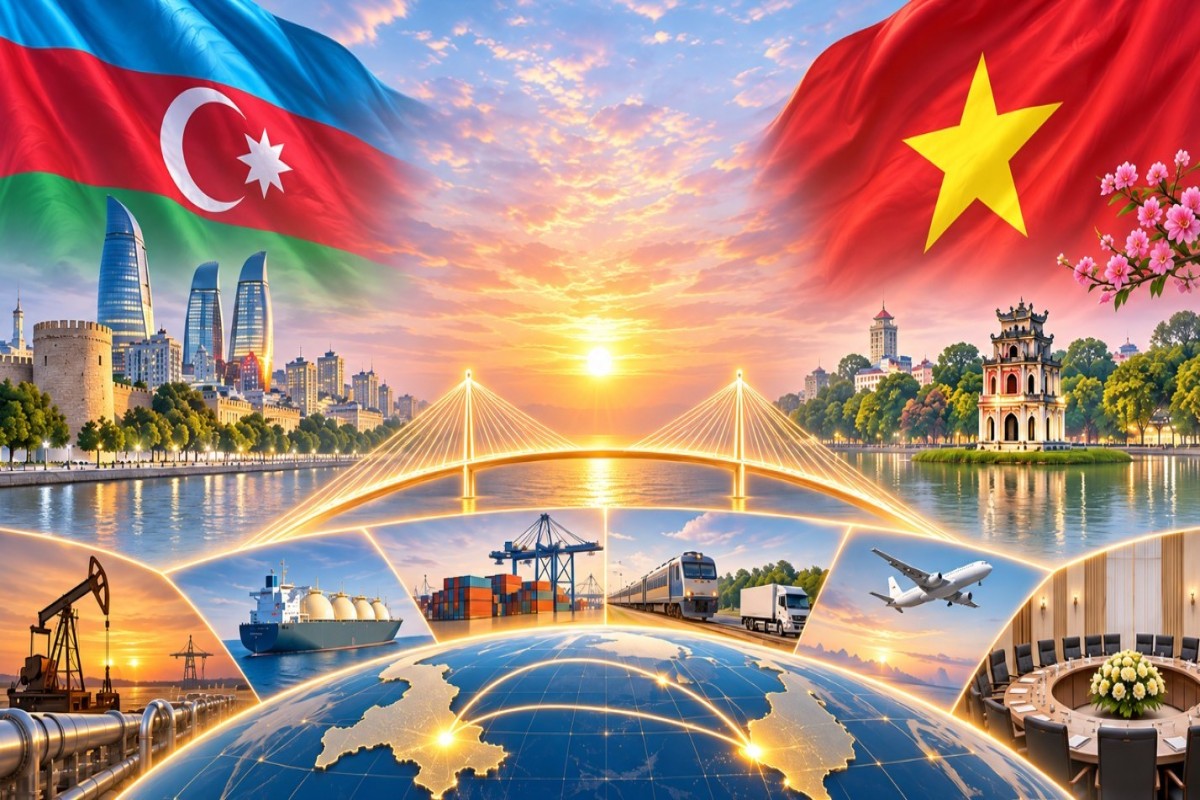


Relations between Azerbaijan and Vietnam have acquired new substance in recent years, reaching the level of strategic partnership. The historical friendship, mutual political trust, and humanitarian ties connecting the two countries today provide a solid foundation for expanding cooperation in the fields of economy, energy, transport, defense industry, education, and other areas. In particular, the state visit of To Lam, General Secretary of the Central Committee of the Communist Party of the Socialist Republic of Vietnam, to Azerbaijan in May 2025 and the Joint Statement on the Establishment of a Strategic Partnership signed during the visit laid the foundation for a qualitatively new phase in bilateral relations.
This document has not only adapted the traditional friendly relations between the two countries to new political and economic realities but has also opened up broad opportunities for long-term cooperation based on mutual interests. The views expressed during the bilateral and expanded meetings between President Ilham Aliyev and To Lam, as well as in their statements to the press, demonstrated that both sides are interested in developing relations not only at the political level but also through concrete economic projects and mutual investments.
The visit of Vietnamese Vice President Vo Thi Anh Xuan to Azerbaijan in October 2026 and her meeting with President Ilham Aliyev demonstrated the continued development of this partnership and the expansion of the objectives set in 2025 into new areas. Discussions during the meeting on the economy, trade, transport and logistics, renewable energy, tourism, investment, and the introduction of a visa-free regime indicated that the bilateral agenda was acquiring more concrete substance.
Friendly relations spanning nearly 70 years
The history of Azerbaijan-Vietnam relations dates back to the late 1950s. The visit of Ho Chi Minh, President of the Democratic Republic of Vietnam, to the Azerbaijan SSR in 1959 was one of the significant events that laid the foundation for friendly relations between the two peoples. The visit of Azerbaijan's National Leader Heydar Aliyev, who at that time held the position of First Deputy Chairman of the USSR Council of Ministers, to Vietnam in 1983 contributed to the further strengthening of these ties.
These visits were not limited to diplomatic contacts but also promoted mutual respect and trust between the peoples and encouraged cooperation in various fields. Azerbaijan's contributions to the establishment of Vietnam's oil industry and the training of specialists following Ho Chi Minh's appeal also constitute part of the historical foundation of these relations. Azerbaijani specialists participated in the development of Vietnam's oil and gas industry, while the experience of Azerbaijani engineers and experts contributed to the formation of the country's energy sector.
The education of thousands of Vietnamese young people at Azerbaijan's higher education institutions during the Soviet period also played a special role in ensuring the continuity of these relations. Nearly 5,000 Vietnamese citizens studied in Azerbaijan during that period. Many of them subsequently held senior positions in public administration, the economy, science, and other fields in Vietnam. These graduates continue to serve as an important bridge in preserving humanitarian ties and mutual understanding between the two countries.
In other words, although diplomatic relations between Azerbaijan and Vietnam were established in 1992, the history of their ties goes back much further. President Ilham Aliyev's state visit to Vietnam in 2014 and Vietnamese President Truong Tan Sang's official visit to Azerbaijan in 2015 marked the beginning of a new stage in the development of bilateral relations. Thus, the elevation of relations to the level of strategic partnership in 2025 represents a logical continuation of the political trust and friendship established over many years.
Strategic partnership opens new opportunities for economic cooperation
The main political outcome of To Lam's state visit to Azerbaijan was the adoption of the Joint Statement on the Establishment of a Strategic Partnership between the two countries. In his statement to the press, President Ilham Aliyev described the document as a significant political instrument that elevated relations to a higher level. The head of state emphasized the importance of transforming the agreements reached into concrete projects, noting the considerable potential for cooperation in trade, the economy, culture, education, energy, and transport.

One of the main priorities of the strategic partnership is to increase bilateral trade turnover and diversify economic ties. In 2024, trade turnover between Azerbaijan and Vietnam amounted to $223.93 million. However, the head of state pointed out that the dynamics of bilateral trade were significantly dependent on Azerbaijan's oil exports to Vietnam. In this regard, establishing a more balanced structure of trade relations and expanding mutual exports of non-oil products are of particular importance.
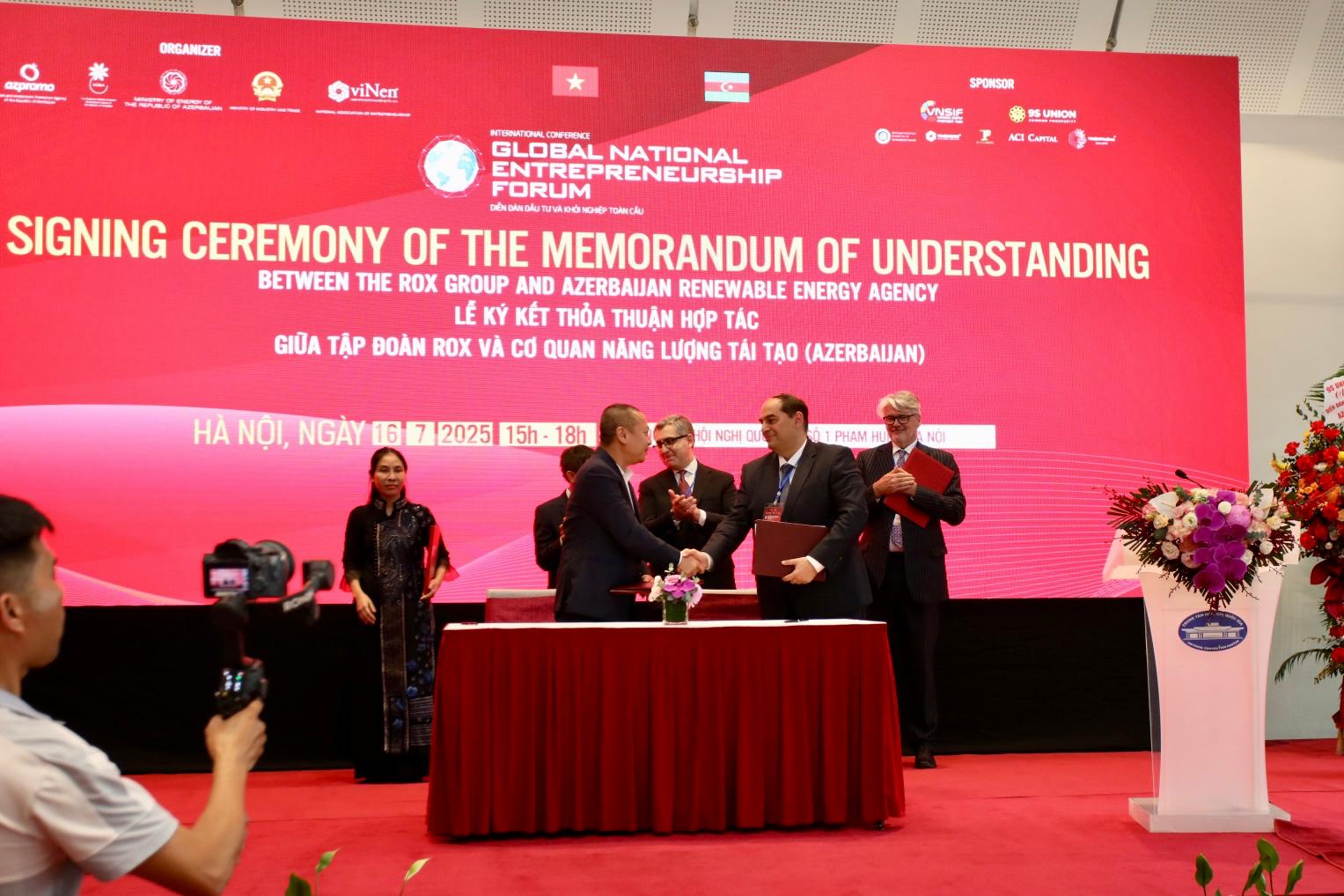
It is important to expand opportunities for business communities in both countries to access each other's markets, promote a favorable investment environment, and establish direct contacts between entrepreneurs. In this context, the Memorandum of Understanding on the establishment of a Joint Business Council between Azerbaijan's Small and Medium Business Development Agency and the Vietnam National Entrepreneurship Association, signed during To Lam's visit, is particularly noteworthy. The first meeting of the Azerbaijan-Vietnam Business Council and the business forum held in Hanoi in July 2025 were among the steps aimed at translating political agreements into practical economic cooperation.
The expansion of economic and trade ties and the promotion of mutual investments were also at the center of discussions during the meeting with the Vietnamese Vice President in October 2026. Two days after that meeting, the implementation of agreements reached in 2025, the strengthening of business ties, increasing trade turnover, and new investment opportunities were also discussed during talks between Vietnamese Deputy Minister of Industry and Trade Phan Thi Thang and Azerbaijani Energy Minister Parviz Shahbazov. The Vietnamese side's observation that trade turnover remained below its existing potential, along with its proposal to facilitate market access, indicates that considerable untapped opportunities remain for expanding cooperation.
Azerbaijan creates new opportunities for Vietnam as a transport and logistics hub
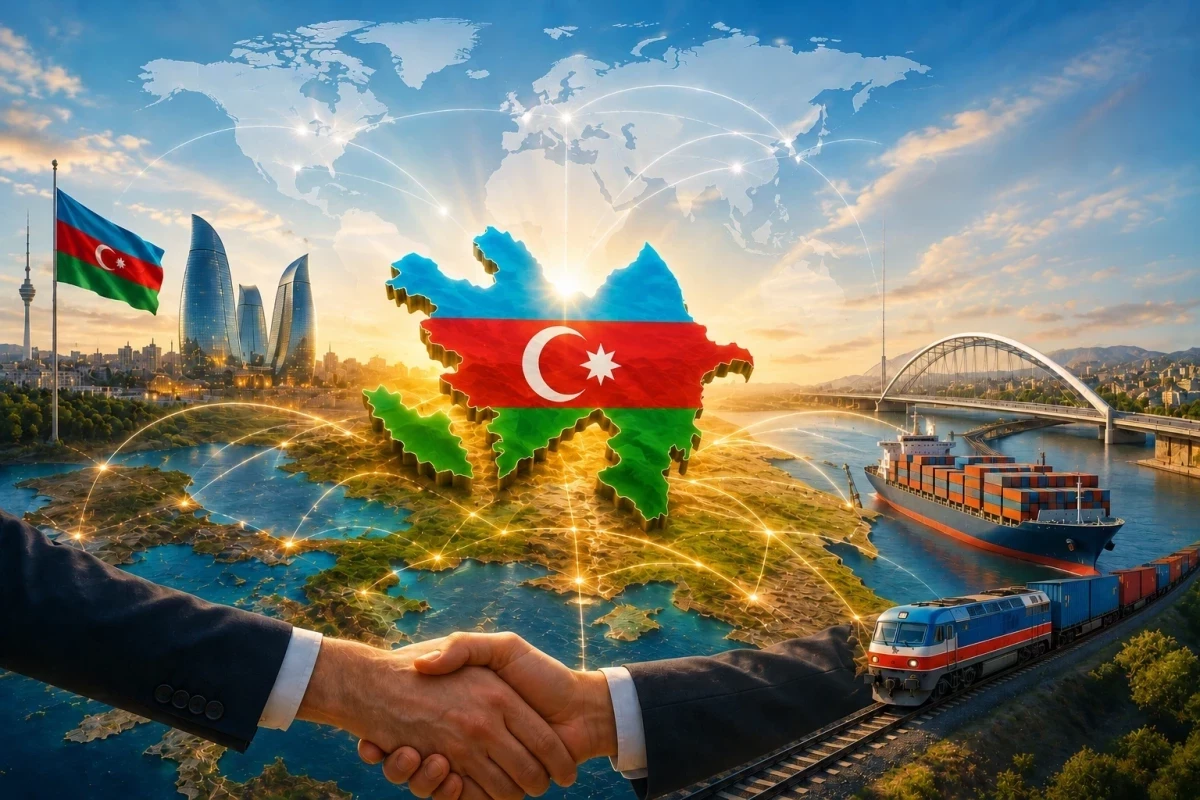
Azerbaijan's favorable geographical position and its growing importance as an international transport and logistics hub also create new opportunities for Vietnam. In this regard, the North-South and East-West transport corridors passing through Azerbaijani territory are of great importance for expanding mutual trade and ensuring more efficient cargo transportation through alternative routes.
Vietnam is one of Southeast Asia's major manufacturing and export centers. Azerbaijan, meanwhile, possesses transit capabilities that provide transport connections between the markets of Europe, the Caucasus, and Central Asia. Combining these two advantages offers promising opportunities for Vietnamese products to reach new markets through Azerbaijan, while also facilitating the delivery of Azerbaijani products to Southeast Asian markets.
Practical results of cooperation in this area are already becoming evident. Vietnam-related transit cargo transportation through Azerbaijan increased by more than 200 percent in 2025 and by approximately 600 percent in January-September 2026. These figures demonstrate Vietnam's growing interest in transport routes passing through Azerbaijan.
The development of transport and logistics ties returned to the agenda during meetings held in October 2026. Discussions between Vietnam's Deputy Minister of Industry and Trade and Azerbaijan's Energy Minister also addressed improvements in cargo transportation and logistics connections, as well as opportunities to establish direct air links. Promoting direct flights is important not only for cargo transportation but also for increasing business travel, tourism, and people-to-people contacts. Thus, cooperation in the transport sector could help overcome the challenges created by the geographical distance between the two countries and contribute to more intensive economic relations.
Strategic cooperation in the energy sector
Energy is one of the traditional areas of cooperation between Azerbaijan and Vietnam. The history of relations in this field dates back to the 1950s, when Vietnam's oil industry was being established. The participation of Azerbaijani specialists in the development of Vietnam's oil industry created a solid foundation for energy cooperation between the two countries.
Today, this historical experience continues under new economic conditions. The signing of a contract between SOCAR and Vietnam's Binh Son Refinery and Petrochemical Company in 2019 marked one of the important areas of cooperation. During To Lam's visit to Azerbaijan, a Memorandum of Understanding was exchanged between SOCAR and the Vietnam National Industry-Energy Group, PetroVietnam. The document creates opportunities for expanding cooperation in exploration, production, technical services, and other areas of the oil and gas sector.
The development of intergovernmental cooperation in the energy sector is also a priority. During the visit, a Memorandum of Understanding on energy cooperation was signed between Azerbaijan's Ministry of Energy and Vietnam's Ministry of Industry and Trade. In addition, President Ilham Aliyev declared Azerbaijan's readiness to invest in renewable energy projects in Vietnam and invited Vietnamese companies to invest in this sector in Azerbaijan.

This approach demonstrates that cooperation is not limited to the traditional oil and gas sector. Areas such as solar and wind energy, energy infrastructure, oil refining, petrochemicals, and liquefied natural gas supplies are of mutual interest. According to Azerbaijan's Ministry of Energy, more than 1.1 million tons of crude oil have been supplied to Vietnam since 2023.
Energy cooperation was discussed again during the Vietnamese Vice President's visit in October 2026. At the meeting between President Ilham Aliyev and Vo Thi Anh Xuan, the Memorandum of Understanding signed between SOCAR and PetroVietnam and opportunities for further expanding the partnership were reviewed. On October 16, talks between Phan Thi Thang and Parviz Shahbazov focused on long-term crude oil supplies, oil and gas exploration and production, petrochemicals, LNG supplies, and joint investment opportunities. The Vietnamese side emphasized Azerbaijan's importance in ensuring energy security and diversifying supply sources. The Azerbaijani side also expressed its readiness to expand long-term cooperation in the energy sector.
At the same time, investments by Vietnamese companies in renewable energy projects in Azerbaijan and the exploration of new opportunities by Azerbaijani companies in Vietnam's energy sector demonstrate the mutually beneficial nature of the partnership. Thus, the energy sector serves as one of the main economic pillars of the Azerbaijan-Vietnam strategic partnership.
Prospects for cooperation in the defense industry
One of the promising areas of cooperation between the two countries is the defense industry. In his statement to the press alongside To Lam, President Ilham Aliyev noted that the defense industries of both countries were developing and that combining efforts, establishing joint ventures, and promoting mutual cooperation could prove beneficial.
The signing of a document on defense cooperation during To Lam's visit created an institutional foundation in this area. Discussions during subsequent contacts on defense industry cooperation, military training, demining, military trade, and logistical and technical support demonstrate an interest in expanding the practical scope of cooperation. These issues were also at the center of discussions during Vietnamese Defense Minister Phan Van Giang's meeting with the Azerbaijani delegation in September 2025.
The development of this partnership could enable both countries to benefit from each other's defense industry capabilities, exchange technology and experience, and explore opportunities for joint production.
Education and humanitarian ties
Cooperation in education and humanitarian affairs is one of the historical characteristics of Azerbaijan-Vietnam relations. The education of thousands of Vietnamese citizens in Azerbaijan during the Soviet era continues to contribute to the development of relations between the two countries. Currently, both sides are interested in expanding inter-university cooperation and exchanges of students and specialists. There are also opportunities to implement joint projects in the cultural sphere.
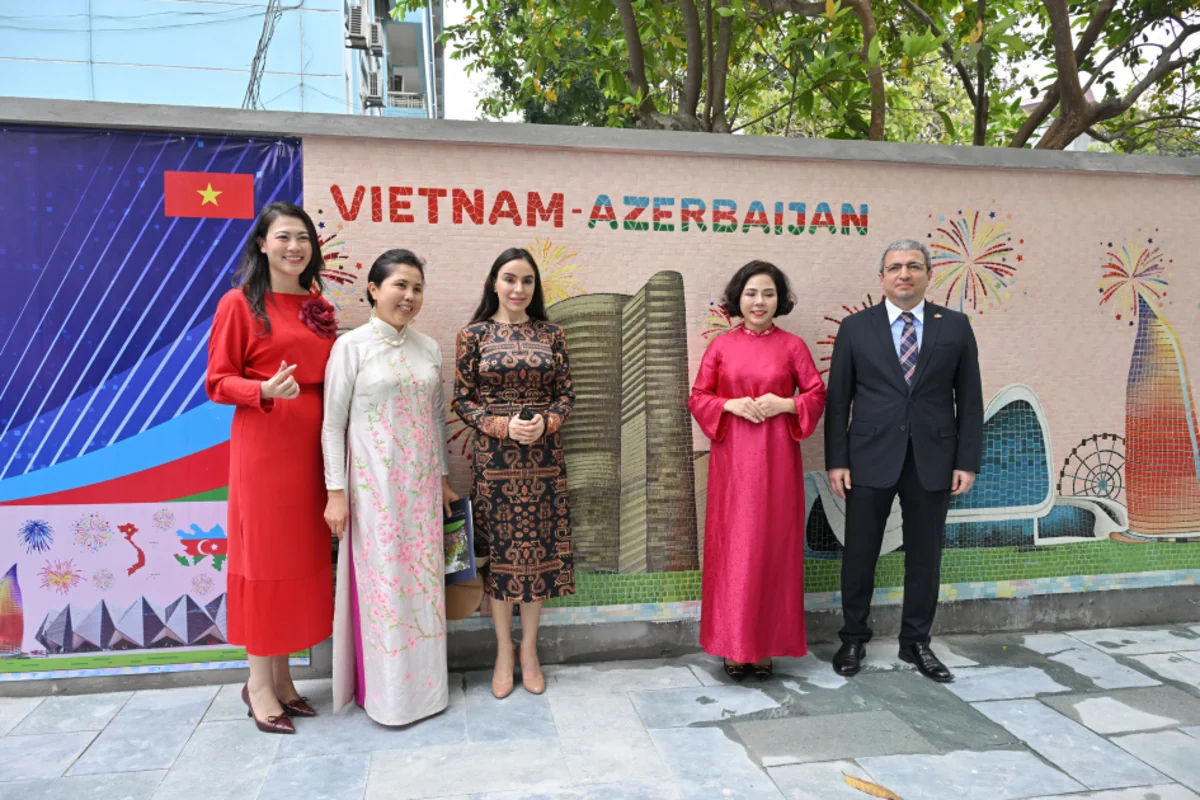
In this context, the humanitarian and cultural projects implemented by the Heydar Aliyev Foundation in Vietnam are of particular importance. The Foundation's support for the construction of a primary school in Ha Giang Province in 2018 is one example of these activities. The visit of Leyla Aliyeva, Vice-President of the Foundation, to Vietnam, her meetings with representatives of the education and creative sectors, and the financial support provided to Hanoi College of Trade and Tourism also contribute to strengthening humanitarian ties.
During her meeting with President Ilham Aliyev and First Lady Mehriban Aliyeva in October 2026, Vietnamese Vice President Vo Thi Anh Xuan expressed gratitude to the Azerbaijani side for the humanitarian and cultural projects implemented by the Heydar Aliyev Foundation in Vietnam. She also fondly recalled Leyla Aliyeva's visit to Vietnam. The Vietnamese side's particular emphasis on these initiatives demonstrates the important role of humanitarian diplomacy in bilateral relations.
Political dialogue, international cooperation and new prospects
Azerbaijan and Vietnam also cooperate within international organizations. Mutual support and the coordination of common interests within the United Nations, the Non-Aligned Movement, and the Conference on Interaction and Confidence Building Measures in Asia (CICA) are important dimensions of the political dialogue between the two countries. President Ilham Aliyev particularly highlighted Vietnam's support during Azerbaijan's membership of the UN Security Council. Both sides also emphasize the importance of respecting the principles of international law and the sovereignty and territorial integrity of states.
The participation of Vietnam's Vice President in the 7th CICA Summit held in Baku in October 2026 also demonstrated the continuation of this cooperation at the current political level. During the meeting, President Ilham Aliyev expressed gratitude for Vietnam's support for extending Azerbaijan's chairmanship of CICA. Vo Thi Anh Xuan, in turn, highly appreciated Azerbaijan's chairmanship of the organization and the hosting of the Summit in Baku. These contacts demonstrate that the bilateral strategic partnership is not limited to economic projects but is also strengthened through political dialogue and mutual support on international platforms.
The development of tourism and the expansion of people-to-people contacts also play an important role in strengthening relations. In this regard, simplifying visa procedures, particularly introducing a visa-free regime for holders of ordinary passports, is of special importance. During the meeting between President Ilham Aliyev, First Lady Mehriban Aliyeva, and Vietnamese Vice President Vo Thi Anh Xuan on October 14, 2026, prospects for introducing a visa-free regime were discussed.
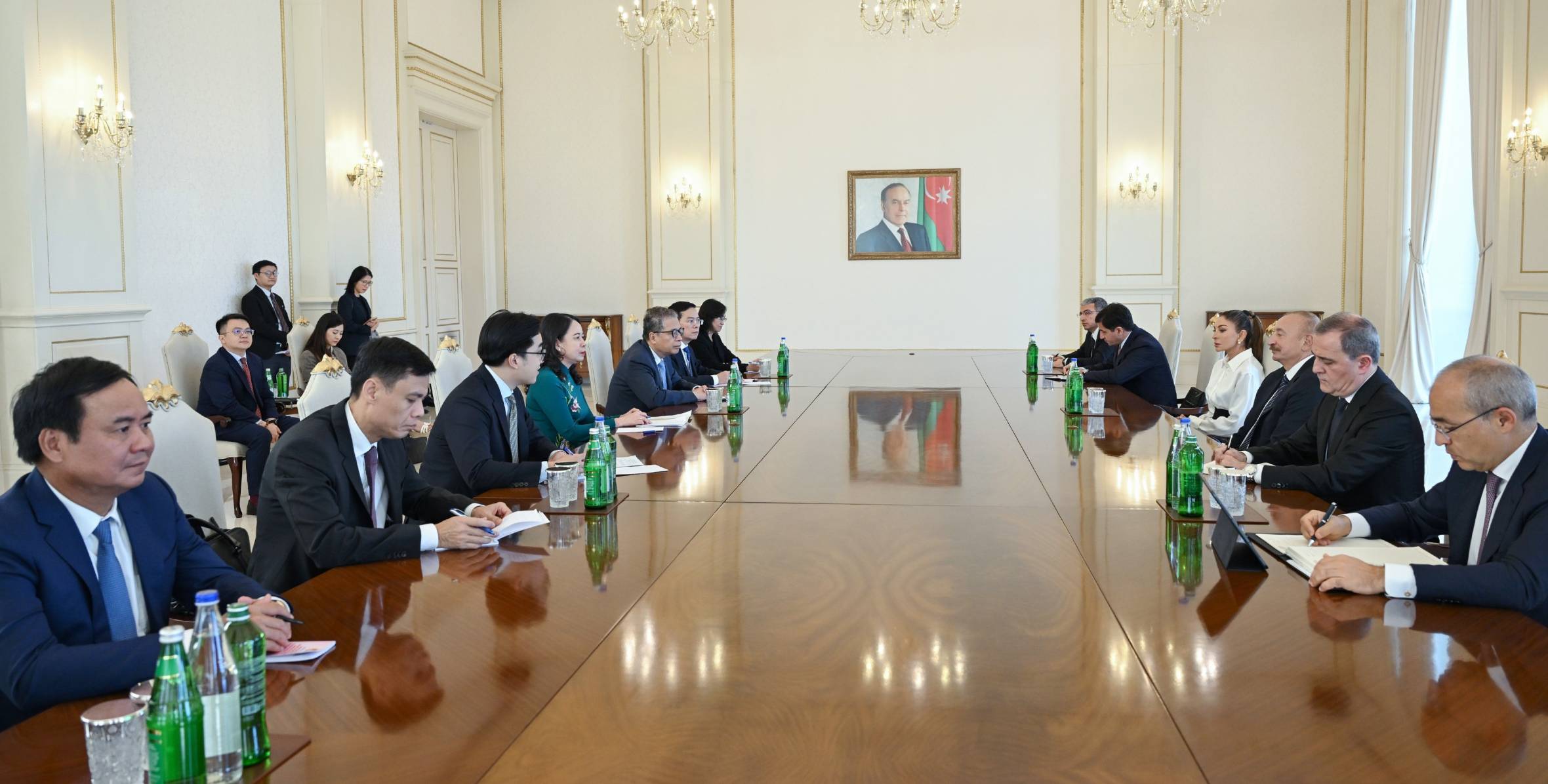
The introduction of a visa-free regime could facilitate not only the expansion of tourism ties between the two countries but also an increase in business travel, investment contacts, and direct communication between citizens. In particular, the inclusion of proposals to establish direct air connections on the agenda demonstrates an interest in developing cooperation in this area in a comprehensive manner. Nevertheless, the visa-free regime is not yet an implemented decision but remains a prospect for cooperation under discussion between the two sides.
The Azerbaijan-Vietnam economic and energy discussions held on October 16 also addressed the promotion of direct flights, human resource development, scholarship programs, and the expansion of ties in other fields. These proposals demonstrate that both sides want the agreements reached at the political level to produce tangible results not only in intergovernmental relations but also in business, education, tourism, and contacts between citizens.
All these developments indicate that Azerbaijan-Vietnam relations are transitioning from a tradition of historical friendship to a strategic partnership, creating a broader agenda for cooperation. While the agreements reached during To Lam's visit to Azerbaijan in May 2025 established a new political framework for relations, Vo Thi Anh Xuan's visit in October 2026 once again demonstrated an interest in developing this framework in the areas of the economy, energy, transport, tourism, and humanitarian cooperation. The main challenge now is to translate these agreements into concrete economic projects, investment initiatives, and sustainable business ties.
In the new phase of relations between the two countries, the initiatives put forward during To Lam's visit to Azerbaijan, the discussions held in October 2026, and new proposals for cooperation are expected to be reviewed.
The new phase could be significant in terms of enriching the strategic partnership with new areas of cooperation, accelerating the implementation of agreements already reached, and transforming mutual economic interests into concrete projects. There are sufficient grounds and opportunities for the nearly 70-year history of friendship between Azerbaijan and Vietnam to acquire broader political and economic substance in the modern era.


 Follow us on Telegram
 t.me/apanewsaz
 Follow us on Instagram
 Follow us on TikTok
 Follow us on Facebook
 Follow us on X

 ANALYSIS'>
 ANALYSIS'>


