






When we set off on November 19 to cover the official visit of Azerbaijani President Ilham Aliyev to the Socialist Republic of Vietnam, we had an intensive three-day work schedule ahead of us, numerous meetings, important political events, and an opportunity to witness a new stage in relations between the two countries.
The visit, which lasted from November 19 to 21, demonstrated that Azerbaijan–Vietnam relations have acquired new substance corresponding to the level of strategic partnership, both in terms of the intensity of political and diplomatic contacts and the scope of the issues discussed.
As we approached Hanoi, the first view from the airplane window reflected the city's harmony with nature. Lakes, rivers, greenery, and picturesque landscapes stretching one after another immediately conveyed Vietnam's distinctive geography. The mild weather in November also complemented our first impressions of the visit. In the capital of this country, located in a tropical climate zone, the relatively mild temperatures in late autumn created favorable conditions for exploring the city.
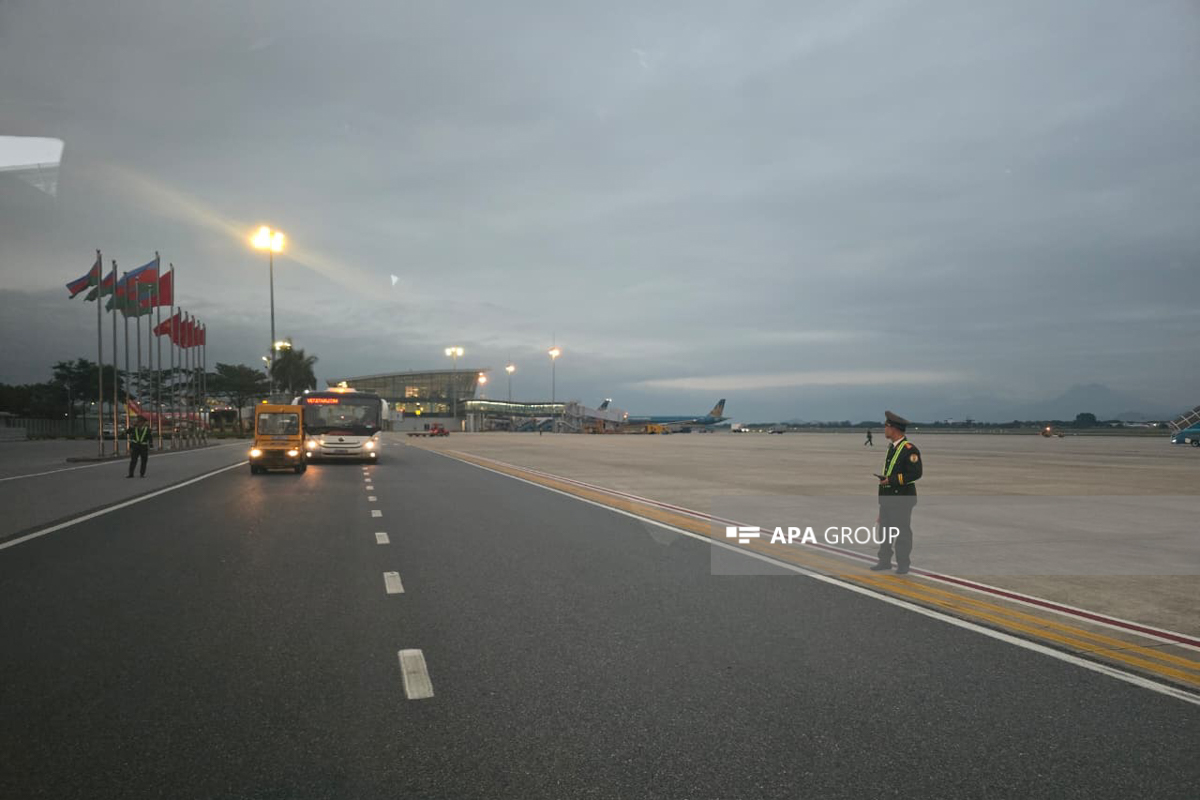
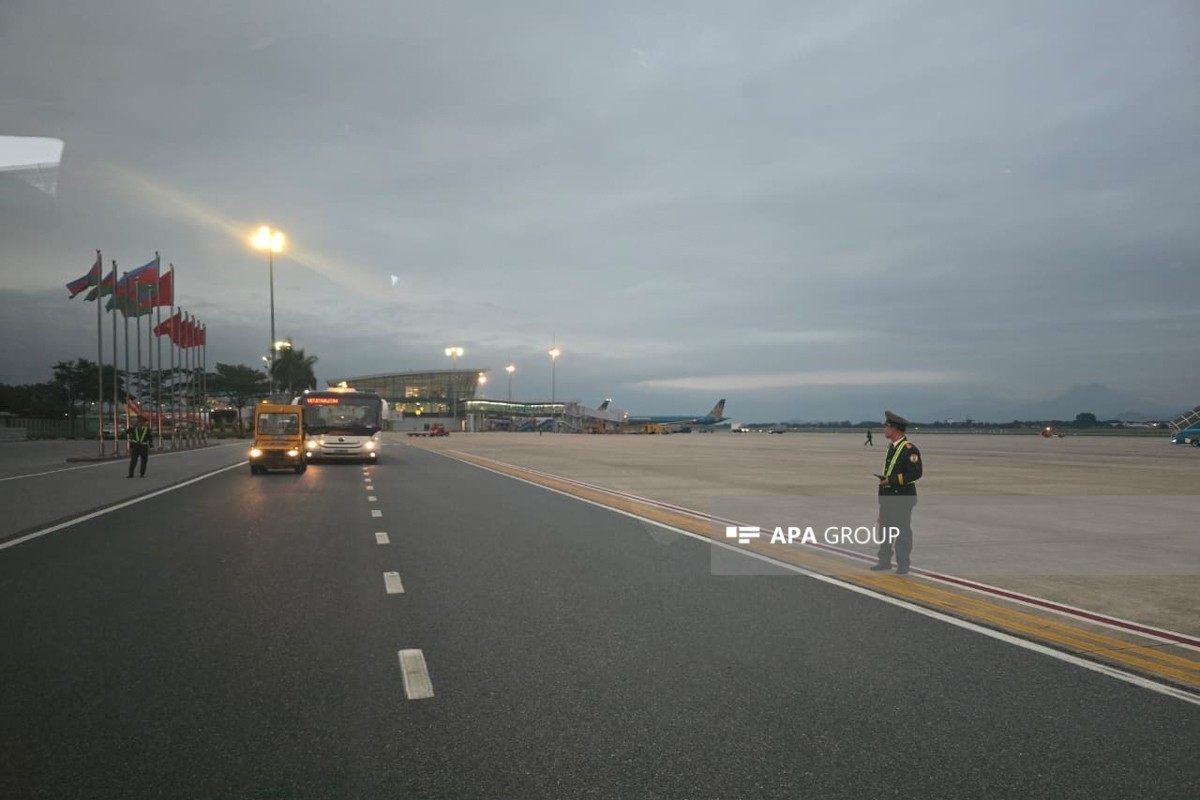
At Hanoi airport, however, we encountered a special scene quite different from the natural landscapes. The flags of Azerbaijan and Vietnam, the attention shown to our delegation, and the warm reception became a symbolic expression of the friendship between the two countries from the very first moments of the visit.
This attitude was not limited to official protocol. The attention paid to members of the Azerbaijani delegation, including journalists covering the visit, showed that the Vietnamese side's attitude toward our country and people was also reflected in everyday communication.
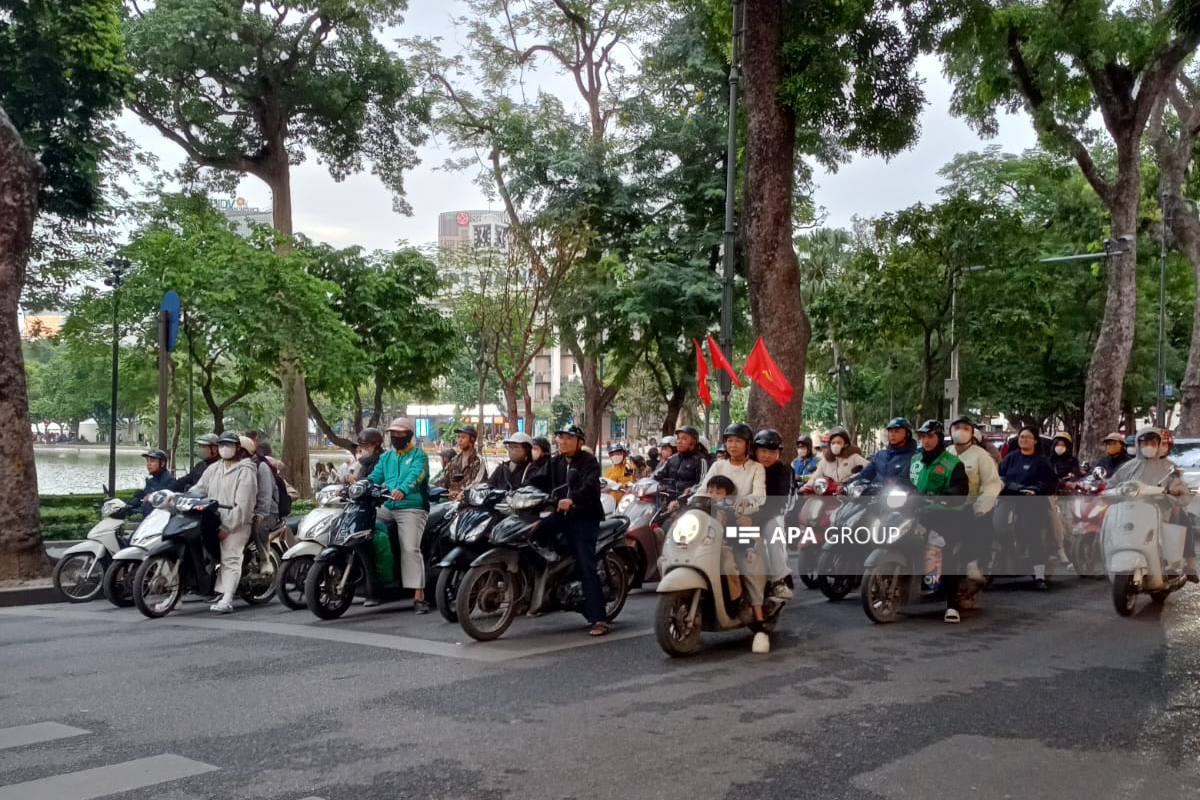
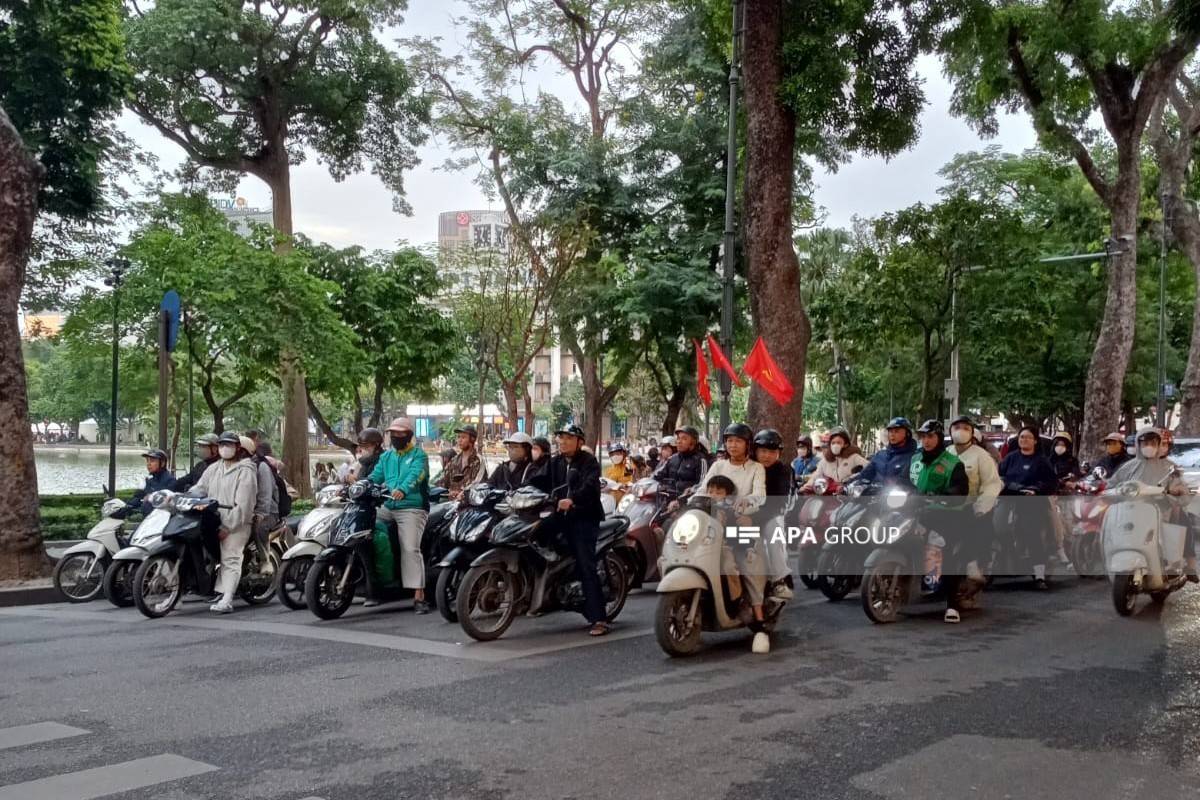
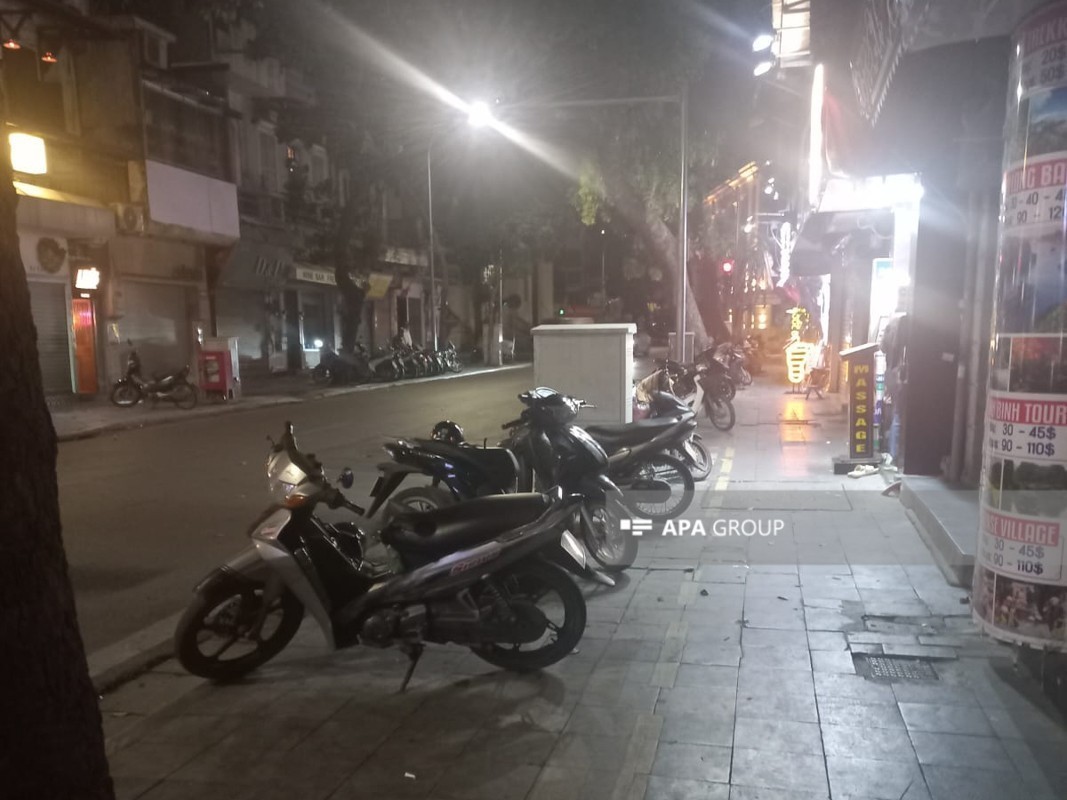
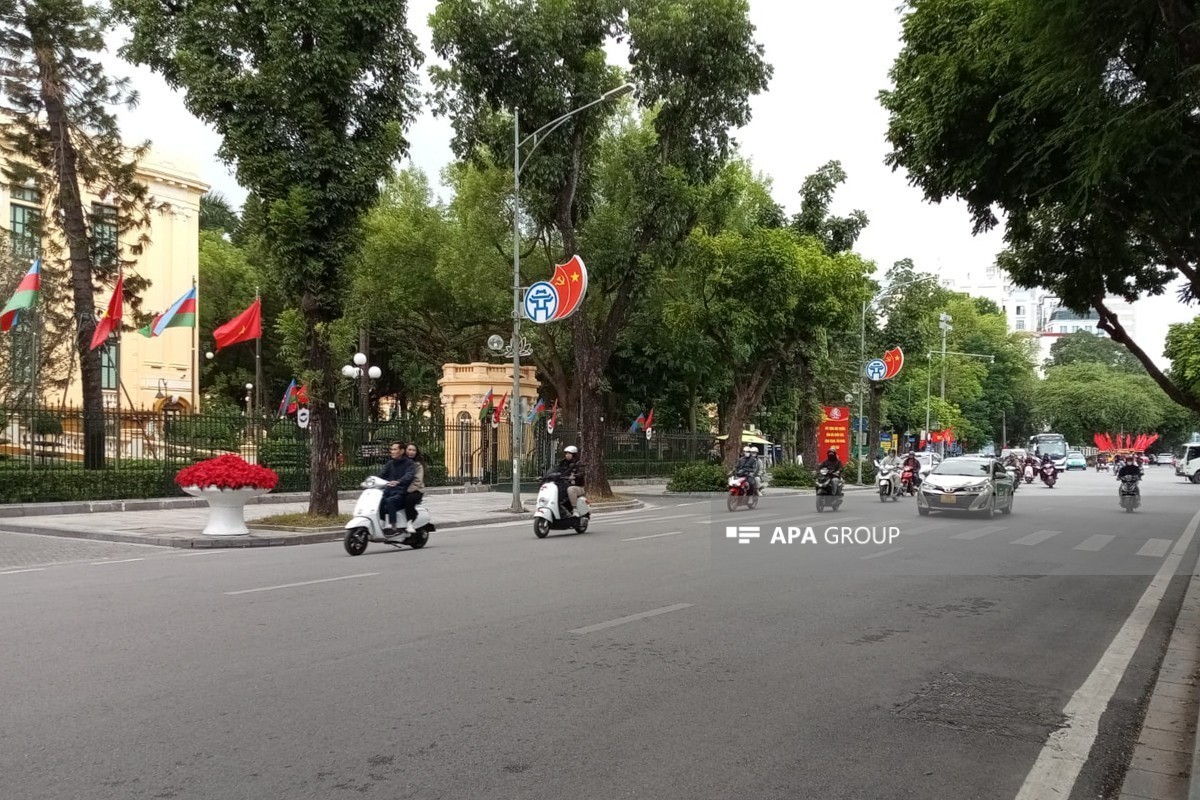
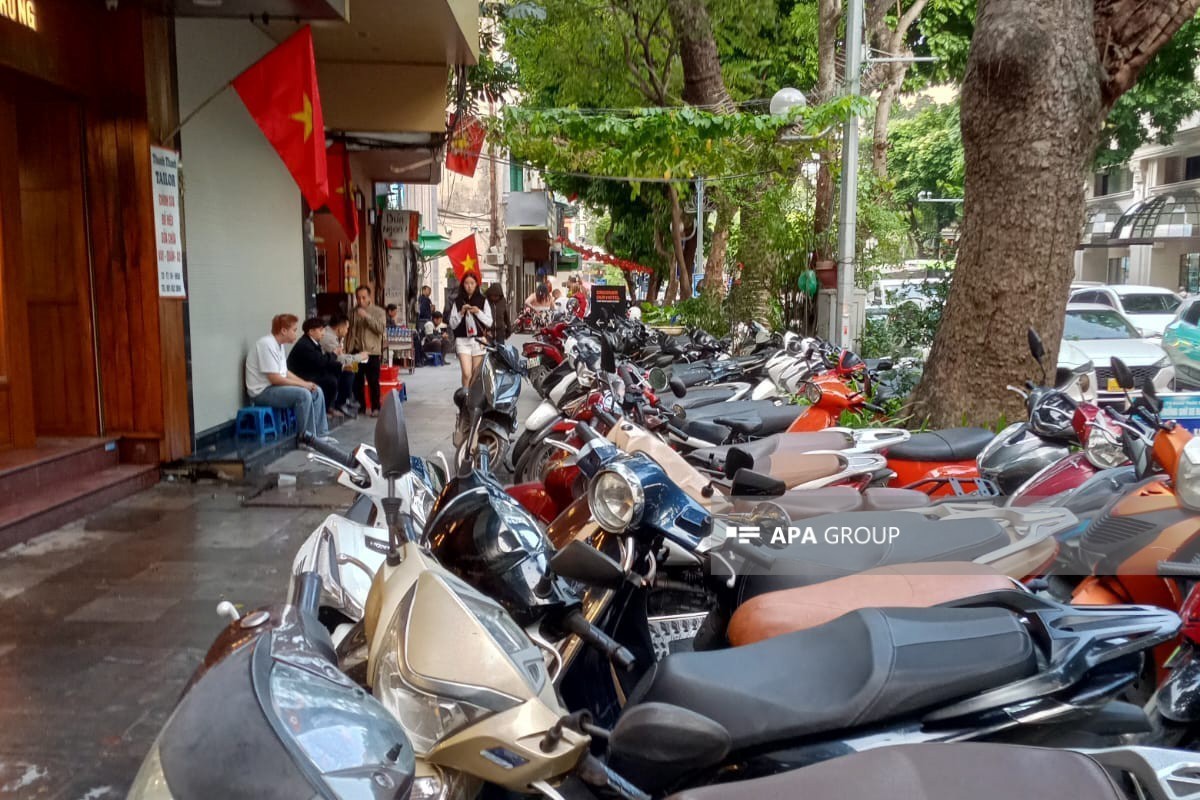
Another striking feature of our first encounter with Hanoi was the city's traffic. Motorcycles and mopeds were more noticeable on the streets than cars. At first glance, the large number of motorcycles waiting at red lights might create the impression that some special event dedicated to these vehicles was taking place in the city. However, as we moved from one street to another and saw the same scene repeated in different parts of the city, we realized that this was simply Hanoi's everyday rhythm. Dozens of motorcycles and mopeds lined up along the roadsides, and the way traffic revolved around these vehicles soon became an ordinary part of the city's daily reality.
Hanoi's streets are memorable not only for their busy traffic but also for their cuisine. Vietnamese dishes are served not only in restaurants but also at small street outlets and mobile stalls. Famous Vietnamese soups, rice dishes, noodles, fresh herbs, and meals prepared with various spices, which attract tourists from around the world, form part of the city's distinctive atmosphere. Street food also offers an opportunity to closely observe Hanoi's way of life and the daily habits of local people.
In Hanoi, which stands out for its historical sites, lakes, ancient architectural landmarks, and greenery, modern urban life and historical heritage complement each other. Hoan Kiem Lake, the Temple of Literature, the Ho Chi Minh Mausoleum, and the Old Quarter hold a special place in the capital's historical memory. These sites help visitors understand not only Vietnam's development today but also the history of its statehood and national identity.
Mutual support and solidarity underpin historic friendship
To understand the political significance of the visit, it is enough to look at the history of relations between the Azerbaijani and Vietnamese peoples. The roots of these relations date back to the middle of the last century.
The visit of Ho Chi Minh, the founder and first president of Vietnam, to Azerbaijan in July 1959 marked one of the important starting points of friendship and cooperation between the two peoples. During that visit, Ho Chi Minh familiarized himself with Azerbaijan's industrial enterprises, particularly its oil industry. In subsequent years, Azerbaijani specialists supported the development of Vietnam's oil industry.
These historical ties are still remembered with respect in Vietnam today. This point was particularly emphasized during President Ilham Aliyev's meeting with Vietnamese Prime Minister Le Minh Hung on November 20.
The Prime Minister said that the Government and people of Vietnam had always highly appreciated the valuable support and assistance provided by the Azerbaijani people during Vietnam's struggle for national liberation and reunification. He recalled that Ho Chi Minh's visit to Azerbaijan in 1959 laid the foundation for the tradition of friendship and cooperation between the two peoples.
President Ilham Aliyev also drew attention to the mutual nature of these historical ties. The head of state said that Azerbaijan had always supported the Vietnamese people's struggle for independence and freedom, while the people and Government of Vietnam had provided strong support to Azerbaijan, including at the UN Security Council, during the 2020 war to liberate its territories from occupation.
These statements demonstrate that relations between the two countries are not limited to diplomatic protocol and political interests but are built on historical memory, mutual respect, and solidarity demonstrated during difficult periods.
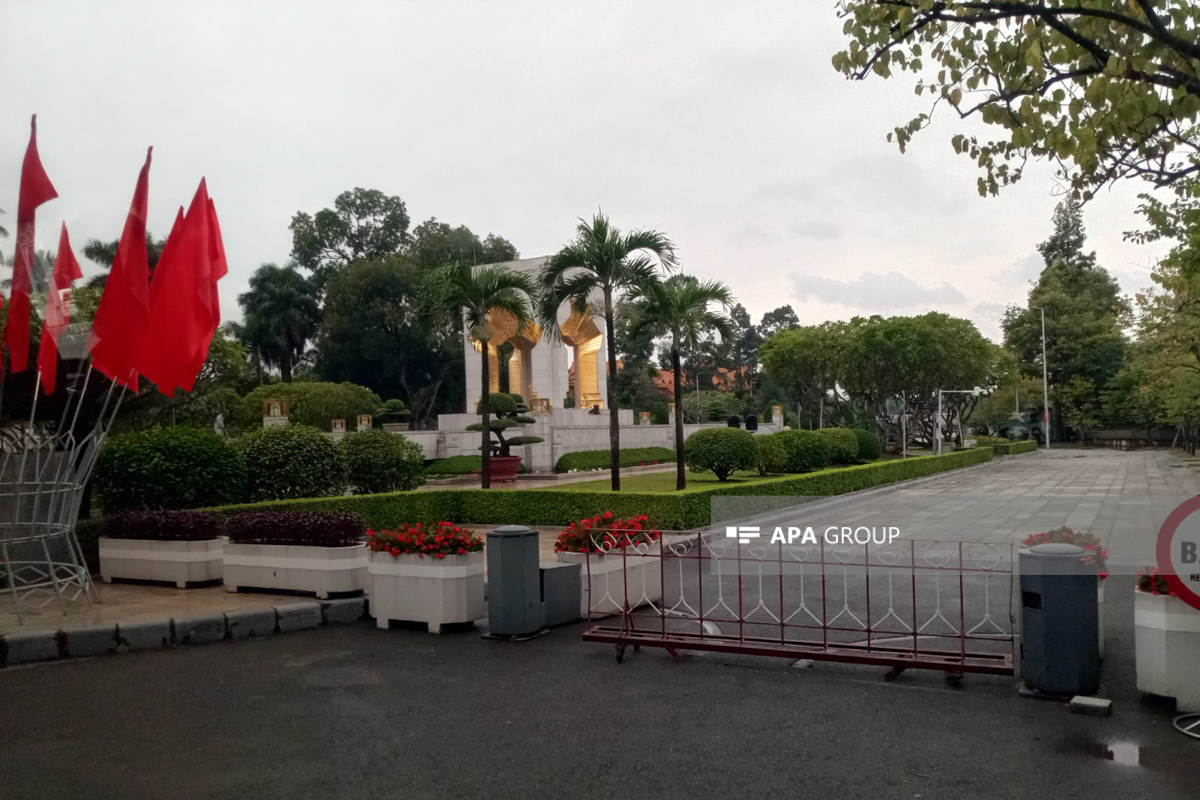
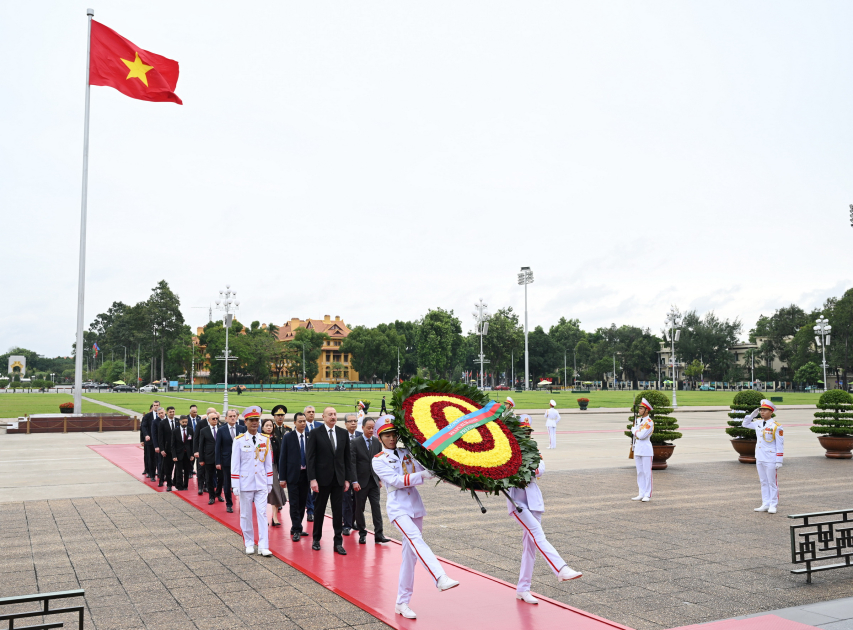
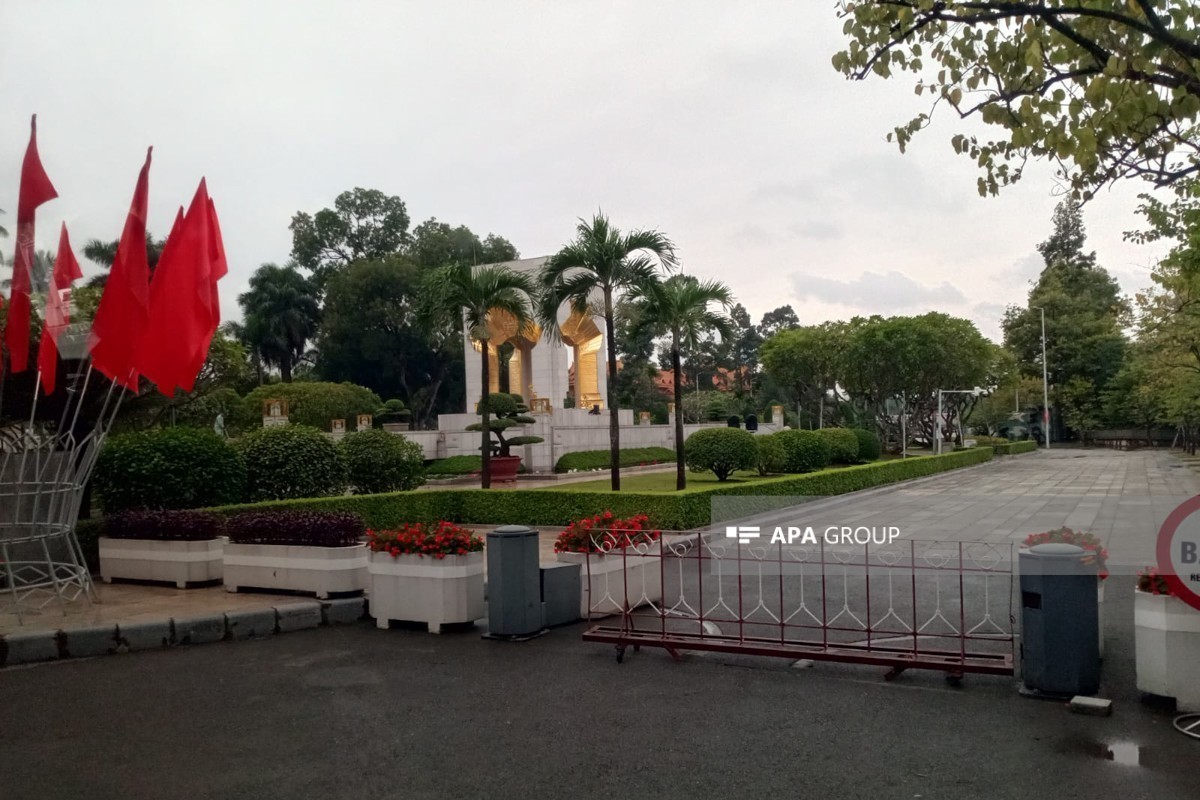
The visit to the Monument to Revolutionary Martyrs in Hanoi on November 20 was also an expression of respect for this historical memory. President Ilham Aliyev's laying of a wreath at the monument stood out as a symbol of the value Azerbaijan attaches to the Vietnamese people's struggle for freedom and independence.
This point was also reflected in the remarks of Nghiem Vu Khai, Honorary President of the Vietnam–Azerbaijan Friendship Association, with whom we spoke during the visit.
He said that President Ilham Aliyev's visit would make an important contribution to strengthening relations in politics, economics, science, technology, education, and culture. Nghiem Vu Khai believes that following the visit, the governments of the two countries should prepare a joint action plan and work together to implement the agreements reached. In his opinion, the current period is favorable for the development of bilateral relations.
Our conversation with Nguyen Van Chien, a lecturer at Hanoi University, literary scholar, and translator, also clearly demonstrated the place of historic friendship in Vietnamese society.
He emphasized that Vietnamese people feel great gratitude toward the Azerbaijani people and that Azerbaijanis provided comprehensive assistance to Vietnam during the war years. According to him, Vietnamese military personnel, officers, and soldiers studied and underwent military training in Azerbaijan during that period. Chien also recalled Heydar Aliyev's contributions to the development of Vietnam's oil industry and important infrastructure projects.
Traces of these ties can still be seen today. During the Soviet period, approximately 5,000 Vietnamese citizens studied in Azerbaijan. Around 2,000 of them specialized in petroleum engineering.
Some of these specialists, who studied at Azerbaijan State Oil and Industry University, subsequently played an important role in Vietnam's economic development, particularly in the energy sector. The opening of a memorial room dedicated to the 135th anniversary of Ho Chi Minh at the university in 2025 also serves to preserve these historical ties.
Strategic partnership: From political will to concrete projects
President Ilham Aliyev's meeting with Prime Minister Le Minh Hung on November 20 was particularly significant in terms of the visit's economic and practical agenda.
During the meeting, both sides highly assessed the existing level of cooperation and emphasized the importance of further expanding economic and trade relations.
Prime Minister Le Minh Hung noted that bilateral trade remains at a relatively low level and has not yet achieved a stable growth trajectory. Nevertheless, there are promising signs for development.
He said that both countries have companies operating in renewable energy, trade, real estate, and tourism, and stressed the importance of translating the potential in defense, security, and energy into concrete results.
President Ilham Aliyev also said that there was positive momentum in the socioeconomic sphere, but that the results achieved were not sufficient. The head of state drew attention to important projects currently being developed in energy security and real estate.
The meeting covered the export of Azerbaijani petroleum products to Vietnam and, through Vietnamese territory, to countries in the region, opportunities for joint production, and cooperation in the energy sector.
Issues related to the defense industry, construction, tourism, and the establishment of direct flights were also on the agenda. President Ilham Aliyev emphasized that the Middle Corridor creates favorable opportunities for Vietnamese companies to access regional markets.
Azerbaijan's geographical position and transport and logistics capabilities are particularly important in this regard.
As a major logistics and energy hub in the South Caucasus, Azerbaijan is a favorable partner for Vietnam, one of Southeast Asia's dynamically developing countries, in terms of access to European and regional markets.
On the other hand, Vietnam's production and export potential could create new opportunities for Azerbaijani businesses in the Southeast Asian market.
Thus, the complementary geographical and economic advantages of the two sides create an important foundation for expanding cooperation.
In this context, the deepening of relations between Azerbaijan's SOCAR and Vietnam's PetroVietnam, the supply of oil, gas, and energy products, and renewable energy projects are particularly noteworthy.
Cooperation in wind and solar energy, as well as energy security issues, is among the areas on the economic agenda of the two countries.
Vietnam to open embassy in Baku: A new stage in diplomatic relations
One of the important announcements made during the visit concerned the opening of Vietnam's embassy in Azerbaijan.
Prime Minister Le Minh Hung said that the Vietnamese embassy would begin operating in Baku in the near future. President Ilham Aliyev highly appreciated this decision, emphasizing that Azerbaijan's embassy in Vietnam had been operating for a long time and that the full operation of diplomatic missions would give a significant boost to the development of relations.
Alongside its political and diplomatic significance, this decision also has a practical dimension. By opening its embassy in Azerbaijan, Vietnam identifies our country as one of its main diplomatic partners in the South Caucasus.
The opening of the embassy in Baku will create conditions for intensifying political dialogue, facilitating contacts between business communities, and expanding consular and humanitarian cooperation.
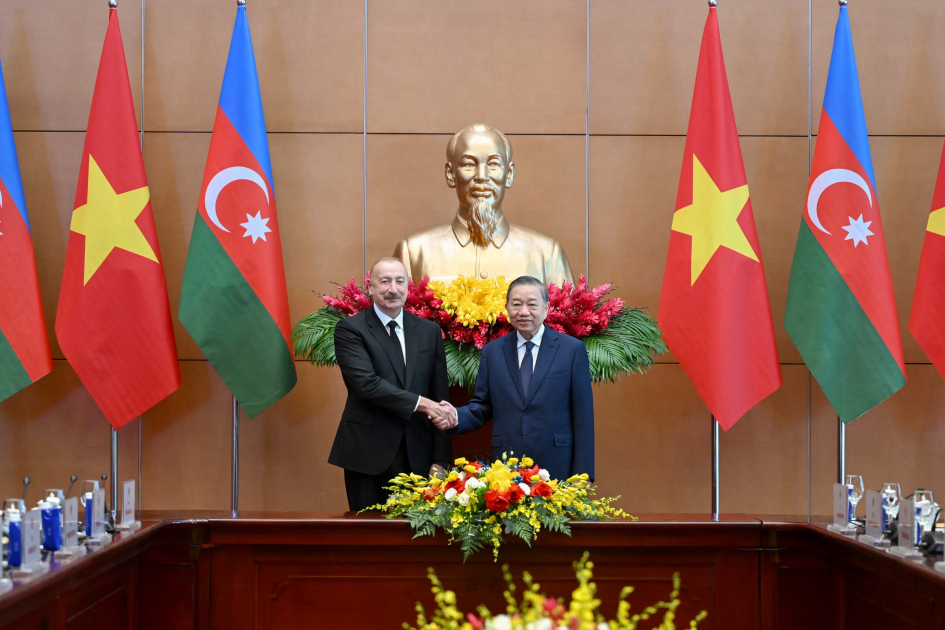
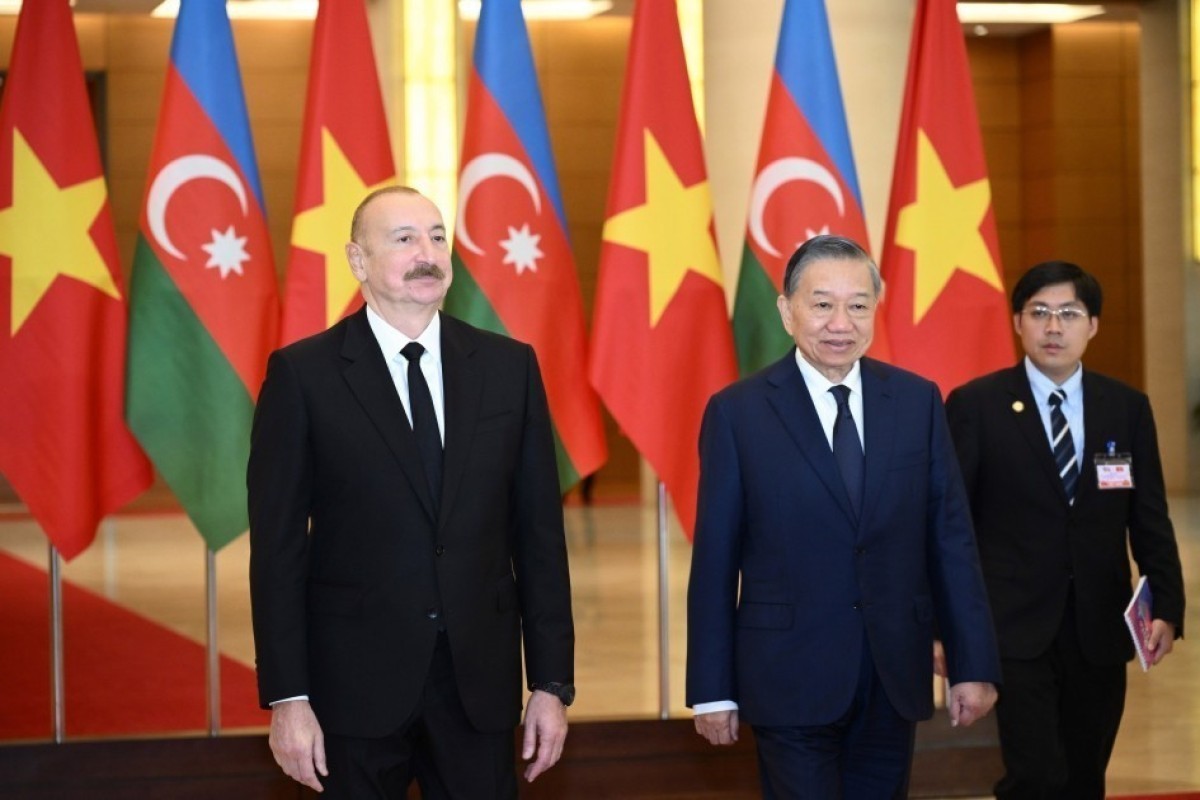
On November 21, the main political event of the visit took place: a meeting and talks between Azerbaijani President Ilham Aliyev and Vietnamese President and General Secretary of the Central Committee of the Communist Party of Vietnam To Lam.
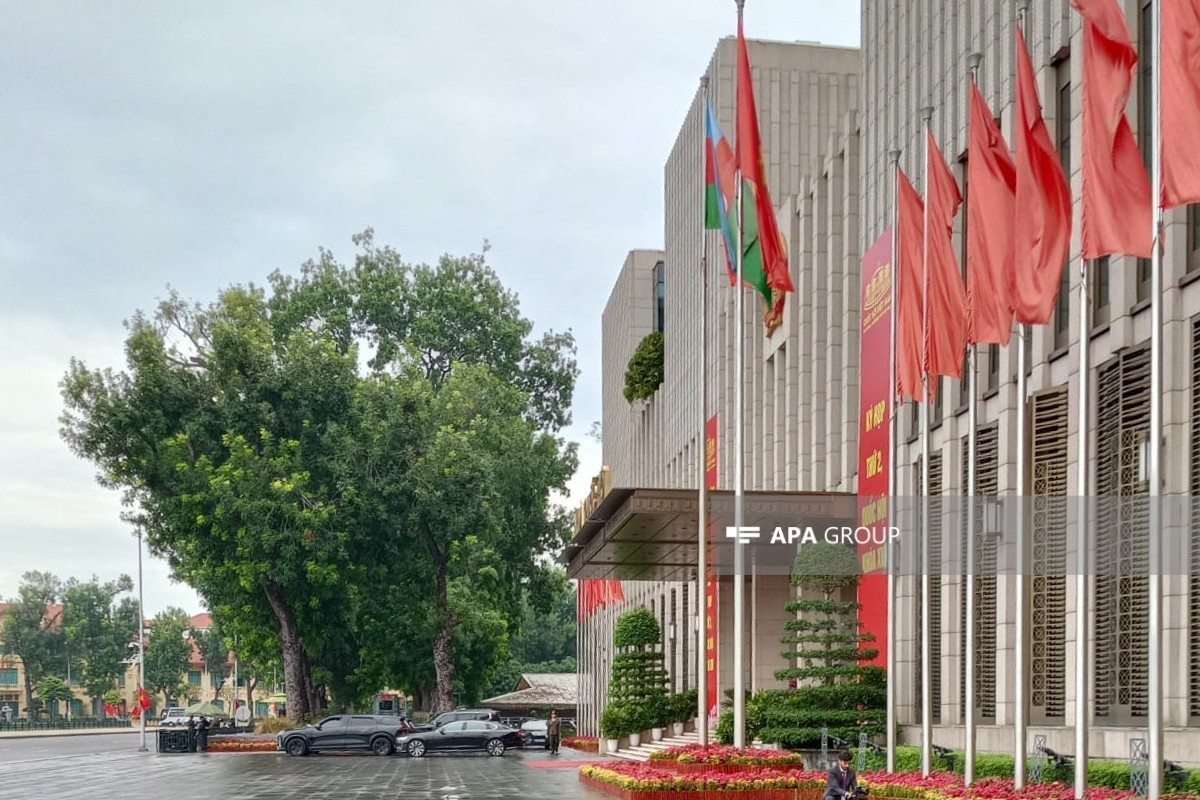
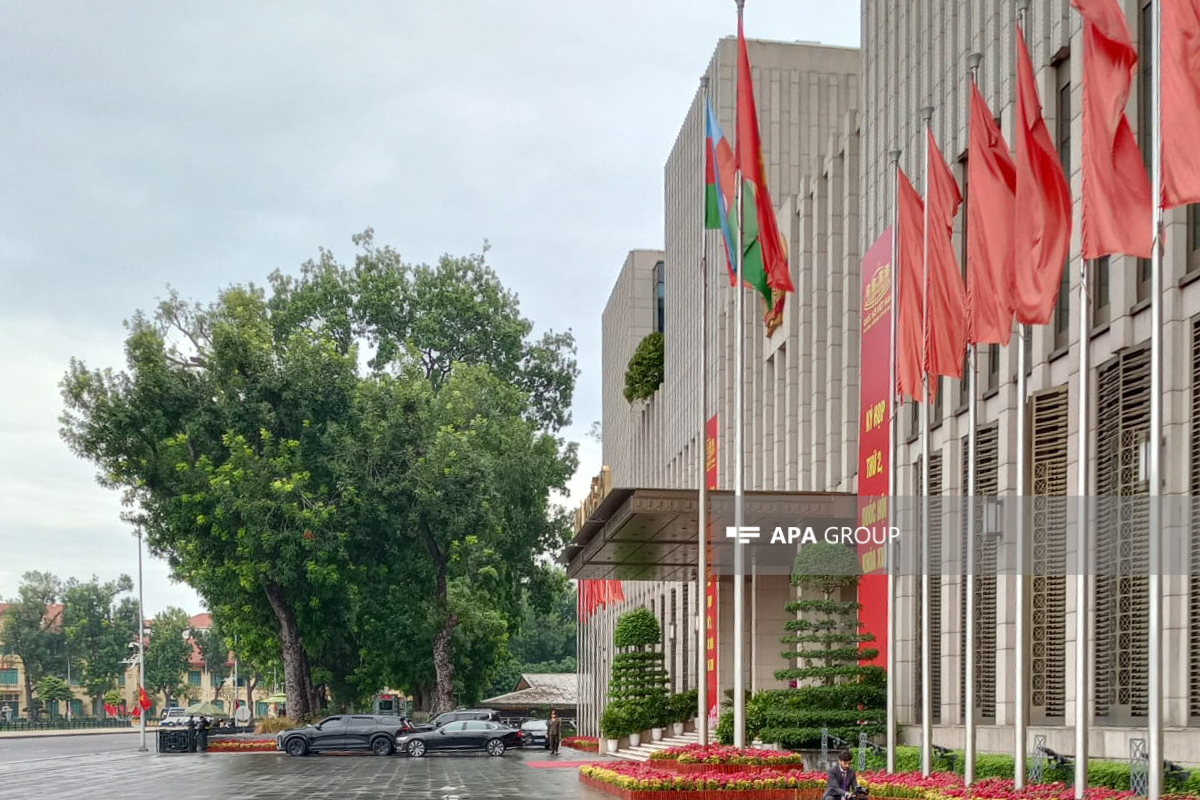
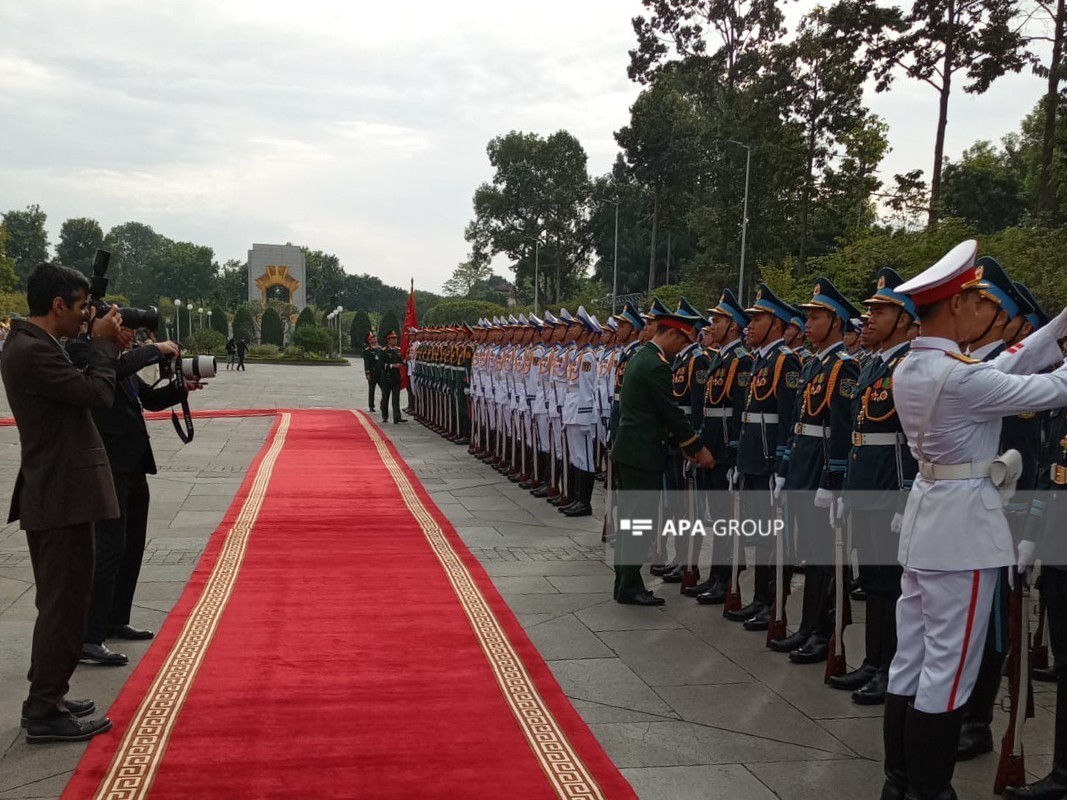
The official welcoming ceremony held in front of the National Assembly building in Hanoi also demonstrated the great importance attached to this visit.
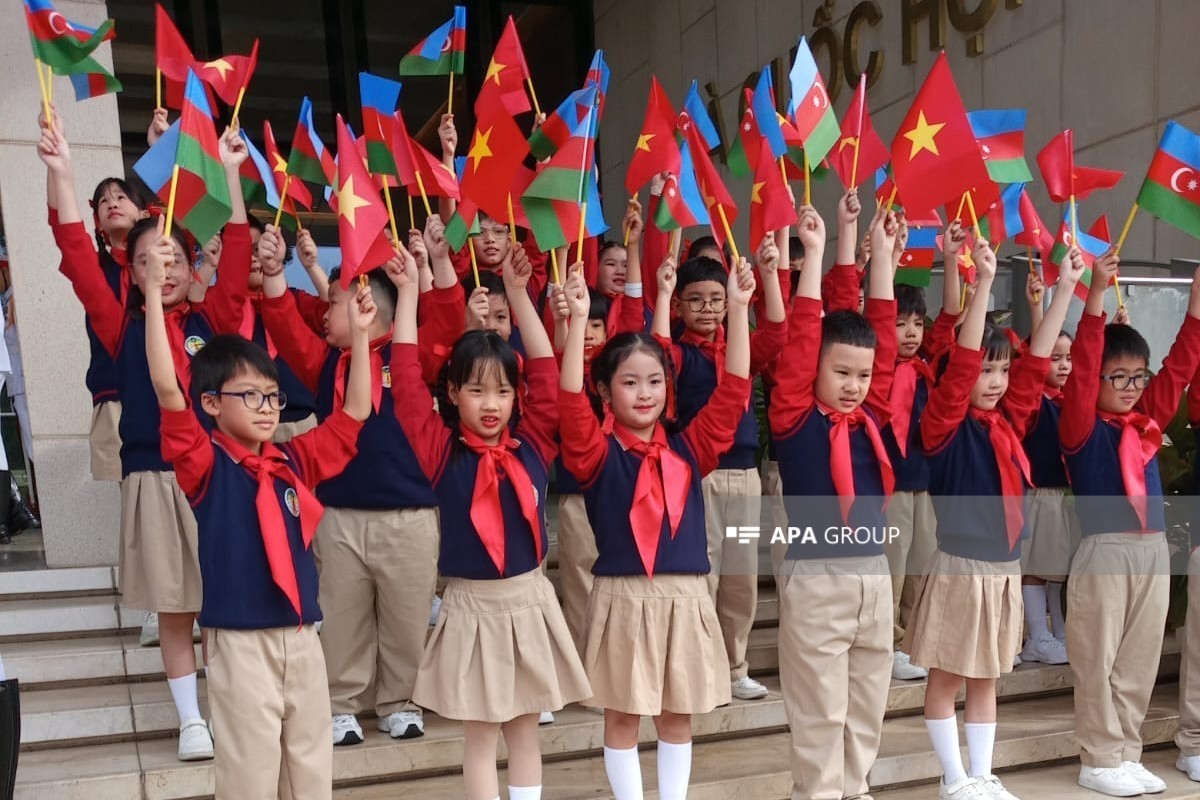
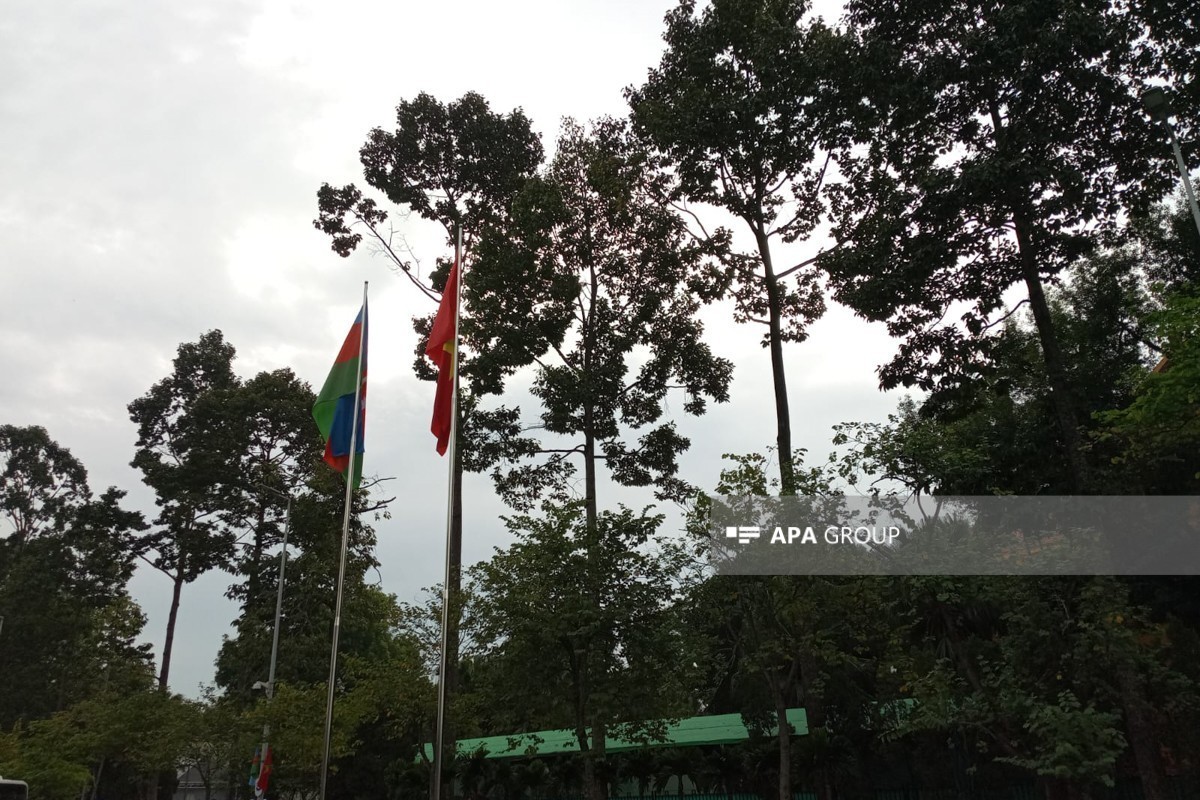
Preparations for the ceremony had been underway since the morning. The square was decorated with Azerbaijani and Vietnamese flags, red carpets were laid, and the honor guard completed its final preparations.
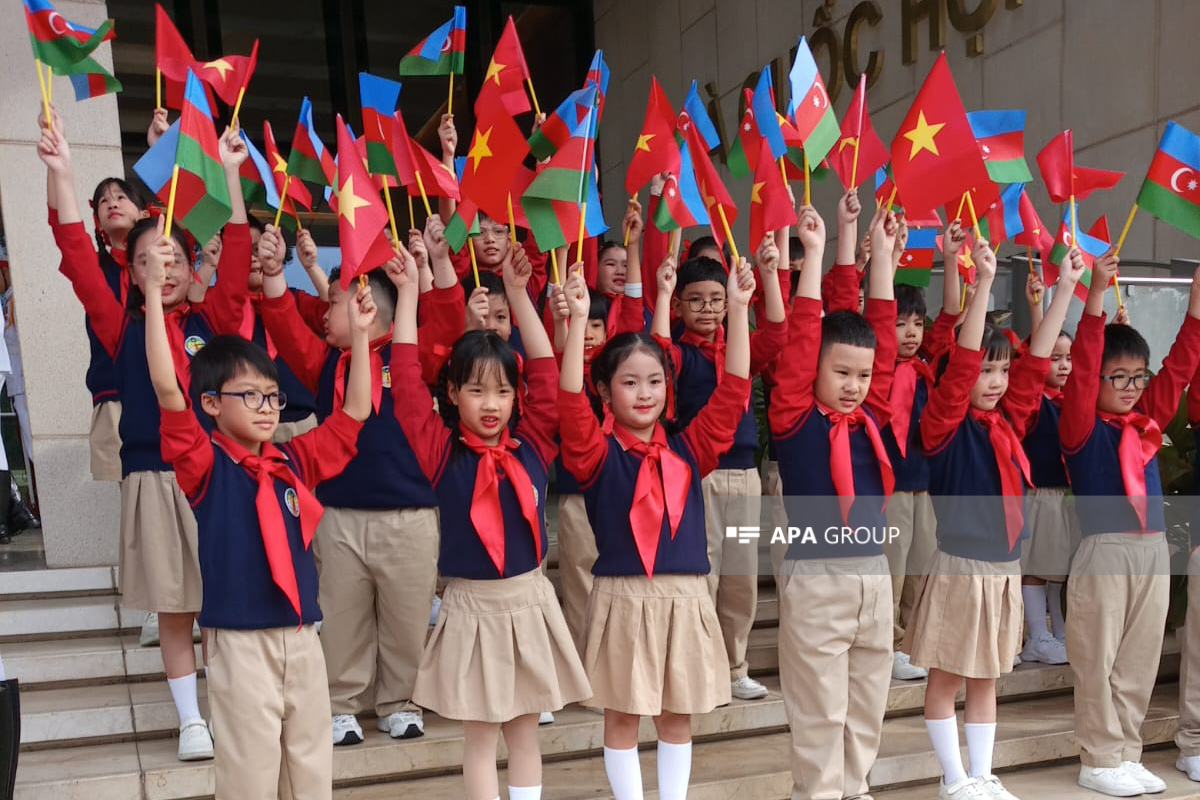
The participation of children holding the flags of the two countries was another noteworthy scene.
As the motorcade carrying President Ilham Aliyev and First Lady Mehriban Aliyeva approached the square, they were welcomed by President To Lam and his wife, Ngo Phuong Ly.
The national anthems were played, the honor guard was reviewed, and the delegations were introduced.
During the expanded meeting, President To Lam emphasized that Azerbaijan is an important strategic partner for Vietnam.
He described the elevation of relations to the level of strategic partnership in May 2025 as a historic milestone in bilateral relations.
The Vietnamese President said that the main task was to diversify the substance of cooperation and transform it into concrete programs, projects, and results that would benefit the peoples of both countries.
President Ilham Aliyev, in turn, noted Vietnam's rapid socioeconomic development and growing role in the international arena, saying that relations were of strategic importance.
The head of state recalled the historical ties between the two peoples, emphasizing that Ho Chi Minh's visit to Azerbaijan in 1959 and subsequent cooperation had played an important role in developing these relations.
Joint Statement: A broad roadmap for cooperation
One of the main political outcomes of the visit was the adoption of a Joint Statement by the presidents of Azerbaijan and Vietnam.
The document reaffirmed the traditional friendship that the two countries have developed on the basis of mutual trust, equality, and respect since establishing diplomatic relations in 1992. It also reiterated their commitment to the principles of the Joint Statement on the Establishment of a Strategic Partnership adopted on May 7, 2025.
The new document envisages the development of political and diplomatic relations, interparliamentary cooperation, and ties between the New Azerbaijan Party and the Communist Party of Vietnam.
In the economic sphere, the promotion of trade and investment, as well as cooperation in agriculture, forestry, fisheries, mining, and the aluminum industry, have been identified as priority areas.
In the energy sector, particular attention was given to strengthening oil and gas relations, supplying energy products, and exploring opportunities to reach long-term agreements on the supply of crude oil and liquefied natural gas (LNG).
The document also includes the implementation of joint programs on climate change, environmental protection, and green development.
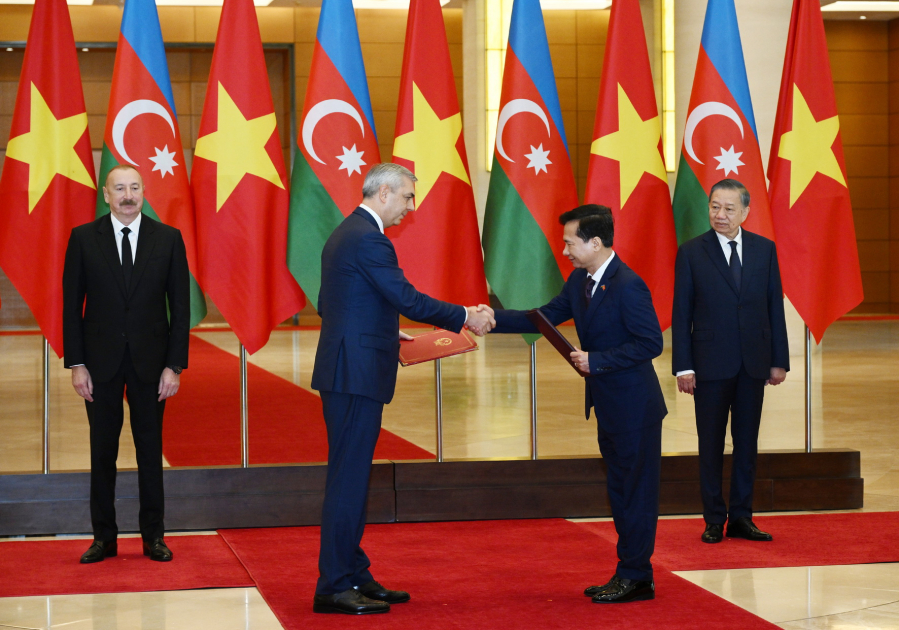
Specific areas of cooperation were also identified in the transport sector.
The document envisages exchanging experience in railway, road, air, and maritime connectivity and promoting cooperation through the Trans-Caspian International Transport Route.
This is significant in terms of expanding opportunities for Vietnamese companies to access European and other regional markets through Azerbaijan.
The Joint Statement also addresses cooperation in defense and security, the exchange of information and experience between law enforcement agencies, and efforts to combat transnational crime, illicit drug trafficking, human trafficking, and cybercrime.
In education, culture, and tourism, the document envisages promoting direct flights, organizing reciprocal cultural days, establishing sister-city and sister-province relations, providing student scholarships, and implementing joint research projects.
Expanding cooperation within the UN, the Non-Aligned Movement, the Conference on Interaction and Confidence Building Measures in Asia (CICA), and ASEAN is another important direction outlined in the document.
These provisions demonstrate that the strategic partnership is no longer limited to political declarations.
The sides are identifying specific areas of cooperation, mechanisms, and directions for future activities.
Humanitarian ties: The people-centered dimension of friendship
One of the important areas of the visit was humanitarian cooperation.
On November 20, First Vice-President Mehriban Aliyeva met with Vietnamese Vice-President Vo Thi Anh Xuan.
The meeting emphasized the importance of relations between the peoples of the two countries, including cooperation at the non-governmental level.
In this regard, particular attention was given to the projects implemented by the Heydar Aliyev Foundation in Vietnam.
With the Foundation's support, a primary school was built in Giap Trung commune in Vietnam's Ha Giang province in 2018.
During the visit of the Foundation's Vice-President Leyla Aliyeva to Vietnam in 2025, assistance provided to Hanoi College of Commerce and Tourism and a school for visually impaired children also contributed to the development of humanitarian relations between the two peoples.
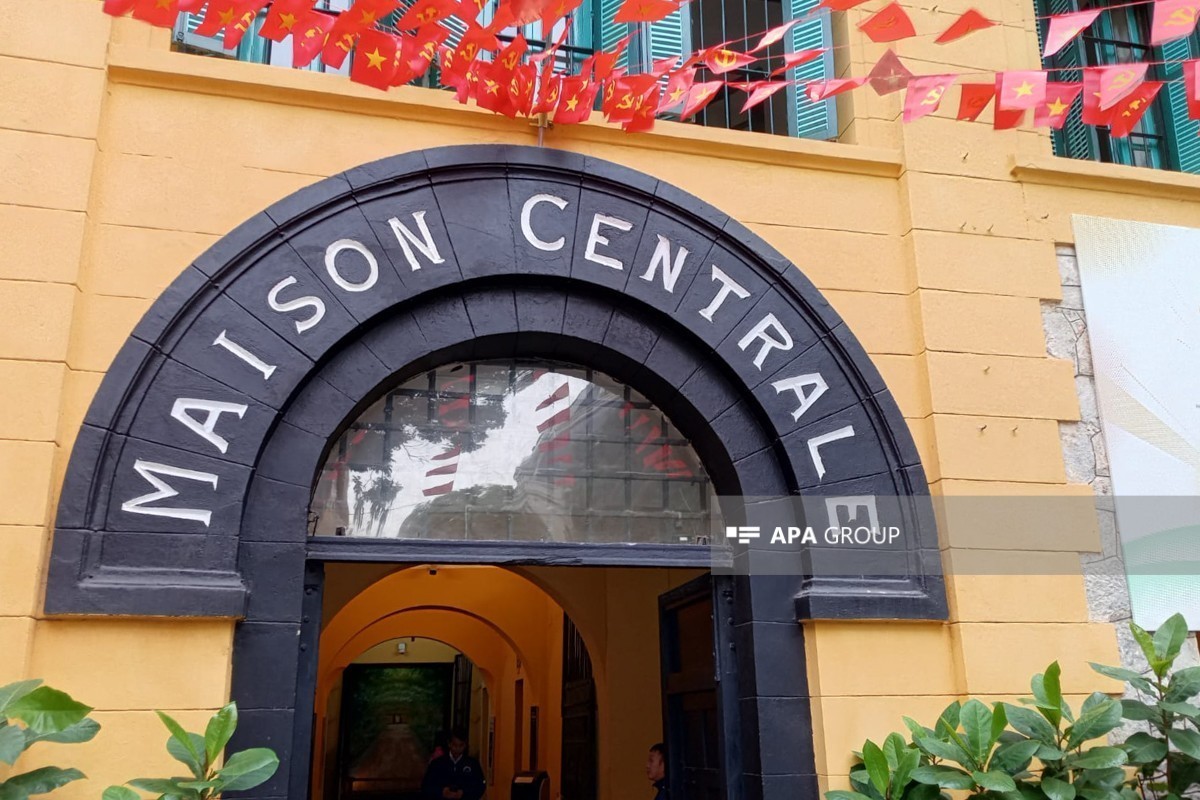
The visit by Azerbaijani media representatives to the Hoa Lo Prison Museum in Hanoi also carried special significance.
Despite the busy work schedule, visiting this historic site was an expression of respect for the Vietnamese people's struggle for freedom.
Hoa Lo, which once held political prisoners and later American military pilots captured during the Vietnam War, now operates as a museum.
Its historic prison cells, prisoners' personal belongings, and other exhibits reflect Vietnam's complex history.
The visit once again demonstrated that friendship between the two peoples is manifested not only through official meetings but also through respect for each other's history, national memory, and struggle.
From Hanoi toward new horizons
The visit, which began on November 19 and concluded on November 21, revealed one clear reality: relations between Azerbaijan and Vietnam have entered a new stage of development, progressing from historic friendship to strategic partnership.
The main feature of this stage is that political trust is complemented by concrete opportunities for cooperation in the economy, energy, transport, defense, education, culture, and tourism.
President Ilham Aliyev's meetings, the talks held, the Joint Statement adopted, and the agreements reached during the visit create a broad foundation for the future development of these relations.
In particular, Vietnam's decision to open an embassy in Azerbaijan, opportunities for cooperation along the Middle Corridor, energy and investment projects, and the promotion of direct flights are areas that will enhance the practical substance of bilateral relations.
As we departed Hanoi, what remained in our memories was not only the city with its lakes, greenery, motorcycle-filled streets, rich cuisine, and historic sites.
The most important impression was the respect shown in Vietnam toward Azerbaijan, the Azerbaijani people, and our country's historical leaders, as well as the sincere relations between the two peoples.
This visit once again demonstrated that although great geographical distances separate countries, shared historical memories, mutual respect, and political will can bring them closer together.
The economic potential, strategic positions, and opportunities for international cooperation possessed by Azerbaijan and Vietnam provide grounds to believe that this rapprochement will gain even greater momentum in the future.
We leave Hanoi confident that Azerbaijan–Vietnam relations will reach a higher level in the coming years and that historic friendship will be strengthened through new projects and tangible results within the framework of the far-sighted and pragmatic foreign policy pursued by President Ilham Aliyev.


 Follow us on Telegram
 t.me/apanewsaz
 Follow us on Instagram
 Follow us on TikTok
 Follow us on Facebook
 Follow us on X

 VIDEO'>