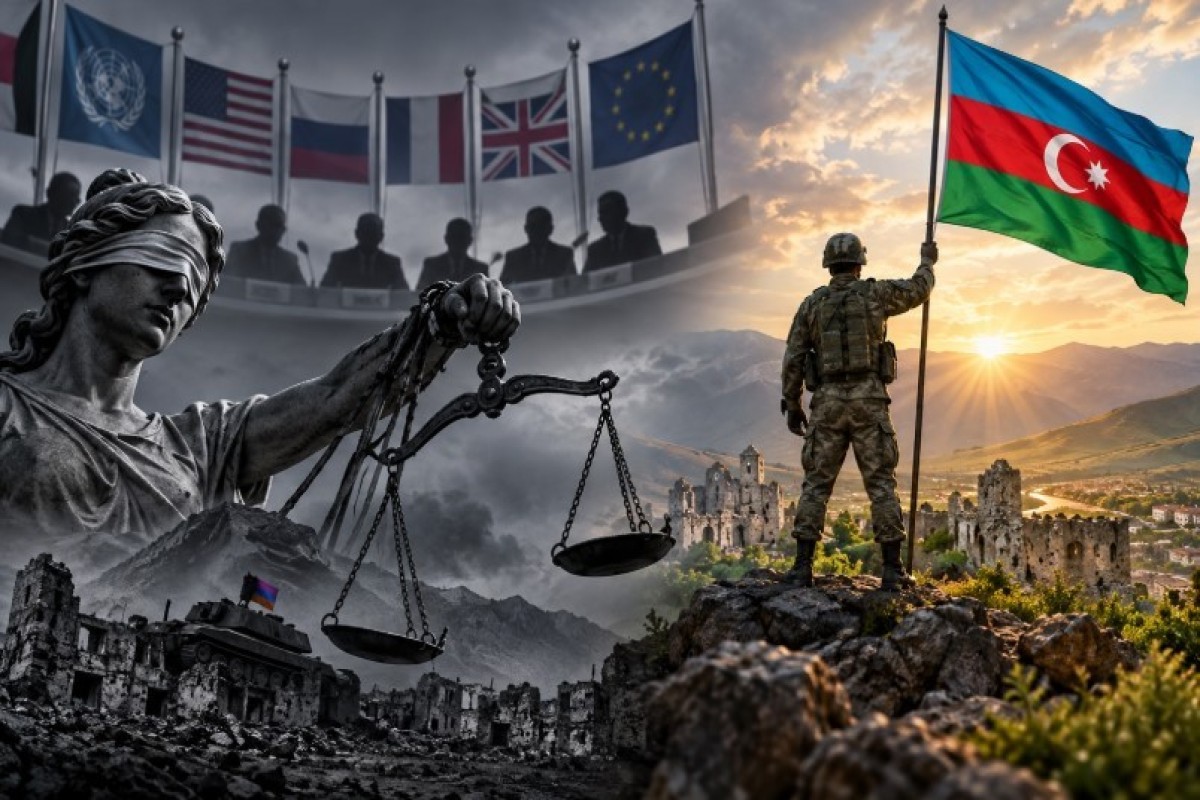


The 30-year history of the Karabakh conflict also reflects the contradiction between the enforcement of international law and political interests. Although Azerbaijan’s territorial integrity was internationally recognized and UN Security Council resolutions were adopted, the occupation was not brought to an end, nor were sanctions imposed that would have compelled Armenia to withdraw. As a result, the concept of justice enshrined in international law was not backed by effective political action, while years of negotiations failed to change the status quo.
The remarks made by President Ilham Aliyev during his September 15 meeting in Baku with participants of international conferences should therefore be viewed not merely as a political assessment of the history of the Karabakh conflict, but also as part of a broader political debate over the selective application of international law, the responsibility of mediation mechanisms and the geopolitical interests of major powers.
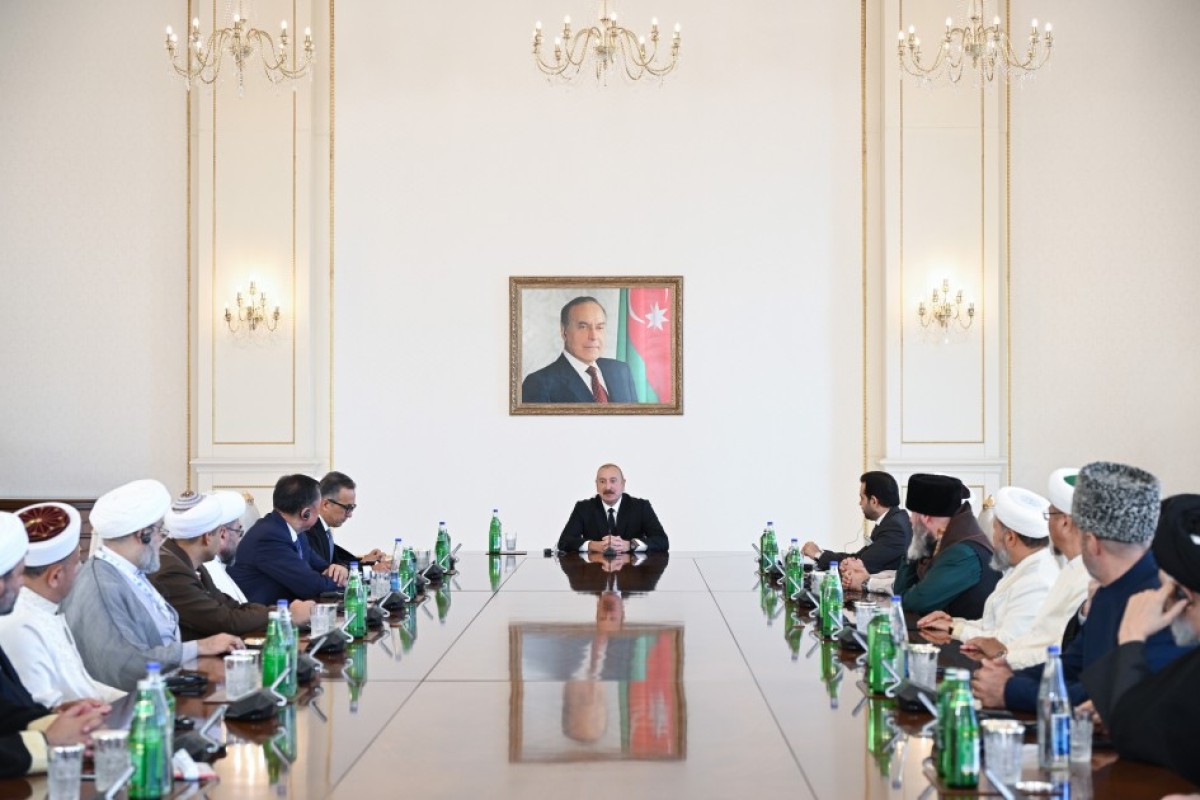
The head of state linked the failure of the negotiations not only to Armenia’s position, but also to the political, economic and military support it received: “As you know, the negotiations that lasted for 30 years produced no results. Because Armenia did not want to leave our lands voluntarily. The states considered major powers that supported Armenia did not want to resolve the issue, but rather to prolong it and make this occupation permanent. By providing Armenia with military, economic and political support, these states were effectively rewarding the occupier.”
This is precisely where the central political contradiction of the 30-year process emerged: Azerbaijan’s territorial integrity was recognized and international documents calling for an end to the occupation were in place, yet there was no political will to enforce them. Armenia, meanwhile, faced no political or economic consequences serious enough to deter it from continuing its policy of occupation.
In this context, the activities of the OSCE Minsk Group became an example of mediation that failed to deliver results. Negotiations conducted under the co-chairmanship of the United States, Russia and France did not bring the occupation to an end for nearly three decades. As the negotiations dragged on, the existing status quo remained intact.
Azerbaijan ultimately changed that status quo in 2020. President Ilham Aliyev’s remarks on September 15 clearly reflected Baku’s political assessment of this process: “The people of Azerbaijan put an end to this injustice and created a precedent in the world. Because, unfortunately, occupied lands had not been liberated until then. At least, such cases were not observed in the 20th and 21st centuries, or were extremely rare.”
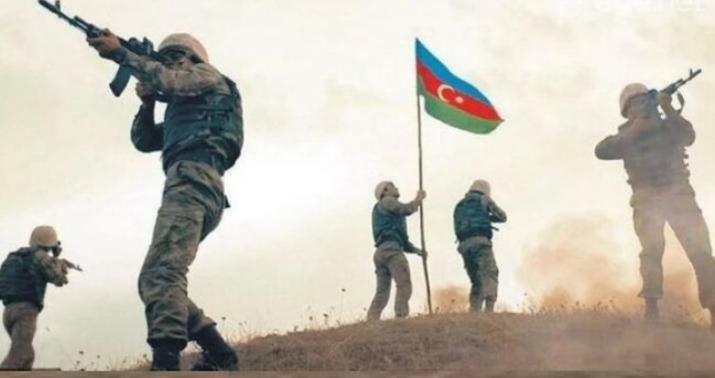
Thus, the outcome that international mechanisms had failed to deliver over 30 years was ultimately achieved by Azerbaijan through its own strength. With the liberation of most of the occupied territories in 2020 and the restoration of sovereignty throughout the country’s entire territory in 2023, the Karabakh conflict came to an end and the reality in the region changed.
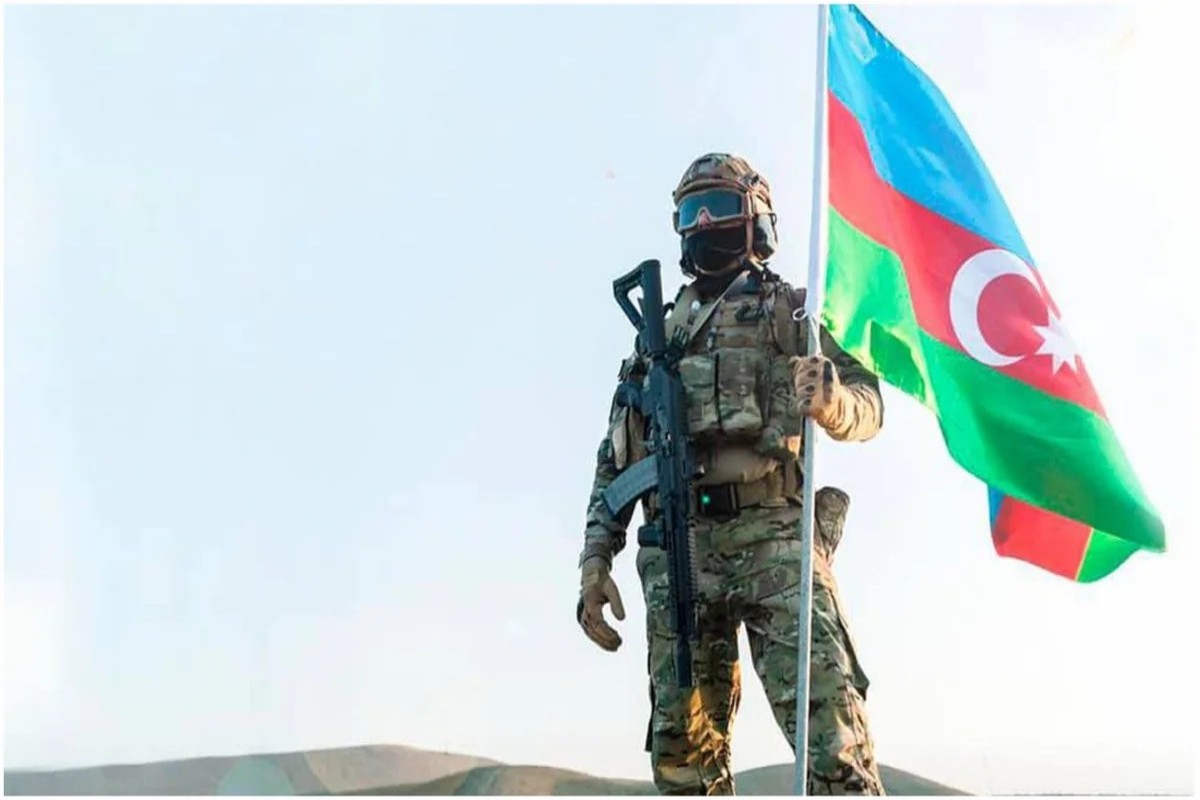
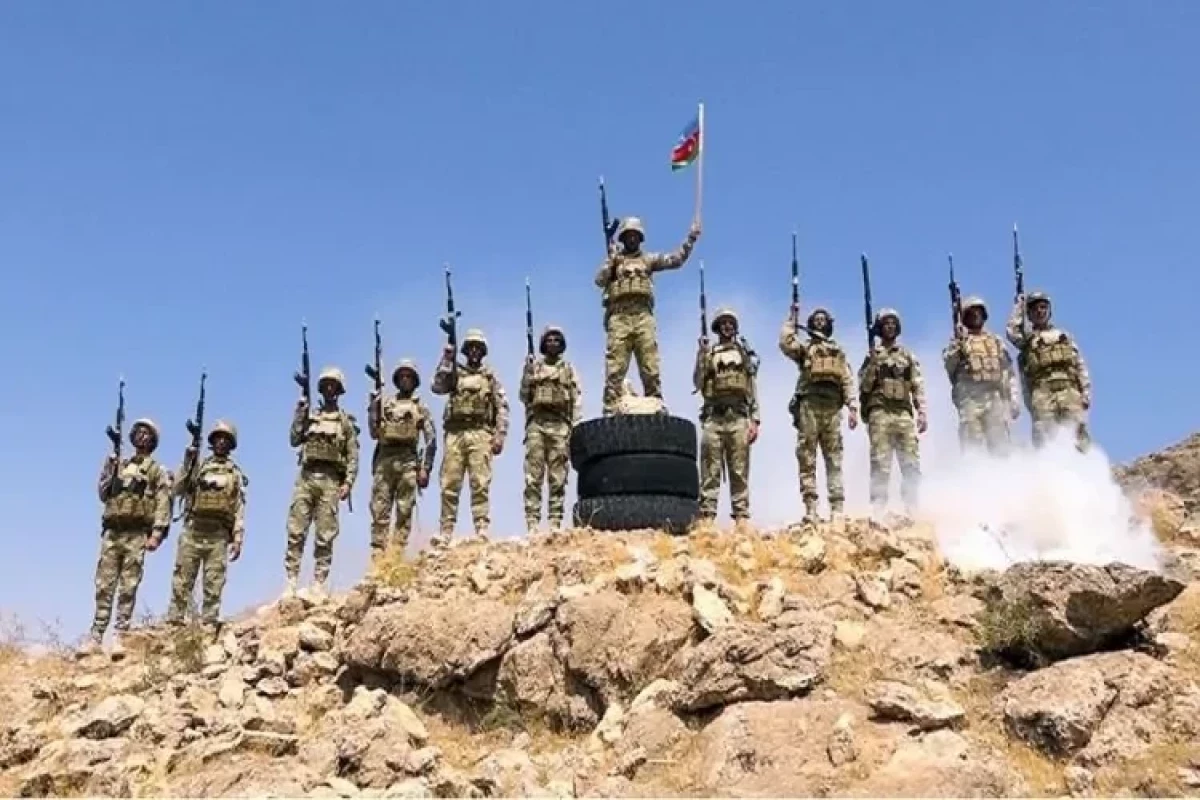
In his remarks, the President presented this not merely as a military outcome, but as the restoration of justice, rights and national dignity: “At the cost of their lives and blood, and thanks to the sacrifice of our heroic sons, we restored our justice, our rights and our national dignity. We drove the occupiers from our lands, raised the Azerbaijani flag in every corner of Karabakh and Eastern Zangezur, and put an end to separatism.”
The post-war period, however, brought another political contradiction to the fore. Baku has repeatedly characterized the approach of PACE and the European Parliament towards Azerbaijan as an example of double standards. Azerbaijan’s argument is that tough political measures that were not applied against Armenia during the occupation were subsequently brought to bear against Baku after Azerbaijan restored its sovereignty.
This raises a fundamental question: if territorial integrity is one of the core principles of international law, why was Azerbaijan’s right to territorial integrity confined for 30 years to statements and unenforced decisions? Why did the occupation carry no tangible political consequences for Armenia, while Azerbaijan faced pressure from certain international institutions after restoring its sovereignty?
The President’s remarks on the role of power also carry particular political significance against the backdrop of this historical experience: “Everyone can see that the world has completely changed today and that the factor of power has come to the fore. We were not the ones who introduced the principle that ‘might makes right.’ But we have to reckon with the existing realities, and of course, we do.”
At the same time, Baku does not present military power as an alternative to the peace agenda. The President stressed that a peace process is under way between Armenia and Azerbaijan and that Azerbaijan is interested in lasting peace. He also made clear, however, that for Baku, peace does not mean forgetting the past: “Yes, there is peace today and the war has stopped. A peace process between Armenia and Azerbaijan is under way, and I am confident that it will be long-lasting. At least, this is the position of the Azerbaijani state. But we will never forget the atrocities committed against us, against our people.”
The 30-year experience of the Karabakh issue demonstrated that when international law is not backed by political will, its principles can remain on paper for decades. Although Azerbaijan’s territorial integrity was not in dispute, its effective restoration was not achieved through international mechanisms. The political essence of President Ilham Aliyev’s remarks stems precisely from this reality: Azerbaijan ultimately secured for itself the outcome it had awaited for years, thereby not only restoring its territorial integrity but also changing the status quo that had been imposed upon it. In this sense, the Karabakh experience represents for Baku not only the conclusion of a chapter in the past, but also an important lesson for future state policy: the most reliable guarantee of sovereignty is a state’s ability to defend it and, when necessary, to restore it.


 Follow us on Telegram
 t.me/apanewsaz
 Follow us on Instagram
 Follow us on TikTok
 Follow us on Facebook
 Follow us on X