









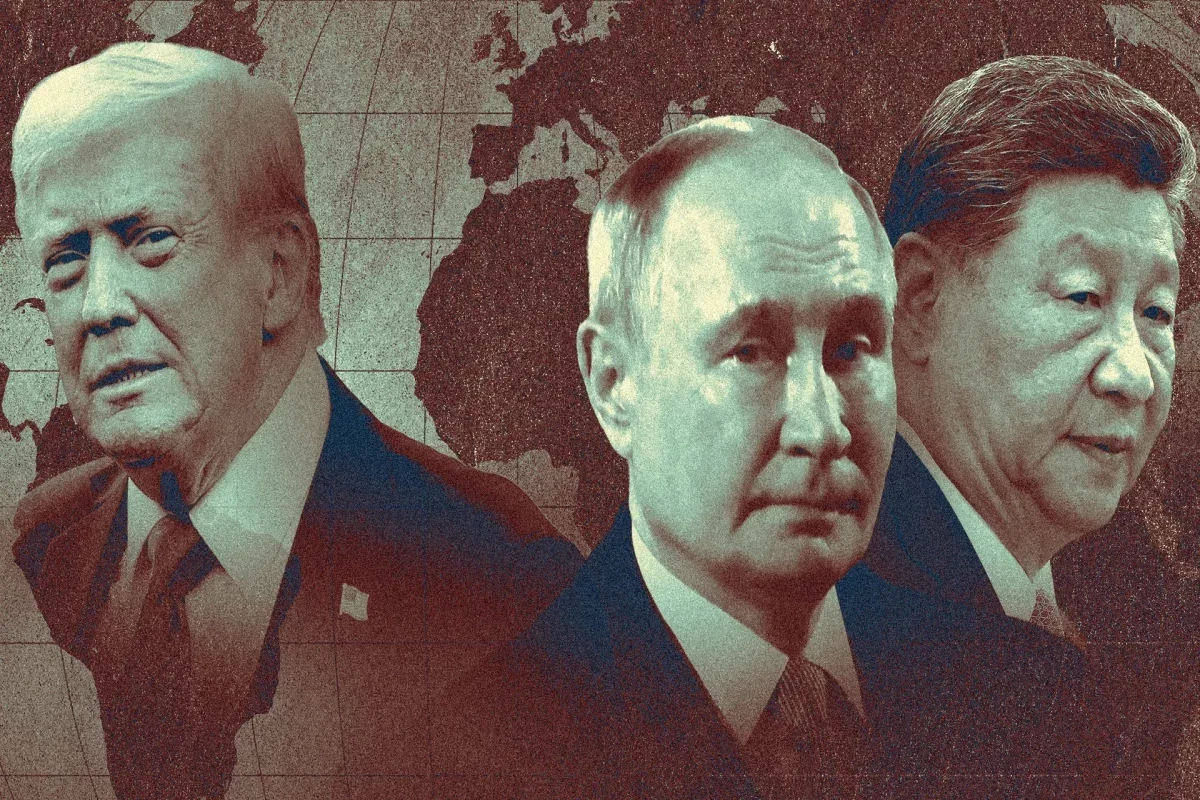


The trilateral meeting scheduled for November 19 in Shenzhen, China, between US President Donald Trump, Russian President Vladimir Putin and Chinese President Xi Jinping has become one of the main topics of discussion in international politics. The leaders of the world's three major powers sitting at the same negotiating table could be of great significance for global security, the war in Ukraine, the situation in the Middle East and nuclear arms control.
However, the parties' differing geopolitical interests and strategic priorities make it difficult to achieve concrete results from the negotiations.
Could the possible summit mark the beginning of a new stage in international relations? What role will China seek to play, and how could the talks affect the future of the South Caucasus? APA discussed these questions with foreign experts.
What is the historical and geopolitical significance of the trilateral summit?
Paolo von Schirach, President of the Global Policy Institute based in Washington, DC, and Professor of Political Science and International Relations at Bay Atlantic University, stated that the participation of the leaders of Russia, China and the United States in the same meeting for the first time is a significant event in itself.

According to him, although numerous high-level meetings have previously been held between Washington and Beijing, the gathering of the three heads of state is of particular interest to the international community.
"A meeting between the three leaders could create a more favorable atmosphere internationally, encourage some flexibility in the parties' positions and reduce mutual distrust. Russia and China consider the United States a rival, and Washington views them in the same way. However, rivalry does not necessarily have to lead to war," the expert emphasized.
Von Schirach believes that one of the most important outcomes of the summit could be reducing the risks of misunderstandings and military escalation between the countries.
Russian political scientist Yevgeny Mikhailov, an expert on interethnic conflicts and security issues, does not favor exaggerating the historical significance of the meeting.

"Many people are now presenting this meeting as a kind of new Yalta. But this will not be Yalta. Russia, the United States and China each have their own interests," the political scientist stated.
In his opinion, Washington's main objective is to prevent competition with China from intensifying further, achieve mutual understanding on certain issues and explore opportunities for economic cooperation in relations with Russia.
Kairat Batyrbayev, Executive Director of the Eurasian Association for International Studies in Kazakhstan and an expert on China, believes that the summit primarily carries symbolic and procedural significance.

"For the first time, the leaders of three countries that are permanent members of the UN Security Council and possess significant military and economic potential may sit at the same negotiating table. The very fact of direct dialogue reduces the risk of miscalculations and mutual misunderstandings," the expert noted.
Nevertheless, Batyrbayev considers it premature to suggest that a single meeting will result in the establishment of a new mechanism for managing international relations. In his opinion, this would require regular expert-level contacts, clear rules and mutually predictable relations.
What are China's strategic objectives, and could Beijing act as a mediator?
Paolo von Schirach believes that China could play a certain role, particularly in efforts to end the war in Ukraine, but whether Beijing genuinely wants to act as a mediator remains an open question.
The expert stated that although China is not directly involved in the war, it continues its partnership with Russia, supplies it with various products and purchases Russian oil and gas.
"In a certain sense, China indirectly supports Russia's war efforts. But could Beijing play the role of a mediator capable of influencing the positions and agendas of the parties to the conflict? It is difficult to say at this stage," he stated.
According to von Schirach, resolving the war in Ukraine with the assistance of China and Russia would be a major diplomatic achievement for Washington.
Yevgeny Mikhailov, meanwhile, emphasized that China acts primarily in accordance with its own national and economic interests.
"China acts first and foremost in its own interests. Yes, Beijing has a positive attitude toward Russia. However, China has certain interests that may mean it does not want Russia to assume a leading position or see its situation improve on some issues," the Russian expert stated.
According to him, Russia supports its economy by generating significant revenues from trade with China. China, in turn, increases its competitiveness in international markets by purchasing cheaper energy resources from Russia.
Mikhailov believes that although these mutual benefits form an important foundation of the partnership, they do not mean that the strategic interests of the two countries fully coincide.
Kairat Batyrbayev sees Beijing's main objective as preserving a stable international environment.
In his opinion, hosting such a summit provides China with an opportunity to strengthen its status as a responsible global power. Stability is important for implementing the country's domestic development priorities and maintaining international trade relations.
"China has certain capabilities for mediation. It maintains working relations with both sides and possesses significant economic influence. However, mediation is effective only when the parties themselves are interested in seeking compromise," the expert stated.
Batyrbayev believes that Beijing will seek to create favorable conditions for negotiations rather than assume the role of an arbiter in resolving disputes.
Is agreement possible on Ukraine, Iran and nuclear arms control?

According to Paolo von Schirach, one of Washington's main priorities is to end the war in Ukraine, which has continued for many years.
The expert noted that the war, which began with Russia's military intervention in Ukraine, has caused significant loss of life, destruction and substantial financial costs for both sides.
"Can the three leaders find a formula for ending the war that would be acceptable to Russia, Ukraine and the United States? This is an extremely difficult task," von Schirach stated.
According to the expert, the Iranian issue could also occupy an important place in the negotiations. He noted that following the US and Israeli military intervention against Iran, Washington's main objective is to prevent Tehran from developing nuclear weapons capabilities and pursuing activities in that direction.
"Can Russia and China help on this issue? Of course they can. But will they help? That is another, more complicated question," the expert emphasized.
Yevgeny Mikhailov believes that the United States may seek to secure China's support on the Iranian issue while reaching certain agreements with Russia in exchange for easing sanctions.
According to him, Washington is also interested in discussing nuclear arms limitations with China.
"This is not beneficial for China because it has fewer nuclear weapons than the United States and Russia. Moscow, meanwhile, will expect Beijing to reaffirm its position on ending the war in Ukraine and will look for positive steps from Washington," the political scientist stated.
Mikhailov also noted that US companies are interested in major projects in Russia, including joint economic activities in the Arctic.
Kairat Batyrbayev, meanwhile, believes that strategic stability is the most realistic area for possible progress.
"The parties' interests coincide more closely in the areas of confidence-building measures, establishing communication channels and reducing the risks of escalation. This is because the consequences of a mistake could be severe for all three countries," he stated.
The expert emphasized that the resolution of regional conflicts must be based on the UN Charter and universally recognized norms of international law. In his opinion, reaffirming the political will to continue dialogue is a more realistic outcome than expecting comprehensive agreements.
Could the meeting lead to the formation of a new world order?
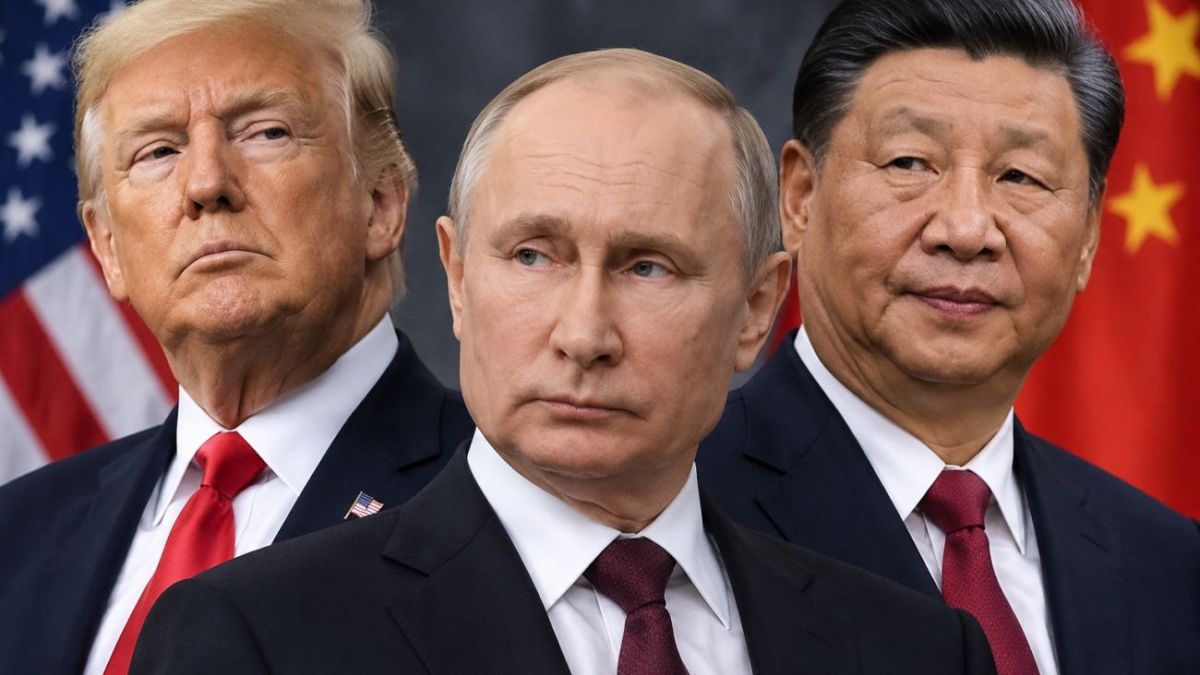
Paolo von Schirach believes that the emergence of a more stable system of international relations depends on the three major powers reaching agreement on mutually beneficial rules.
"If relations are built on the principle of 'I win, you lose,' this will be a system based on power rather than rules," the expert stated.
According to him, openly discussing national security interests and foreign policy priorities could help countries prevent miscalculations. However, the parties' understanding of each other's priorities does not mean that they will accept those priorities.
Von Schirach also considers it unrealistic to expect the summit to produce results that would fundamentally transform world politics.
"This meeting has not been organized to announce an agreement reached after months or years of complicated negotiations. Therefore, I would be cautious about expecting breakthroughs that would completely transform the geopolitical environment," he stated.
Yevgeny Mikhailov also said that he does not expect major and concrete results from the meeting.
In his opinion, the parties may reach preliminary agreements, with their details subsequently discussed at the level of delegations.
"I do not currently expect any memorandum to be signed. But if such a document is signed, it would be a major success," the political scientist emphasized.
Mikhailov believes that reaching long-term agreements is difficult under the current international circumstances. According to him, agreements that could remain in force for decades will become possible only after the parties understand that continuing confrontation would lead to more serious consequences.
Kairat Batyrbayev, however, does not consider it appropriate to form a new world order solely on the basis of an agreement between the three major powers.
"The modern system of international relations is multipolar and multilevel. It includes the UN, regional organizations and groups of states with different interests. No meeting can abolish the principle of sovereign equality of states, which forms the foundation of international law," the expert stated.
According to him, the main concern for small and medium-sized states is that dialogue between major powers should reduce tensions, while decisions affecting the interests of other countries should be discussed with their participation and with respect for their sovereignty.
Citing the experience of Azerbaijan and Kazakhstan, Batyrbayev stated that pursuing a multivector and pragmatic policy makes it possible to develop relations with all major centers of power while protecting national interests.
How could the summit affect the future of the South Caucasus and Azerbaijan's interests?
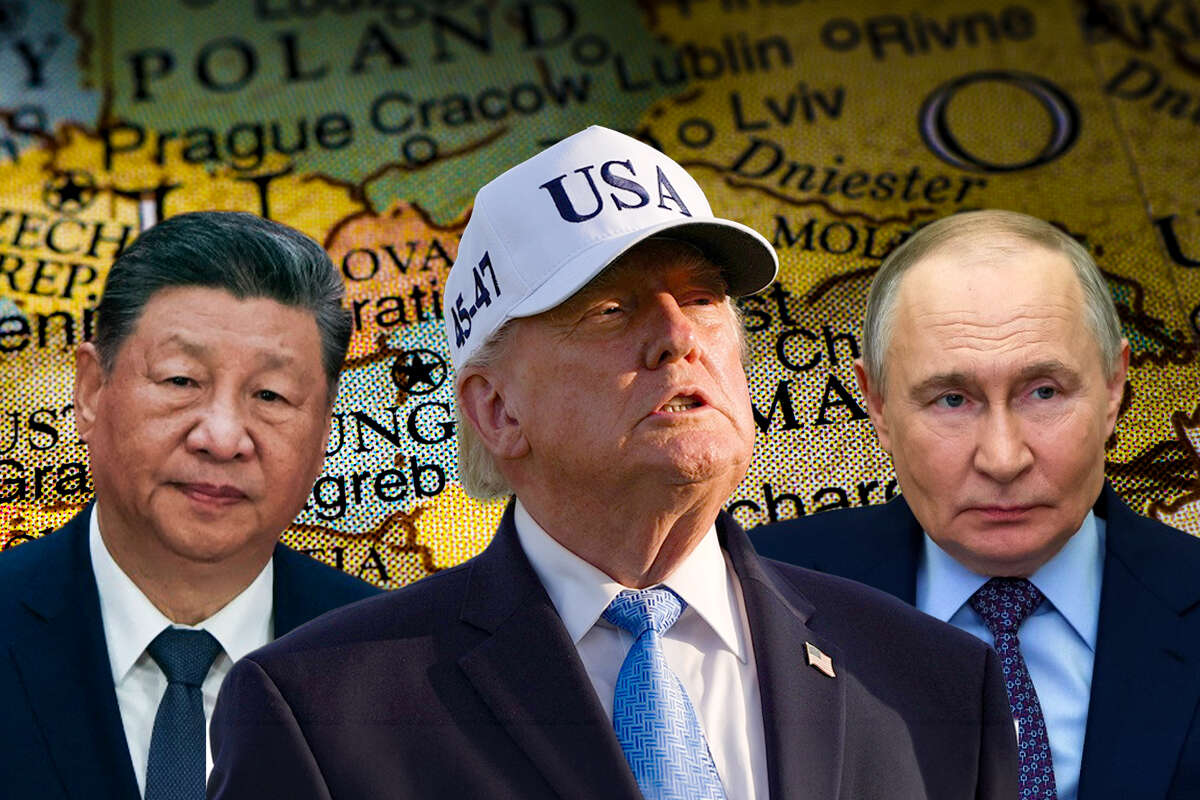
According to Paolo von Schirach, the South Caucasus is no longer an area of intense confrontation as it once was.
The expert stated that Azerbaijan's restoration of full sovereignty over its territories as a result of its military and diplomatic efforts, the emergence of prospects for normalizing relations with Armenia and initiatives related to the Zangezur Corridor have contributed to reducing tensions in the region.
"Russia has lost some of its influence in the region. The United States has played an important and constructive role as a mediator between Azerbaijan and Armenia. This opens up new opportunities for transport, trade and investment in the South Caucasus," von Schirach stated.
In his opinion, China's direct political role in the region is not yet entirely clear. Nevertheless, Beijing's extensive relations with Central Asian countries could also indirectly influence the South Caucasus.
The expert believes that the region's economic development and the expansion of transport connections do not contradict the fundamental national interests of the three major powers.
"I do not think that the development of the South Caucasus poses a threat to Russia. The United States would also like to see this development, and I see no reason for China to oppose it," he noted.
Yevgeny Mikhailov, meanwhile, stated that geopolitical activity is increasing in the South Caucasus, particularly around the "Trump Route."
According to him, Azerbaijan, Russia and Iran have important interests in the region. The political scientist believes that despite the current activity of the United States, the regional balance of power may change, and Iran's position will also be taken into account in possible agreements.
The expert stated that Azerbaijan has begun to take a more active position in ensuring its national interests. In particular, the Zangezur Corridor is important for Azerbaijan in terms of connectivity with Nakhchivan and the development of interstate transport routes.
In Mikhailov's opinion, Azerbaijan has the ability to defend its interests within the plans of major powers concerning the region.
"No one will make serious decisions in the South Caucasus without Azerbaijan's participation, or at least without taking its position into account," the Russian political scientist emphasized.
Kairat Batyrbayev, meanwhile, approached the issue from the broader perspective of Eurasian cooperation.
In his opinion, the main priorities for the region are maintaining stability and developing open trade and transport connections.
"The development of transport corridors, including the Trans-Caspian route, our countries' transport connectivity and cooperation in the energy sector strengthen the region's resilience regardless of changes in relations between major powers," the expert stated.
Batyrbayev noted that cooperation based on mutual benefit forms a solid foundation for regional security. According to him, agreements that may be reached between major powers should not replace the existing system of international law and the role of the UN but should instead complement them.
Thus, although the three experts have different approaches to the potential outcomes of the summit, the common element in their assessments is the importance of direct dialogue.
The American expert emphasizes reducing distrust and miscalculations, the Russian political scientist prioritizes pragmatic political and economic agreements, while the Kazakh expert on China highlights stability based on international law.
In the context of the South Caucasus, the expansion of transport connections and the development of regional economic cooperation are considered among the possible positive outcomes.


 Follow us on Telegram
 t.me/apanewsaz
 Follow us on Instagram
 Follow us on TikTok
 Follow us on Facebook
 Follow us on X

 ANALYSIS'>
 ANALYSIS'>
 ANALYSIS'>


