











By Alexander Jackson
Caucasus Update No. 83, November 24, 2010
Caucasian Review of International Affairs
http://cria-online.org/Caucasus_Update.html
Published in the framework of APA-CRIA partnership
On November 18, the leaders of the five states which border the Caspian met in Baku, for one of their regular attempts to thrash out an agreement on the Caspian’s status. The presidents of Azerbaijan, Iran, Turkmenistan, Kazakhstan and Russia last met to discuss their shared sea in 2007.
Since then, the issue of whether the Caspian really is a sea or a lake – a decision which would affect the ownership of the Caspian’s huge gas and oil reserves has gone nowhere, whilst development of undersea energy stocks has continued apace. The latest meeting looks unlikely to change these dynamics. Instead of a comprehensive deal on the status of the Caspian, the issue of delimiting the sea has been put off once again.
Security issues were also high on the agenda. Threats have often been rolled out to explain the littoral states’ cautious naval build-up, but the resources and the reality are seriously mismatched. Analyst Joshua Kucera draws attention to stories of piracy and armed poachers on the Caspian (Eurasianet, November 11), but this is hardly a reason to justify the hardware of the five Caspian navies.
Kazakhstan is negotiating to buy corvettes armed with formidable Exocet anti-ship missiles (Eurasianet, June 23), whilst Russia’s Caspian Flotilla is being boosted with new frigates (News.az, November 2) and Azerbaijan is strengthening its radar and command-and-control systems. Even Turkmenistan is trying to increase its naval profile (Jamestown Foundation, February 16).
Iran’s naval aspirations, framed by its stubborn and isolated position on Caspian delimitation, are the elephant in the room. Earlier this year, Iran announced that it was launching its first destroyer in the Caspian, capable of electronic warfare, anti-submarine and anti-aircraft attacks – hardly required to stop sturgeon poachers (Trend.az, February 19). Moscow and Tehran are uneasy about each others’ naval presence, but have so far presented a united front to prevent their biggest fear – a greater role in the Caspian for the US or NATO (Eurasianet, November 19). These fears presumably informed the security agreement which emerged from the Baku summit.
Agreeing on a division of the Caspian Sea has been on the agenda for years (the first official summit of littoral states was in 2002), but Russian President Dmitry Medvedev was only able to report progress towards that goal, acknowledging that “the negotiation process is not progressing very fast†(Kremlin.ru, November 18).
However on the actual issue of delimiting the Caspian, President Medvedev offered a sign that Iran – which claims that the Caspian should be divided into five equal shares – has finally conceded its position to the other four littoral states. The Russian leader said that within the next three months, each country’s responsible agency would agree on “the national maritime zones, based on sea borders of 24 or 25 miles off the coast†(Kremlin.ru, November 18).
In other words, Iran will lose out in the carve-up of oil and gas reserves, receiving a share based on its smaller coastline. However, Moscow made efforts to keep Tehran happy, with some not-so-subtle hints that a Trans-Caspian gas pipeline (TCP), linking Azerbaijan with Turkmenistan and backed by the EU and US, was impermissible. President Medvedev stated that no state could “take unilateral steps that could disrupt the existing balance or frustrate the efforts toward the new convention….We must also preserve [the Caspian’s] unique environmentâ€.
In other words, a TCP is environmentally and legally prohibited. This is music to Iran’s ears which, like Russia, opposes any effort to send Caspian energy reserves to global markets through alternative routes.
However, Turkmenistan offered up a defiant note, in line with its recent prickly relationship with Moscow, stating that a pipeline along the Caspian seabed needs only the approval of the countries involved (Turkmenistan.ru, November 18). Turkmen plans to join the EU’s Nabucco project, bringing Caspian gas to Europe, are apparently still going ahead, despite some outstanding disputes with Baku (Bloomberg, November 19). Ashgabat’s confident support of a TCP contradicts the agreements made at the previous littoral summit in 2007 (RFE/RL, November 19), at which participants agreed that seabed pipelines needed the consent of all five states.
Turkmenistan’s commitment to this pipeline may shake up the cautious world of Caspian diplomacy. Moscow is now aware that dragging out the question of the Caspian’s legal status, whilst beneficial in the short term (by allowing each state to quietly get on with developing resources in undisputed coastal zones), has backfired by undermining Russian and Iranian plans to stall a TCP through a legally agreed regime for the Caspian. This urgent need to delimit the Caspian may explain President Medvedev’s insistence that all five littoral states must meet more regularly, starting next year in Russia.
Ironically, the new security pact – created as a result of mutual suspicion between Russia and Iran – could deprive both of the military freedom to intimidate Turkmenistan or Azerbaijan if construction of a TCP goes ahead. Much is still made of a 2001 incident in which Iranian gunboats chased off BP research vessels exploring Azerbaijan’s sector of the sea. But the stronger security environment now in the Caspian, thanks to Moscow and Tehran’s desire to limit each others’ naval clout, will make future confrontations much more unlikely. Russo-Iranian competition could permanently undermine their mutual interests in closing off the Caspian. Good news for Nabucco.
Caspian Compromise Backfires for Russia and Iran – ANALYSIS

 25 November 2010 08:13 (UTC +04:00)



 İDMAN XƏBƏR
 Follow us on Telegram
 t.me/apanewsaz
 Follow us on Instagram
 Follow us on TikTok
 Follow us on Facebook
 Follow us on X
Political
Alarm bells over the Caspian Sea: Sharp decline in water levels poses not only environmental but also economic and strategic challenges - ANALYSIS
16:15
 9 October 2026
Caspian Environmental Summit: Sea’s environmental problems to be discussed in five-party format - COMMENTARY
13:34
9 October 2026
Consultative Meeting of Central Asian and Azerbaijani Heads of State: Cooperation format transforms into C6 - COMMENTARY
10:39
8 October 2026
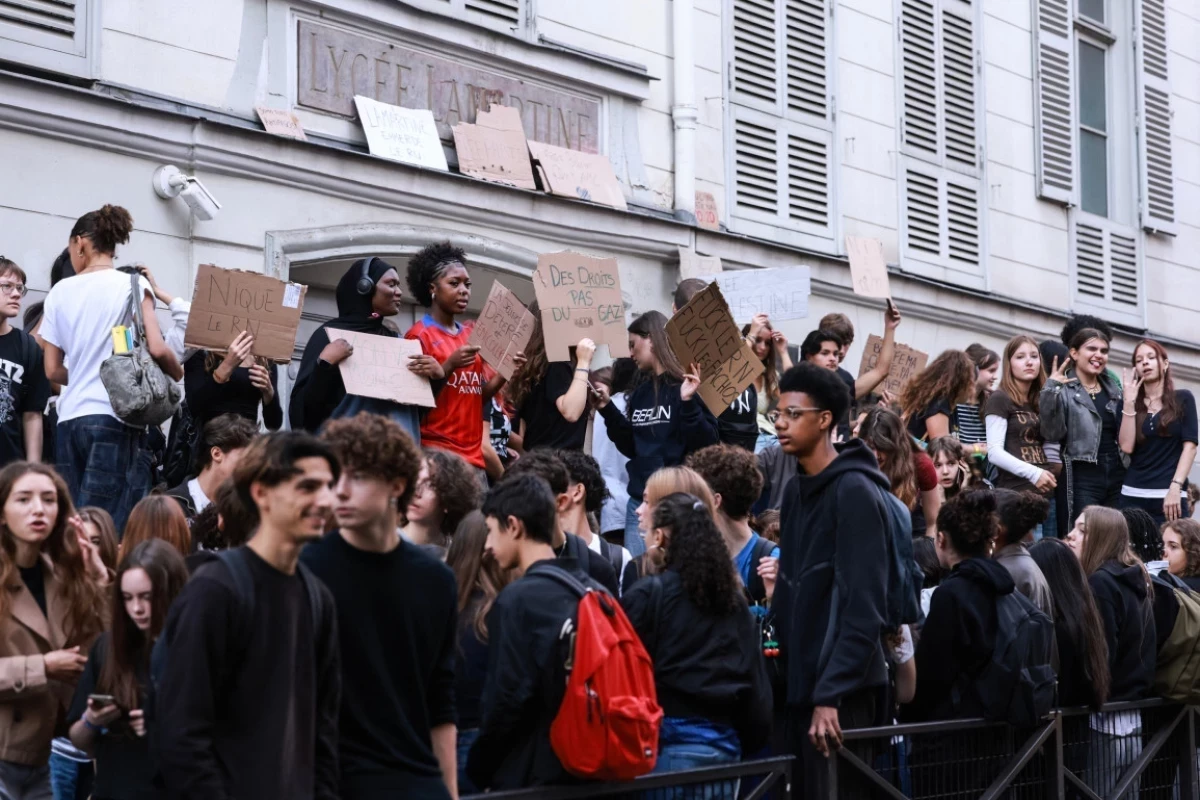
School protests in France: International organizations remain silent on human rights violations - COMMENTARY
14:26
7 October 2026

NEWS FEED
More than 40 flights to Istanbul have been diverted to other airports
04:09
15 October 2026
Houthis claim hit on Saudi fighter jet
03:41
15 October 2026
US destroys Iran-linked ship in Gulf of Oman
02:37
15 October 2026
Aston Villa beat Fenerbahce 6-0 in Champions League clash at Villa Park
02:10
15 October 2026
Media and Broadcasting Council and Ministry of Health release joint statement
01:37
15 October 2026
Trump: Canada will end up being 51st state
01:14
15 October 2026
Istanbul roads collapse, traffic hits 90% as flooding continues
00:52
15 October 2026
Banks, buildings burn as Albania's capital Tirana erupts into student violence
00:26
15 October 2026
Six years pass since Armenian army's shelling of Terter cemetery
00:00
15 October 2026
Haberturk: Teenager dies from electric shock during heavy rain in Istanbul
23:45
14 October 2026
Ukrainian President rules out resigning, holding elections
23:39
Audio
14 October 2026
FBI denies Patel's visit to Russia
23:16
14 October 2026
Britain will develop military equipment for Ukraine
23:00
14 October 2026
Dinner hosted on behalf of President Ilham Aliyev in honor of participants of 7th CICA Summit
22:44
14 October 2026
French President to visit Gulf states from October 19 to 21
22:34
14 October 2026
President Ilham Aliyev met with President of Tajikistan
22:18
14 October 2026
President Ilham Aliyev met with President of Uzbekistan-UPDATED
21:50
14 October 2026
US plans to deploy hundreds of thousands of kamikaze drones
21:41
14 October 2026
Zelenskyy says he feels 'betrayed' by Trump's actions
21:25
14 October 2026
FBI Director Patel visits in Russia
20:37
14 October 2026
Iranian FM, Lebanese President discuss developments in Lebanon and the region
20:27
14 October 2026
Le Pen and Melenchon gain momentum ahead of French 2027 election, poll shows
20:11
14 October 2026
Amir of Qatar arrives in Azerbaijan
19:35
14 October 2026
Hakan Fidan arrives in Baku - UPDATED
19:13
14 October 2026
President Ilham Aliyev met with President of Israel
19:11
14 October 2026
President Ilham Aliyev receives Bahrain’s Foreign Minister
19:09
14 October 2026
President Ilham Aliyev receives member of Political Bureau of CPC Central Committee
19:09
14 October 2026
Georgia not invited to EU forum
19:08
14 October 2026
President Ilham Aliyev met with Vietnamese Vice President
19:06
14 October 2026
President of Azerbaijan receives Sri Lankan minister
19:06
14 October 2026
State Migration Service: More than 30 Azerbaijani citizens readmitted from Germany
18:48
14 October 2026
MP from Pashinyan’s party denied entry to Russia
18:32
14 October 2026
Shavkat Mirziyoyev arrives in Baku - UPDATED
18:30
14 October 2026
Azerbaijani delegation familiarizes itself with operations of Kazakhstan’s leading ports and terminals
18:22
14 October 2026
Azerbaijani and Kyrgyz delegations hold meeting - VIDEO
18:15
14 October 2026
“Falcons Meet - 2026” joint tactical flight exercise continues - VIDEO
18:14
14 October 2026
Trump did not invite OSCE observers to the U.S. midterm elections
18:10
14 October 2026
Chinese and Russian foreign ministers meet in Baku
18:08
14 October 2026
Emomali Rahmon arrives in Azerbaijan
18:03
14 October 2026
Kyrgyz President arrives in Azerbaijan
17:47
14 October 2026
NATO Secretary General: No need for idea of unified European army
17:32
14 October 2026
Prime Ministers of Azerbaijan and Cambodia meet in Baku
17:29
14 October 2026
Kanak politician: We cannot allow France to continue its colonial policy
17:26
14 October 2026
Azerbaijan-Laos investment and business forum held in Baku - PHOTO - UPDATED
17:26
14 October 2026
Kazakh President begins visit to Azerbaijan
17:23
14 October 2026
Agreement reached on draft documents to be adopted at 7th CICA Summit in Baku tomorrow
17:19
14 October 2026
Assessment of OPEC+ countries’ production capacities to be ready by year-end
17:15
14 October 2026
Azerbaijani and Kyrgyz delegations hold meeting - VIDEO
17:11
14 October 2026
Russian FM arrives in Azerbaijan - UPDATED
16:58
14 October 2026
Novak: Diesel agreement with US will increase oil production in Russia
16:56
14 October 2026


