



The mine threat in Azerbaijan’s territories liberated from occupation remains one of the main obstacles to human life, the Great Return, economic development, and the future of the region even years after the end of the war. The scale of the problem is not limited to mines alone – clearing explosive devices, booby traps, ammunition, and other explosive remnants of war, as well as ensuring the safety of contaminated areas, is a long-term process requiring significant resources.
When wars end, the weapons fall silent, but the danger they create sometimes persists for decades. For Azerbaijan, this danger is mines and other explosive remnants of war.
Against the backdrop of reconstruction and restoration work being carried out in Karabakh and East Zangezur, this invisible threat beneath the ground is not merely a military and security issue. The mine problem is also a humanitarian, social, economic, environmental, and development issue. Azerbaijan is currently considered one of the most mine-contaminated countries in the world. According to preliminary estimates, more than 1 million mines are believed to have been planted in the territories liberated from occupation. It is estimated that 11,667 square kilometres of territory in the Karabakh and East Zangezur economic regions are contaminated with mines and other explosive remnants of war.
The map of the war has changed, but the mine map still remains
The areas with the highest level of mine contamination are the former line of contact and its surroundings. On the other hand, the areas around military positions established before the anti-terror operations have also been heavily contaminated with mines. However, the threat cannot be presented solely as a problem affecting former military positions.
ANAMA, in response to APA’s inquiry, stated that agricultural fields, gardens, cemeteries, and other civilian areas have also been extensively mined. The occurrence of mine incidents even in a number of village cemeteries in the liberated districts demonstrates the scale of the threat.
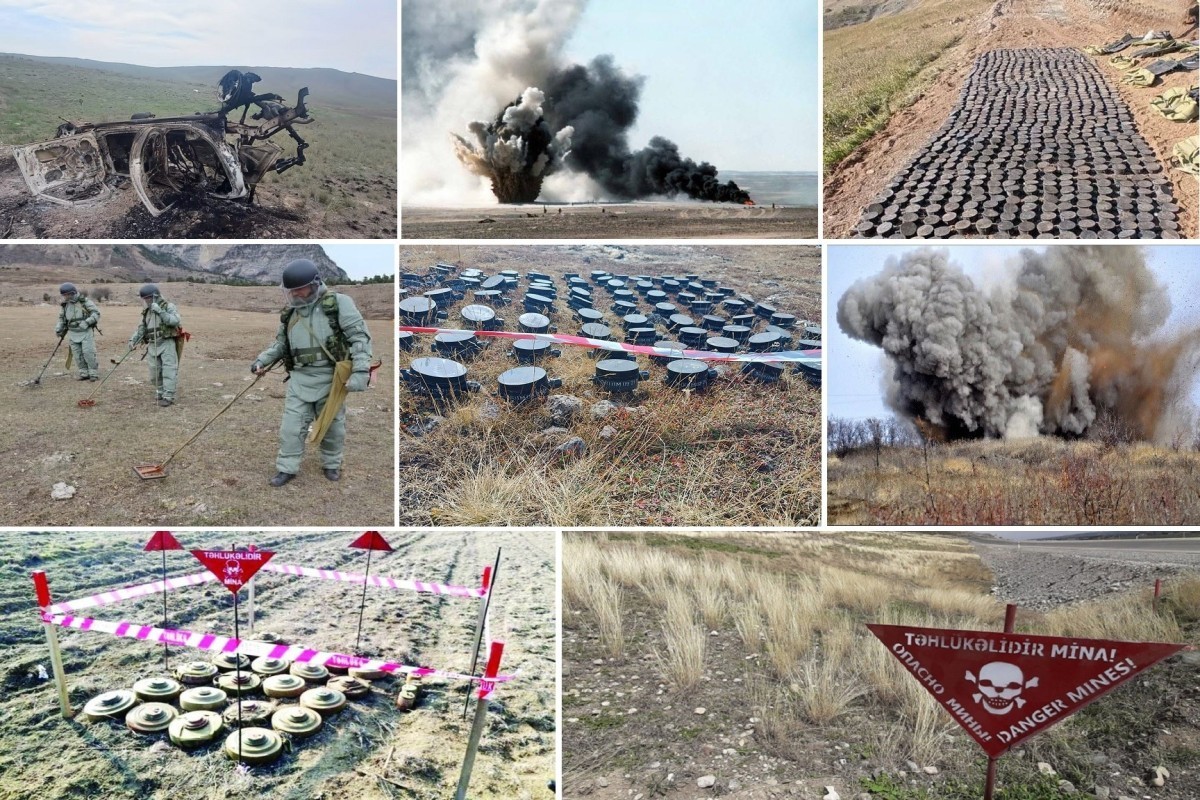
Among the factors further complicating the situation along the former line of contact are mixed minefields, the high density of mines, the large amount of metal remnants, trenches, fortifications, and tripwires. In such areas, checking every square metre requires additional time, technical capabilities, and human resources.
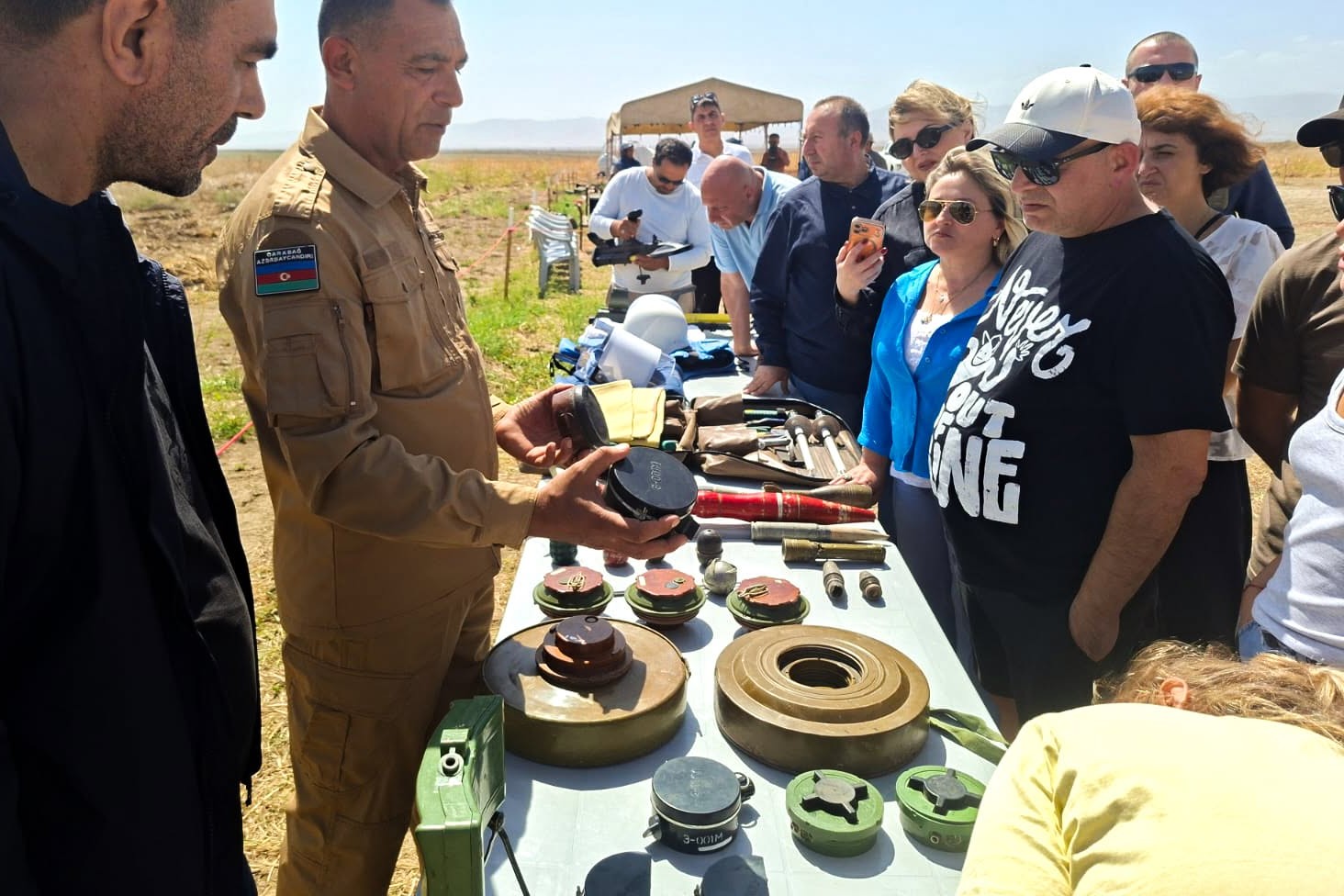
In other words, it is not simply a matter of searching for mines in the ground. Deminers sometimes have to work amid the remains of military positions, metal debris, unexploded ordnance, and specially prepared booby traps.
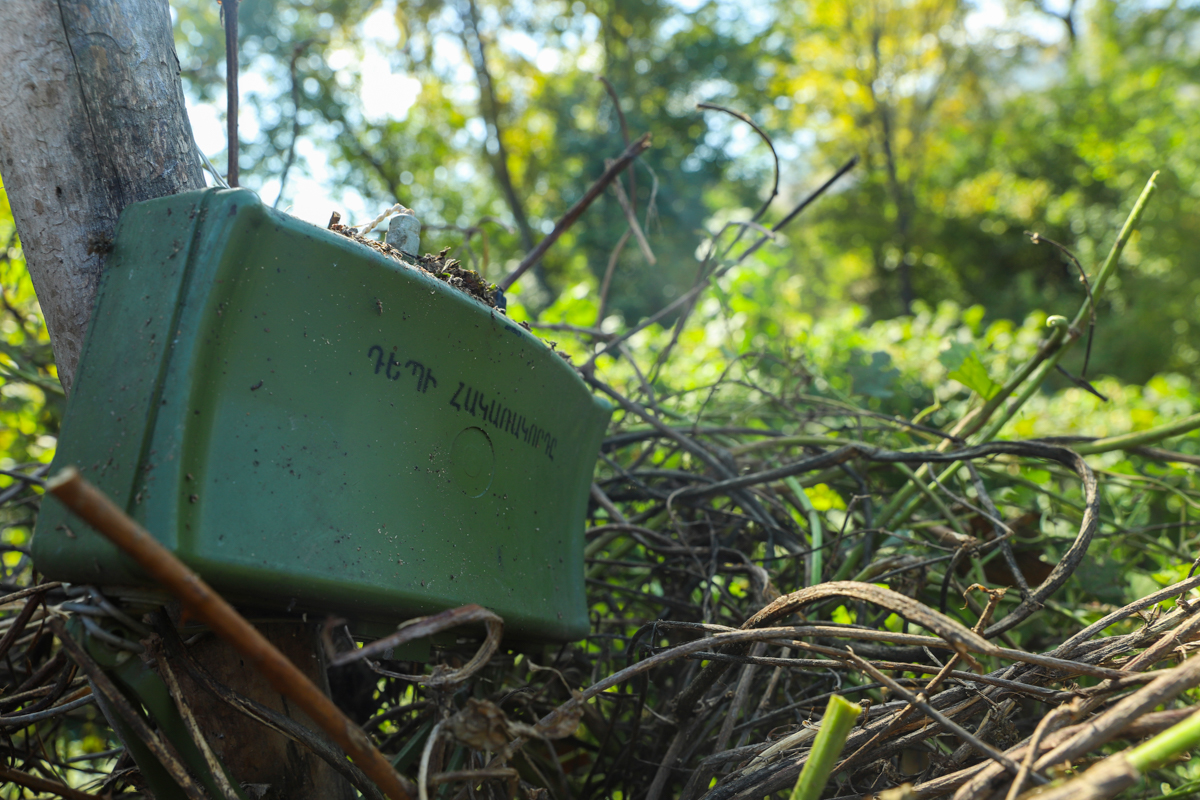
ANAMA stated that improvised explosive devices with high explosive power have also been discovered during operations carried out in the liberated territories. For example, a MON-50 anti-personnel mine attached to a tree was discovered in an area with difficult terrain, woodland, and dense vegetation in the village of Taghaverd in Khojavand district.
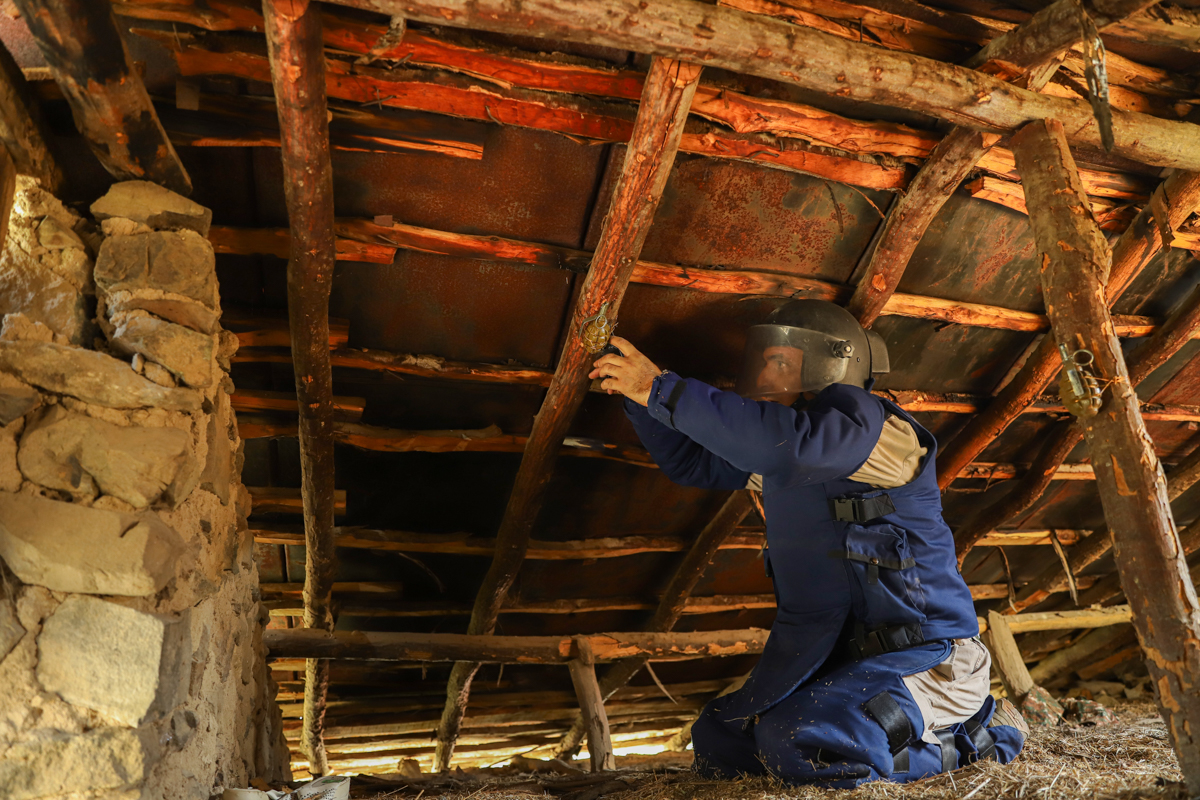
In the village of Kichik Galadarasi in Shusha district, during the clearance of houses, two F-1 hand grenades that had been set in combat-ready condition using tripwires on the roof, a pillar, and the entrance door were detected.
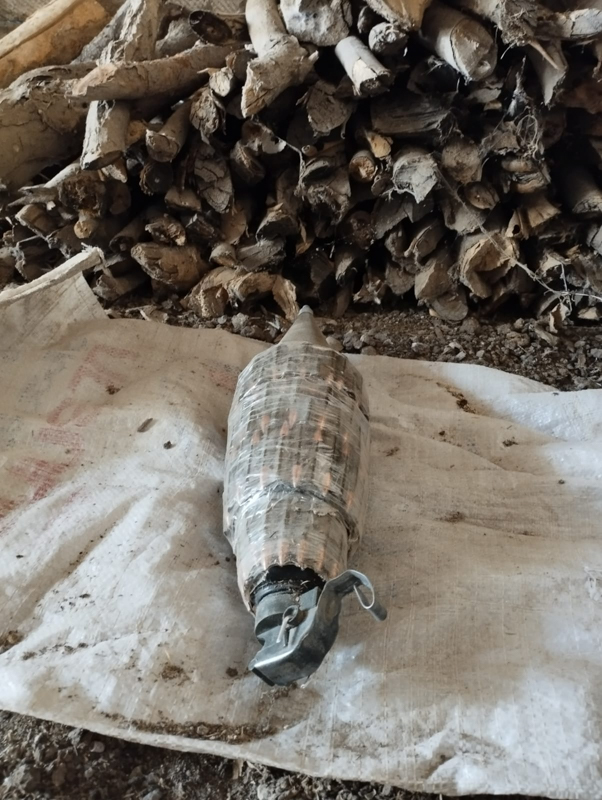
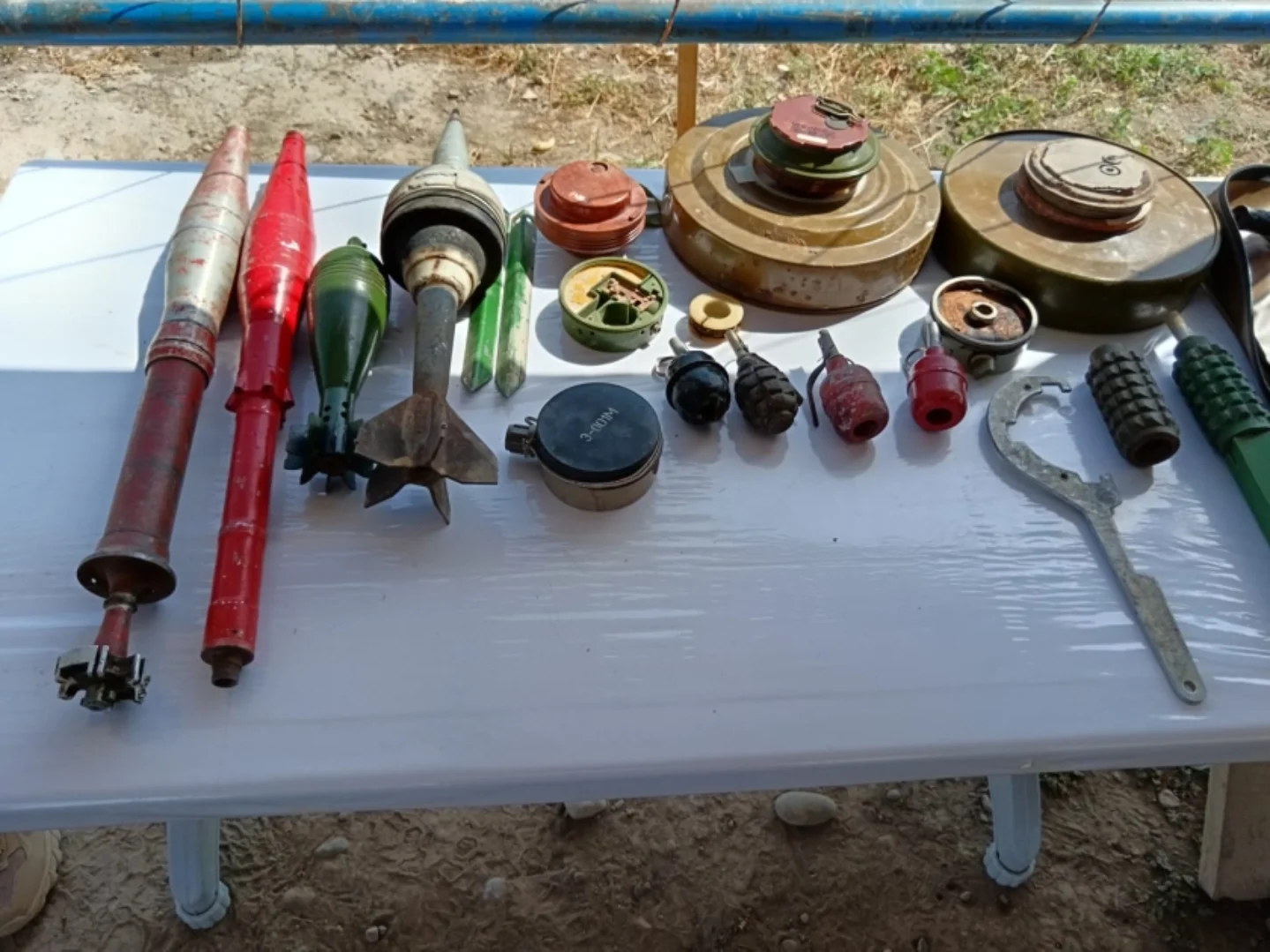
The device discovered in the village of Bulutan in Khojavand reveals a more complex form of the threat. In one of the abandoned residential houses, dozens of small-arms cartridges had been attached to a PG-7L rocket, and the device had been turned into a booby trap using a hand-grenade fuze.
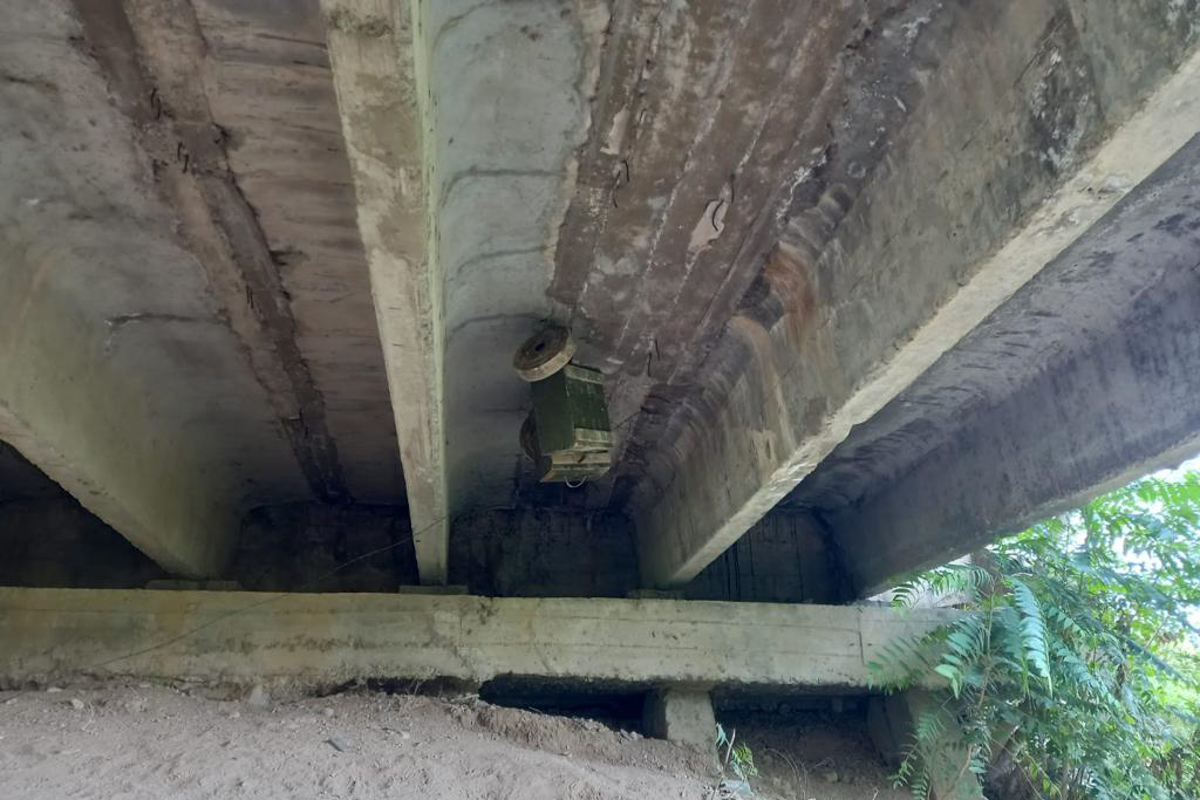
During other operations in Khojavand, explosive devices consisting of boxes containing a total of more than 200 kilograms of TNT, triggered by tripwires and electrical means, were detected in residential buildings and on bridges near the central district hospital and residential areas.
In Aghdam, cases were detected in which a 240-millimetre 9M24F turbojet rocket and more than 30 120-millimetre mortar shells had been compactly tied together inside earth-covered mounds along the roadside.
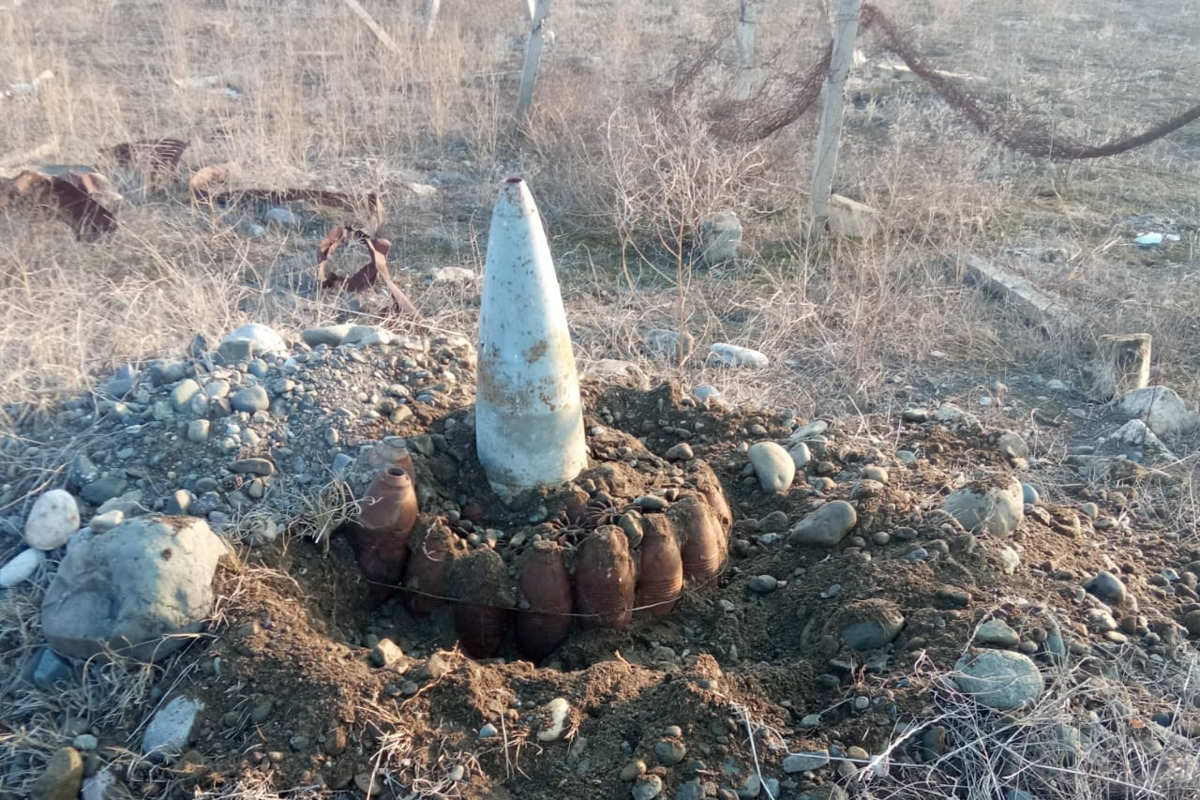
These facts show that eliminating the mine threat is a broader concept than a conventional mine clearance operation.
More than 305,000 hectares of land cleared
Despite all these complexities, a large volume of mine clearance work has been carried out in Azerbaijan in recent years.
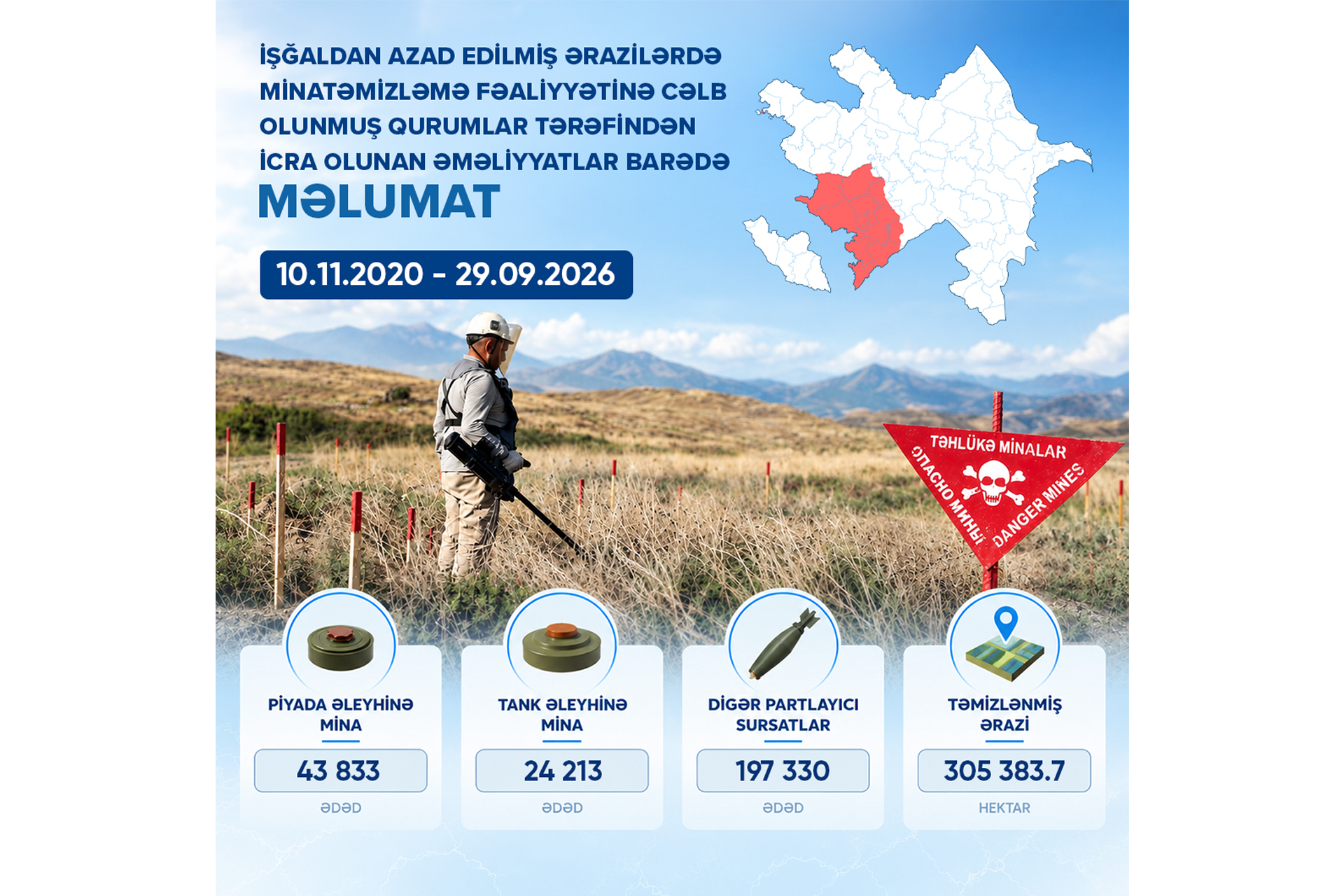
According to data provided by ANAMA, as a result of humanitarian mine clearance operations, 305,383.7 hectares of land were cleared from November 10, 2020 to September 29, 2026.
During this period, a total of 265,376 mines and other explosive ordnance were detected and neutralized. Of these, 197,330 were other explosive ordnance, 43,833 were anti-personnel mines, and 24,213 were anti-tank mines.
Behind these figures are not only technical operations but also serious risks to the daily lives of deminers.
From Gazakh to Karabakh
The mine problem is not limited to Karabakh and East Zangezur. Mine clearance activities have been carried out in the liberated territories of Gazakh district since April 2024.
According to the information, 451.4 hectares of land have been cleared there, and 1,265 anti-personnel mines, 154 anti-tank mines, and 111 other explosive ordnance have been detected and neutralized.
In these areas, both the complexity of the terrain and the high level of mine contamination are among the main factors affecting the pace of operations.
The absence of mine maps or the inaccuracy of existing documents is also among the issues complicating the process.
In most of the minefield forms provided by Armenia, information on coordinates, reference points, and the placement of mines was incomplete and inaccurate. According to data provided by ANAMA, following analyses, it was determined that those documents had a low level of correspondence with actual minefields and that the coordinates were unusable in a number of cases, while the documents were reported to reflect only 25 percent accuracy and reliability.
This situation reveals another feature of mine clearance: an area that appears clear on a map does not mean that it is safe on the ground.
276 incidents, 441 mine victims
The gravest indicator of the threat posed by mines and other explosive ordnance is the loss of human life.
From November 10, 2020 to September 29, 2026, 276 mine incidents were recorded in Azerbaijan.
As a result of these incidents, 441 people became mine victims. Of them, 73 were killed and 368 sustained bodily injuries of varying degrees.
These figures show that explosive remnants of war continue to pose threats to people and the environment. Mines continue to kill and injure people today.
Moreover, the risk is not limited to professional deminers. A resident returning to their land, a farmer going to an agricultural field, a worker working on road infrastructure, or a person carrying out any economic activity in the area may face a potential mine threat.
Therefore, there is a direct link between the Great Return and mine clearance.
The invisible prerequisite for the Great Return
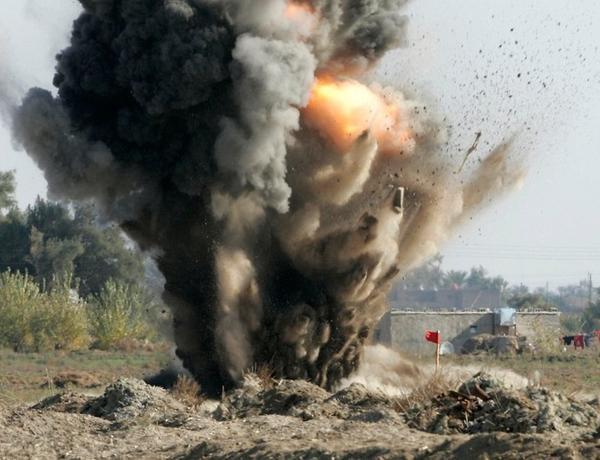
The construction of new roads, schools, hospitals, residential areas, and electricity and water infrastructure in the territories liberated from occupation requires mine clearance to be carried out in parallel.
It is impossible to establish a safe settlement in an area before it is cleared of mine threats.
According to the UN, as of September 2026, 25.9 percent of Azerbaijan’s estimated mine-contaminated territories had been released for safe use, and this process had enabled the return of approximately 40,300 former internally displaced persons, as well as the restoration of economic activity and public services.
Currently, more than 93,000 people in total live, work, and study in these territories. Mine clearance activities enable not only the return of former internally displaced persons, but also the provision of safe living and working conditions throughout the territories, the construction of infrastructure, the expansion of economic activity, and the organization of public services.
Thus, the mine problem is not simply about “clearing the land.” In fact, it is about ensuring the safety of a city before it is built.
Why are fences important?
In areas that are most heavily contaminated by mines and fall into the high-risk category, another mechanism for managing the threat is fencing.
ANAMA stated that areas highly contaminated with mines and other explosive ordnance are conserved and fenced off. In addition to being a safety measure in line with international mine action standards, this is a temporary mechanism aimed at protecting human life.
The main problem here, however, is unauthorized interference with fenced-off areas.
The removal or damage of barriers and the carrying out of economic activities in these areas do not only put the life of a particular individual at risk. Such interference may also negatively affect the surveying of minefields and the subsequent clearance process. In other words, combating the mine threat is not limited to finding and neutralizing mines. Preventing people from entering areas where the threat exists is also part of the process.
_1790677878.jpg)
Awareness – the first line of defence against mines
Awareness-raising holds a special place in the concept of mine action, which is more widely used today.
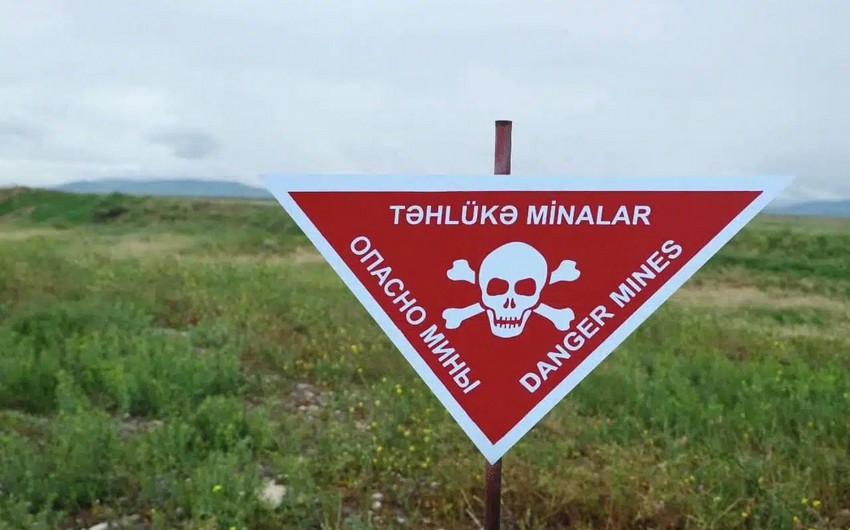
ANAMA’s installation of warning signs and special markings in the territories, as well as its awareness-raising activities for people relocating there and representatives of institutions operating in those areas, are also related to this.
This is because a mine may not be visible. A citizen may sometimes be unaware that they have entered a dangerous area.
For this reason, awareness of the mine threat is a preventive mechanism as important as mine clearance itself. Recognizing dangerous areas, knowing the rules of conduct in high-risk areas, and, in general, adopting a responsible approach to the threat posed by explosive ordnance are important factors.
Is international support sufficient?
Discussions are ongoing on a project between the UN and Azerbaijan that envisages the procurement of mine clearance equipment and the establishment of a Mine Action Centre of Excellence.
It is reported that an additional EUR 5 million has been allocated for mine action under the EU’s 2025–2027 programme. The document also notes that the financial commitment is subject to the availability of funds in the relevant budget years and subsequent procedures.
The planned Centre of Excellence could enable Azerbaijan to share the experience it has gained in the field of mine action with other countries facing mine-related problems. This project is regarded as the beginning of future cooperation, with plans to subsequently expand its activities.
Under the Memorandum of Understanding on the allocation of financial assistance signed with the Saudi Arabian side on January 16, 2024, USD 3 million was allocated through the King Salman Humanitarian Aid and Relief Centre, representing the Kingdom of Saudi Arabia, to support humanitarian mine clearance activities carried out in the territories of Azerbaijan liberated from occupation.
On November 26, 2024, a Memorandum of Understanding was signed on the donation of USD 5 million by the Government of the United Arab Emirates, through its Embassy in the Republic of Azerbaijan, to support humanitarian mine clearance activities carried out in Azerbaijan.
In accordance with the “Memorandum of Understanding on Strengthening Cooperation in the Field of Humanitarian Mine Clearance” signed between ANAMA and the Ministry of Foreign Affairs of the People’s Republic of China on April 23, 2025, the Chinese government donated USD 324,541 to ANAMA.
In addition, the Embassy of the People’s Republic of China in the Republic of Azerbaijan donated two BXM-2000 handheld X-ray devices to ANAMA this year to support humanitarian mine clearance activities.
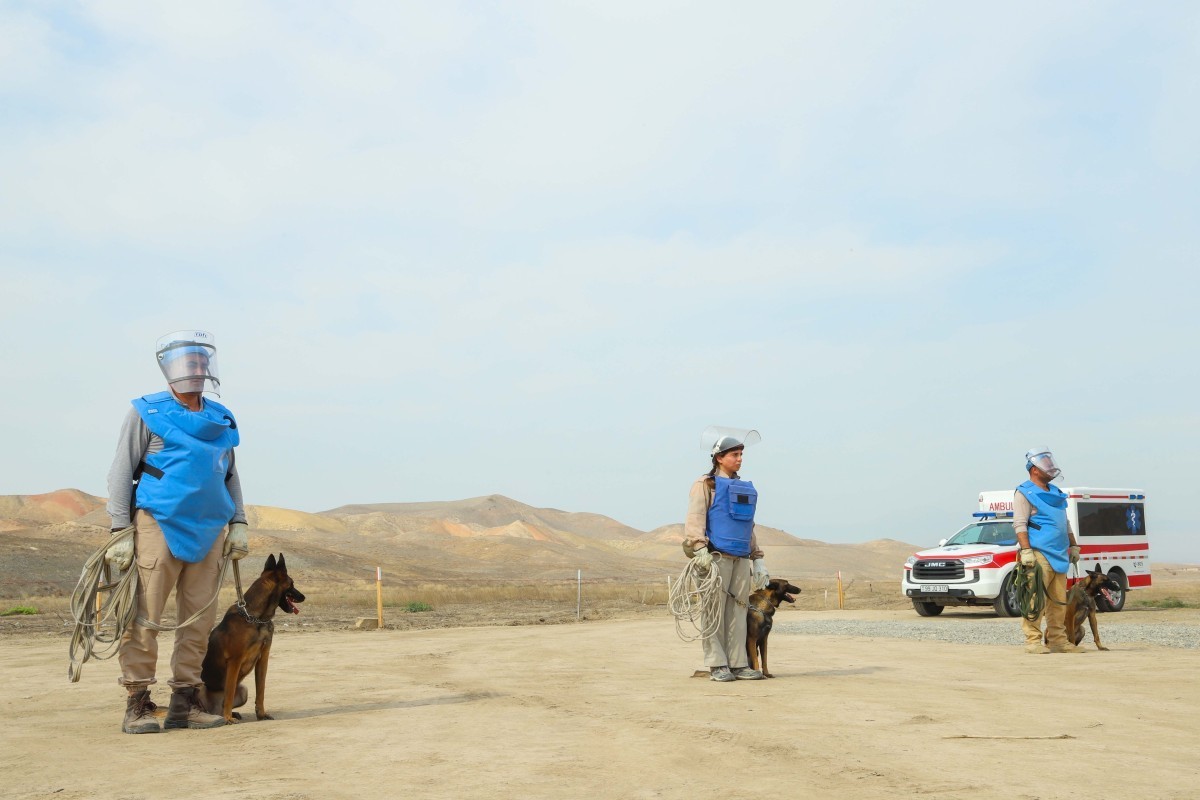
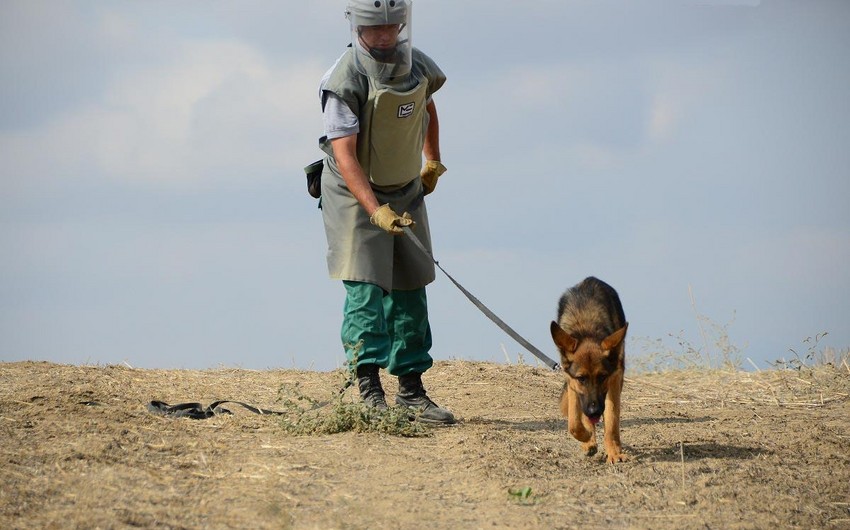
The US-based Marshall Legacy Institute, Croatia, and the UK-based NGO APOPO have provided mine detection dogs and animal detection support.
On July 7, 2025, a Memorandum of Understanding on “Providing Support for Humanitarian Mine Action in the Republic of Azerbaijan” was signed between ANAMA and the Geneva International Centre for Humanitarian Demining (GICHD). The Memorandum envisages GICHD’s support to ANAMA in strengthening humanitarian mine clearance capacity, expanding cooperation in the field of mine action through existing initiatives and platforms, exchanging experience in humanitarian mine clearance, and implementing relevant training programmes for ANAMA employees.
In addition, during the international conference titled “Humanitarian Demining for Urban Recovery: Setting Standards of Excellence for Safe Human Settlements,” held in Baku on September 2–3, 2026, and jointly organized by ANAMA and the UN, a Memorandum of Understanding on “Cooperation in the Field of Mine Action” was signed between ANAMA and the ASEAN Regional Mine Action Center. The signed document is of great importance in terms of expanding international cooperation aimed at addressing Azerbaijan’s mine problem, as well as strengthening the exchange of knowledge and experience among mine action organizations operating in different regions.
In recent years, Azerbaijan has sought to present the mine problem not only as a national issue but also as an issue on the international agenda.
President Ilham Aliyev also drew attention to this issue in his address to the participants of the 4th International Conference on Mine Action in September 2026. The head of state stated that Azerbaijan bears the main burden of both humanitarian mine clearance and the reconstruction of the liberated territories through its national resources, but the scale of contamination, the urgency of reconstruction, and the humanitarian importance of the safe return of people require broader and more practical support from the international community. He identified predictable financing, modern equipment, technical expertise, training, technology transfer, and long-term partnerships as important areas.
In 2025, the Ministry of Foreign Affairs stated that Azerbaijan had continued its diplomatic efforts with the UN, NATO, and other international partners to address the mine problem and attract international assistance for humanitarian mine clearance activities. That year, Azerbaijan was one of the main co-sponsors of a resolution at the UN Human Rights Council on the impact of anti-personnel mines on the enjoyment of human rights.
Assistant to the President of the Republic of Azerbaijan – Head of the Foreign Policy Affairs Department of the Presidential Administration, Hikmat Hajiyev, has also emphasized the importance of international cooperation in various speeches. At an event held in Zangilan in 2024, he stated that international cooperation was important in terms of mine clearance and noted that Azerbaijan ranked among the countries most affected by the mine problem globally.
Azerbaijan’s main argument is as follows: the scale of mine contamination is so extensive that resolving the problem solely through national resources may take a long time. This approach also highlights the core of the problem: Azerbaijan’s need is not only for money.
What kind of support does Azerbaijan need?
International assistance in combating the mine threat can cover several areas.
First, long-term and predictable financing. A mine clearance project is not a campaign lasting several months. Surveying, mapping, and clearing the territory, quality control, and subsequent safety measures require a long period of time.
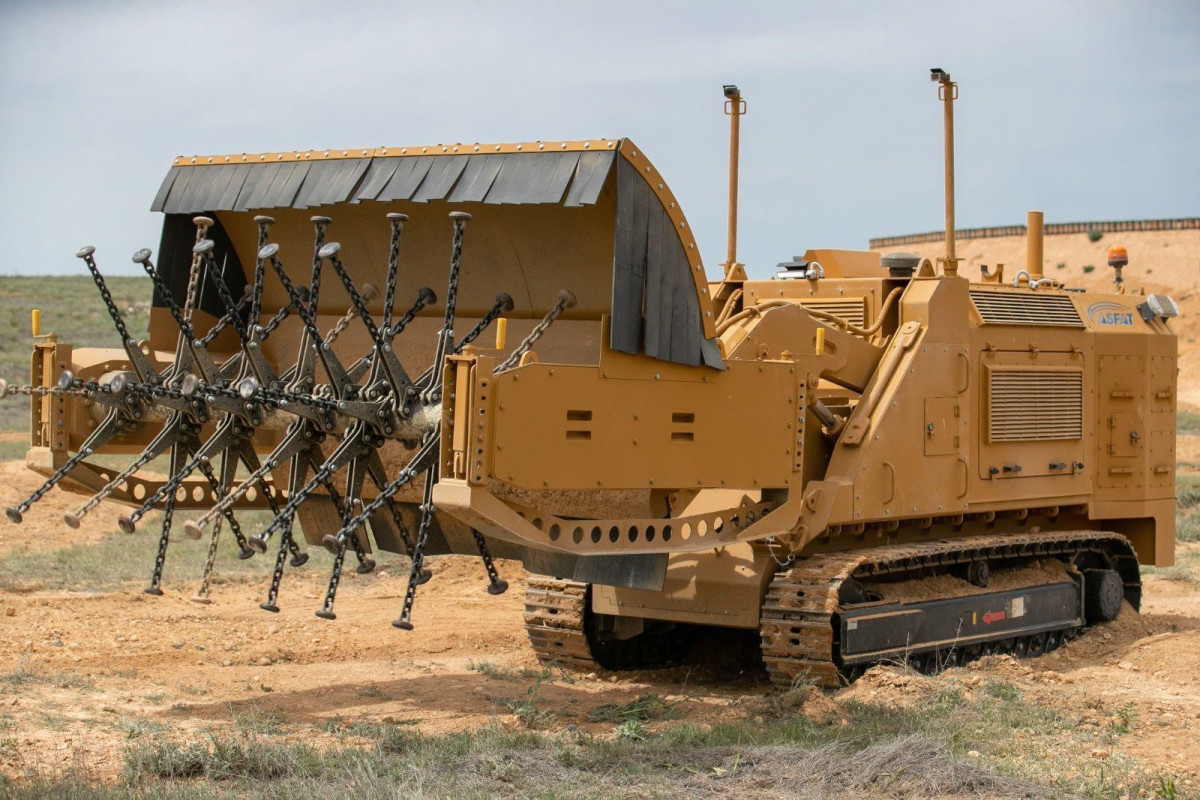
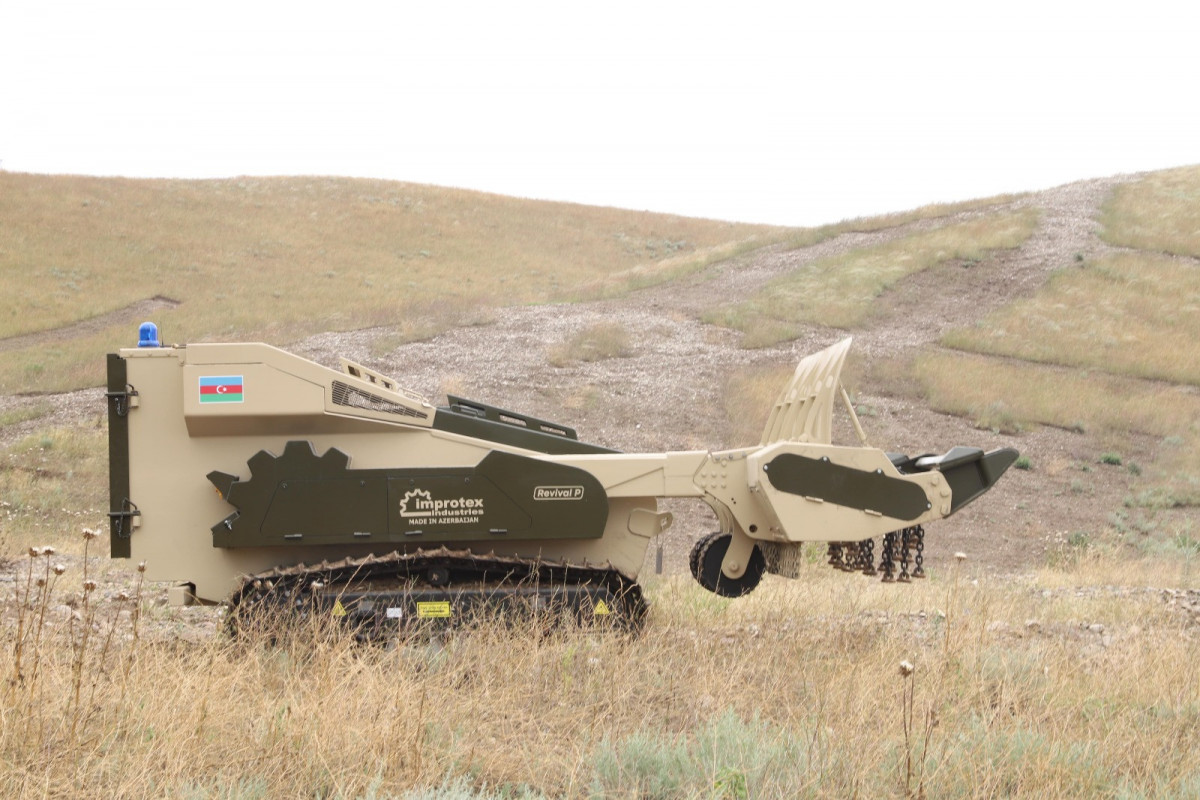
Second, modern technologies and equipment. Mechanical mine clearance equipment, drones, remote sensing, artificial intelligence-based data analysis, and mine detection technologies can accelerate the process.
Third, training and human capital. Training demining specialists and medical personnel, conducting awareness-raising activities, assisting mine victims, and transferring international expertise produce long-term results.
Fourth, the exchange of experience. In this regard, Azerbaijan is no longer only a recipient of assistance, but is also becoming a country that shares some of its experience with other countries.
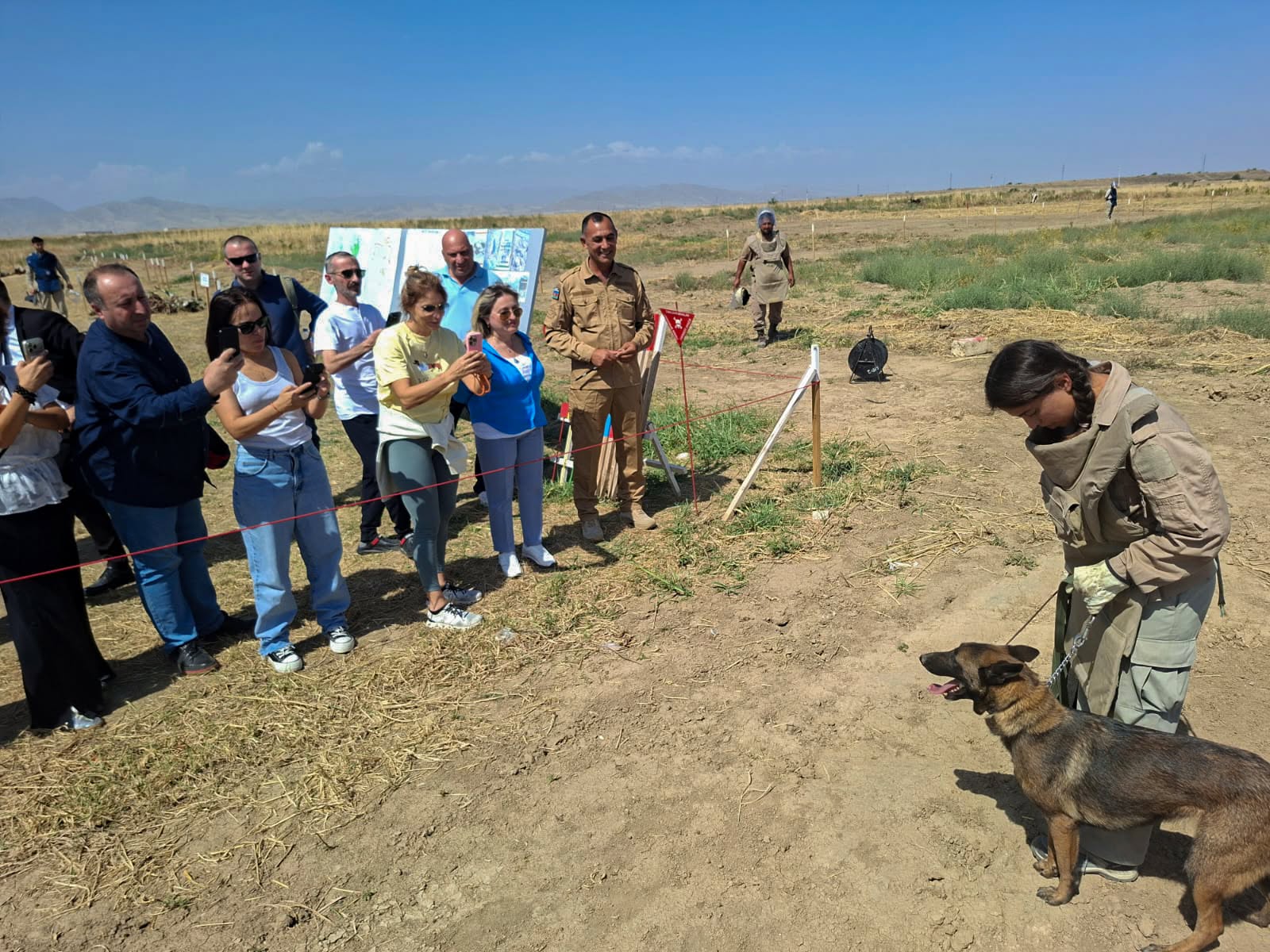
The 4th International Conference on Mine Action in Baku itself is also an indication of Azerbaijan’s efforts to create an international platform on this issue. More than 400 representatives from 60 countries participated in the event, which was jointly organized with the UN. The conference participants represented 155 different organizations. These included international organizations, national mine action agencies, government institutions, non-governmental organizations, academic and research institutions, representatives of foreign media and the private sector, as well as diplomatic missions accredited in Azerbaijan. The conference discussed the role of humanitarian mine action in urban recovery, safe return, the formation of resilient communities and long-term development processes, international cooperation and donor mechanisms, the role of humanitarian mine action in ensuring community resilience, the integration of policies in the recovery of mine-affected areas, the role of technology and innovation in improving the safety and efficiency of humanitarian mine action operations, and the national experiences of various countries in the field of humanitarian mine action. At the end of the conference, the participants adopted a Final Statement.
It should be noted that the discussions and exchange of experience held within the framework of the conference contributed to the development of new partnerships and joint initiatives in the field of humanitarian mine action. The conference also served as an important platform for presenting Azerbaijan’s contributions to international cooperation in this field.
Azerbaijan itself also contributes to international experience. An interesting point is that, alongside addressing the mine problem, Azerbaijan is also taking steps towards becoming an international centre of expertise and knowledge in this field. This approach serves to present the problem not only as “Azerbaijan’s problem,” but as a common challenge for all countries facing the reconstruction of territories after war.
It should be noted that ANAMA actively participates in international platforms in the field of humanitarian mine action, shares Azerbaijan’s experience, studies advanced approaches and technologies, and expands cooperation with international partners.
The main question: When will the mine problem end?
The most difficult aspect of the mine problem is the difficulty of determining an exact date for when it will end. This is because the exact number of mines and explosive devices that remain underground is not fully known. Inaccurate maps for some areas, the irregular laying of minefields, booby traps, metal contamination, and difficult terrain further complicate the process.
Despite all these difficulties, the territories are being gradually cleared of mines and explosive devices, and this process is creating conditions for the population to safely return to their native lands within the framework of the Great Return. Cities are being built and roads are being constructed. On the other hand, the underground threat still remains in some of these areas.
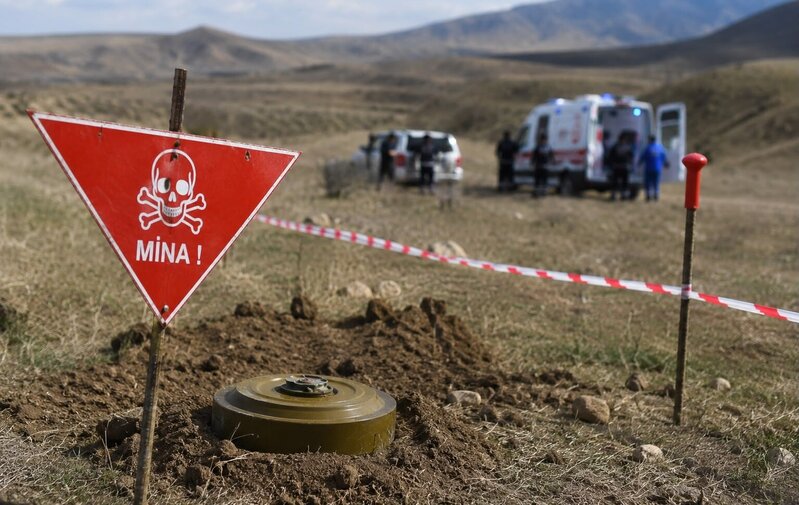
For this reason, Azerbaijan’s mine problem is one of the most long-term challenges of the post-conflict period. The UN also considers mine action to be an integral part of Azerbaijan’s socio-economic development agenda. In September 2026, the organization’s representative in Azerbaijan noted that mine action had become one of the country’s national development priorities and that Azerbaijan had adopted its 18th National Sustainable Development Goal in this field.
Peace is not merely the silencing of weapons
The figures presented by Azerbaijan regarding the mine problem demonstrate one truth: the consequences of war do not automatically disappear with a ceasefire or a peace document.
For the land to be safe, the danger beneath it must first be eliminated. For this reason, combating the mine threat is not only a matter of closing the chapter on the past for Azerbaijan, but also of building a secure future.
For the Great Return to be completed in a real sense, it is not enough for people simply to move into new homes. They must be able to leave those homes safely and travel to the village, school, workplace, agricultural fields, and cemetery.
That is precisely why mine clearance is not a technical addition to the reconstruction process, but a prerequisite for it.
Azerbaijan’s expectations from the international community are shaped precisely at this point: sustainable, practical, and long-term support commensurate with the scale of the problem.
Because mines are not a problem of one day, one year, or even one generation.
Until the mine map left behind by the war is erased, it is impossible to say that the land has been fully freed from danger.


 Follow us on Telegram
 t.me/apanewsaz
 Follow us on Instagram
 Follow us on TikTok
 Follow us on Facebook
 Follow us on X