

The campaign that emerged within Armenia’s political, religious and diaspora circles following the latest visit by representatives of the diplomatic corps accredited in Azerbaijan to Karabakh and Eastern Zangezur has once again raised serious questions about the sincerity of Yerevan’s position in the peace process with Azerbaijan.
At first glance, the reactions are presented as the positions of individual politicians, members of parliament, experts, religious figures and diaspora representatives. In reality, however, they reveal a broader political picture. In particular, the fact that representatives of the Armenian authorities are also using similar rhetoric indicates that this campaign cannot be completely separated from the policies of Nikol Pashinyan’s government.
On September 11–12, a visit to Karabakh and Eastern Zangezur was organized for 150 representatives from 58 countries and nine international organizations. In other words, Azerbaijan organized a visit by foreign diplomats to its sovereign territory. For some reason, however, the visit caused concern in Armenia and across Armenian circles, with threats and insults even being directed at the diplomats. Armenians still appear unwilling to accept that Azerbaijan does not need the consent of any third country to invite foreign diplomats to Khankendi, Shusha, Aghdara, Kalbajar or any other part of the country. This is Azerbaijan’s exclusive sovereign right and an internal matter.
The reactions coming from Armenia, however, show that the issue is not being approached from this perspective. The diplomats’ visit to Karabakh is being questioned, accusations are being made against them, and narratives such as “Artsakh,” “ethnic cleansing” and the “expulsion of Armenians” are once again being circulated. Discussions surrounding the Gandzasar and Khudavang monasteries are also being used in an attempt to turn Azerbaijan’s sovereignty over Karabakh into a subject of political dispute.
A statement by Aram I, Catholicos of the Great House of Cilicia, is one example. He sharply criticized the visit to Shusha by diplomats from countries he described as Armenia’s “friends.” The Armenian Apostolic Church, meanwhile, condemned remarks by Hikmet Hajiyev, Assistant to the President of Azerbaijan, regarding Gandzasar and Khudavang, while also calling on the Armenian authorities to respond to the issue and take action.

The key point here is that the campaign is not confined to the Church, the diaspora, individual representatives of the Armenian opposition or members of parliament. Representatives of the Armenian authorities themselves have also not refrained from expressing views on the issue. One example is Ruben Rubinyan, a representative of the ruling Civil Contract party and a senior member of the Armenian parliament, who described Azerbaijan’s position as “unfounded” and said it did not contribute to the peace process.
Among others, Rubinyan’s position is particularly significant. As a senior parliamentary official and one of the leading members of Pashinyan’s governing team, his statement can therefore be regarded as reflecting the position of the Armenian authorities themselves.
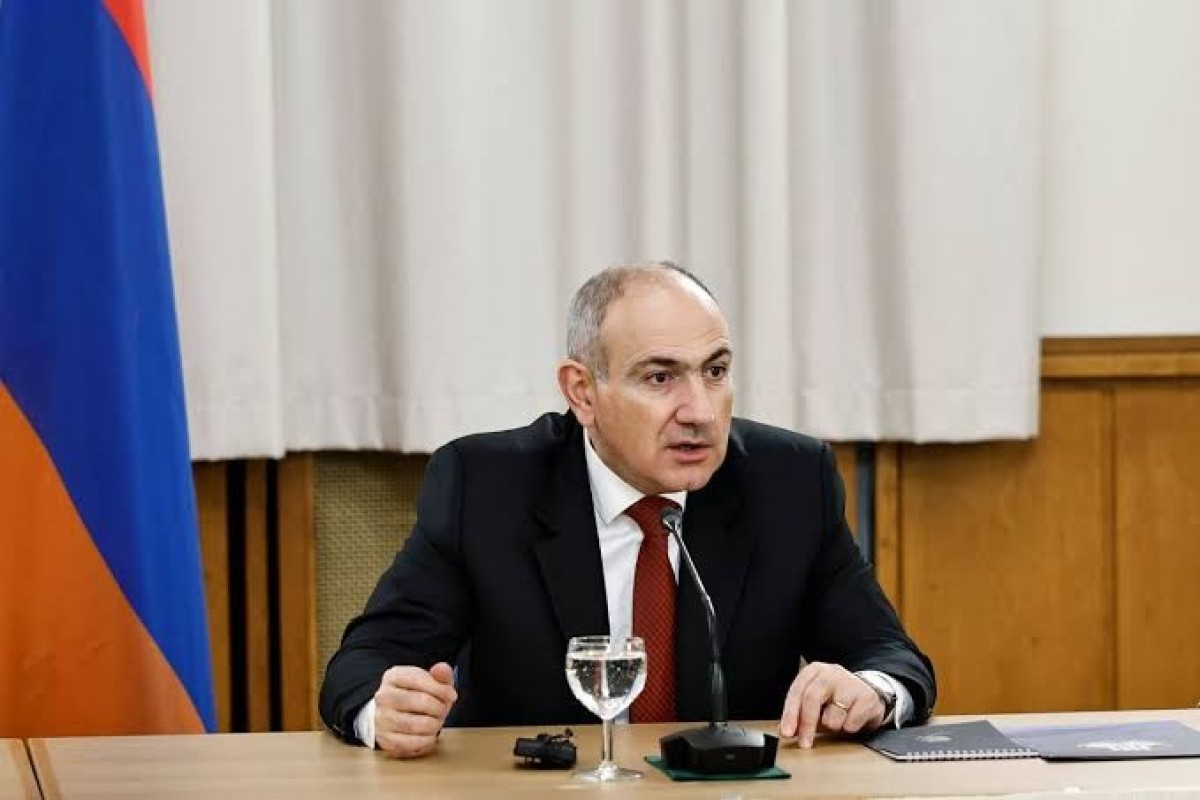
It is precisely at this point that Nikol Pashinyan’s political responsibility comes into focus.
On the one hand, Pashinyan says that he recognizes Azerbaijan’s territorial integrity and acknowledges that Karabakh is part of Azerbaijan. On the other hand, within the political system he leads, Azerbaijan’s activities in Karabakh continue to become the subject of debate and protest. These two approaches create a contradiction between Yerevan’s peace rhetoric and its practical political conduct.
If Armenia recognizes Azerbaijan’s territorial integrity unconditionally, then Azerbaijan’s decision to take foreign diplomats anywhere within its own territory — whether to Khankendi, Shusha or Kalbajar — is not a matter for Armenia to debate. Any approach to the contrary unequivocally amounts to an attempt to interfere in Azerbaijan’s internal affairs.
There is another important point. The Pashinyan government presents itself as a political force that, unlike previous Armenian governments, has adopted a different approach to the Karabakh issue, recognizes Azerbaijan’s territorial integrity and is leading the country toward peace. However, after every new development concerning Karabakh, reactions of essentially the same nature emerge from within the government, the Church, diaspora organizations and various political circles. This raises questions about the extent to which these claims are being translated into practice.
Peace does not merely mean recognizing the other side’s territorial integrity on paper. It also requires recognition of that state’s sovereign rights over its own territory. Otherwise, statements about recognizing territorial integrity remain merely formal.
The reactions to the diplomatic corps’ visit once again demonstrate why the issue of Armenia’s Constitution is a matter of principle for Azerbaijan. Baku has long demanded the complete elimination of the legal foundations for territorial claims against Azerbaijan in Armenia. In this context, the continued reference to the Declaration of Independence in the preamble to Armenia’s Constitution remains one of the main points of contention. That document refers to the 1989 decision concerning the “unification” of the Armenian SSR and the former Nagorno-Karabakh Autonomous Oblast.
Yerevan may argue that this does not constitute a territorial claim against Azerbaijan. However, the continuing resistance within Armenia’s political and public sphere to treating Karabakh as Azerbaijan’s internal matter — particularly the involvement of members of Pashinyan’s own team in this process — indicates that Baku’s concerns are not unfounded.
That is precisely why, for Azerbaijan, the issue is not merely what Pashinyan says today. The central issue is the complete elimination of the legal and political grounds that could allow territorial claims against Azerbaijan to be raised again in the future.
If Nikol Pashinyan genuinely seeks lasting peace with Azerbaijan, he must also assume responsibility for making that peace a reality. Recognition of Azerbaijan’s territorial integrity should not remain merely a statement made on international platforms; it should also be reflected in the Armenian authorities’ political conduct regarding Karabakh.
For now, however, the campaign surrounding the diplomatic corps’ visit to Karabakh and Eastern Zangezur suggests the opposite. On the one hand, Yerevan speaks of peace; on the other, it demonstrates an attitude toward developments taking place within Azerbaijan’s sovereign territory that amounts to interference.
The political responsibility for this contradiction rests first and foremost with Armenian Prime Minister Nikol Pashinyan. The sincerity of the peace process must be demonstrated not only at the negotiating table, but also in the day-to-day political approach toward Azerbaijan’s sovereignty and territorial integrity.


 Follow us on Telegram
 t.me/apanewsaz
 Follow us on Instagram
 Follow us on TikTok
 Follow us on Facebook
 Follow us on X