









Published in the framework of APA-CRIA partnership
Iran’s role in the Nagorno-Karabakh conflict has always been more complicated than suggested by its image in the outside world. The millenarian Islamic Republic favouring an avowedly Christian state in a dispute with its predominantly Shiite Muslim neighbour seems like an unlikely situation. But since the war in the early 1990s, Iran has been pre-disposed towards supporting Armenia over Azerbaijan on the Karabakh issue. Iranian attempts to broker a ceasefire in 1992 failed and, shortly after, Armenian forces captured Shusha and Lachin, leading to doubts in Azerbaijan about Iran’s commitment.
Subsequently, Tehran has publicly expressed a neutral and balanced approach to the conflict. However, it has built a strong economic alliance with Yerevan. Iran supplies Armenia with significant volumes of its natural gas, and is its sole supplier aside from Russia. It has also helped to construct hydro-electric dams on the Araz river between the two states.
Iranian support of Armenia is largely due to strategic balancing. The huge population of ethnic Azerbaijanis in Iran’s north-western provinces have always been seen as a potential secessionist threat by Tehran. This is notwithstanding the high positions which many Azerbaijanis have reached in Iran (even the Supreme Leader Ayatollah Ali Khamenei is ethnically Azerbaijani).
Tehran seems to believe that if Azerbaijan regained Karabakh and the surrounding regions, it could potentially provoke an upsurge of nationalist feeling in the north-western provinces of Iran. The status quo is preferable. Tehran has also been angered by competition with Baku over disputed Caspian oil and gas resources, and by Azerbaijan’s growing ties with the West and with Israel.
As the facts on the ground change, Iran is forced to adapt its policy accordingly. When the negotiations on the Madrid Principles (a framework for resolving the Karabakh conflict, envisaging Armenia’s initial withdrawal from some of the occupied lands surrounding Nagorno-Karabakh itself in exchange for security guarantees) intensified, Tehran reiterated its willingness to mediate.
Iranian diplomats have repeatedly criticised the OSCE’s Minsk Group of Russia, France and the US for failing to resolve the conflict after 18 years. This is hardly a rare (or unjustified) criticism. However, Iran’s ambassador to Azerbaijan Muhammad Bagir Bahrami also suggested that these non-regional countries “are only pursuing their own agendas and view the Nagorno-Karabakh issue as a means of furthering their own interests." (RIA Novosti, February 1).
Exactly what those interests are is not made clear, but the insistence on a regional solution indicates Iran’s deep concern over peacekeeping forces in Karabakh, one of the conditions of the Madrid Principles.
Given Iran’s deeply antagonistic relationship with the West, the deployment of international military forces – probably from the OSCE - just a few miles from its northern border would provoke serious concern and add to Tehran’s fear of encirclement (US troops are already to the west in Iraq; the east in Afghanistan; the south-west in the Gulf; and the north-east in Central Asia).
The reactions of Yerevan and Baku to Iran’s mediation offer have been mixed. As analyst Mina Muradova observes, the ongoing tensions between Azerbaijan and Turkey over the Armenia-Turkey thaw has raised serious concerns in Baku about Turkey’s reliance as a positive influence in Nagorno-Karabakh (Central Asia-Caucasus Analyst, March 18). This may have led it to reappraise Iran’s suitability as a mediator, although for now it remains publicly cautious.
Iran has significant leverage over Armenia, in this case due to its strategic economic alliance. Armenia has been more willing than Azerbaijan, historically, to consider Iranian mediation. In January Robert Kocharian, the former Armenian president, made a trip to Iran in which he met President Mahmoud Ahmadinejad (RFE/RL, January 25). Although described as a ‘private visit’, there was significant speculation that the former Armenian leader was seeking to quietly encourage Iran to make more active efforts in Karabakh.
Nonetheless, the possibility of Iranian mediation in Nagorno-Karabakh remains remote. None of the other players involved in the conflict would be willing to accept Tehran having anything more than an informal role. This reluctance extends beyond Europe and the US. Russia’s growing irritation with its southern neighbour would lead to serious disapproval on any actions which looked as if they intruded in Russia’s sphere of influence.
And even Turkey – for all Prime Minister Erdogan’s regular comments about his country’s friendship with Iran – would be alarmed by Iranian encroachment into Turkey’s difficult eastern neighbourhood, especially when the thaw with Armenia is under a number of complex pressures.
Iran’s enthusiasm for mediating in the Nagorno-Karabakh conflict is also an attempt to restore some geopolitical prestige at a time when it is under serious external pressure. As the diplomatic screws tighten over its nuclear programme, expect to see it becoming more and more active in its attempts to broker a peace.


 Follow us on Telegram
 t.me/apanewsaz
 Follow us on Instagram
 Follow us on TikTok
 Follow us on Facebook
 Follow us on X
Political
Alarm bells over the Caspian Sea: Sharp decline in water levels poses not only environmental but also economic and strategic challenges - ANALYSIS
 16:15
16:15
 9 October 2026
Caspian Environmental Summit: Sea’s environmental problems to be discussed in five-party format - COMMENTARY
13:34
9 October 2026
Consultative Meeting of Central Asian and Azerbaijani Heads of State: Cooperation format transforms into C6 - COMMENTARY
10:39
8 October 2026
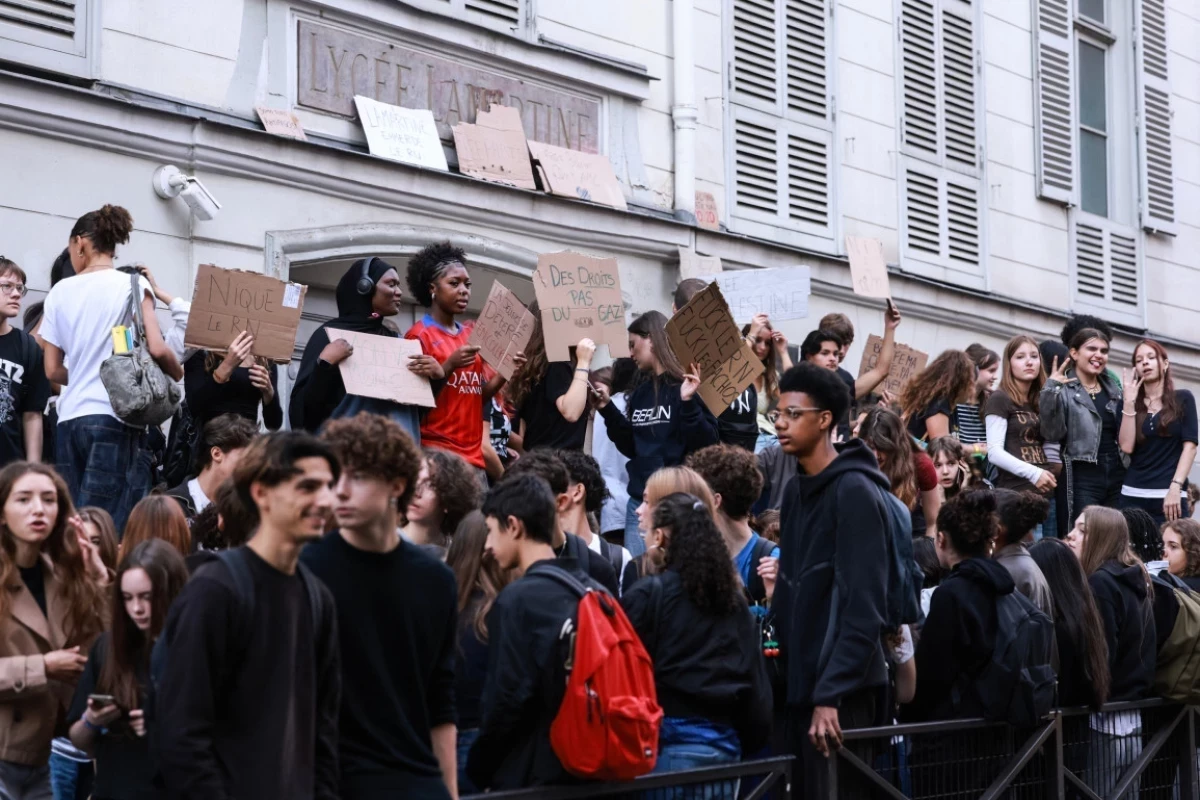
School protests in France: International organizations remain silent on human rights violations - COMMENTARY
14:26
7 October 2026

NEWS FEED
More than 40 flights to Istanbul have been diverted to other airports
04:09
15 October 2026
Houthis claim hit on Saudi fighter jet
03:41
15 October 2026
US destroys Iran-linked ship in Gulf of Oman
02:37
15 October 2026
Aston Villa beat Fenerbahce 6-0 in Champions League clash at Villa Park
02:10
15 October 2026
Media and Broadcasting Council and Ministry of Health release joint statement
01:37
15 October 2026
Trump: Canada will end up being 51st state
01:14
15 October 2026
Istanbul roads collapse, traffic hits 90% as flooding continues
00:52
15 October 2026
Banks, buildings burn as Albania's capital Tirana erupts into student violence
00:26
15 October 2026
Six years pass since Armenian army's shelling of Terter cemetery
00:00
15 October 2026
Haberturk: Teenager dies from electric shock during heavy rain in Istanbul
23:45
14 October 2026
Ukrainian President rules out resigning, holding elections
23:39
Audio
14 October 2026
FBI denies Patel's visit to Russia
23:16
14 October 2026
Britain will develop military equipment for Ukraine
23:00
14 October 2026
Dinner hosted on behalf of President Ilham Aliyev in honor of participants of 7th CICA Summit
22:44
14 October 2026
French President to visit Gulf states from October 19 to 21
22:34
14 October 2026
President Ilham Aliyev met with President of Tajikistan
22:18
14 October 2026
President Ilham Aliyev met with President of Uzbekistan-UPDATED
21:50
14 October 2026
US plans to deploy hundreds of thousands of kamikaze drones
21:41
14 October 2026
Zelenskyy says he feels 'betrayed' by Trump's actions
21:25
14 October 2026
FBI Director Patel visits in Russia
20:37
14 October 2026
Iranian FM, Lebanese President discuss developments in Lebanon and the region
20:27
14 October 2026
Le Pen and Melenchon gain momentum ahead of French 2027 election, poll shows
20:11
14 October 2026
Amir of Qatar arrives in Azerbaijan
19:35
14 October 2026
Hakan Fidan arrives in Baku - UPDATED
19:13
14 October 2026
President Ilham Aliyev met with President of Israel
19:11
14 October 2026
President Ilham Aliyev receives Bahrain’s Foreign Minister
19:09
14 October 2026
President Ilham Aliyev receives member of Political Bureau of CPC Central Committee
19:09
14 October 2026
Georgia not invited to EU forum
19:08
14 October 2026
President Ilham Aliyev met with Vietnamese Vice President
19:06
14 October 2026
President of Azerbaijan receives Sri Lankan minister
19:06
14 October 2026
State Migration Service: More than 30 Azerbaijani citizens readmitted from Germany
18:48
14 October 2026
MP from Pashinyan’s party denied entry to Russia
18:32
14 October 2026
Shavkat Mirziyoyev arrives in Baku - UPDATED
18:30
14 October 2026
Azerbaijani delegation familiarizes itself with operations of Kazakhstan’s leading ports and terminals
18:22
14 October 2026
Azerbaijani and Kyrgyz delegations hold meeting - VIDEO
18:15
14 October 2026
“Falcons Meet - 2026” joint tactical flight exercise continues - VIDEO
18:14
14 October 2026
Trump did not invite OSCE observers to the U.S. midterm elections
18:10
14 October 2026
Chinese and Russian foreign ministers meet in Baku
18:08
14 October 2026
Emomali Rahmon arrives in Azerbaijan
18:03
14 October 2026
Kyrgyz President arrives in Azerbaijan
17:47
14 October 2026
NATO Secretary General: No need for idea of unified European army
17:32
14 October 2026
Prime Ministers of Azerbaijan and Cambodia meet in Baku
17:29
14 October 2026
Kanak politician: We cannot allow France to continue its colonial policy
17:26
14 October 2026
Azerbaijan-Laos investment and business forum held in Baku - PHOTO - UPDATED
17:26
14 October 2026
Kazakh President begins visit to Azerbaijan
17:23
14 October 2026
Agreement reached on draft documents to be adopted at 7th CICA Summit in Baku tomorrow
17:19
14 October 2026
Assessment of OPEC+ countries’ production capacities to be ready by year-end
17:15
14 October 2026
Azerbaijani and Kyrgyz delegations hold meeting - VIDEO
17:11
14 October 2026
Russian FM arrives in Azerbaijan - UPDATED
16:58
14 October 2026
Novak: Diesel agreement with US will increase oil production in Russia
16:56
14 October 2026