

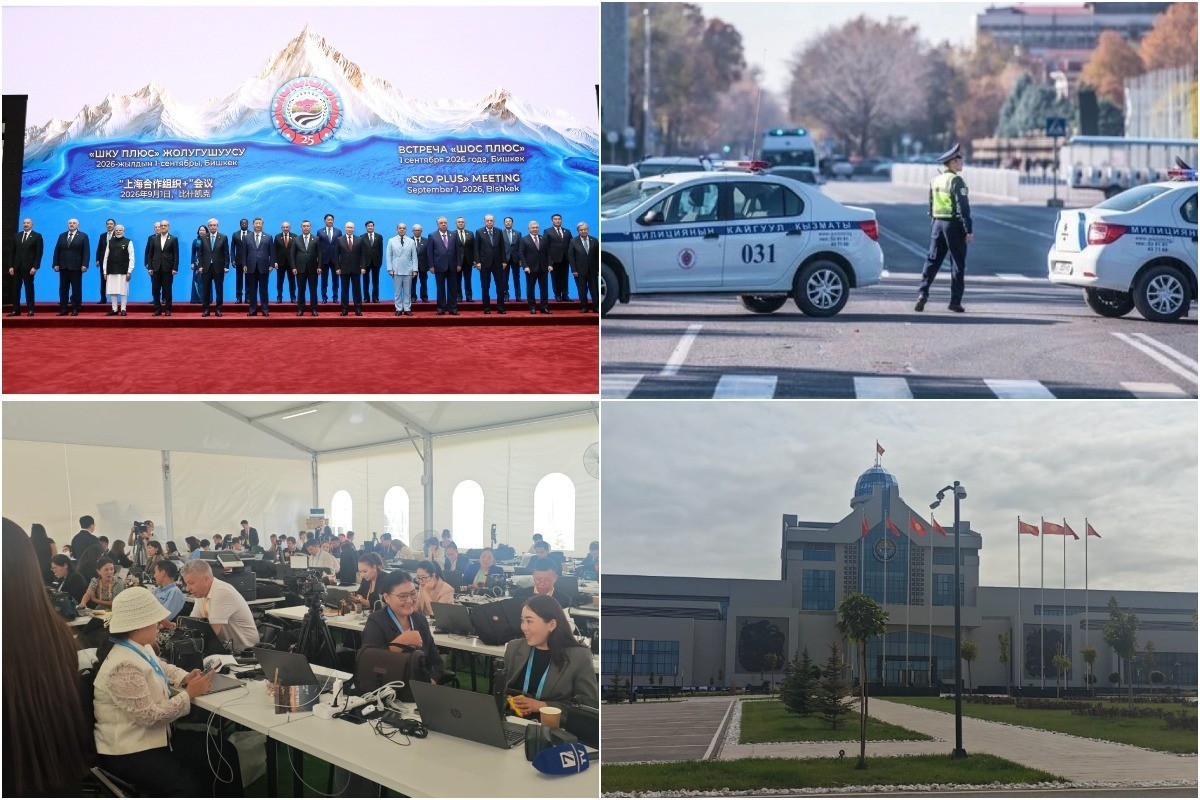


Bishkek, the capital of Kyrgyzstan, hosted the Shanghai Cooperation Organization (SCO) Summit on September 1. That day, the intense pace of diplomacy was added to the city’s daily rhythm. For one day, Bishkek became the political center not only of Kyrgyzstan but also of the vast geography covered by the SCO.
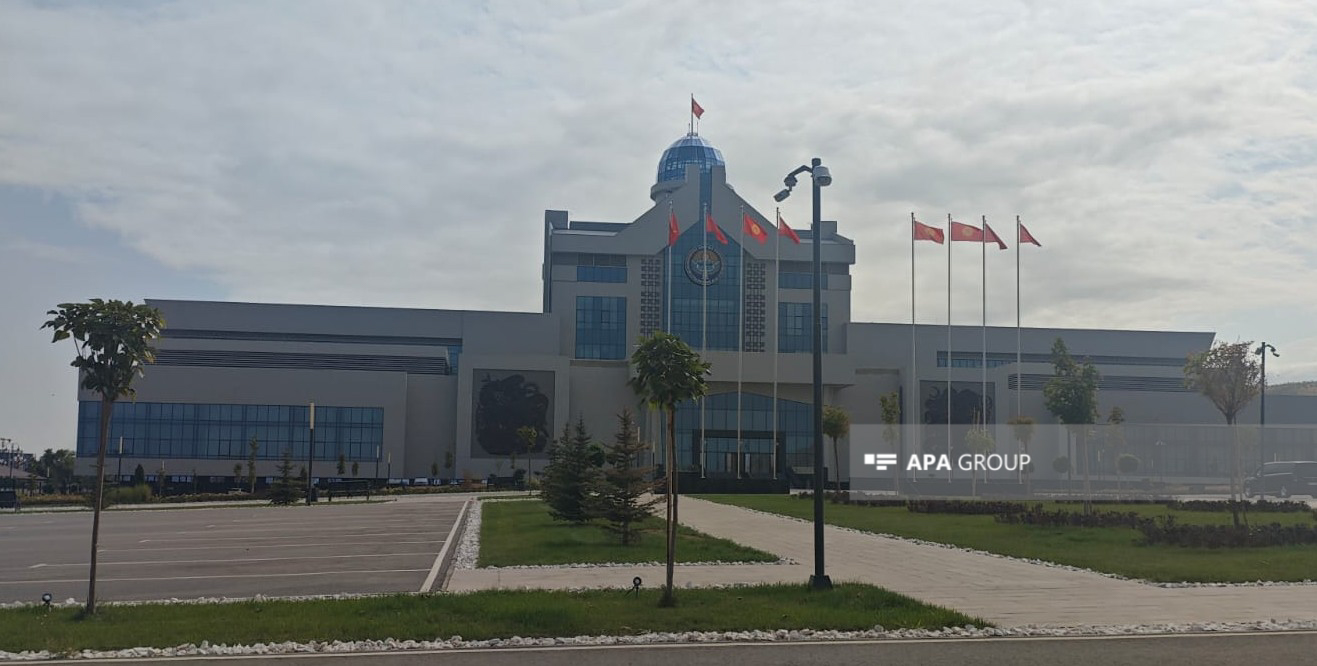
As one approached the area where the summit was being held, the scale of the event was first evident in the security measures. Security barriers, police posts and checkpoints marked the boundaries of the summit venue. Security here was not limited to visible barriers – screening of people entering the venue and regulating access under special procedures were among the key elements of the overall organizational process.
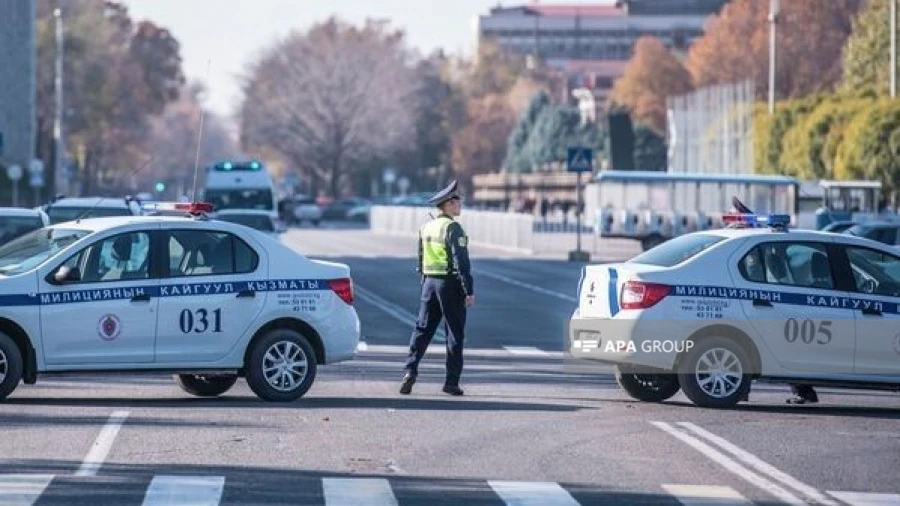
Everything in the area was carried out according to predetermined procedures. Diplomatic protocol was in place inside the summit venue, while a heightened security regime was enforced around it. On one side were delegations from various countries, and on the other were journalists working to deliver news to different parts of the world.
Although security barriers separated the summit venue from the city’s ordinary rhythm, the media connected it to the entire world.
First stage of the summit – meeting of SCO leaders
The SCO Summit in Bishkek began on September 1 with a closed-door meeting of the heads of state of the organization’s member countries. The meeting was held without the participation of media representatives. It was one of the summit’s main political stages. The heads of state exchanged views on current issues of cooperation within the organization, the regional agenda and future areas of interaction. While the meeting was underway, journalists at the media center waited for official information to be released and prepared news reports related to the summit.
At events like this, time is measured differently: while proceedings in the negotiating hall move forward with diplomatic restraint, every minute at the media center carries news value. On one side were discussions between heads of state, while on the other journalists were racing against time to deliver information emerging from the summit to their audiences.
Summit continued in SCO Plus format
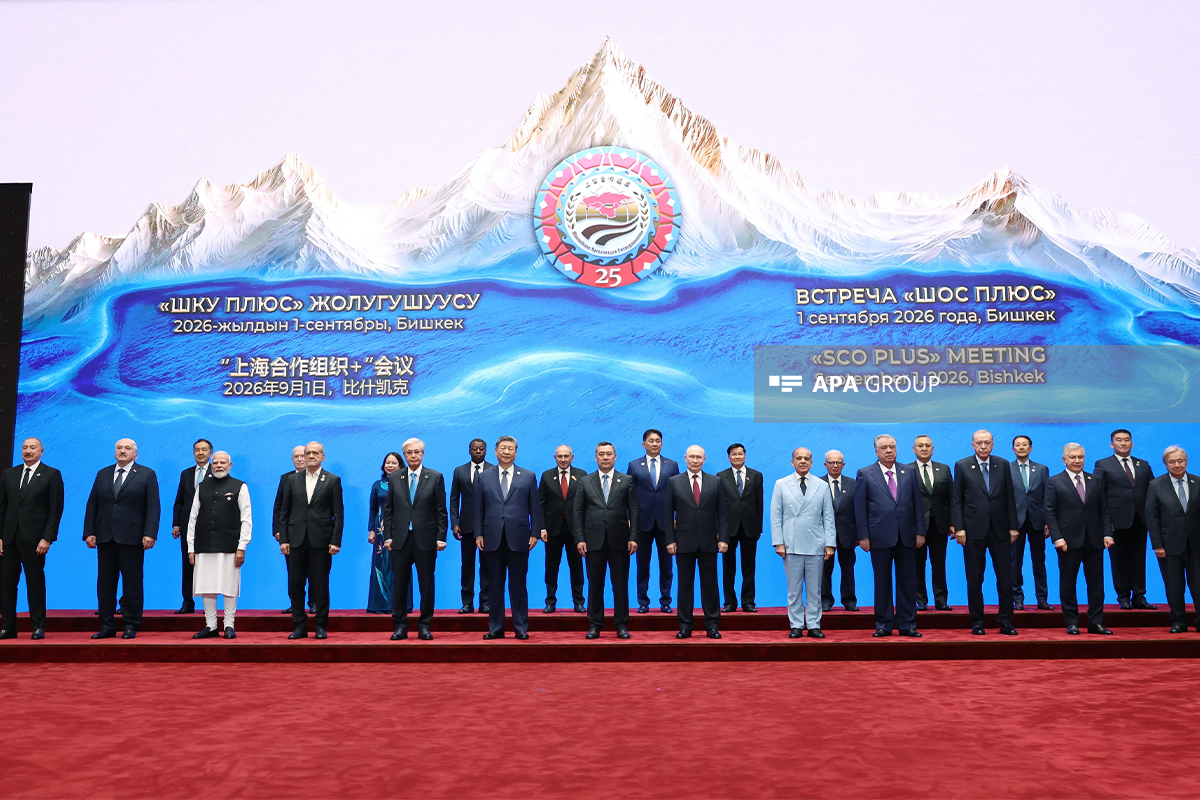
Following the meeting of the heads of state of SCO member countries, the summit continued in the SCO Plus format, which provided for broader participation. The SCO Plus meeting expanded the scope of discussions. Alongside SCO member states, this format brought representatives of invited countries and international organizations together around one table.
Thus, the exchange of views held at the level of leaders of the organization’s member countries was taken to a broader international platform at the next stage of the summit. The SCO Plus format expanded not only the number of participants but also the political and geographical scope of the discussions.
While the positions of states were being voiced in the summit hall, those views were being shaped into news language at the media center. The long sentences of diplomacy were transformed into short, precise and timely news reports by journalists.
Message of peace and multilateralism from the Bishkek podium
President of Azerbaijan Ilham Aliyev delivered a speech at the SCO Plus format meeting. The head of state thanked President of Kyrgyzstan Sadyr Japarov for the invitation and hospitality. The President emphasized the importance of the Treaty on Allied Relations signed a month earlier: “That historic document elevated relations between Azerbaijan and Kyrgyzstan to the highest level.”
Speaking about the new situation in the South Caucasus, Ilham Aliyev noted that Azerbaijan and Armenia had initialed the text of a peace agreement: “The South Caucasus region, which for many years was a zone of conflict, is turning into a zone of peace.”
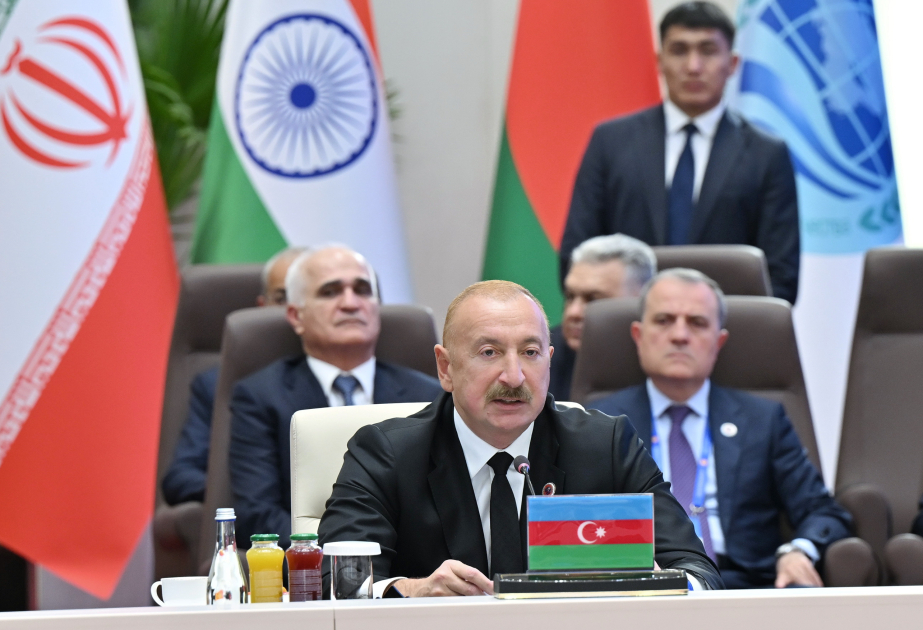
The head of state said that Azerbaijan supplies oil products to Armenia and ensures the transit of cargo from third countries. He noted that the sides are working to expand mutual trade and establish new overland transport links.
Touching upon the implementation of UN Security Council resolutions, the President emphasized: “Azerbaijan restored its sovereignty and territorial integrity entirely on its own.” Ilham Aliyev called for the development of mechanisms that would ensure the swift implementation of the resolutions.
At the end of his speech, the President said that Azerbaijan would continue to contribute to strengthening the principles of multilateralism.
Sadyr Japarov, in turn, thanked Ilham Aliyev and said: “It is precisely such broad dialogue that is necessary for the formation of a just, multipolar world.”
Summit’s information center
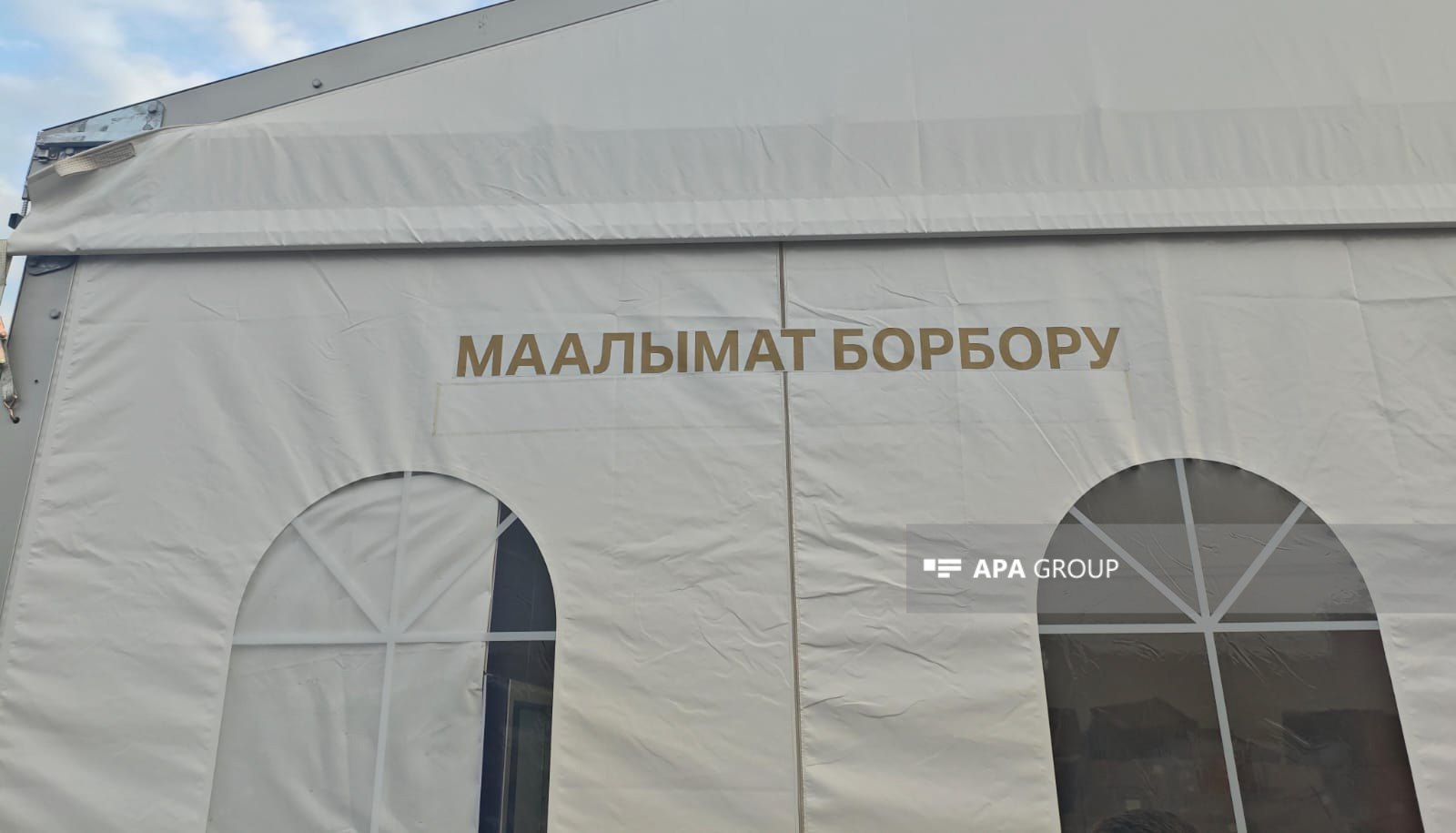
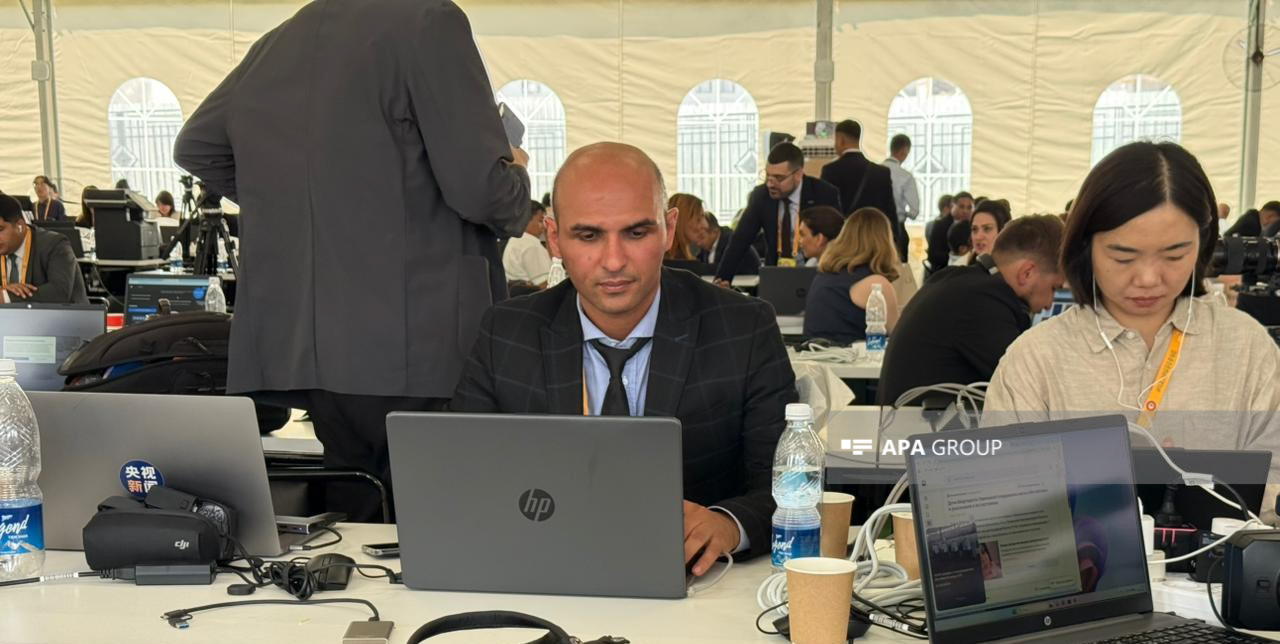
More than 500 local and foreign media representatives took part in covering the SCO Summit in Bishkek. Representatives of the Azerbaijani media were also among the journalists who arrived in Bishkek from various countries. In the summit hall, the microphones belonged to the heads of state, while at the media center, they belonged to journalists. Although the main discussions on the political agenda took place in meeting halls, it was the press center from which they were disseminated to the world. A special workspace had been set up for media representatives at the summit venue. The necessary conditions were created there for journalists to follow the event, promptly prepare information and send it to their newsrooms.
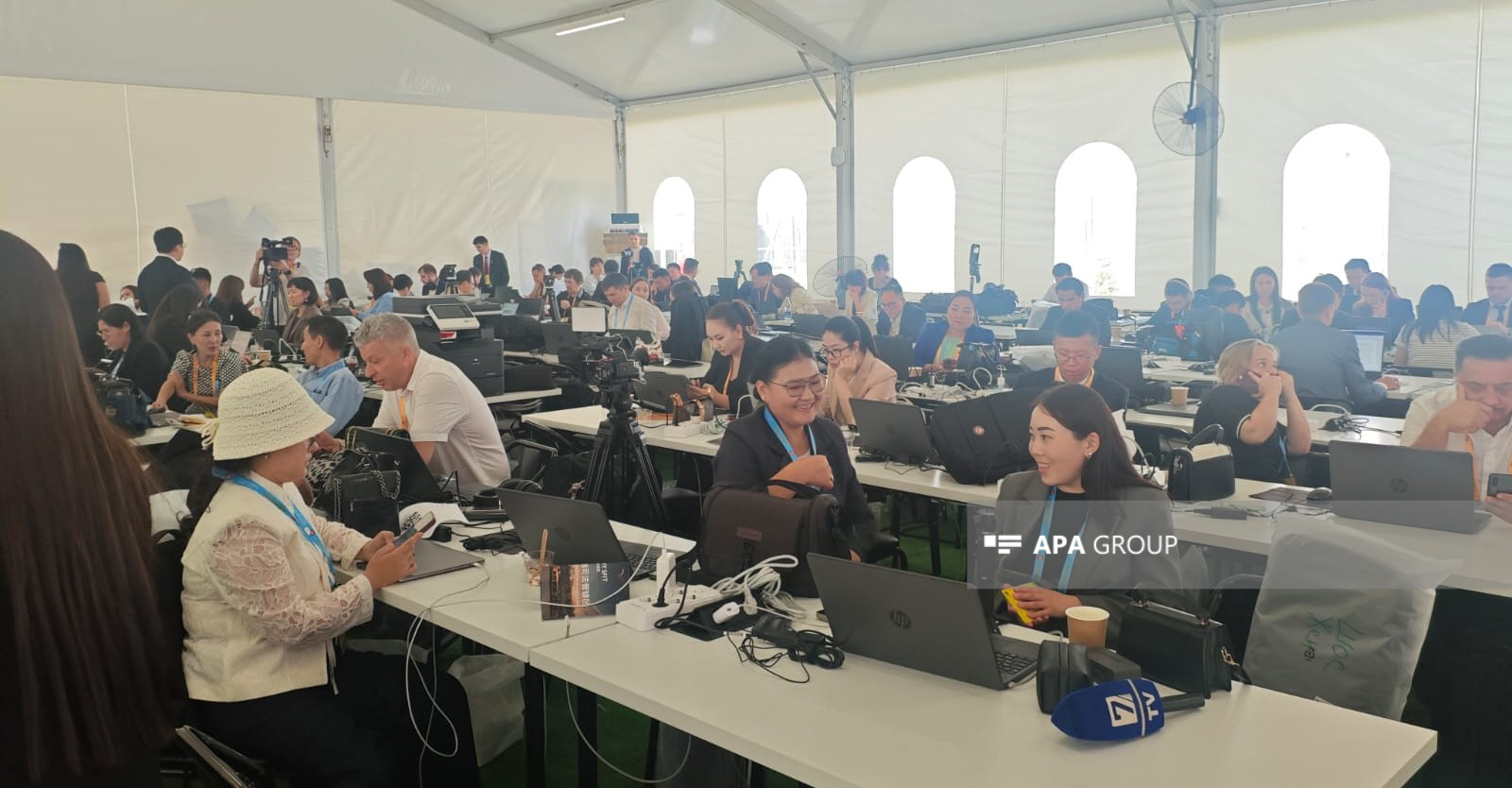
At the press center, news reports were written in different languages, videos were produced, live broadcasts were arranged, and various moments of the summit were captured by cameras. The same event was presented in different languages by journalists from various countries but was delivered to the world from the same center.
The media served as the window through which developments at the summit were presented to the public. Although journalists were not participants in the negotiations, it was they who created the information landscape through which the summit was seen by the world.
Azerbaijani media also in Bishkek
Azerbaijani media representatives were among the hundreds of local and foreign journalists attending the summit. Representatives of the Azerbaijani media covered the meeting of SCO leaders, the SCO Plus meeting and other events taking place on the sidelines of the summit.
Their work was not limited to reporting on the beginning and conclusion of meetings. The overall atmosphere at the summit venue, security measures, the activities of delegations and the conditions created for the media also became subjects of their reports.
Every news story prepared, every photograph taken and every piece of footage recorded in Bishkek during the day became part of the summit’s information chronicle. While the meetings of heads of state were writing the summit’s political history, journalists were creating its day-to-day chronicle.
A short break in the news marathon
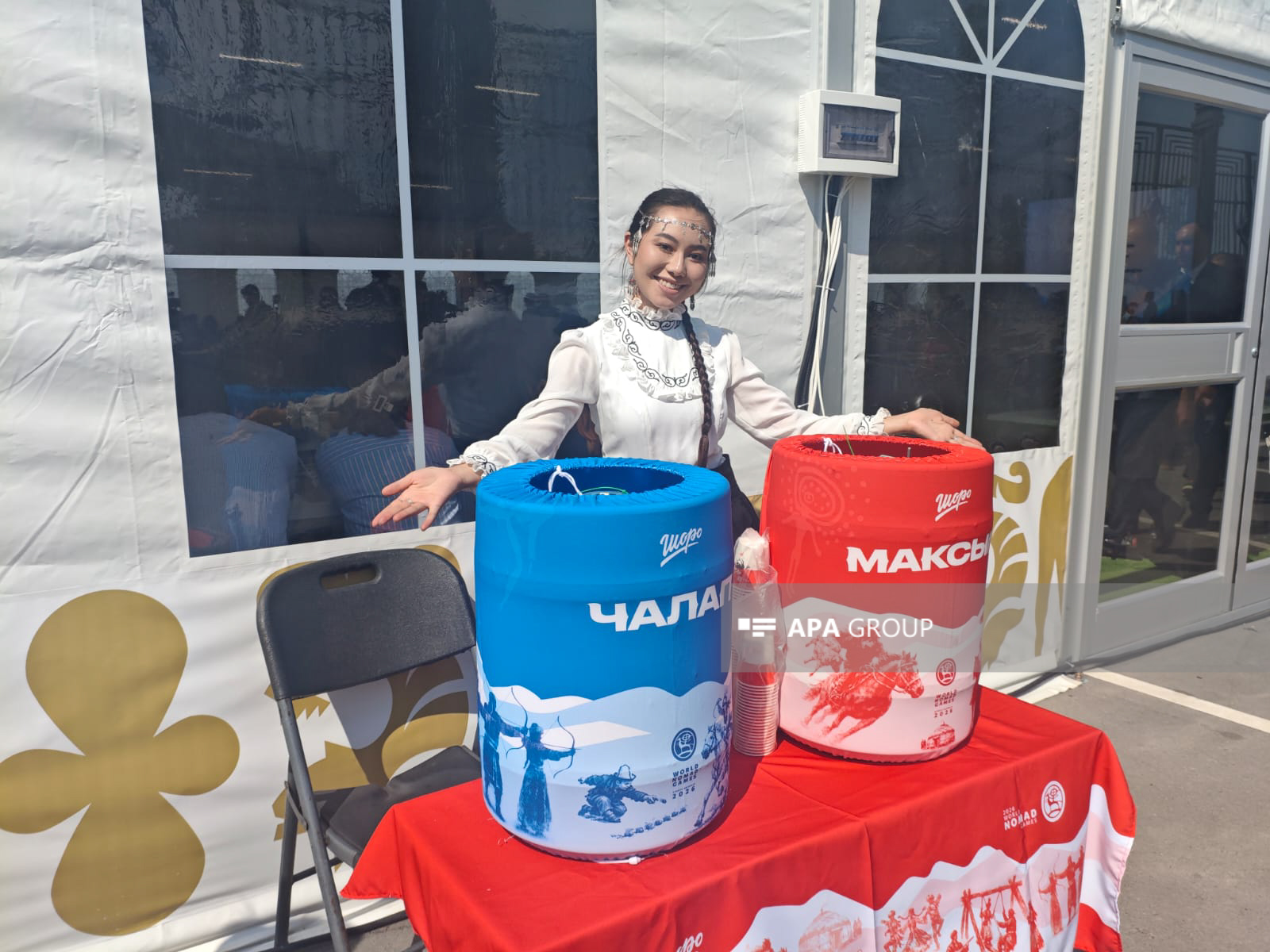
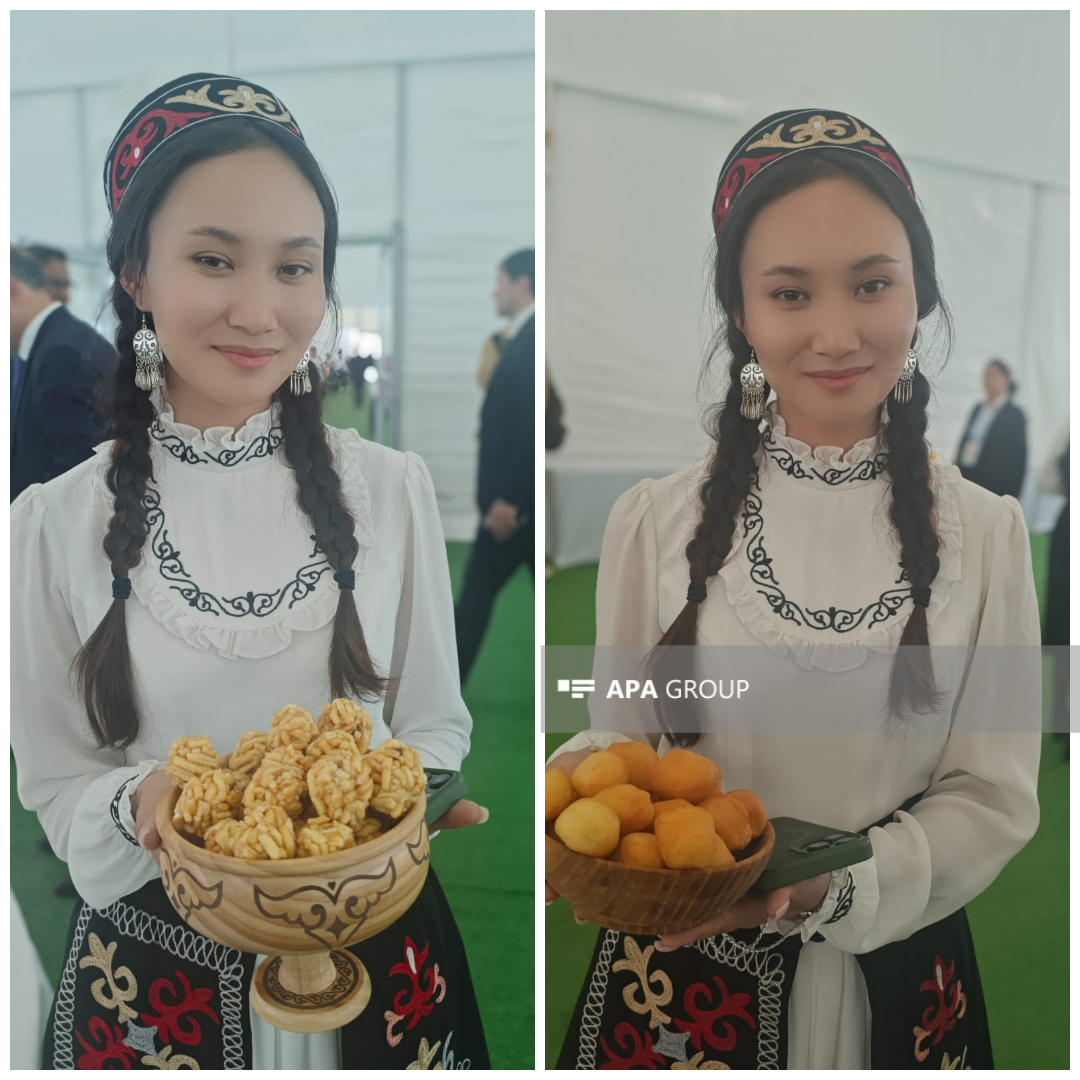
A separate area was allocated for media representatives to take breaks and have lunch. Journalists were offered a variety of dishes from Kyrgyz national cuisine as well as international cuisine. However, the boundary between lunch and work was very brief. For journalists, this area was not simply a place to rest. Media representatives from different countries discussed the day’s events there, exchanged information and prepared for their next assignment.
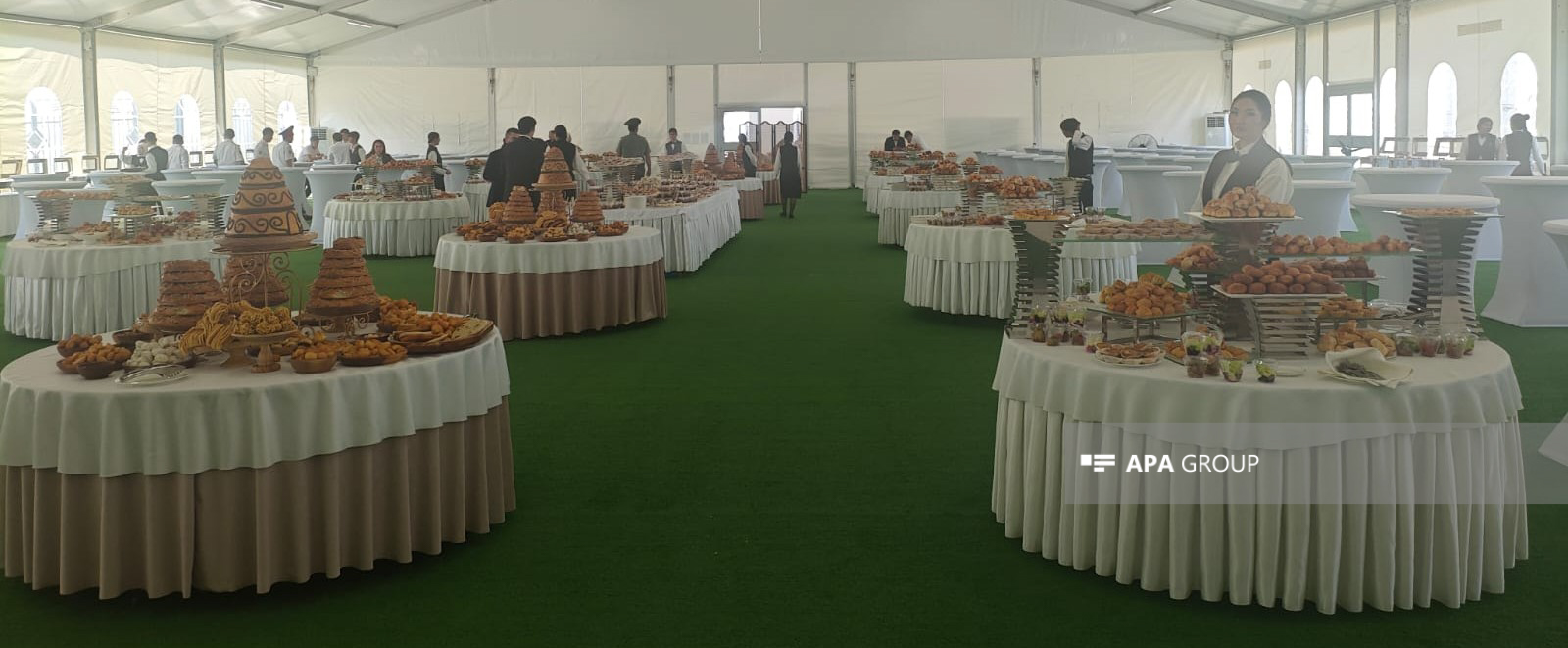
After a break of just a few minutes, computer screens lit up again and cameras were readied for the next shot. Although the summit program included a lunch break, there was no break from the news. The area offering local and international cuisine also provided a small reflection of the summit’s international character: journalists from different countries shared the same tables.
The Bishkek Summit was marked by political meetings, broad-format discussions and intensive media activity. While meetings between heads of state were the visible side of the summit, a complex mechanism of security, protocol and media work operated behind the scenes. Barriers and police posts set up around the venue ensured physical security. Meanwhile, more than 500 journalists working at the media center carried developments at the summit across information borders and delivered them to the world.
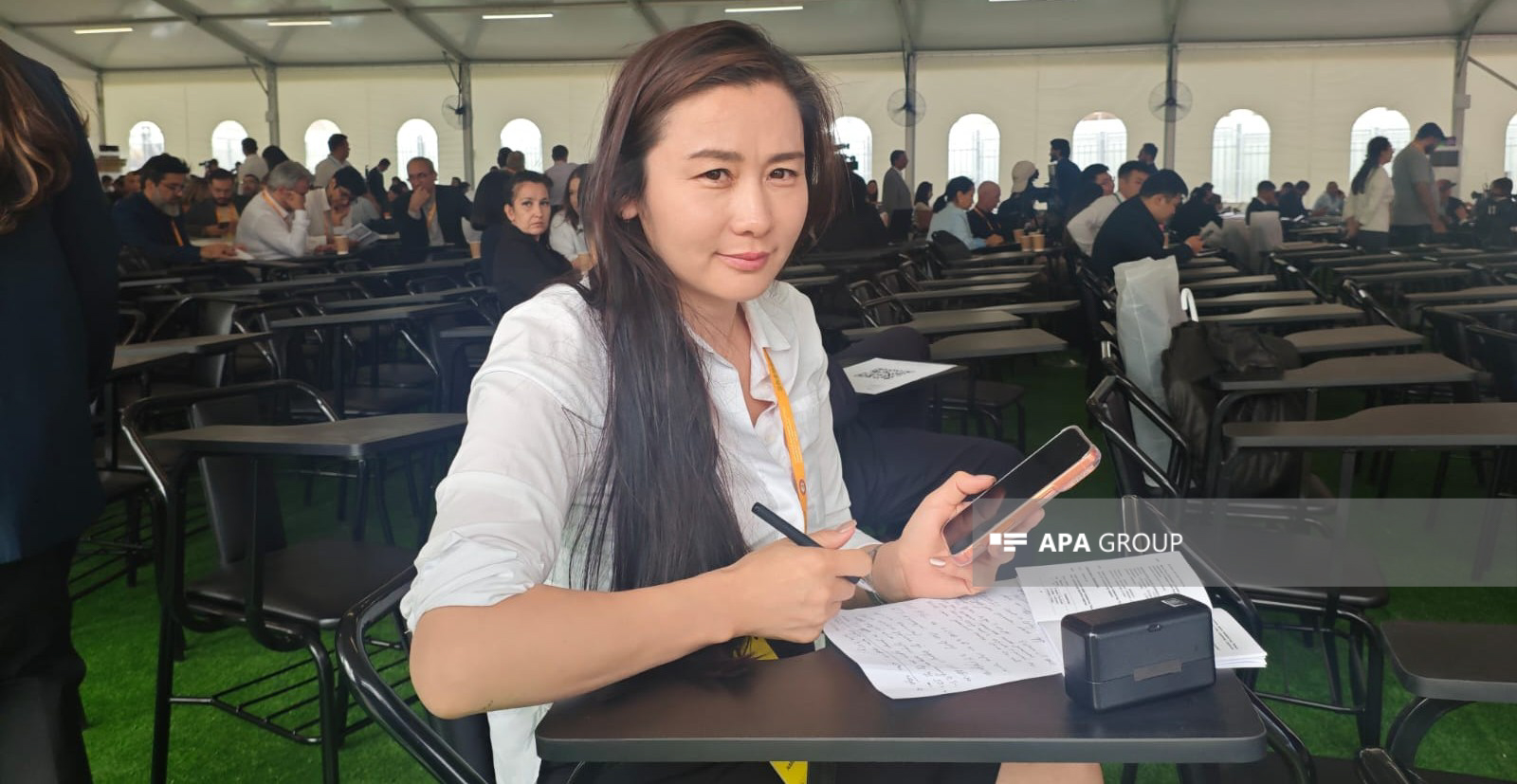
At the end of the day, although discussions in the summit hall had concluded, work at the media center continued. The latest information was being verified, reports were being completed, photographs were being selected and footage was being sent to newsrooms.
Thus, diplomacy had its say in Bishkek, while the media delivered those words to audiences around the world in different languages.


 Follow us on Telegram
 t.me/apanewsaz
 Follow us on Instagram
 Follow us on TikTok
 Follow us on Facebook
 Follow us on X