





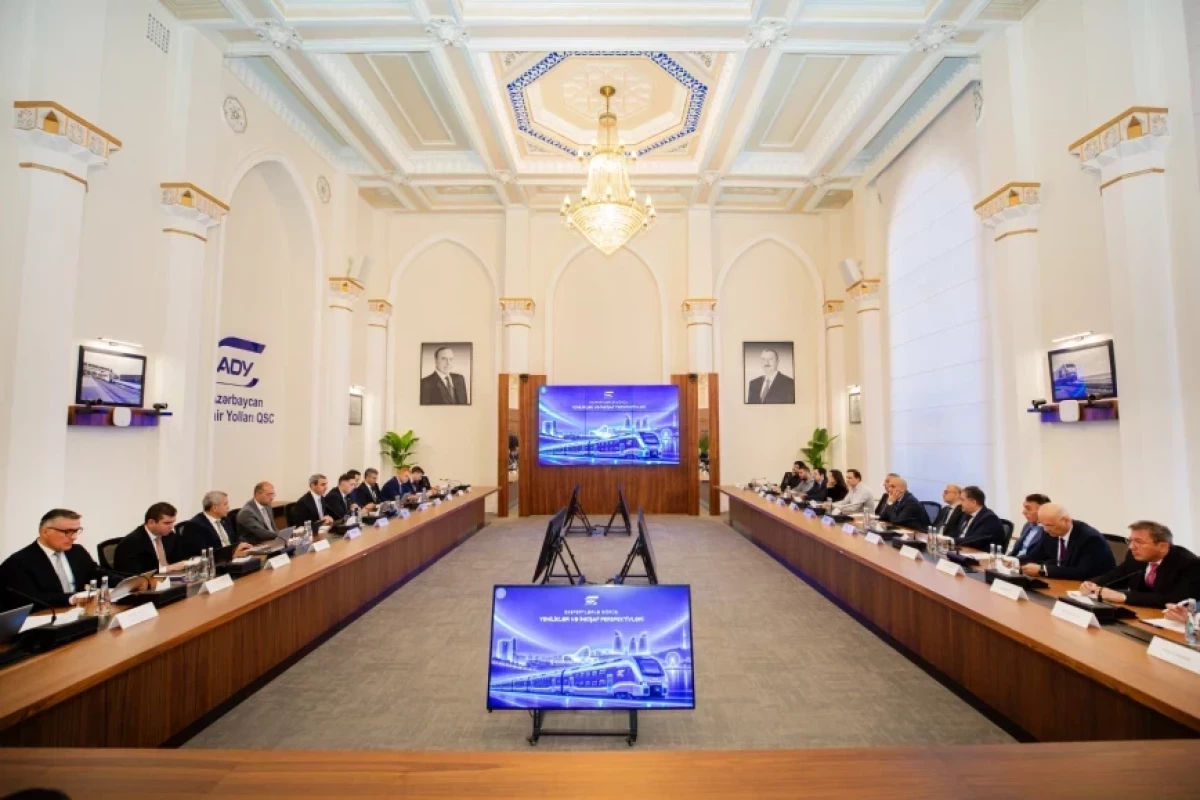


The management of Azerbaijan Railways (ADY) has held a meeting with experts in public transport, international transport corridors, logistics and tourism to discuss the company's recent achievements, ongoing projects and future development priorities, APA-Economics reports.
The meeting featured an extensive exchange of views on projects implemented by ADY in recent years, passenger and freight transportation performance, railway infrastructure modernization, the development of international transport corridors, as well as existing challenges and future priorities.
ADY Chairman Rovshan Rustamov highlighted the important role of railway transport in the country's socio-economic development, improving public mobility and strengthening Azerbaijan's position as an international transport and logistics hub. He noted that increasing passenger satisfaction, improving service quality, and ensuring safe and sustainable transportation remain among the company's key priorities.
According to figures presented at the meeting, ADY transported 9.8 million passengers in January–October 2026, marking a 19% increase compared with the same period last year. October also saw a record monthly passenger volume, with more than 1.3 million people using the railway network. Meanwhile, average daily passenger traffic on the Absheron circular railway has increased from 36,000 to 52,000 over the past two years.
The meeting also reviewed reforms in passenger transportation, including the launch of new routes, the restoration of existing railway connections and the acquisition of modern rolling stock. Particular focus was put to the restoration of the inland Baku–Balakan and Baku–Aghdam routes, the extension of the Baku–Aghstafa service to Gazakh, the introduction of daily passenger services between Ganja and Gabala cities, and the resumption of the Baku–Tbilisi–Baku international railway connection.
Discussions on the development of railway services across Absheron focused on reducing passenger congestion, optimizing train schedules, upgrading infrastructure in the Khirdalan direction and improving passenger facilities at stations and stops. ADY also outlined measures to upgrade the Baku–Khirdalan–Sumgayit and Baku–Pirshagi–Sumgayit lines, restore new suburban railway routes and procure 20 new passenger trains.
The development of digital services was another key topic, with participants discussing improvements to online ticket sales, real-time passenger information, modern payment systems and the accessibility of railway services.
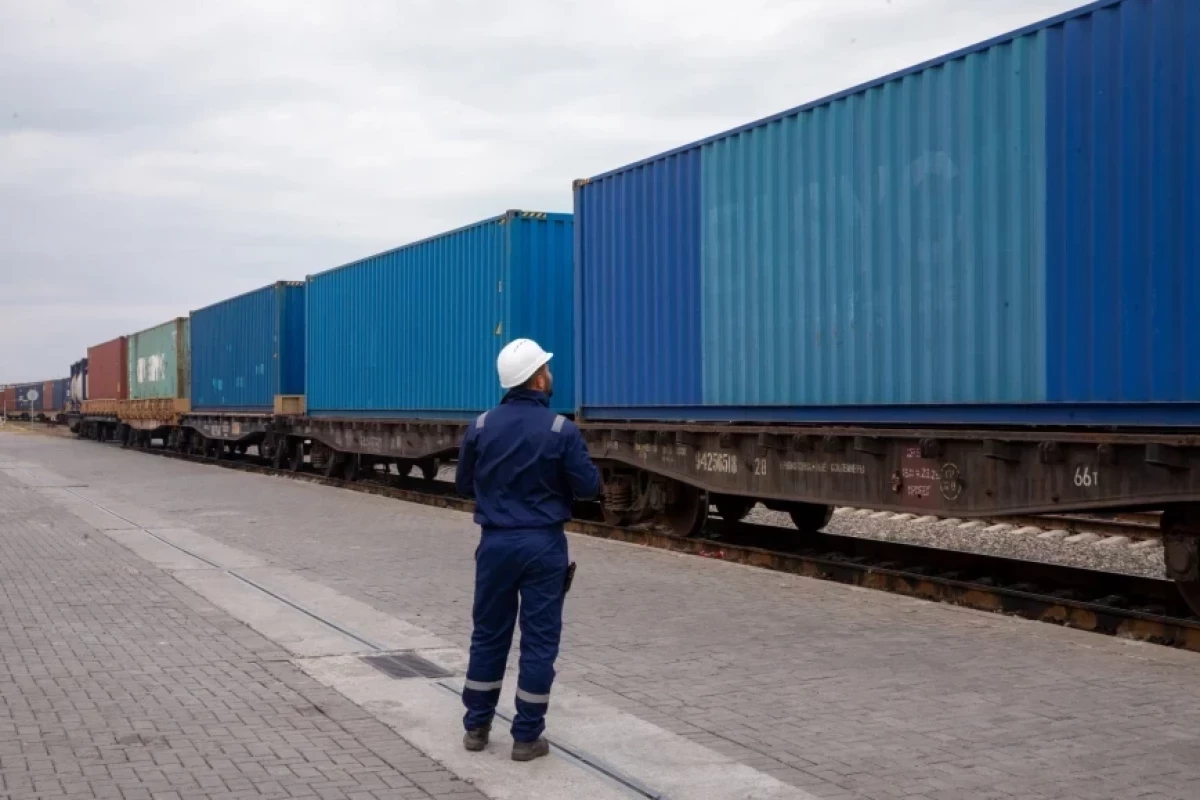
A significant part of the meeting focused on strengthening Azerbaijan's transit potential along international transport corridors. ADY reported that freight transportation volumes reached 15.7 million tons in the first ten months of 2026, up 13% year-on-year. Transit freight volumes increased by 20% over the same period.
The participants were briefed on the development of the Middle Corridor and the North–South International Transport Corridor, the modernization of the Baku–Tbilisi–Kars railway, construction of the Horadiz–Aghband railway line, development of the Astara Terminal and expansion of the Port of Baku's capacity, and the upgrade of the Baku–Tbilisi–Kars railway, which increased its annual freight capacity fivefold, from 1 million to 5 million tons.
The transfer of the Port of Baku under ADY's management was also discussed in the context of improving coordination between rail and maritime transportation. During the first ten months of this year, container throughput at the port exceeded 112,000 twenty-foot equivalent units (TEUs), representing a 31% increase and an all-time high.
Participants also addressed ways to improve the competitiveness of international freight services, eliminate bottlenecks across logistics chains, expand the wagon fleet, simplify border-crossing procedures, digitalize freight operations and make greater use of artificial intelligence.
The role of railway transportation in tourism development was another focus of the discussions. The expansion of passenger services to regional destinations was highlighted as an important factor in promoting domestic tourism, improving transport accessibility in the regions and stimulating regional economic activity.
ADY management answered questions from the experts, heard their proposals and provided updates on ongoing and planned initiatives aimed at further improving railway services.
Concluding the meeting, Rustamov emphasized the importance of maintaining open and constructive dialogue with the expert community. He said such meetings provide a valuable platform for exchanging views, considering professional recommendations and identifying key priorities for the development of railway transportation. ADY expressed its interest in continuing cooperation with experts across relevant sectors.


 Follow us on Telegram
 t.me/apanewsaz
 Follow us on Instagram
 Follow us on TikTok
 Follow us on Facebook
 Follow us on X