







Poland has been plunged into a major constitutional confrontation after the suspension of two senior Constitutional Tribunal judges triggered street protests, police intervention and an escalating political dispute between Prime Minister Donald Tusk and President Karol Nawrocki, APA reports.
The crisis intensified on October 30, 2026, when the president abruptly canceled his trip to Senegal and returned to Warsaw as rival political camps accused each other of undermining Poland's constitutional order.
The confrontation erupted after Constitutional Tribunal judge Anna Korwin-Piotrowska issued orders suspending the court's president, Bogdan Święczkowski, and vice president, Bartłomiej Sochański. The court's existing leadership rejected the orders, leaving the legality of the suspensions disputed.
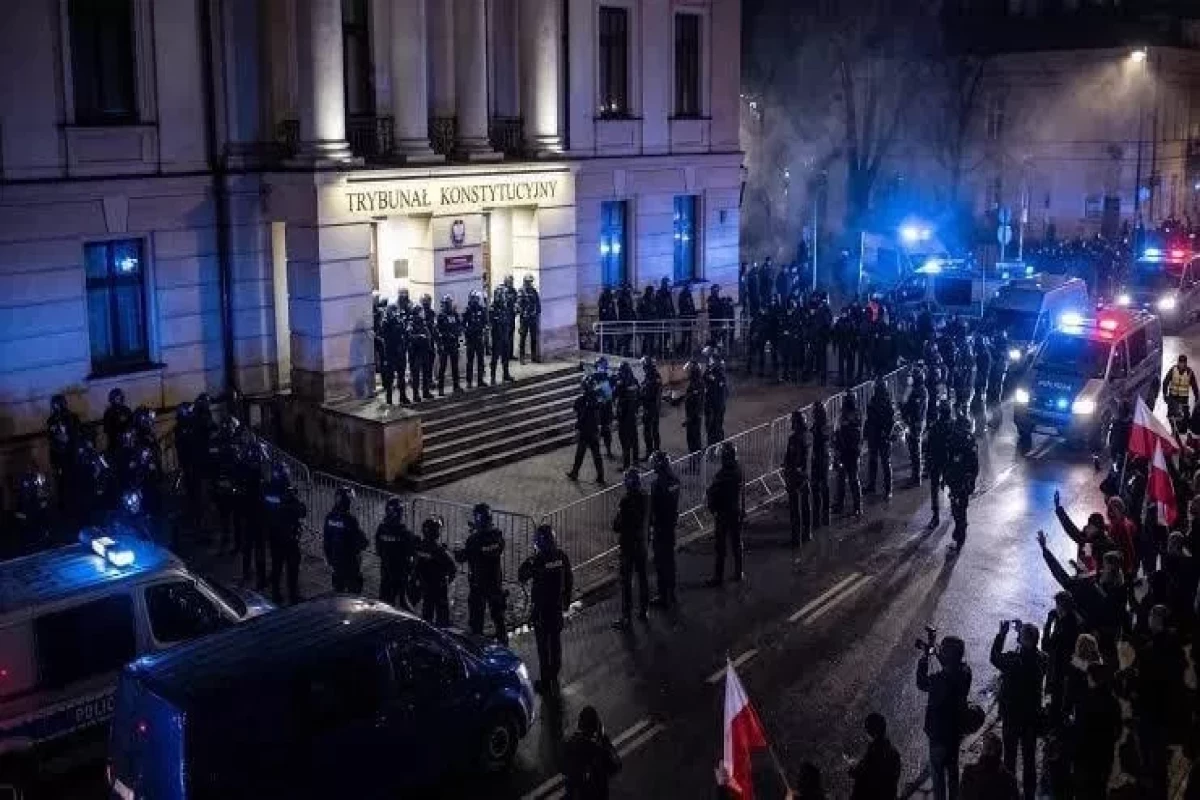
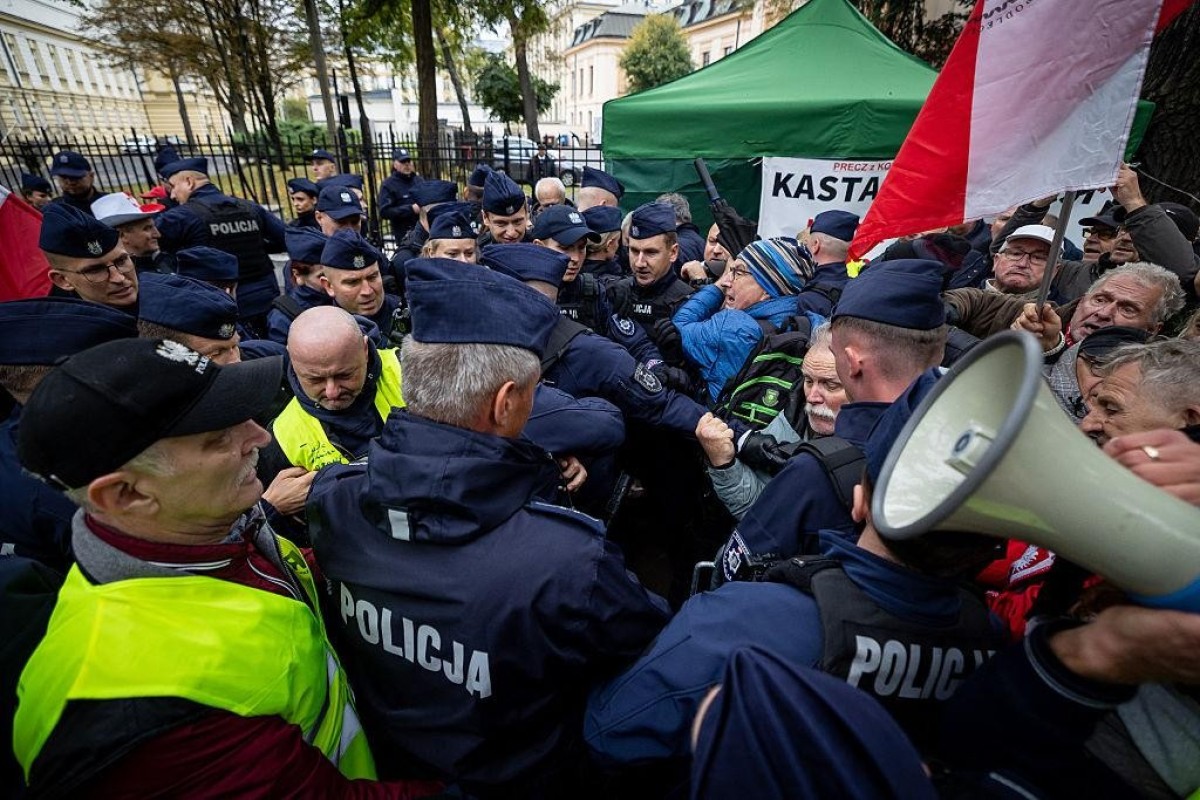
Police deployed outside the tribunal as hundreds of demonstrators gathered, with three people detained following confrontations near the building. The developments represent the latest escalation in a judicial dispute dating back to 2015, when reforms introduced by the Law and Justice (PiS) government prompted concerns about judicial independence.
What triggered Poland's latest constitutional crisis?
The immediate crisis began on October 30 when Constitutional Tribunal judge Anna Korwin-Piotrowska announced the temporary suspension of the institution's president, Bogdan Święczkowski, and his deputy, Bartłomiej Sochański.
The orders accused the court's leadership of obstructing the work of judges elected by the current parliamentary majority and preventing the tribunal from performing essential constitutional duties.
Święczkowski rejected the decision, maintaining that he remained the legitimate president of the tribunal. The institution's official communications also disputed the suspensions, deepening uncertainty over who could lawfully exercise authority.
Police were deployed around the court after security concerns emerged. Some demonstrators attempted to breach barriers, while others reportedly threw objects at officers. Three people were detained.
Polish authorities said the deployment was intended to maintain public order and protect court personnel.
The confrontation exposed an institutional deadlock in which competing groups of judges and political leaders dispute appointments, internal procedures and the legal authority to manage one of Poland's most important courts.
Why has Poland's judiciary been at the center of political disputes since 2015?
Poland's judicial crisis originated in disagreements over appointments to the Constitutional Tribunal after the conservative Law and Justice party came to power in 2015.
The new parliamentary majority sought to appoint judges to positions that had already been filled by its predecessors, triggering disputes over the legality of competing appointments.
Subsequent judicial reforms raised concerns among European Union institutions about the independence of Polish courts and the separation of powers.
The European Commission initiated legal proceedings, while disagreements over judicial independence contributed to EU financial penalties and restrictions affecting European funding.
After Donald Tusk's coalition formed a government in December 2023, it promised to reverse controversial reforms and restore judicial independence.
However, implementing those commitments proved difficult because judges appointed under the previous administration remained in office.
The dispute intensified after Karol Nawrocki became president in 2025 and opposed elements of the government's reform agenda.
Consequently, Poland's constitutional institutions have remained divided over judicial legitimacy, political authority and the procedures required to restore public confidence.
How are Donald Tusk and President Karol Nawrocki responding to the confrontation?
Prime Minister Donald Tusk and President Karol Nawrocki have adopted sharply different positions regarding the legality and necessity of the developments at the Constitutional Tribunal.
Tusk maintains that decisive measures are required to restore judicial independence after reforms introduced during the previous Law and Justice administration.
His government argues that the existing tribunal leadership has obstructed judges elected by parliament, preventing the institution from functioning properly.
Foreign Minister Radosław Sikorski defended the police deployment on October 31, saying intervention was necessary to enable the tribunal to resume its constitutional responsibilities.
Nawrocki, meanwhile, interrupted his journey to Senegal and returned to Poland, emphasizing the seriousness of the confrontation.
Opposition politicians, including PiS leader Jarosław Kaczyński, accused the government of attempting an unconstitutional takeover of the tribunal.
These accusations have not established that a coup occurred.
The contrasting positions demonstrate the fundamental disagreement between the government and presidency over legitimate judicial appointments, institutional independence and constitutional authority.
How could the constitutional dispute affect Poland's democracy and European Union relations?
The confrontation could affect Poland's democratic institutions by prolonging uncertainty over the Constitutional Tribunal's legitimacy and its ability to review legislation.
The tribunal is responsible for determining whether laws and certain state actions comply with Poland's Constitution.
When judges and political authorities dispute its composition, the institution may struggle to issue decisions that command broad legal and public acceptance.
The current deadlock also complicates relations between the government and presidency, particularly because Nawrocki can veto legislation intended to implement judicial reforms.
For the European Union, the dispute carries additional significance.
Brussels has repeatedly emphasized judicial independence as an essential requirement of EU membership and has previously challenged Polish reforms considered inconsistent with European legal standards.
Although Tusk's administration has sought to improve relations with European institutions, unresolved judicial disputes remain a source of concern.
Continued institutional paralysis could complicate future legislation, reinforce political polarization and weaken confidence in constitutional oversight ahead of Poland's next parliamentary election.
What could happen next as Poland's political and judicial crisis deepens?
The next stage will depend on whether Poland's competing political and judicial authorities can establish an accepted legal procedure for resolving the leadership dispute.
Justice Minister Waldemar Żurek has sought the removal of judicial immunity from Święczkowski and Sochański, alleging that their actions prevented other judges from performing their duties.
Any criminal proceedings would require appropriate legal procedures and would not automatically resolve the dispute over the tribunal's leadership.
President Nawrocki could continue challenging government-backed changes, while Tusk's parliamentary coalition may pursue further institutional reforms.
The situation could also prompt additional demonstrations if supporters of either political camp believe constitutional procedures are being violated.
International concern may increase if the confrontation disrupts essential judicial functions or creates further uncertainty over the rule of law.
However, the available evidence does not establish that Poland is undergoing a military coup or that its constitutional government has collapsed.
As of October 31, the central unresolved question remains who can lawfully exercise authority over the Constitutional Tribunal and how its normal functioning can be restored.


 Follow us on Telegram
 t.me/apanewsaz
 Follow us on Instagram
 Follow us on TikTok
 Follow us on Facebook
 Follow us on X