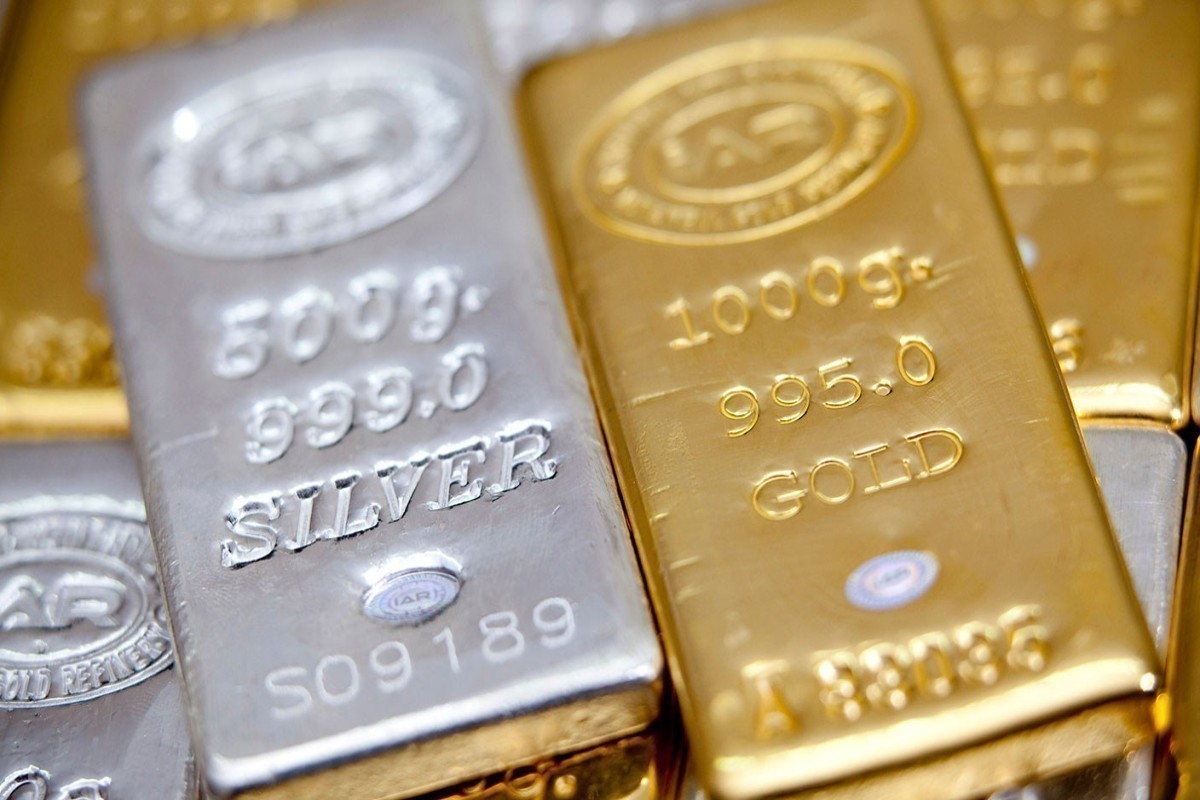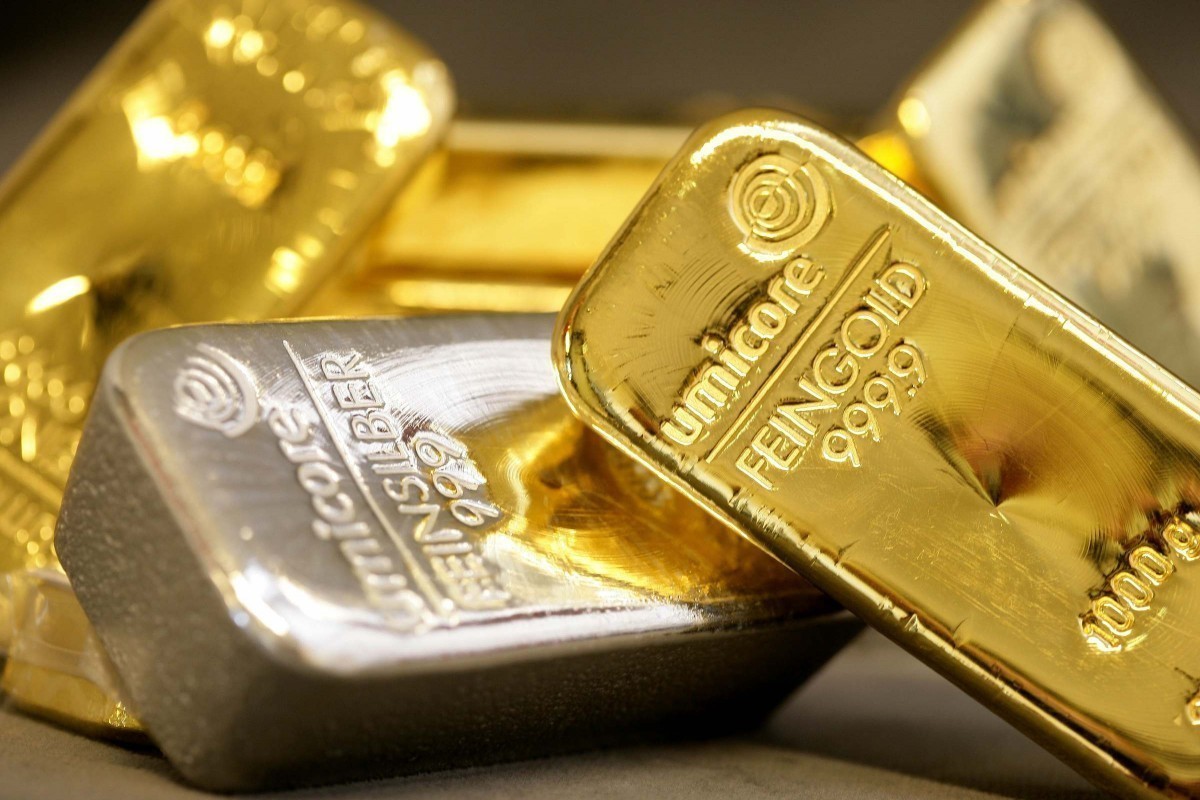


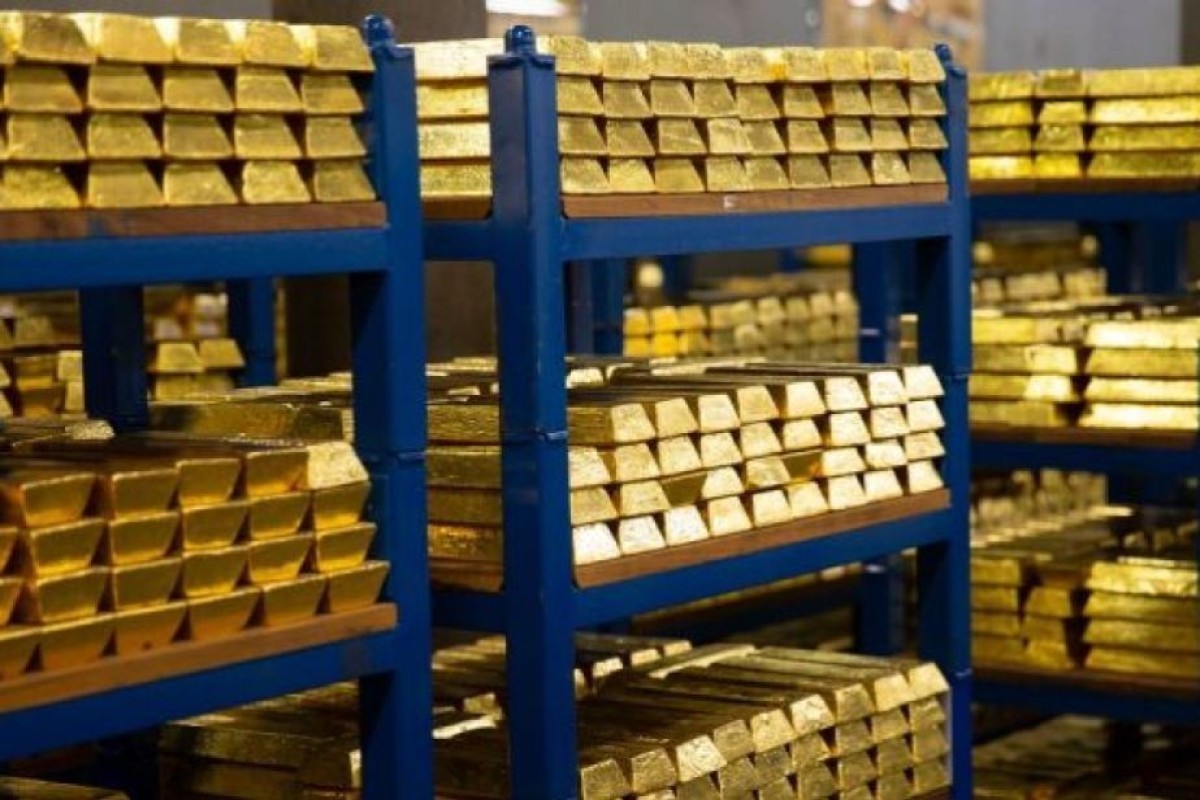


Russian economic commentator Vyacheslav Shiryayev claimed on the “DW на русском” platform that Azerbaijan is acting as an intermediary in bringing sanctioned Russian gold to Western markets. At first glance, his argument is noteworthy: while Azerbaijan produces approximately 3 tons of gold annually, it exported 24.2 tons of gold in the first half of 2026.
However, simply placing two figures side by side does not establish a cause-and-effect relationship between them, especially when it comes to state gold reserves accumulated over the years.
Production is 3 tons, so where did 24 tons come from?
The main gap in Shiryayev’s comparison is that Azerbaijan’s gold capacity is limited solely to current production. However, the State Oil Fund of Azerbaijan (SOFAZ) has been investing in physical gold since 2012. At that time, the limit for gold in the Fund’s investment portfolio was set at up to 5%. In subsequent years, this limit was gradually increased: to 10% in 2019, 15% in 2022, 25% in 2025, and 35% in 2026.
SOFAZ has particularly accelerated its gold purchases over the past two years. The Fund purchased 44.8 tons of gold in 2024 and an additional 53.4 tons in 2025. As a result, by the beginning of 2026, SOFAZ’s gold reserves had reached 200 tons, while the market value of those assets had risen to more than $28 billion.
This figure clearly demonstrates one point: when assessing Azerbaijan’s capacity to export 24 tons of gold, it is not methodologically correct to look only at the 3 tons mined in that particular year. The hundreds of tons of gold reserves accumulated by the country in previous years are also part of the balance.
Gold prices rose, changing the portfolio weighting
The period during which SOFAZ increased its gold reserves coincided with a rapid rise in prices on the global market.
While the average annual price of gold was approximately $1,800 per ounce in 2022, it rose to $1,940 in 2023, $2,388 in 2024, and above $3,400 in 2025. On January 29, 2026, gold reached an all-time high of $5,594.82 per ounce.
The rise in prices not only increased the value of the gold held by SOFAZ but also increased its share in the Fund’s overall investment portfolio. As a result, the share of gold exceeded the limit set out in the investment policy.
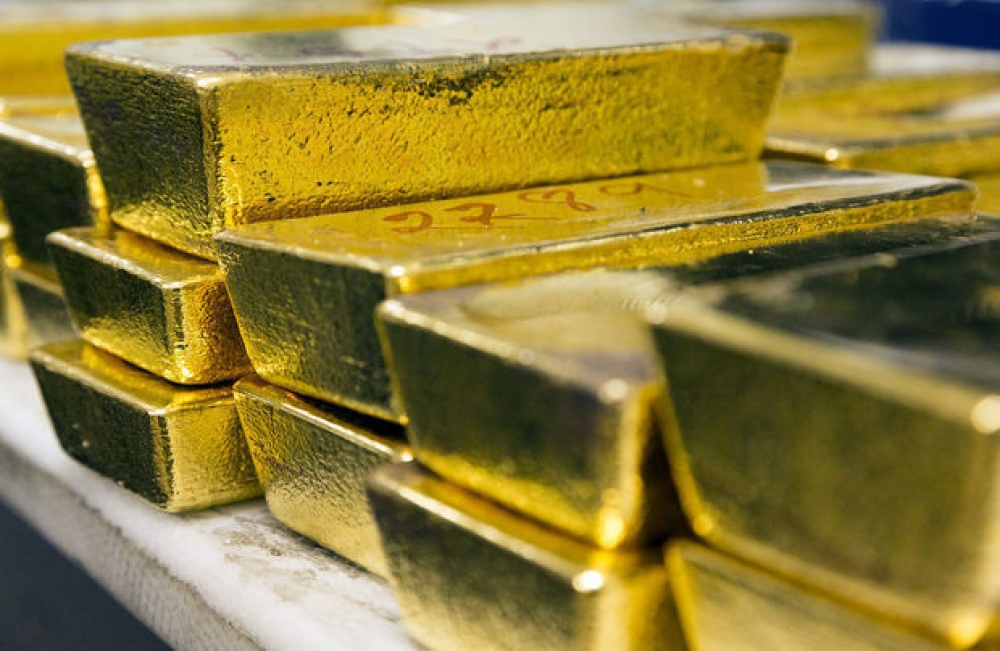
For this reason, the Fund sold 21.9 tons of gold in the first quarter of 2026. Its reserves declined from 200 tons to 178.1 tons. SOFAZ explained this as a rebalancing of its portfolio. Fitch Ratings also noted that part of the gold reserves was sold in January-April specifically to restore the balance of the portfolio.
In other words, this was not an extraordinary or unexplained transaction, but a standard investment mechanism used to keep the share of assets within the established limits.
Matching sales and export figures – 21.9 tons
The most noteworthy part of the issue, however, is that the figures match.
Of the 24.2 tons of gold exported by Azerbaijan in the first half of 2026, 21.902 tons were shipped to the United Kingdom. The volume of gold sold by SOFAZ in the first quarter was 21.9 tons. Open customs statistics also provide grounds to conclude that the 21.902 tons shipped to the United Kingdom was precisely the gold sold by SOFAZ. The fact that these figures are so close provides a clear, logical, and documented alternative explanation for the bulk of the 24-ton surge in exports.
Shiryayev, however, without taking this fact into account, draws a direct conclusion about Russian gold from the “3 tons of production – 24 tons of exports” comparison.
Where is the evidence of gold imports from Russia?
If the claim is indeed that gold imported from Russia was re-exported from Azerbaijan to the West, then under normal circumstances at least part of this chain should be reflected in foreign trade statistics. In the first half of 2026, Azerbaijan’s gold imports amounted to just 91.5 kilograms. Of this, 72.4 kg was imported from Türkiye, 19 kg from Switzerland, and 0.1 kg from the UAE. As can be seen, open statistics contain no data indicating the import of tens of tons of gold from Russia to Azerbaijan.
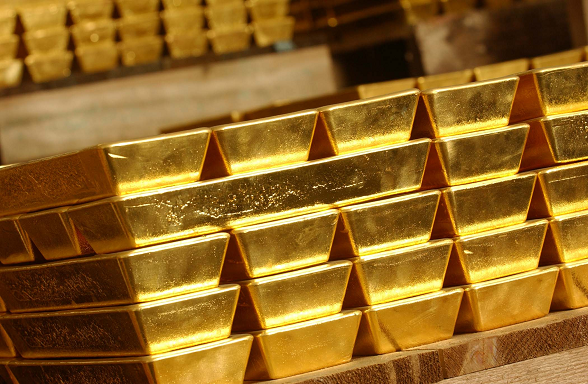
This does not automatically rule out, in theory, the existence of unofficial or other schemes. However, anyone making such a claim must then prove it: the origin of the gold, the route by which it entered Azerbaijan, customs documents, sellers and buyers, and the refining and transit chain must be identified.
Instead, simply comparing production with exports is not sufficient to substantiate such a serious allegation.
Armenia as an example of re-export
One of the clearest examples of this is Armenia. In 2024, Armenia imported approximately 84.5 tons of unprocessed non-monetary gold worth $5.9 billion from Russia and exported 77.5 tons of gold that same year.
In this case, the country of origin, import volume, and subsequent export destinations are clearly visible in the statistics. The World Bank has also specifically noted that, amid sanctions, Armenia has become one of the re-export and transit hubs for Russian goods. In Shiryayev’s claim regarding Azerbaijan, however, no such chain is presented.
What facts should Deutsche Welle have checked?
The other side of the issue concerns the platform on which the claim was published.
When an international media organization such as Deutsche Welle publishes a serious allegation that Azerbaijan is helping Russian gold circumvent sanctions and reach Western markets, it should also have checked publicly available information from the other side.
SOFAZ’s 200-ton gold reserves, its sale of 21.9 tons of gold in the first quarter of 2026, the export of 21.902 tons of gold to the United Kingdom during that period, and the absence of any large-scale gold imports from Russia in the statistics are not difficult facts to investigate.
One of the fundamental principles of journalism is to verify allegations, seek the position of the other side, and present readers with all material facts. If, without doing so, an expert’s assumption is presented to the audience in a way that gives the impression of fact, serious questions arise regarding the principles of balance and fact-checking.
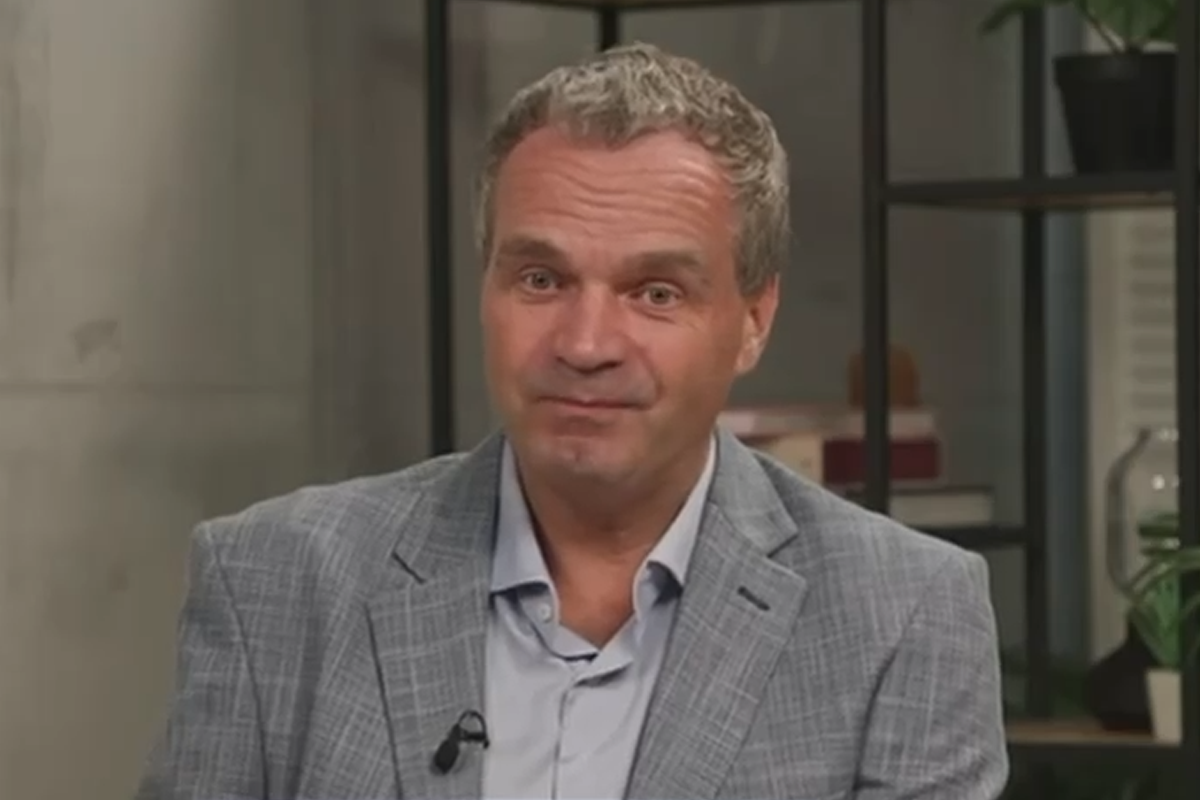
The burden of proving Shiryayev’s claim also rests with Shiryayev himself. The available public data provide a different and documented explanation for the 24 tons of exports than the Russian gold theory. Those claiming otherwise must provide concrete evidence.
If Vyacheslav Shiryayev is unable to provide such evidence, he should withdraw the allegation he has made. Deutsche Welle, for its part, should correct the material and restore balance if it is established that the information was published without fact-checking and without seeking the position of the other side. If the unfounded allegation is defamatory in nature, an apology from both Shiryayev and Deutsche Welle is a requirement of journalistic responsibility.


 Follow us on Telegram
 t.me/apanewsaz
 Follow us on Instagram
 Follow us on TikTok
 Follow us on Facebook
 Follow us on X