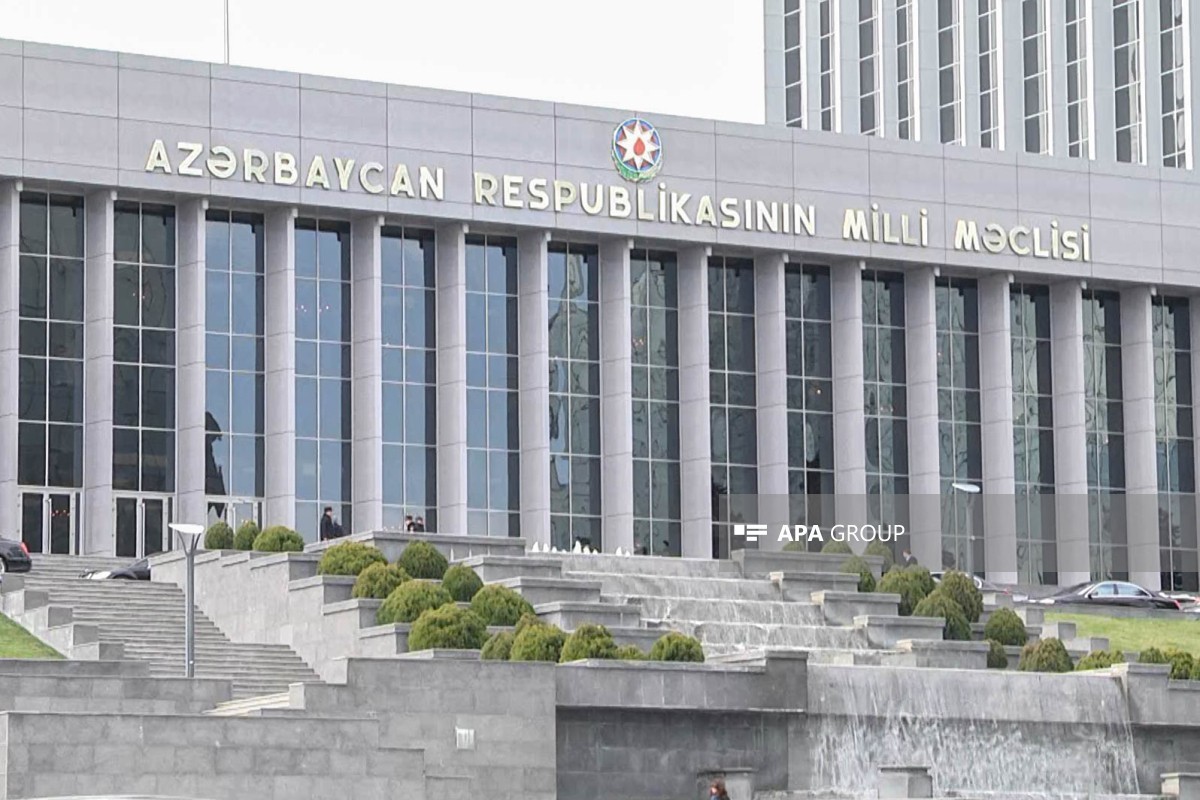






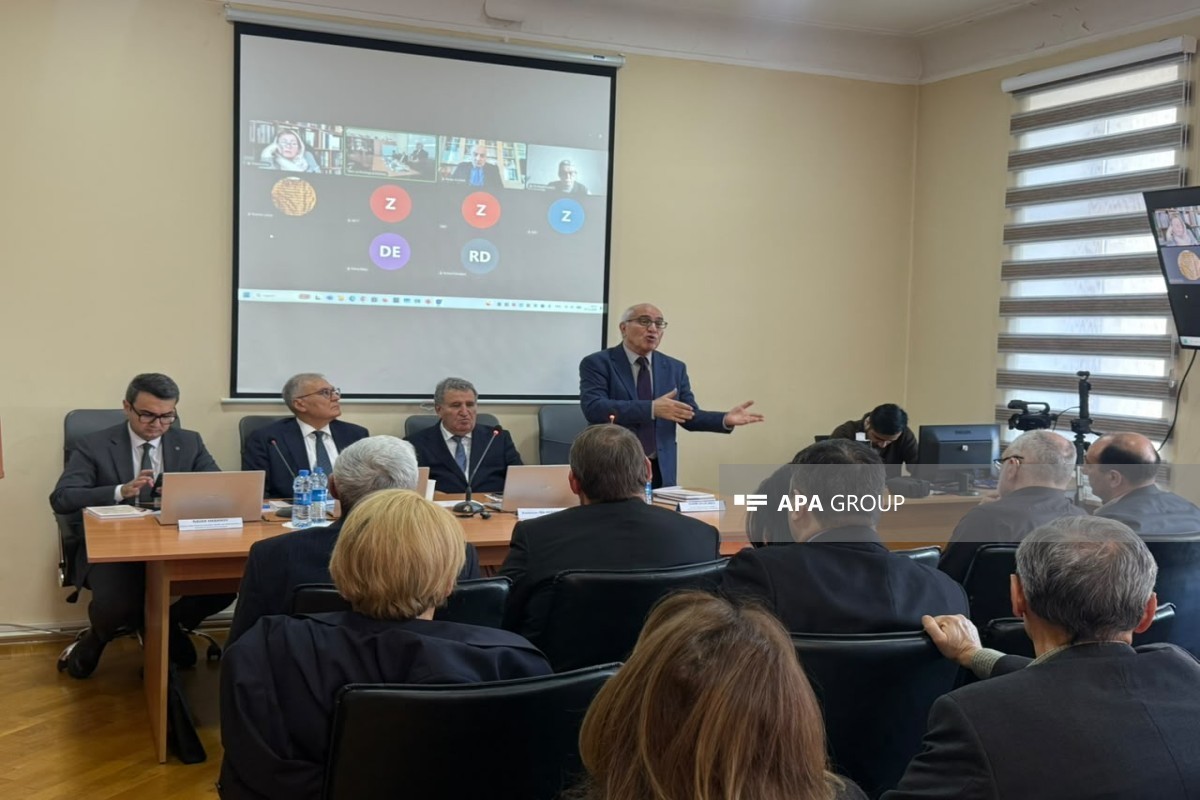


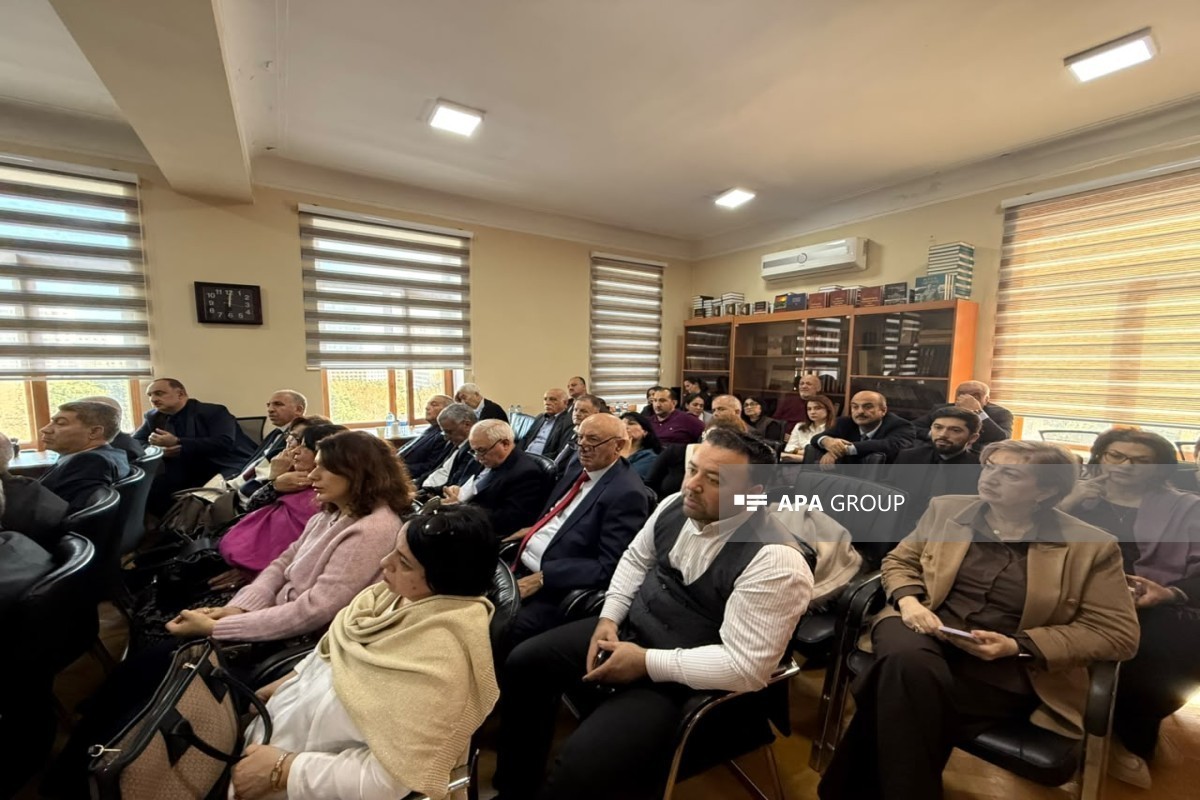
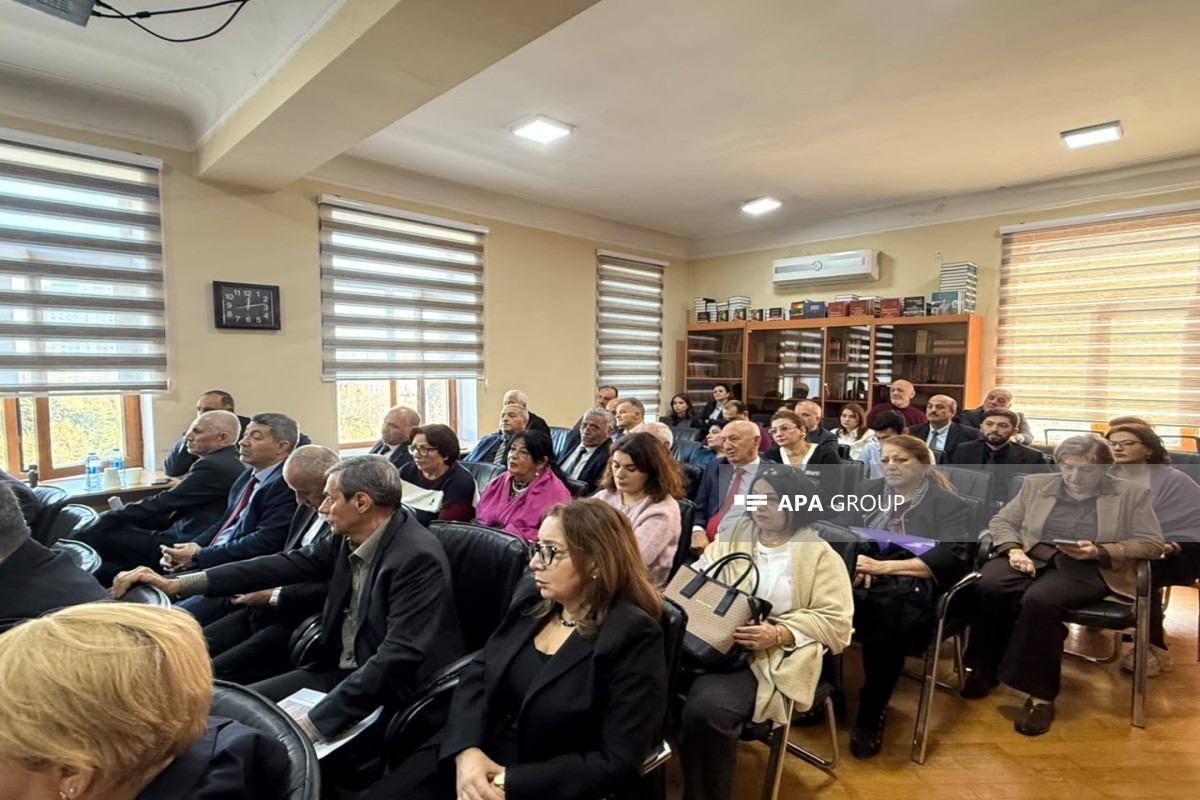
The 13th International Scientific Conference titled "The Christian Church of Caucasian Albania in the Context of Middle Eastern Civilization" has been held, APA reports.
Speaking at the conference, Fuad Akhundov, Head of the Political Research and Analytical Analysis Sector of the Department of Social and Political Affairs of the Presidential Administration, said that a new stage had begun in the region and opportunities had emerged for scientific cooperation with Armenian scholars.
Touching on research into the Albanian heritage at the Gandzasar Monastery, Fuad Akhundov said that, according to the inscription, the monument was built in 1240 during the tenure of the Albanian Catholicos.
He called on Armenian scholars to approach the issue constructively and examine the inscription at the site.
"I appeal to Armenian scholars that the time has come to work constructively. Come and see for yourselves; the inscription mentions the Albanian Catholicos. We must put an end to false claims that no such inscription exists there," he said.
President of the Azerbaijan National Academy of Sciences (ANAS), Academician Isa Habibbayli, said that research into the history of Caucasian Albania would be expanded.
"There are serious disagreements among various countries regarding the historical territories of Caucasian Albania, which countries they belong to in the modern era, and the ownership of historical monuments. The issue of Caucasian Albania is of great importance to both Azerbaijani and global historiography. Although various studies have been conducted in this field, important issues still require further investigation.
"I am confident that our activities will expand further this year. Important steps will be taken toward organizing anthropological and ethnographic expeditions, and these activities will be implemented in practice for the first time.
"A number of works by German authors are being translated by Armenians and presented to the international community. Through these publications, claims that do not correspond to the truth are also being conveyed to the global public. In this regard, identifying and obtaining the original texts of works by German authors and translating them accurately into Azerbaijani is of great importance. ANAS will put forward a relevant initiative in this direction," he said.
Director of the Institute of History and Ethnology of ANAS Karim Shukurov said that the history of Caucasian Albania is being seriously distorted internationally, particularly in foreign historiography.
"International scientific conferences are regularly organized in Azerbaijan to prevent these distortions. The history of Caucasian Albania occupies an important place in the history of Azerbaijani statehood. Research into the history of Caucasian Albania is one of the main scientific areas of Azerbaijani historiography," he said.
Karim Shukurov also noted that significant scientific work was being carried out to decipher the Albanian alphabet and that new publications were being prepared in this field.
"Research into the language and alphabet of Caucasian Albania is continuing at the institute," he said.
Director of the Center for Azerbaijani Studies and Multiculturalism at Azerbaijan University of Languages Ravan Hasanov said that Caucasian Albania is of great importance for studying the ancient history of Azerbaijani statehood, as well as the religious and cultural development of the South Caucasus.
"The formation of the Albanian Church, its traditions of religious architecture and its written culture demonstrate that the processes that took place in this geographical area cannot be explained solely within the historical framework of one people or one religious center. Various political, religious and cultural influences interacted here.
"One of the important tasks of Azerbaijani studies of Caucasian Albania is to examine Caucasian Albania within the political and religious realities of its historical period. Mechanically applying modern national and confessional concepts to antiquity and the early Middle Ages can lead to serious methodological errors.
"The fact that a monument was used by a particular religious community in later centuries does not automatically answer all questions about its original origins. At the same time, determining its original origins does not provide grounds for denying the monument's subsequent history.
"The dates of the original construction, subsequent reconstruction and inscriptions of monuments such as Khudavang (Dadivank) in Kalbajar, Gandzasar in Aghdara and the Kish Temple in Sheki must be studied separately.
"For example, information about the main 13th-century church of Gandzasar and the patronage of Hasan Jalal cannot be assessed separately from the political and confessional environment of that period.
"Azerbaijani historiography pays particular attention to the connection of these monuments with the Albanian Church. However, different classifications exist in international literature.
"The way to resolve these disagreements is through the publication of inscriptions in their original languages, comparison of archival photographs and scientific dating of construction phases.
"In this context, the study of Christian monuments in Karabakh and Eastern Zangezur is particularly relevant.
"It is important to bring together existing archival documents, earlier photographs, architectural measurements and field research for each site within a unified system. Such a database could serve as a reliable reference source for both future scientific debates and restoration work.
"To convey the position of Azerbaijani scholars to the international academic community, it is not enough to hold discussions solely within our own circles. We must publish our findings in foreign languages, make primary sources accessible and create conditions for open discussion of different scientific approaches.
"In this regard, I would particularly like to highlight the long-standing cooperation between the Institute of History named after A. A. Bakikhanov of ANAS, now the Institute of History and Ethnology, and the Baku International Multiculturalism Center.
"This cooperation has created an important scientific platform bringing together historians, religious studies scholars, architectural specialists and foreign researchers," he said.
He noted that several practical tasks face modern studies of Caucasian Albania.
"First, a unified digital scientific inventory of monuments belonging to Caucasian Albania must be created. It could contain photographs, architectural descriptions, inscriptions, research and conservation histories, as well as information about existing scientific debates concerning each monument.
"The sources of the information and the aspects that have yet to be clarified must be clearly indicated.
"Second, epigraphic materials must be documented with high precision, and primary sources must be published with critical scholarly analysis.
"Modern technologies such as three-dimensional modeling and high-quality photography make it possible to preserve inscriptions and architectural details for future research. However, technology does not replace scientific expertise; it expands its capabilities.
"Third, a permanent interdisciplinary expert platform must be established through cooperation between ANAS and relevant institutions working in the field of multiculturalism.
"Alongside historians, the participation of archaeologists, linguists, architects, conservation specialists and legal experts could play an important role.
"The involvement of foreign specialists and open scientific peer review of findings would strengthen the international credibility of the research.
"Finally, special attention must be paid to training young researchers. The future of Azerbaijani studies of Caucasian Albania depends not only on preserving the existing scientific heritage but also on a new generation of scholars mastering ancient languages, source studies and modern research methods," he said.
Note that the conference aims to support the further development of scientific research, the introduction of new sources into academic circulation, the preservation of historical and cultural heritage, and the continuation of the scientific tradition to which Professor Farida Mammadova made significant contributions.


 Follow us on Telegram
 t.me/apanewsaz
 Follow us on Instagram
 Follow us on TikTok
 Follow us on Facebook
 Follow us on X