







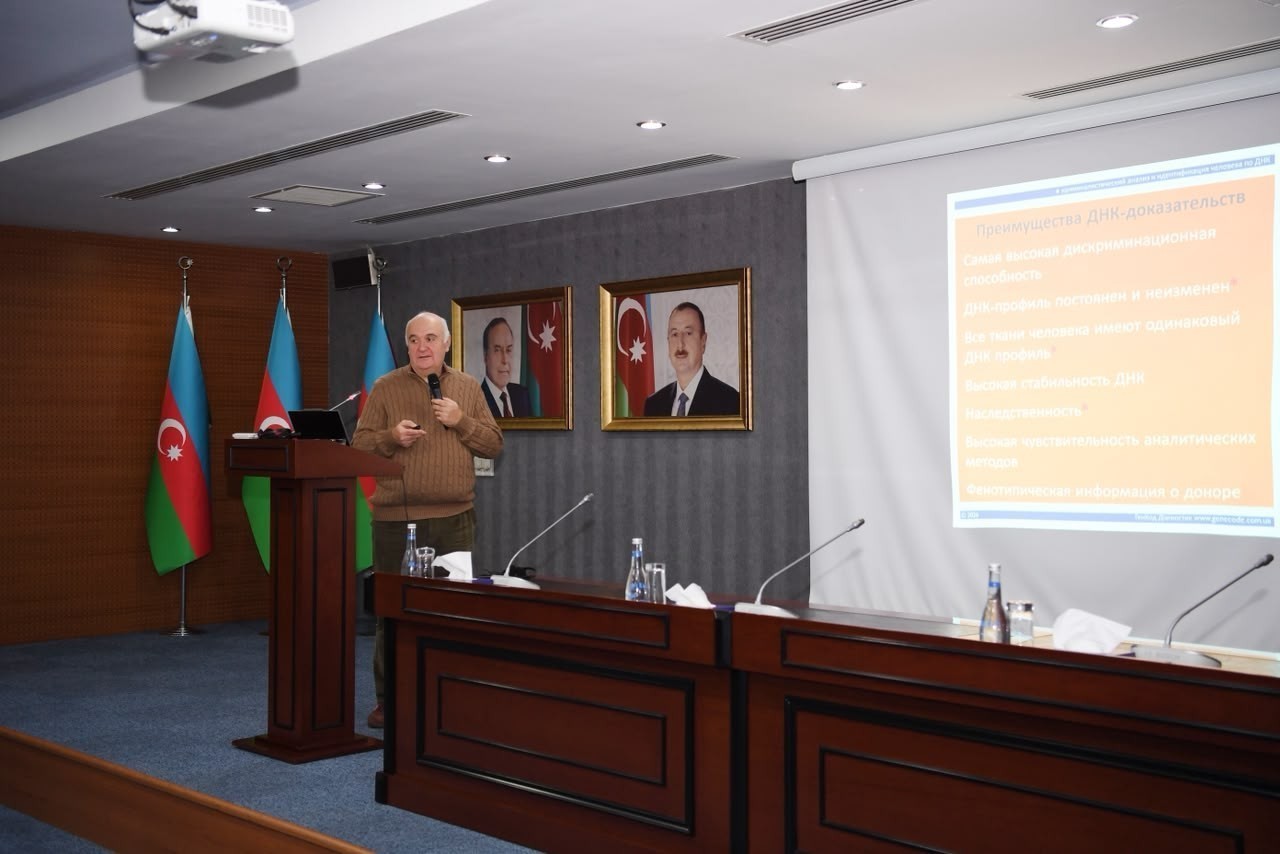
A specialized training course titled "Forensic DNA Analysis and DNA Evidence" has been organized at the Main Military Medical Department of the State Security Service (SSS) by the State Commission of the Republic of Azerbaijan on Prisoners of War, Hostages and Missing Persons, with the support of the SSS, APA reports.
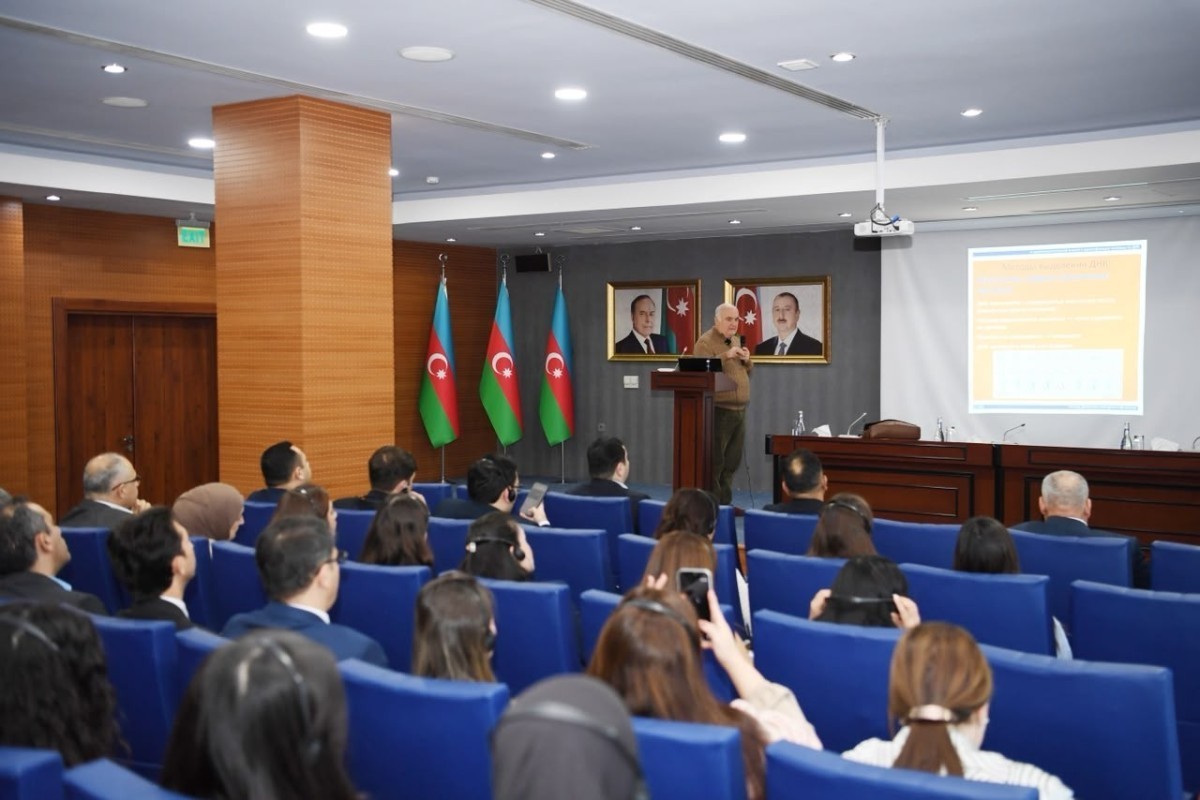
The four-day course, attended by specialists from government agencies and structural units represented on the State Commission, was conducted under a specially developed program by Dr. Andrei Semikhodskii, a scientist specializing in molecular biology, medical genetics and forensic genetics, and Scientific Director of the UK-based company Genecode Diagnostics.
Dr. Andrei Semikhodskii also participated in the Fourth International Conference on Missing Persons, held from October 7 to 10 this year within the framework of the Baku Dialogue. His invitation to deliver specialized training in Azerbaijan is significant in terms of maintaining professional contacts established during the conference and advancing international cooperation at a practical level.
Covering four main thematic areas, the training program examined in detail the history and applications of DNA evidence, modern methods and technologies for forensic analysis of human DNA, international experience in the use of genetic databases, the interpretation and statistical evaluation of DNA evidence, as well as challenges arising in complex forensic examinations and approaches to addressing them.
The distinctive feature of the course was its integration of modern scientific approaches, advanced international experience and the practical knowledge required to conduct complex forensic genetic examinations within a single program.
Particular attention was devoted to the identification of human remains, the determination of kinship, the examination of degraded DNA samples, the accurate interpretation of forensic findings, and the enhancement of their scientific validity and reliability.
Throughout the training, participants exchanged views and professional experience, and their questions were addressed in detail.
Upon completion of the course, participants were presented with special certificates confirming their completion of the training.
The State Commission systematically and consistently undertakes measures to enhance the professional qualifications of specialists directly involved in the search for missing citizens of the Republic of Azerbaijan and in the recovery, exhumation, reconstruction and identification of human remains.
In this regard, the State Commission regularly organizes international conferences, specialized training courses, scientific and practical seminars, working meetings and other thematic events, inviting internationally renowned scientists, distinguished experts and highly qualified specialists from various countries to Azerbaijan.
These activities lay the groundwork for expanding professional networks, exchanging knowledge and experience, effectively drawing on the expertise of international specialists, engaging them in subsequent specialized training and expert consultations, and applying the acquired knowledge and skills in practice.
At the same time, to enhance the professional knowledge and skills of specialists from the relevant government agencies and structural units represented on the State Commission, arrangements are made for their participation in international training programs, professional development courses and experience-sharing programs abroad.
These measures are aimed at integrating modern scientific and technological advances and international best practices into national practice, implementing new internationally recognized and accepted protocols, improving existing working methods, and enhancing the quality, accuracy and reliability of research and forensic examinations.
The overarching objective of all these measures is to accelerate the search for missing citizens of the Republic of Azerbaijan, the recovery and identification of human remains, and the return of identified human remains to their families for a dignified burial with all due honors, in accordance with religious rites and national and cultural values, while ensuring the right of families to know the fate of their missing loved ones, as enshrined in international humanitarian law.


 Follow us on Telegram
 t.me/apanewsaz
 Follow us on Instagram
 Follow us on TikTok
 Follow us on Facebook
 Follow us on X